Scheldt Tunnel entrance on Left Bank ready to receive eight tunnel sections
Text and images Lantis
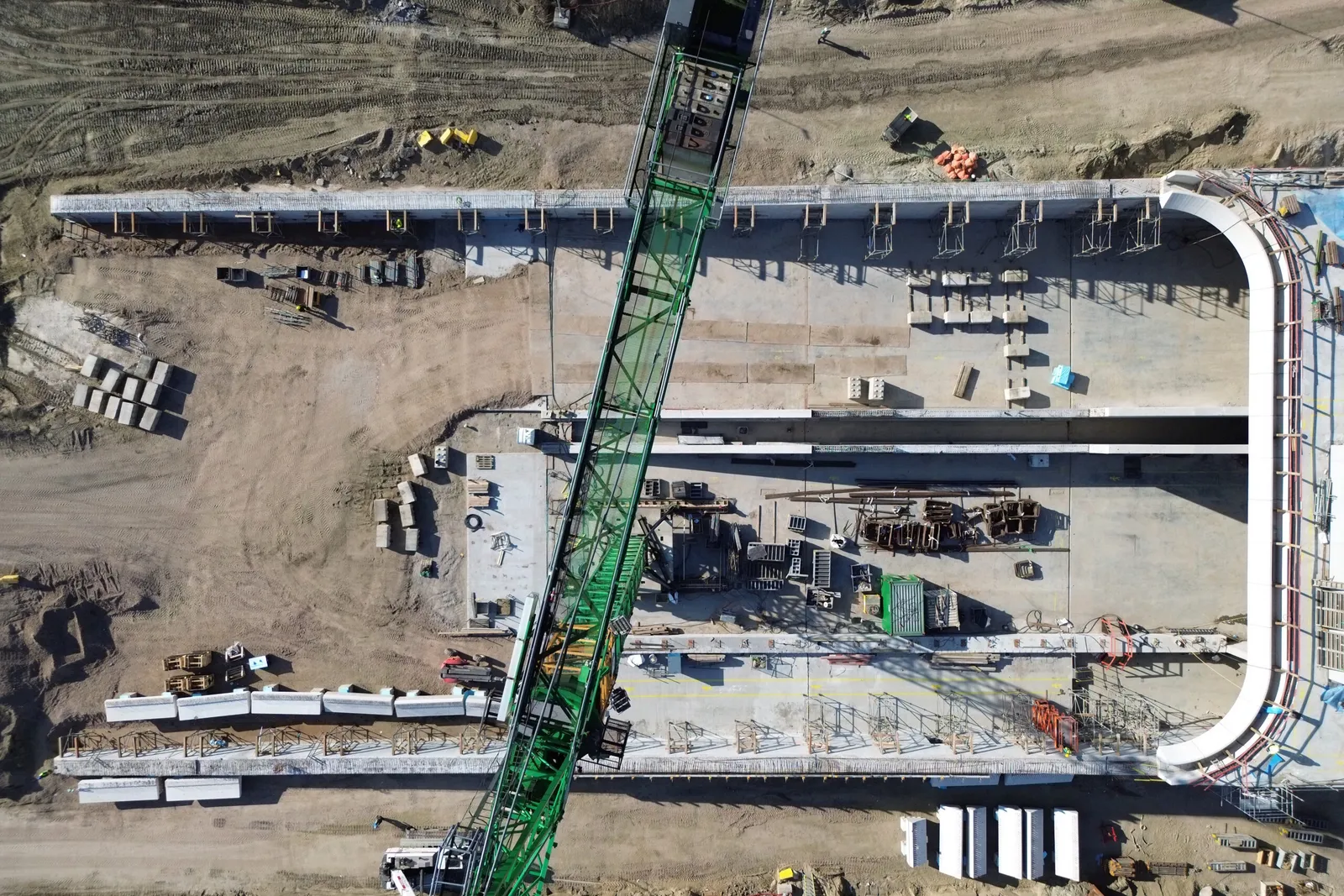
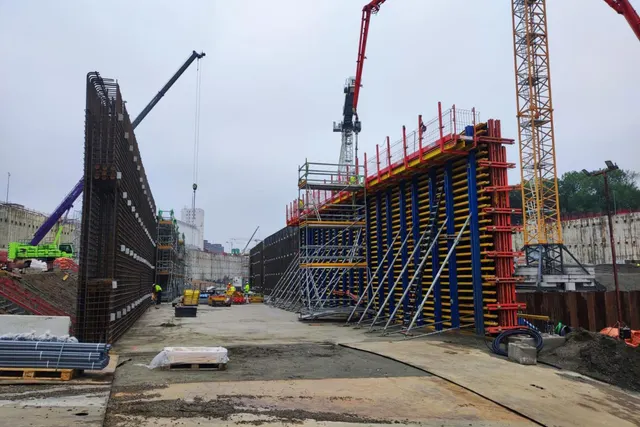
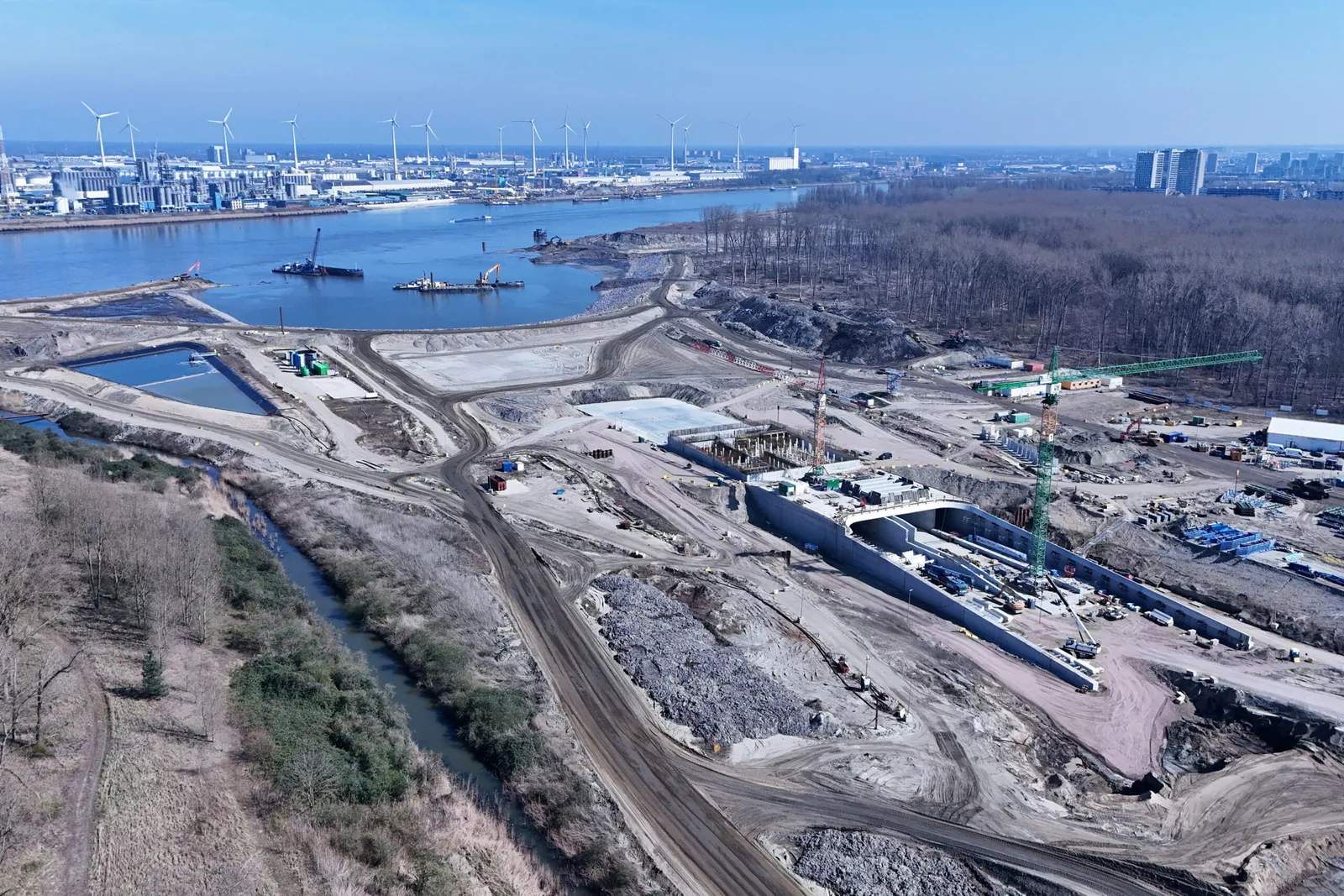
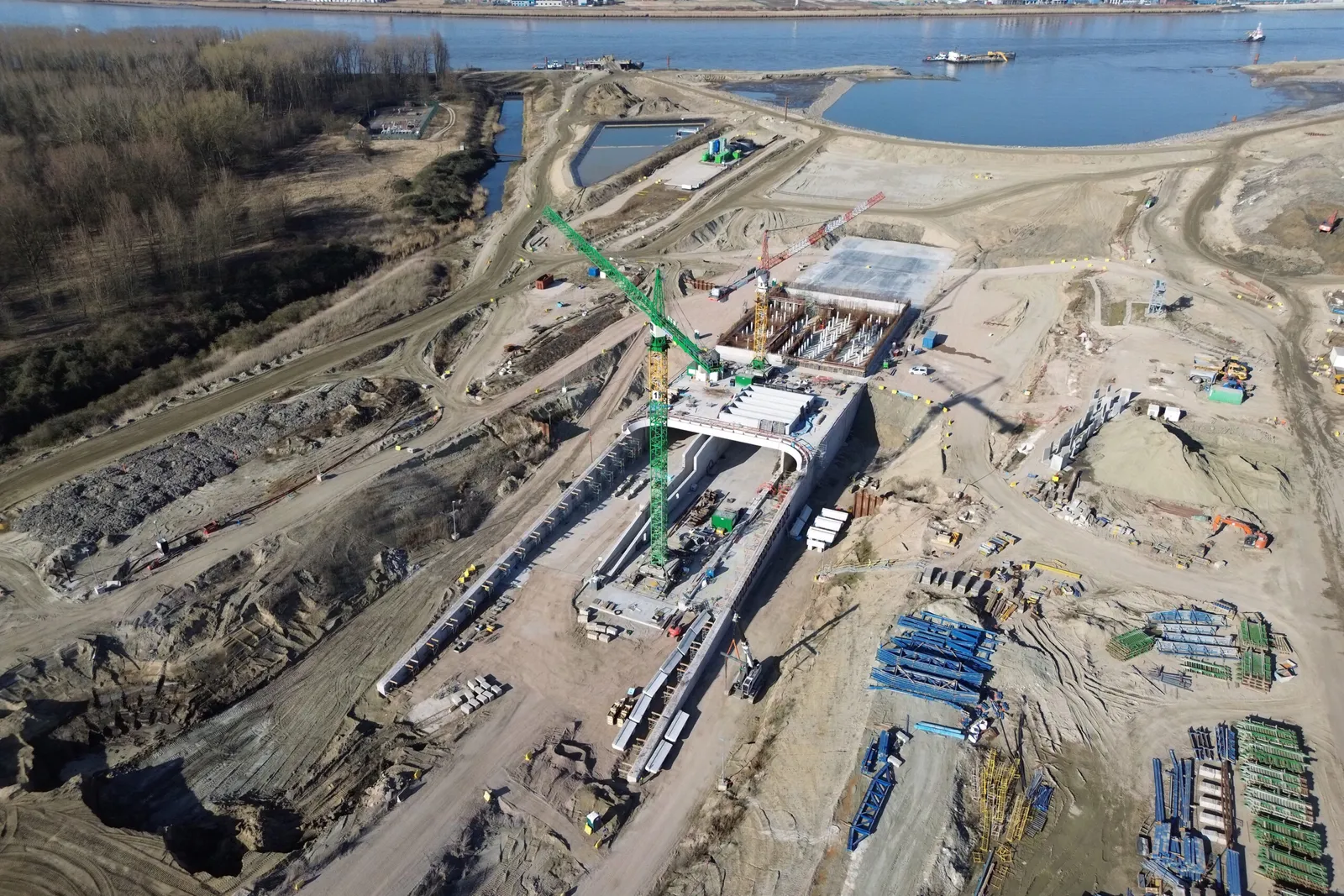
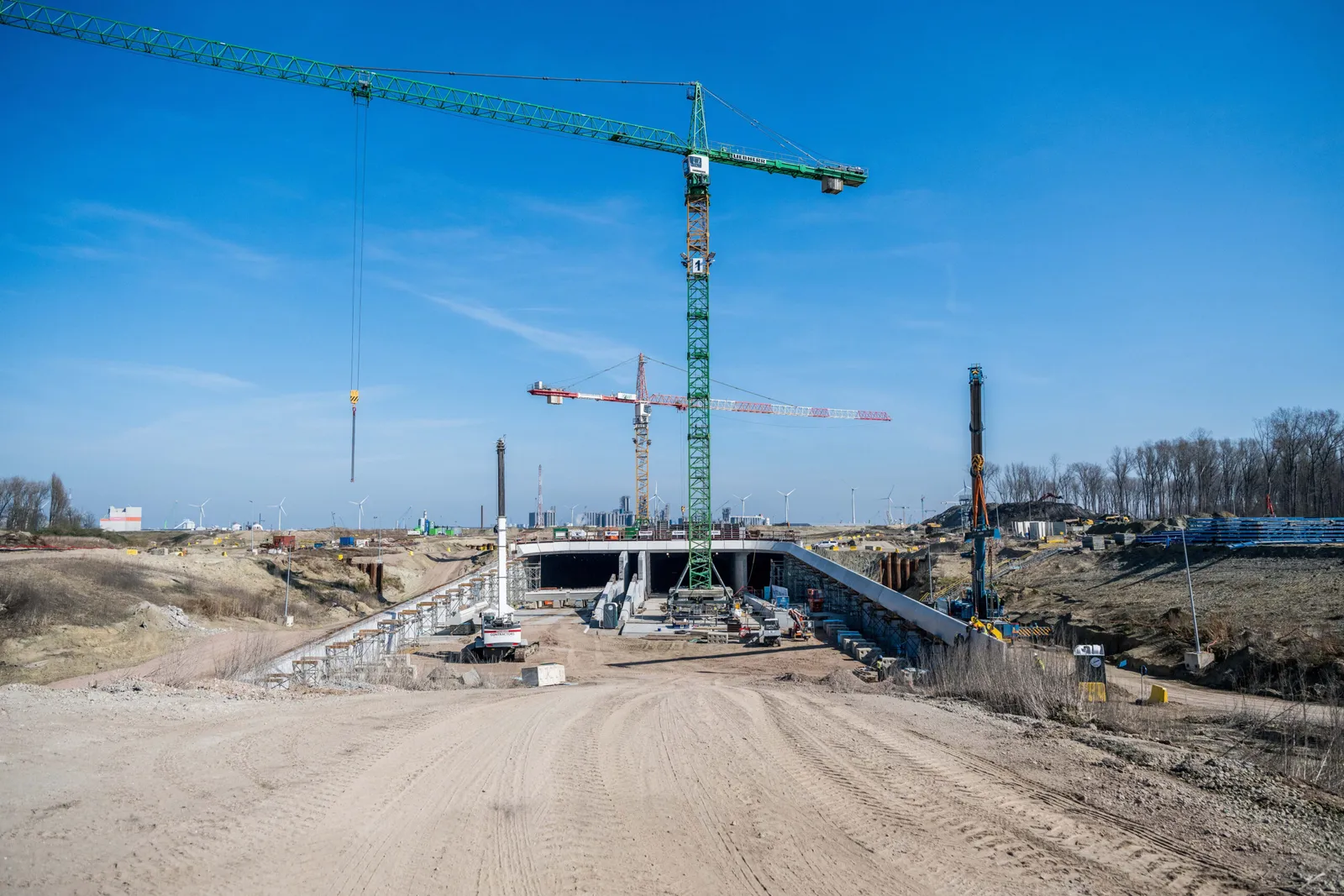
Lantis and contractor TM COTU* have taken another step forward in building the Scheldt Tunnel: the structural work on the tunnel entrance on the Left Bank is complete. This means that, together with the eight gigantic concrete tunnel sections in Zeebrugge and the base of the tunnel approach on the Right Bank, the essential components of the Scheldt Tunnel are now ready. Minister Annick De Ridder walked through the entrance to the Scheldt Tunnel for the first time on 27 March.
After more than three years of preparation and intensive construction work, the essential components of the Scheldt Tunnel are ready. The structural work on the tunnel entrance on the Left Bank has just been completed. “A total of 85,000 m³ of concrete and 19,000 tonnes of steel were needed to build this 486-metre-long section of tunnel,” says Maarten Pombreu, project manager at Lantis. “We are now continuing work here on the connection to the Sint-Anna interchange on the Left Bank.” Concrete work is also progressing well on the Right Bank. The final tunnel section will be connected to it at the end of 2025.
Giants on the way
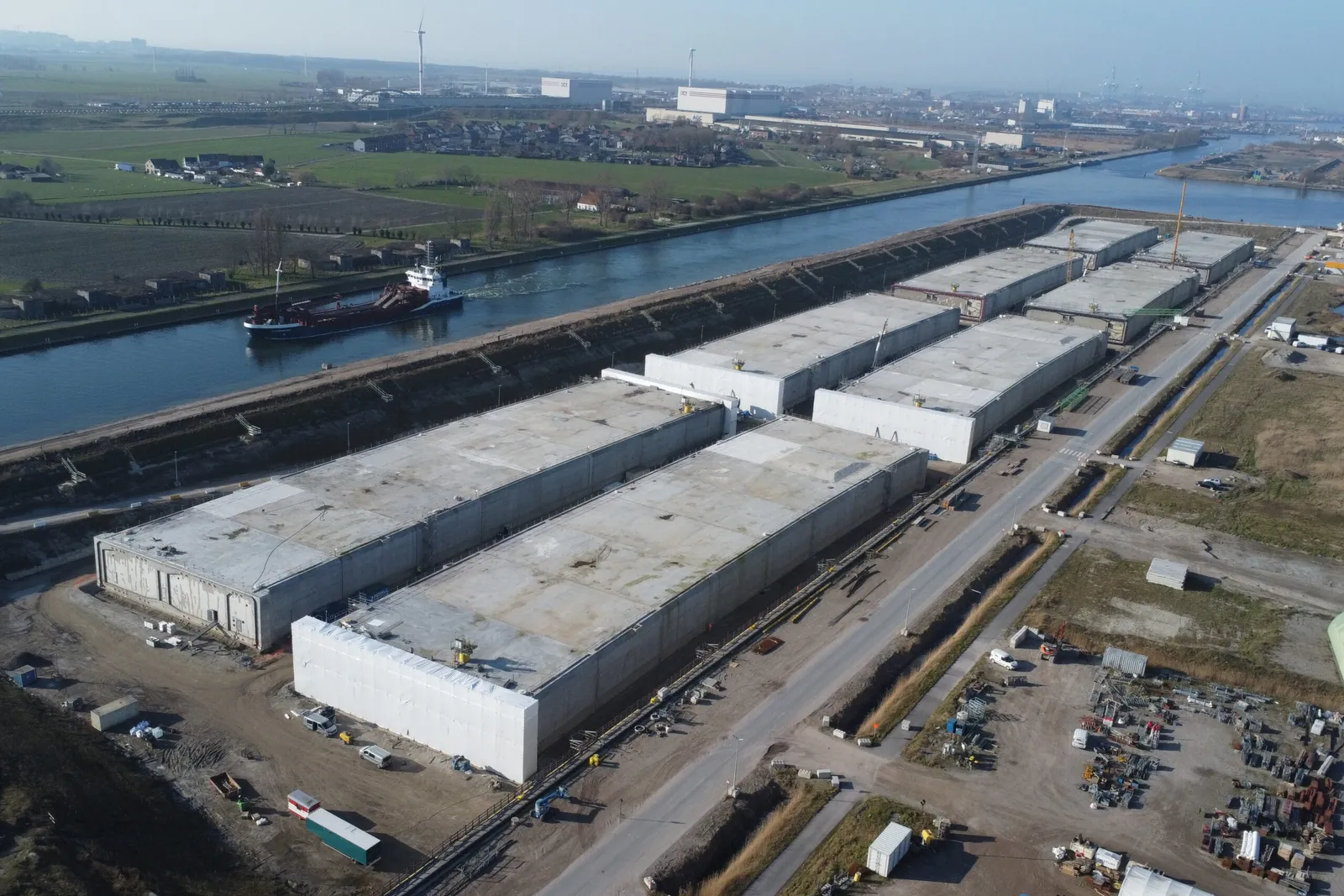
Together with the eight concrete tunnel sections waiting in Zeebrugge, all the pieces of the puzzle for the Scheldt Tunnel are ready. Each tunnel section is larger than a football pitch, longer than the tallest cathedral, a true giant. They weigh an average of 60,000 tonnes and measure 160 metres long, 42 metres wide and 10 metres high. These are real giants, and this year they will float to Antwerp one by one. They will make a spectacular journey of more than 100 kilometres across the North Sea and along the Scheldt.
The large-scale logistical operation required for this involves numerous technical challenges, from controlled transport across the North Sea and along the Scheldt to complex underwater installation. Every step requires meticulous preparation and cooperation between various parties.
Raymond de Kroon, Project Director for Execution at TM COTU: “According to the current schedule, we will flood the construction dock in Zeebrugge on 11 April. At that point, the ballast tanks in the eight tunnel sections will also contain water, keeping them on the bottom,” says Raymond de Kroon. “On 19 May, it will be time for the first tunnel section to depart. We will then pump the water out of the ballast tanks so that the section rises to the surface. In short, Archimedes’ principle in a nutshell.”
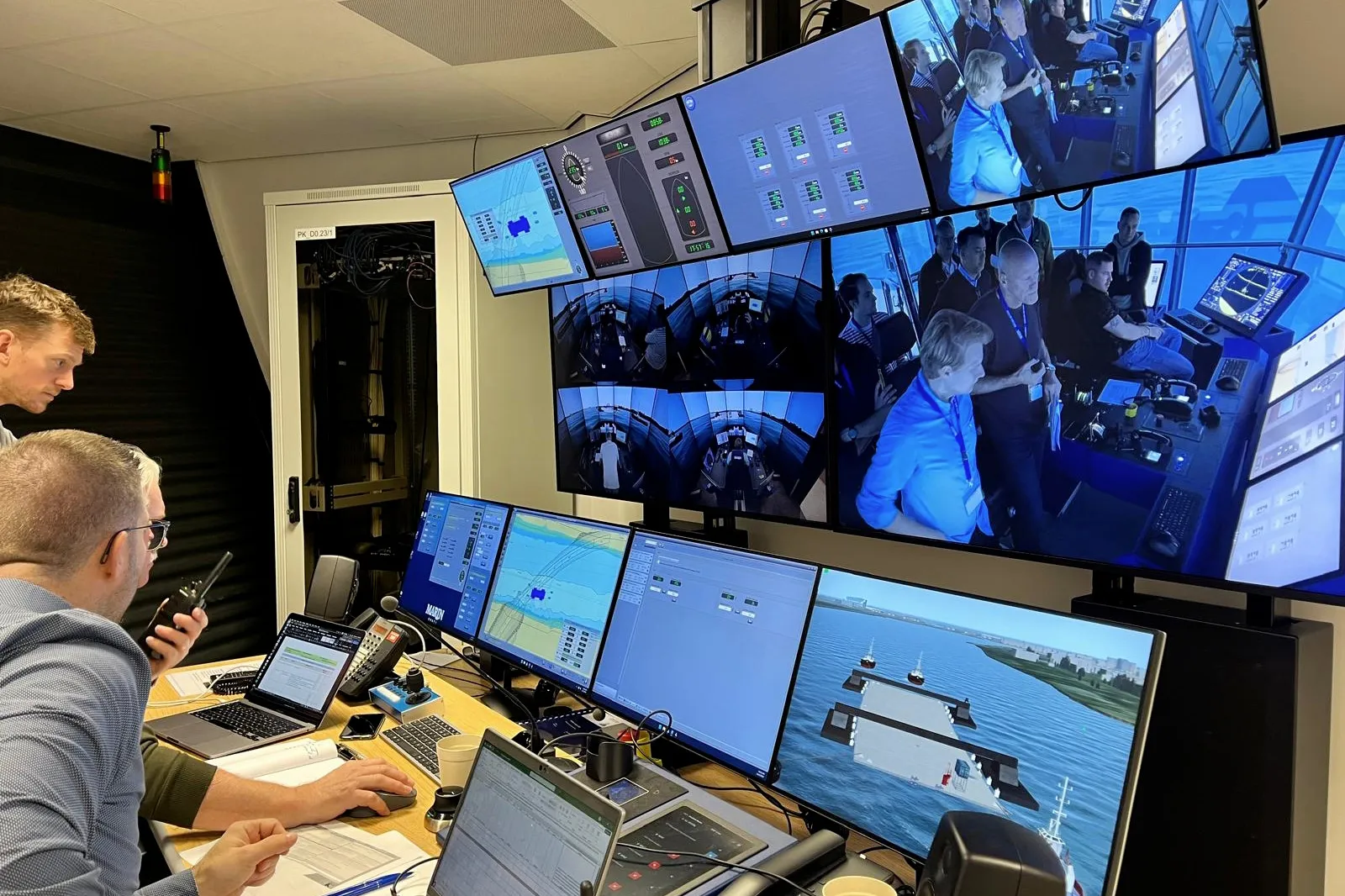
“The schedule depends on a number of conditions, such as the weather, wind strength, waves and tides,” Raymond de Kroon continues. “We constantly assess the forecasts and compare them with the actual conditions at the time of execution. To prepare for these conditions, we use advanced simulations that map out the entire journey in detail. In these simulations, skippers train not only to manoeuvre and navigate in response to these factors, but also in crisis management, communication and cooperation.”
30 hours in transit
The journey from Zeebrugge to the Doeldok in Antwerp takes around 30 hours per tunnel section. En route, each section makes two stops, once in Zeebrugge’s outer harbour and once in Terneuzen. They stop to wait for high tide, so they can travel with the current.
The tunnel sections are also held in the Doeldok to wait for the tides. They can only be sunk around neap tide, when the difference between high and low water is at its smallest. This occurs only twice a month, around the first and last quarter of the moon. Lantis and TM COTU are aiming for early July for the first immersion operation. By the end of the year, all eight tunnel sections will be in place and finishing work on the tunnel can begin.
Only possible through cooperation
It will be an impressive journey for these concrete giants, but the people of flesh and blood working on the project are at least as impressive. “A project on this scale can only be delivered through close cooperation between many parties,” says Jonas Rabaey, environmental manager at Lantis. “From engineers and construction workers to tugboat captains and safety coordinators, everyone plays a crucial role. We also need to coordinate, plan and work continuously with stakeholders and external parties.”
A unique operation for all of Flanders
Annick De Ridder, Minister for Mobility and Public Works: “All the pieces of the puzzle are ready, and we can now start putting everything together so that the tunnel can open fully in 2030. This will not only create a literal connection between the Left Bank and the Right Bank, but also bring together the expertise and knowledge that have made this technical feat possible. I always say, without hesitation, that we are building the construction site of the century here. Because people in Flanders sometimes have a tendency to be hesitant about saying that. They shouldn’t be. We should be proud that we can deliver such a huge project here in our small Flanders.”
With this project, Lantis also wants to get people in Flanders excited about the tremendous expertise and knowledge involved in building the Scheldt Tunnel. That is why the “Kanjers op Komst” campaign starts today, featuring striking images that convey the scale of the operation. You can follow all the latest updates on this project at www.kanjersopkomst.be.
New Scheldt Tunnel helps complete the Ring
The Scheldt Tunnel is a crucial link in the Oosterweel Connection. The new tunnel connects the two banks of the Scheldt and helps complete the Antwerp Ring to the north of the city, together with the Oosterweel interchange and the Canal Tunnels. The result: smoother, safer traffic to and past Antwerp. The Scheldt Tunnel will open to cyclists in 2028. From 2030, it will also provide a connection for cars and lorries between the motorways on the Left Bank, the port and the north of the city.
*TM COTU stands for Tijdelijke Maatschap Combinatie Oosterweeltunnel. The consortium comprises the Belgian construction groups BESIX, Stadsbader Contractors, DEME and Jan De Nul.
Question about this story? Ask your question
Who worked on Scheldetunnel
- contractorTM COTUMentioned in Transporting the Scheldt Tunnel’s giant elements: preparations in full swing
- bouwkuipstempelingAlmex MetaalMentioned in Transporting the Scheldt Tunnel’s giant elements: preparations in full swing
- clientLantisMentioned in Transporting the Scheldt Tunnel’s giant elements: preparations in full swing
Keep following this
Get an email when a new story is published. No account needed.
- ProjectScheldetunnel
- ThemeExtending the life of bridges and tunnels
- SubjectBridges & tunnels