Road maintenance boosts sustainability, cost efficiency and safety
Text Joris Hendrickx Beeld EAPA
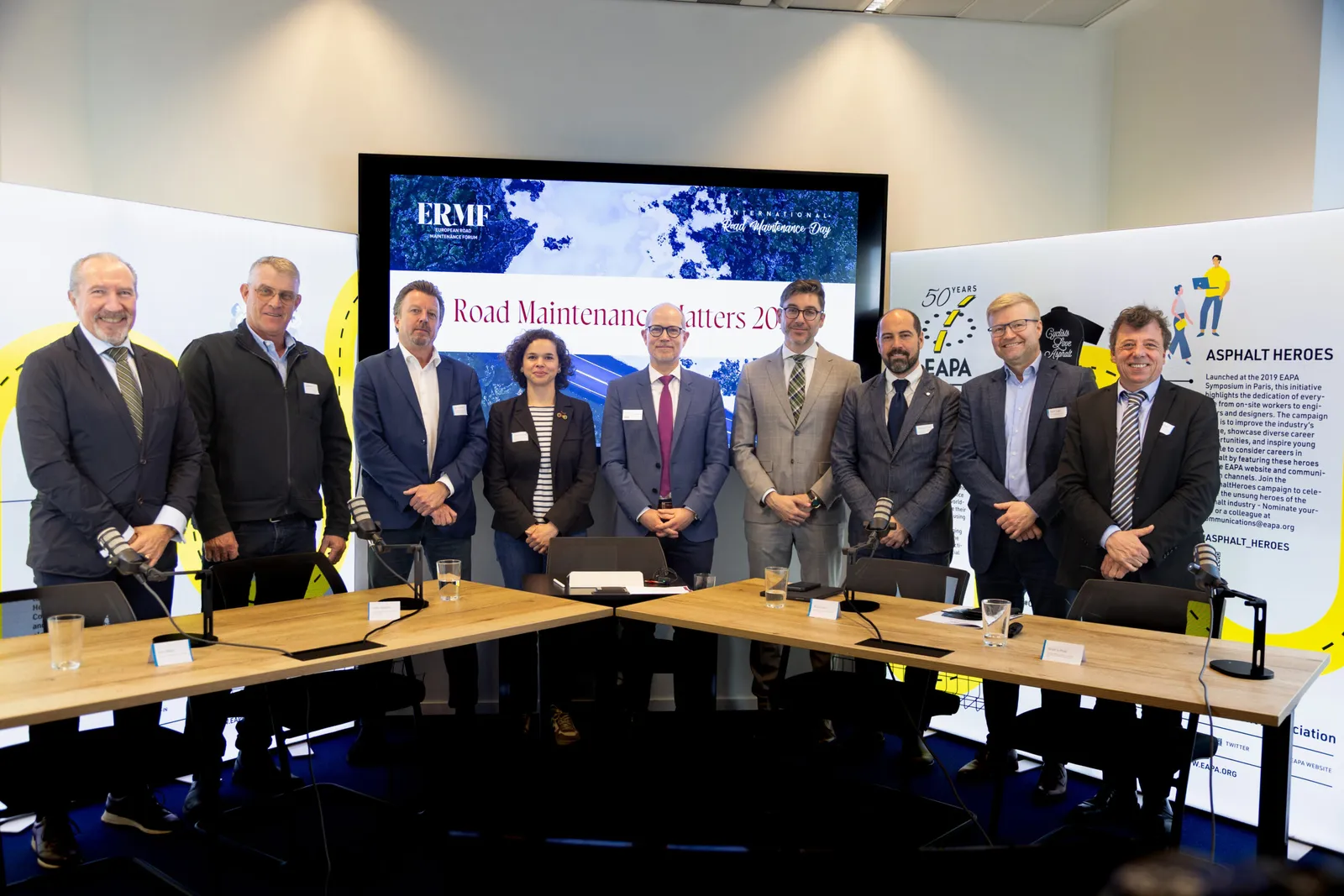
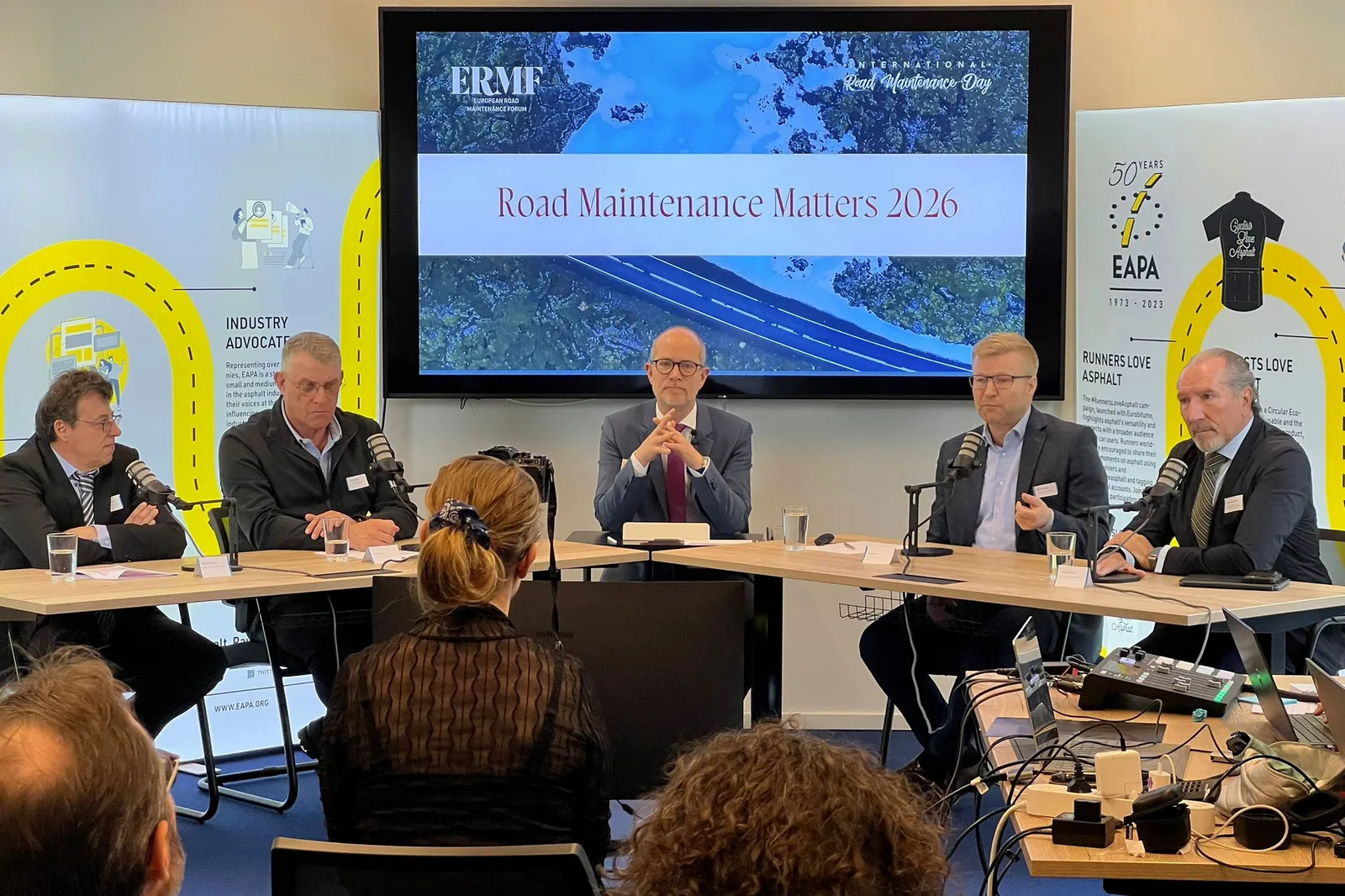
On 9 April, the European Road Maintenance Forum, led by the European Asphalt Pavement Association (EAPA), held its annual ‘Road Maintenance Matters’ event. The forum brought together policymakers, industry experts and researchers to discuss how road maintenance can contribute to Europe’s climate and infrastructure goals. GWW was also there and looks back at some of the standout presentations.
Europe aims to reduce CO2 emissions by 55% by 2030 and achieve carbon neutrality by 2050. Well-maintained, smooth asphalt roads play an essential role in this: they reduce fuel consumption by 5%. This amounts to an annual saving of 14 million tonnes of CO2, or the equivalent of 3 million fewer cars.
Consistent road maintenance as the foundation of a modern, free society
In his welcome address, Carsten Karcher (Secretary General of the European Asphalt Pavement Association, EAPA) pointed out that everyone benefits from well-maintained roads. After winter, frost damage has become visible, making repairs necessary to ensure safe traffic flow. However, many municipalities have postponed major road renovations because of financial constraints, leaving them reliant on temporary fixes that are increasingly inadequate. Without sustained investment, he said, deterioration will accelerate and costs will consequently rise. Poor road surfaces also contribute to higher fuel consumption and increased emissions.
Preventive road maintenance to reduce ‘grey debt’
Wilfried Pillard (Head of Technical Affairs at Routes de France) focused on the situation in France. He warned of the growing so-called ‘grey debt’, the accumulation of deferred maintenance. Preventive maintenance tackles this problem. It reduces costs in the long term and improves safety. It also helps achieve climate goals. Yet one problem remains persistent: a lack of data. More than half of the French road network consists of local roads, for which reliable information is often lacking. Without data, targeted maintenance is difficult.
Data and technology guide policy
Juan José Potti (Managing Director of the Spanish Association of Asphalt Producers, ASEFMA) showed how Spain takes a multidimensional approach to road maintenance, looking beyond traditional maintenance criteria. One notable feature is the use of data from connected vehicles. This data shows how road conditions affect fuel consumption and emissions. This gives maintenance a clear role in energy and climate policy. The message is clear: data makes the impact of maintenance visible and measurable.
Road maintenance for traffic safety
Steve Phillips (Secretary General of the Conference of European Road Directors, CEDR) emphasised that road maintenance is fundamentally about traffic safety and that this mission requires a holistic approach encompassing infrastructure, technology, funding and people. In his view, the challenges posed by ageing infrastructure, growing complexity and evolving technologies call for coordinated planning and innovation. In addition, raising awareness of the less visible aspects of maintenance, securing sustainable funding and protecting staff health are essential.
Asphalt 4.0: from traditional construction and maintenance to an intelligent ecosystem
Breixo Gomez (Director of the European Asphalt Pavement Association, EAPA) discussed the concept of Asphalt 4.0. The comprehensive digitalisation of the asphalt supply chain enables the real-time collection, integration and management of data. This makes it possible to optimise every stage, from processing raw materials to road construction and maintenance. Key aspects include equipping asphalt plants with sensors, smart paving and compaction, centralised digital management systems, asset management and predictive maintenance. This digital transformation not only improves operational performance, but also provides transparency, unprecedented levels of customer satisfaction and detailed information throughout the road’s entire life cycle.
Question about this story? Ask your question
Keep following this
Get an email when a new story is published. No account needed.
- ThemeFuture-proofing roads and railways
- SubjectRoad construction