Heavy lifting specialists, from shipwreck recovery to lock gates
Text Joris Hendrickx Beeld Herbosch-Kiere & Multraship
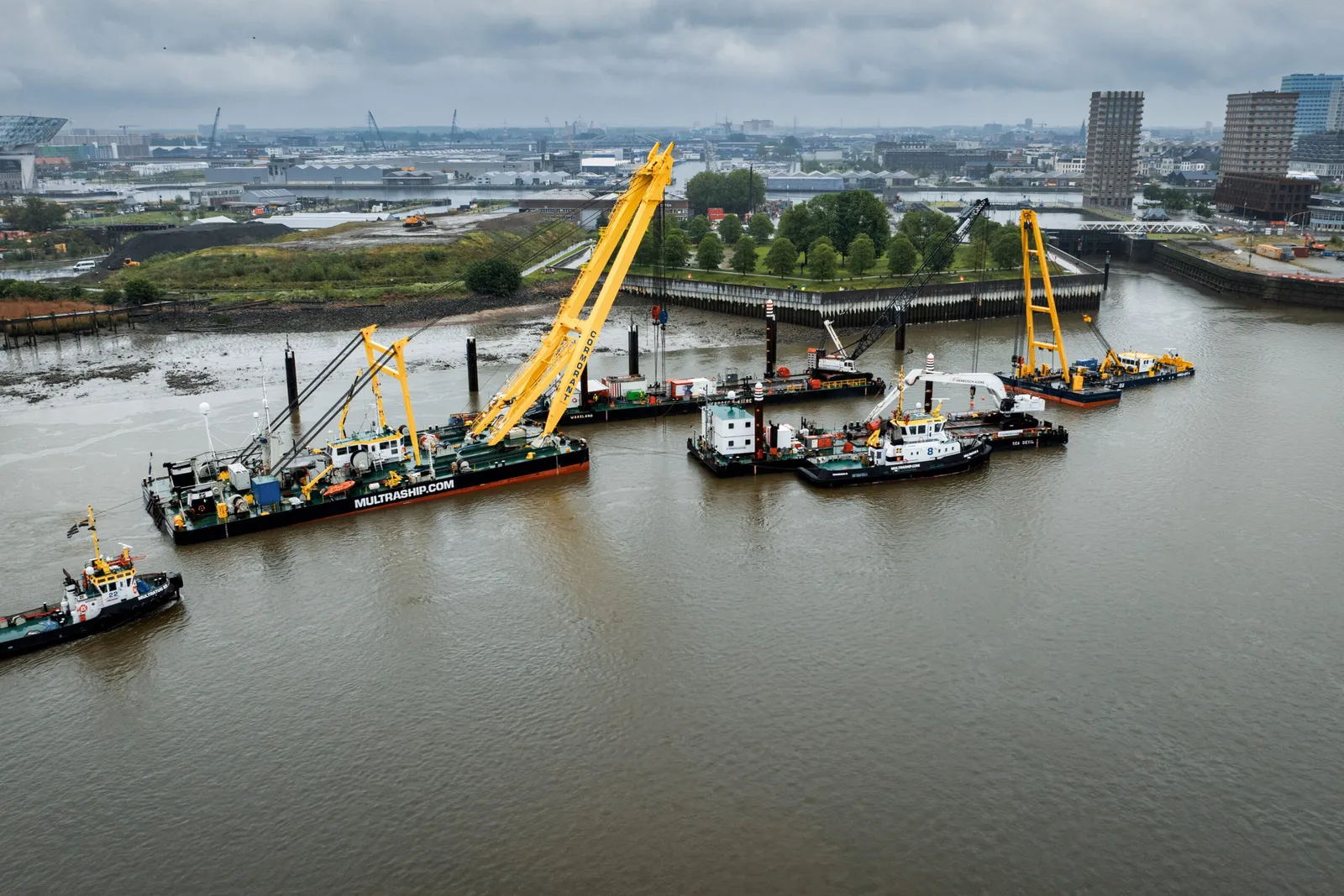
Complex maritime projects call for experience, specialist equipment and partners who trust one another implicitly. Herbosch-Kiere brings these strengths together at its headquarters in the Port of Antwerp. Together with Multraship Salvage and Antwerp Underwater Solutions, the company recently showed how quickly a well-coordinated team can respond to challenging assignments on the water. For heavy lift manager Koen Ameye, that is precisely where its strength lies: combining technical expertise with a flexible fleet, both in Antwerp and much further afield.
Recovery in challenging conditions
In April 2026, the 86-metre-long Dutch inland vessel Sola Gratia sank after colliding with a mooring dolphin near the Royers lock. It was carrying around 1,600 tonnes of sand. Herbosch-Kiere, Multraship Salvage and Antwerp Underwater Solutions immediately developed a recovery plan. The operation involved two floating sheerlegs, two crane pontoons, tugboats, auxiliary equipment and specialist divers.
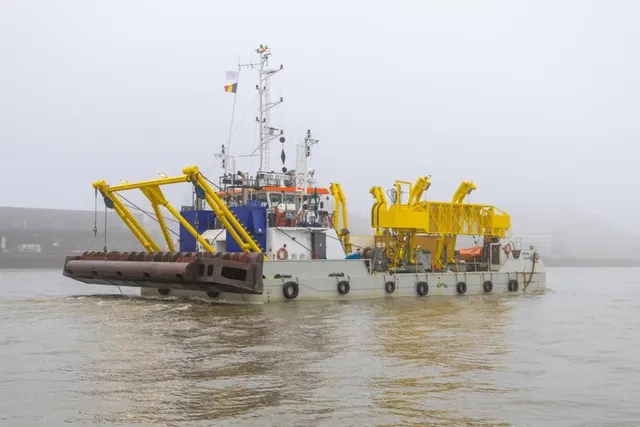
“To ensure the vessel’s stability, we first removed the sand from the hold using our Sea Devil pontoon and a powerful dredging pump,” says Koen Ameye. “We then also deployed the Waasland, fitted with an SCX 2800 crane, to provide additional support during the lift. Slings were attached at three points to distribute the weight evenly and reduce the risk of the vessel breaking up during the lift. This was done in collaboration with specialist divers.”
Conditions made the work particularly challenging. The vessel was lying at a depth of 15 metres in a bend in the Scheldt. Strong currents and spring tides significantly restricted the time available for diving. Even so, the team completed the entire operation in less than ten days.
Expertise beyond shipwreck recovery
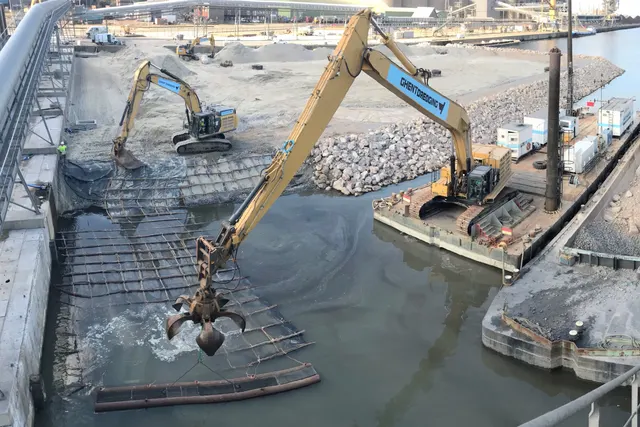
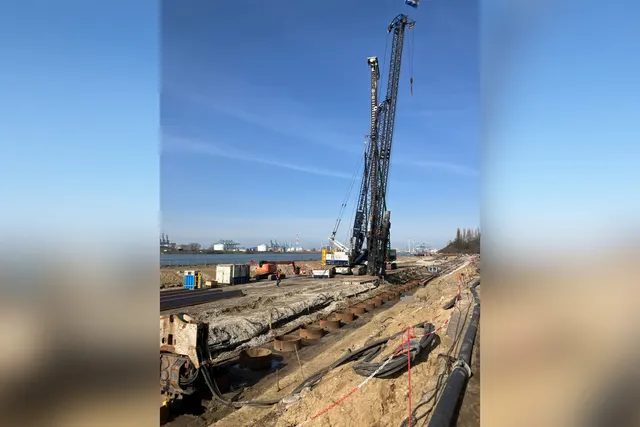
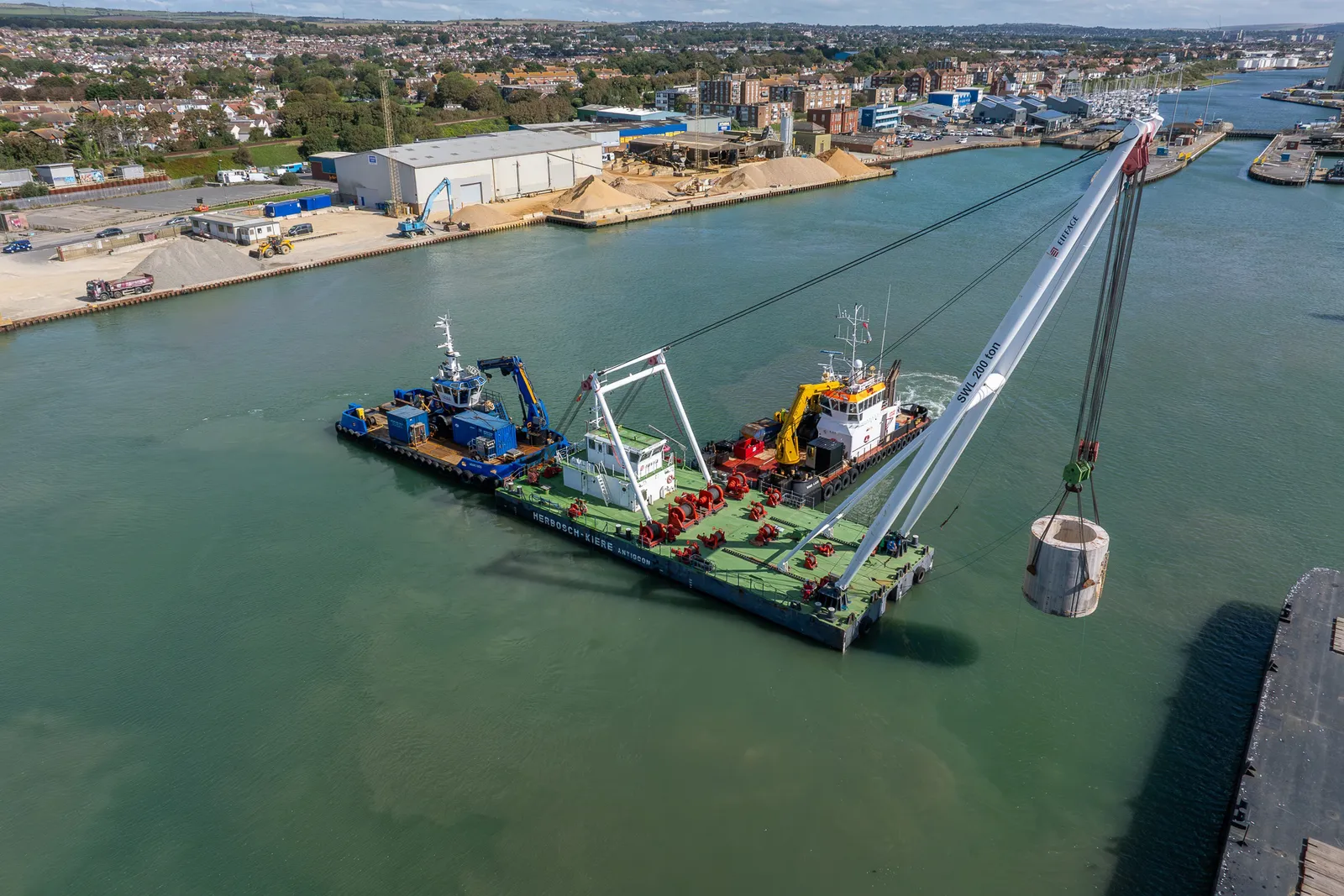
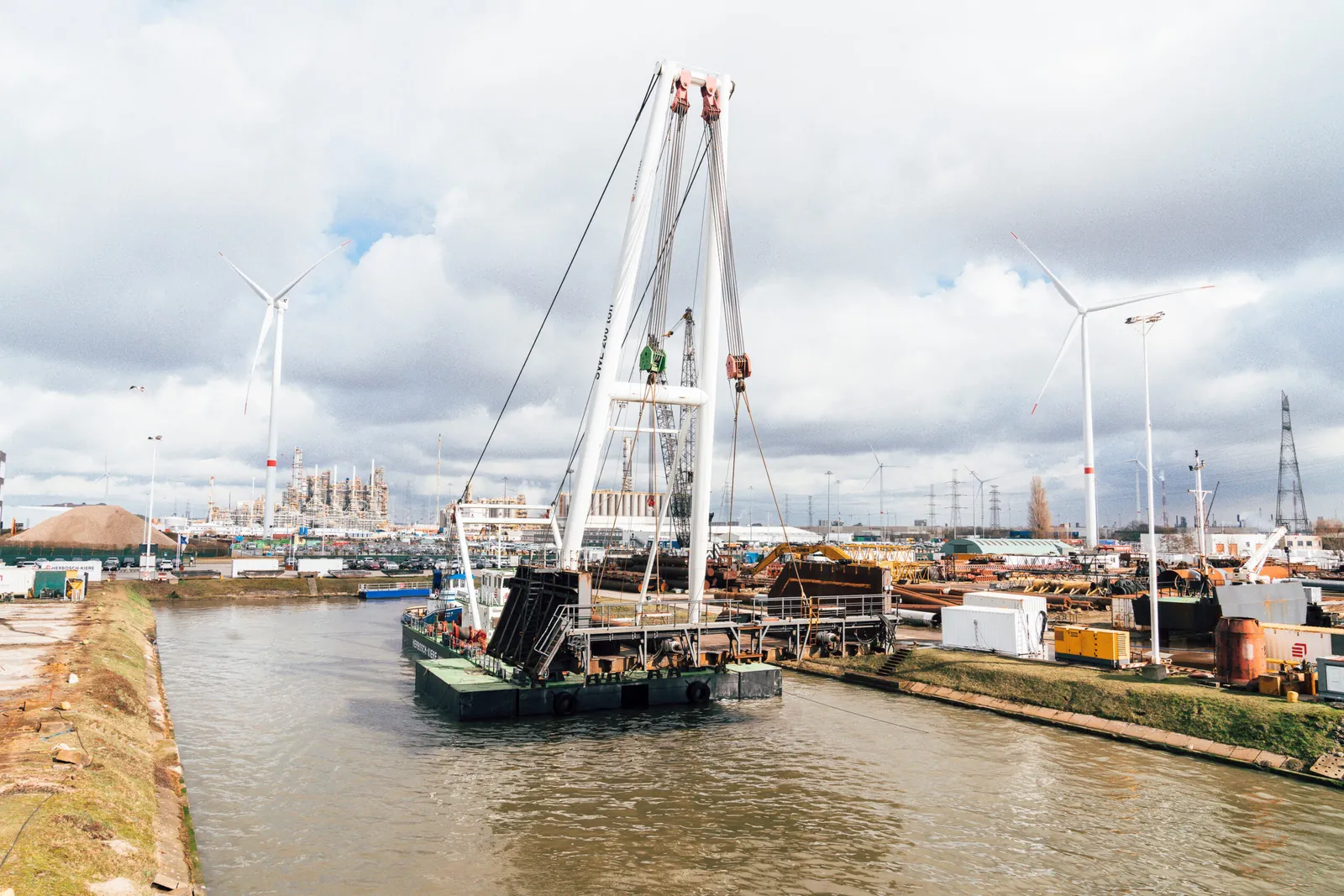
Although shipwreck recoveries often attract attention, they account for only part of Herbosch-Kiere’s activities. The company uses its pontoons, crane vessels and lifting equipment every day for a wide range of maritime projects. “We often deploy our equipment for piling, building quay walls and combi walls, and work on lock gates,” says Ameye.
Previous recoveries also demonstrate the versatility of the fleet. In 2023, Herbosch-Kiere helped with the delicate recovery of the JOGO 2 in Grembergen, on behalf of HEBO. The inland vessel was lying on its side on the bed of the Scheldt. The team righted it underwater, pumped it out, lifted it and prepared it for removal. In 2025, the company recovered the push-tug and tugboat Ina XL in the Port of Antwerp.
From Antwerp to international projects
A key advantage is the location of the company’s headquarters in the Port of Antwerp. This means both equipment and specialist staff can get to site quickly. “When an incident occurs, we can respond exceptionally quickly,” says Ameye. “That makes a big difference on urgent assignments.”
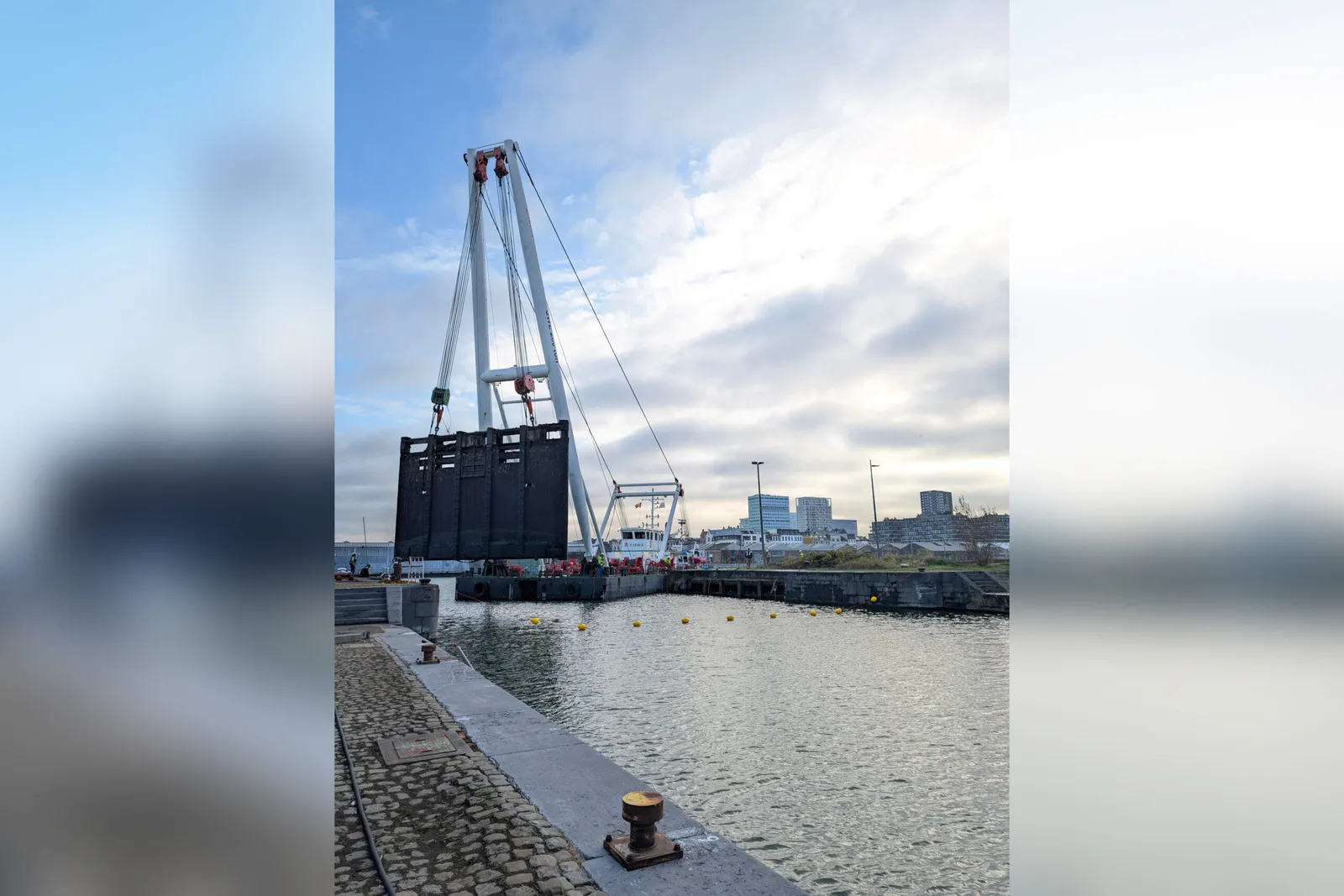
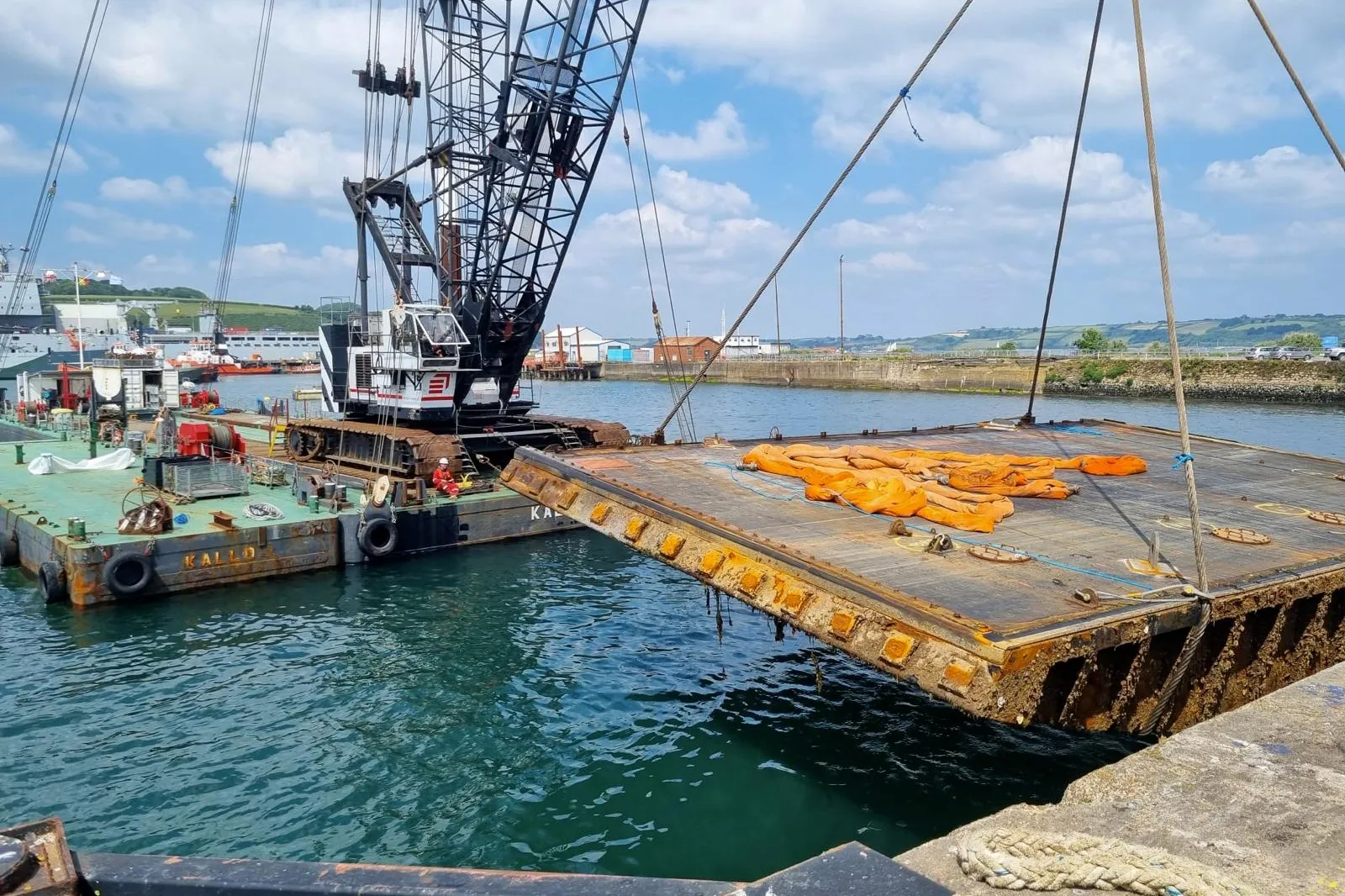
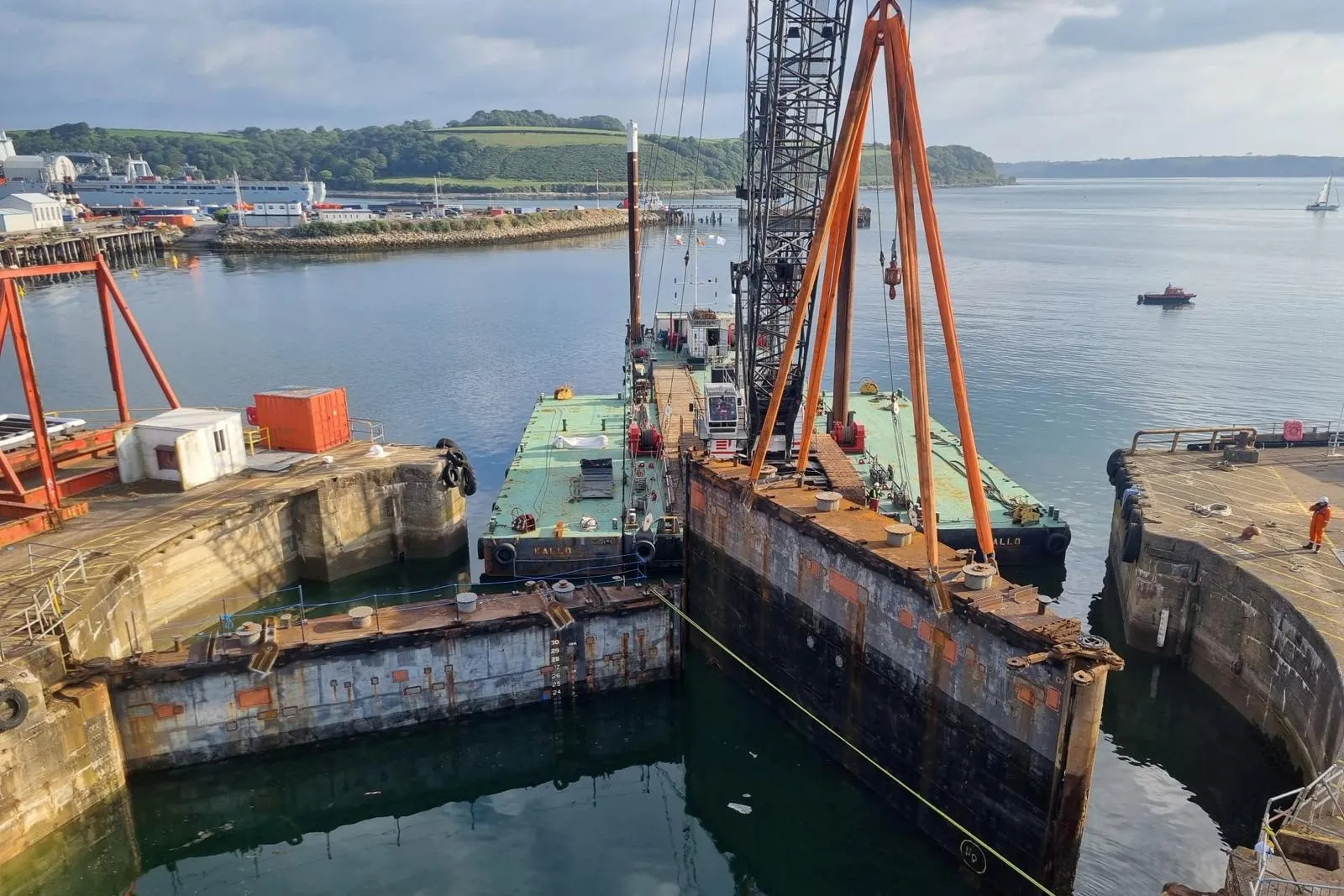
However, the company’s work is not limited to Belgium. Herbosch-Kiere recently supported the renovation of lock gates in Falmouth, UK. Using the crane vessel Waasland and the tugboat Mercia, two lock gates, each weighing 190 tonnes, were removed and later reinstalled. The biggest challenge was that the gates had to be set down 20 metres from the water’s edge, but thanks to the Waasland’s lifting capacity, the project was completed successfully.
According to Ameye, demand for heavy lifting is also growing rapidly. Since the announced retirement of the Brabo, Belgium’s largest floating crane, Herbosch-Kiere has received more enquiries for major projects in the Port of Antwerp. “With the Waasland, we can carry out lifts of up to 340 tonnes. That puts us in an excellent position to help meet some of this demand.”
Een zakelijke vraag aan Herbosch-Kiere? Get in touch
Companies in this story
Keep following this
Get an email when a new story is published. No account needed.
- ThemeStrengthening waterways and coastlines
- SubjectHydraulic engineering
- CompanyHerbosch-Kiere