Rail renewal tailored to a complex urban environment
Text Joris Hendrickx Beeld Frateur - De Pourcq
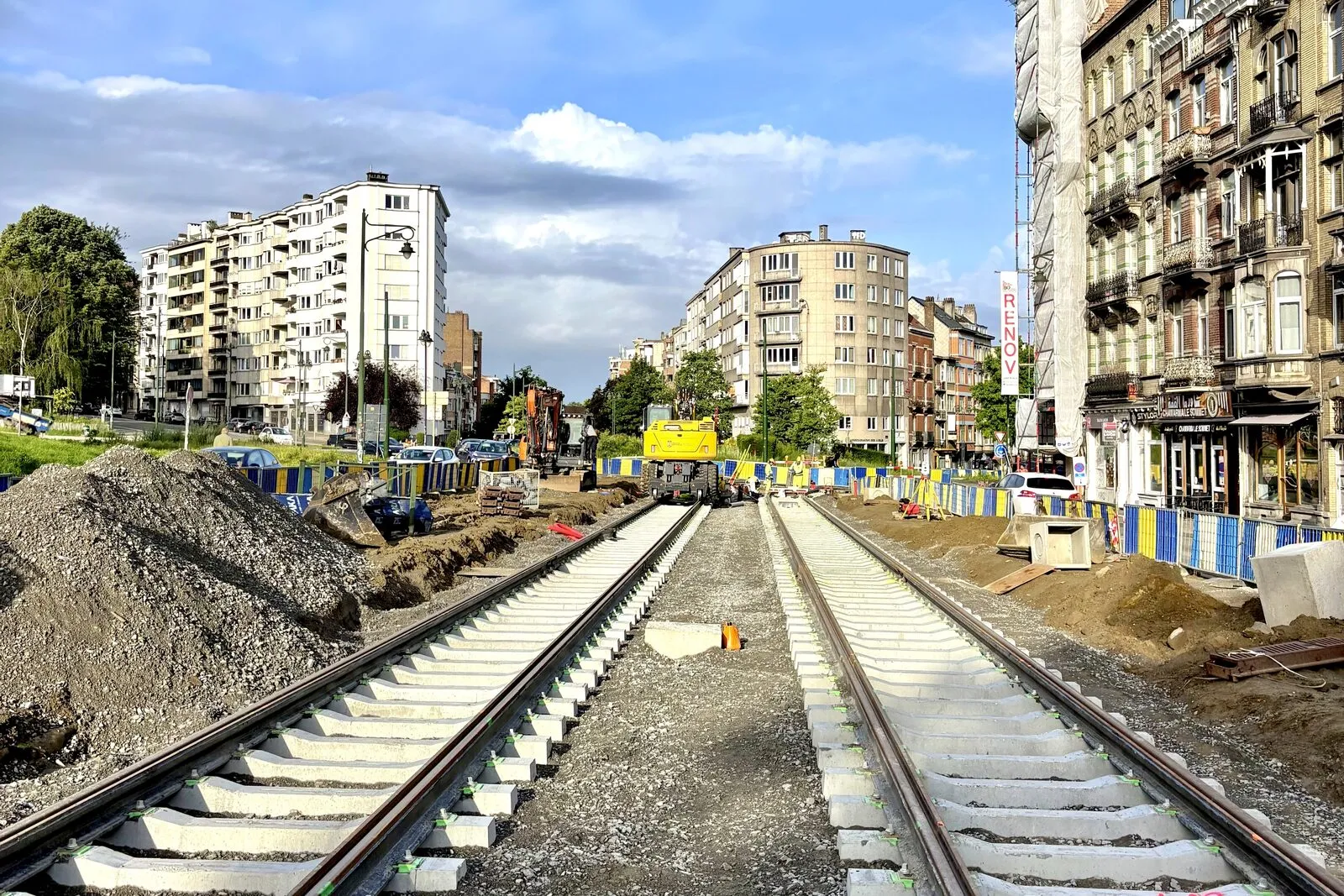
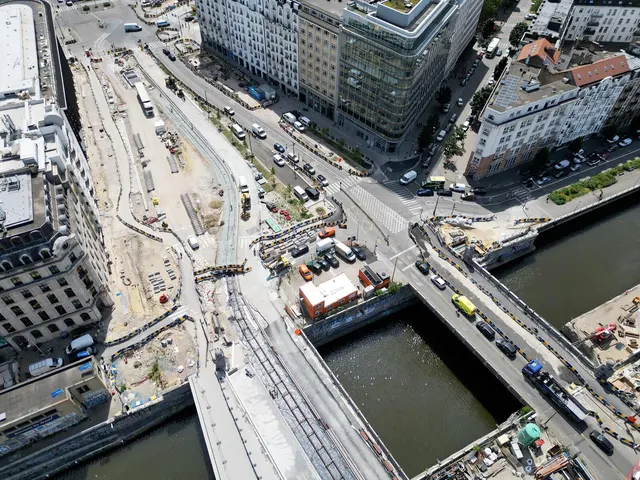
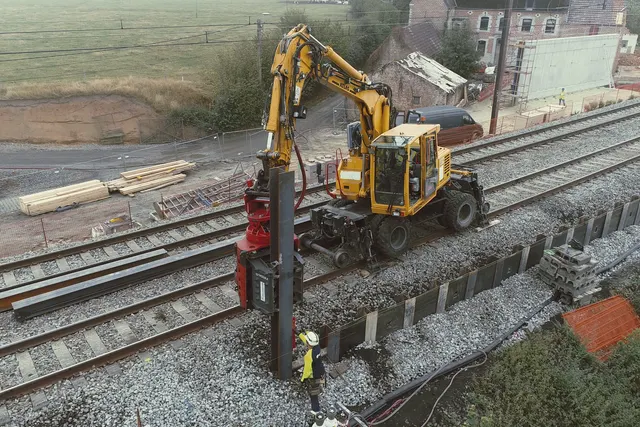
Four different tram track systems, new rainwater solutions and extra care for existing trees. The renewal of Brussels’ Parklaan presents Frateur, De Pourcq with a range of technical challenges. Notably, the track specialist is also carrying out most of the surrounding infrastructure works itself. “This gives us more control and allows us to respond to changes more quickly,” says technical director Jan Gillis.
More than just track works
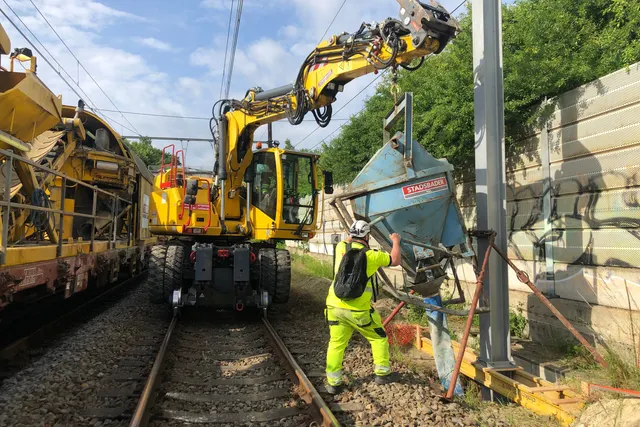
Frateur: De Pourcq has a long history in railway construction. The company has been operating since 1887 and employs around 20 office staff and 70 site workers. In addition to maintenance, it builds new lines, points, crossings and custom components. “One of our key strengths is our own fabrication workshop,” says Gillis. “That allows us to respond quickly to specific requirements.”
On Parklaan, the company is taking on a broader role. It is renewing not only the tram tracks, but also the surrounding infrastructure. Earthworks, kerbs and sewer connections are largely being carried out by its own teams. “We used to work with a roadworks contractor more often for this. Here, we have deliberately decided to do more ourselves. That gives us greater control and lets us respond to changes more quickly.” This flexibility proved useful from the outset. A number of crucial design elements were still changed at the start of the project.
Water and trees help shape the design
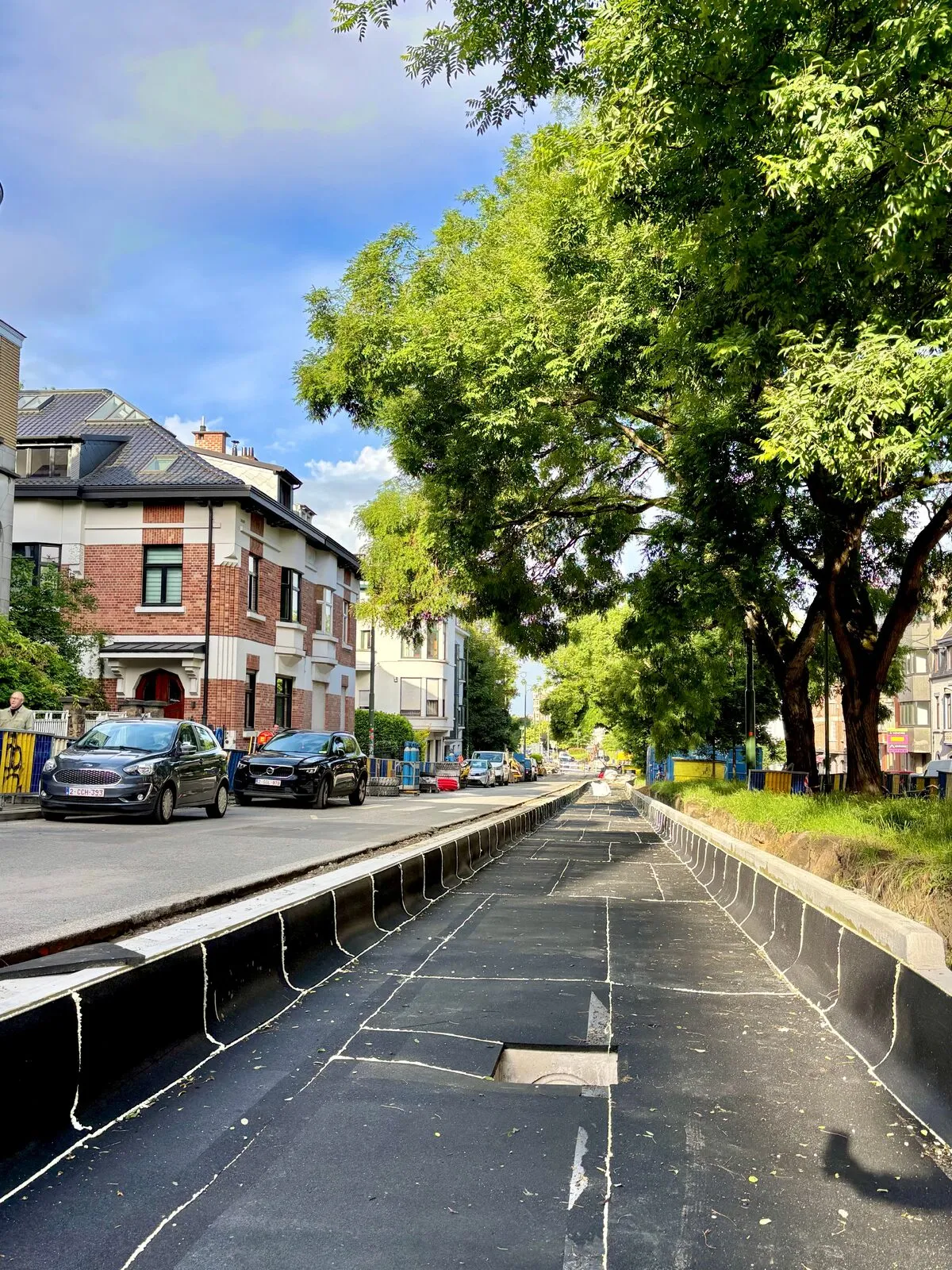
Climate adaptation plays a prominent role in the redevelopment. Rainwater must infiltrate on site as much as possible. Parklaan is therefore being fitted with swales and permeable paving, among other features. This choice even affects the kerbs. Together with a subcontractor, Frateur, De Pourcq developed a bespoke kerb. It forms a single monolithic unit and rises locally by around 30 centimetres. “Every metre, the kerb drops back to zero level and then rises again,” explains Gillis. “This allows us to direct the water towards the swales in a controlled way.”
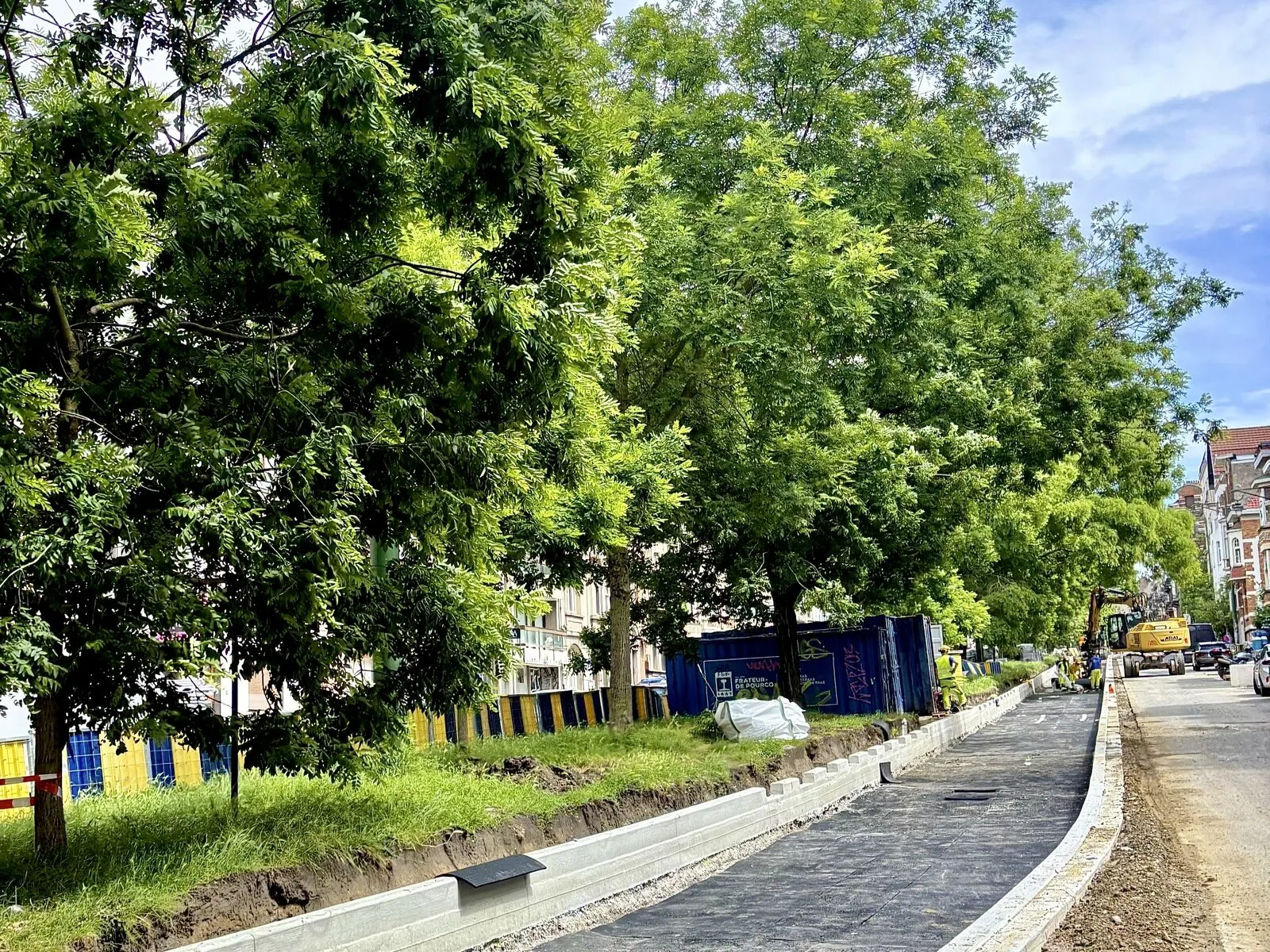
The existing trees also require a tailored approach. An arboricultural expert supervises excavation work close to the roots. The team first digs trial trenches. The expert then decides which roots are to be retained, protected or removed. “This has become much more important in recent years,” says Gillis. “Trees are highly valuable to their surroundings, and damage can have serious consequences. That is why we carefully assess in advance how we can carry out the work.”
Four track systems in one project
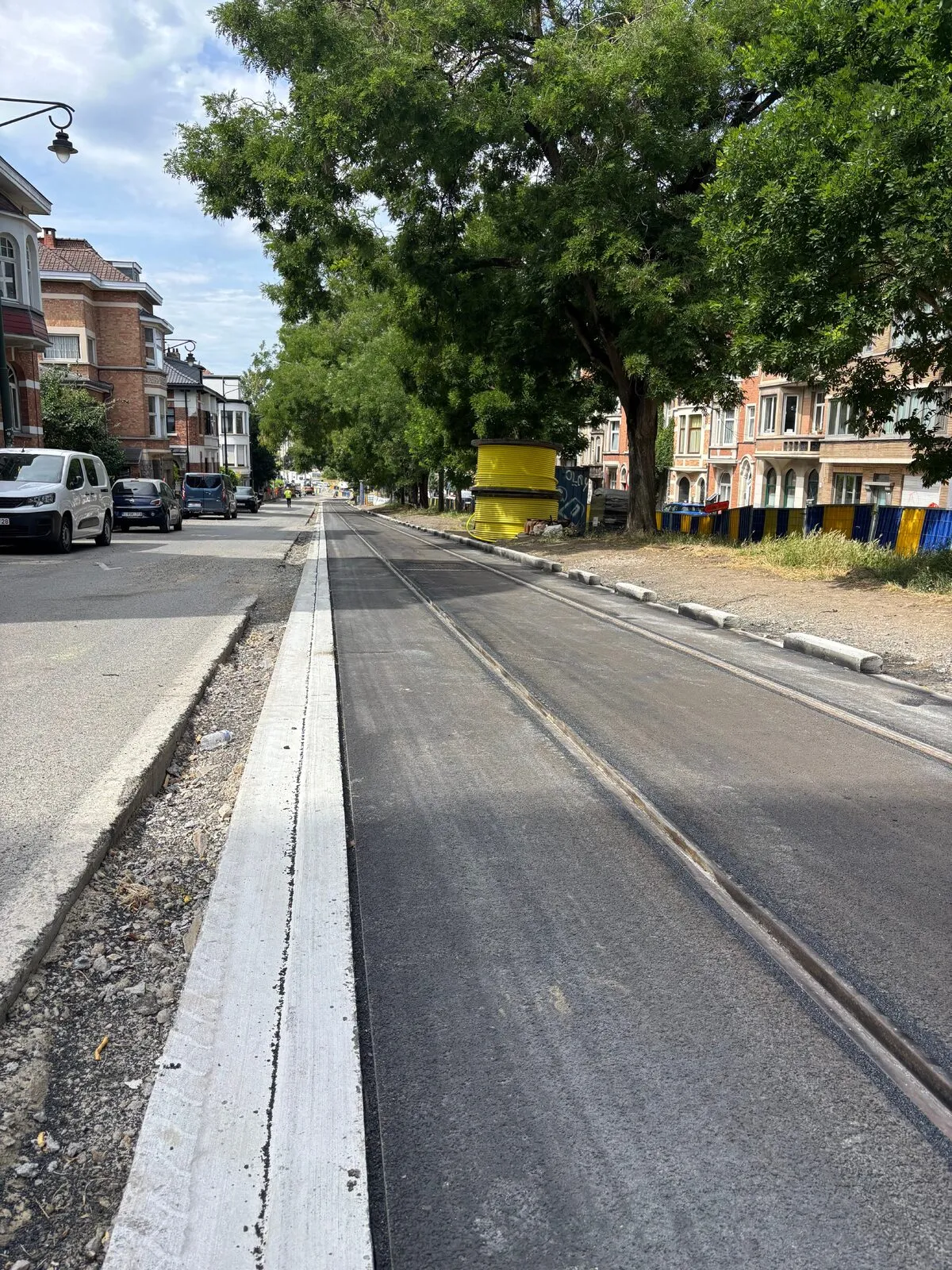
The Parklaan also leaves little room for standard solutions when it comes to track engineering. Frateur, De Pourcq is using four different systems on the project. The main differences lie in the fastening and installation methods. On the wider section of Parklaan, the homes are far enough from the tracks. A permeable track structure with a ballast bed, asphalt and a single vibration-damping mat is sufficient there.
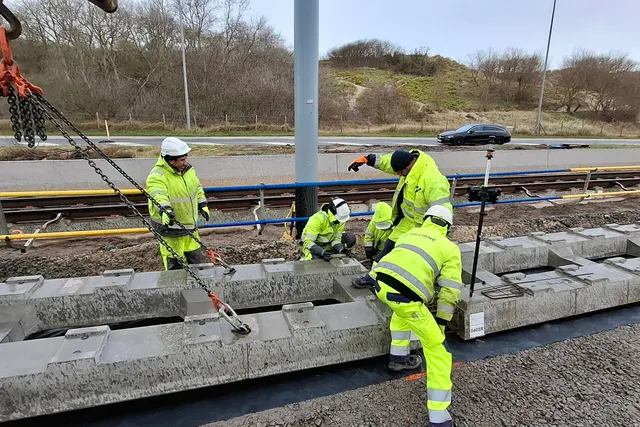
Further along, the street narrows. The proximity of homes there means vibrations need more attention. “We use a portal system with beams. The greater mass of concrete helps the vibration-damping mats work more effectively.” At Paul Dejaerlaan, the track also runs through natural stone paving. Prefabricated modules help position the stones accurately.
Complexity calls for strong coordination
Above and below ground, everything must fit together. MIVB, Vivaqua, utility companies, the region and the municipalities of Sint-Gillis and Vorst therefore coordinate their work continuously. “We are working here with many parties and a wide range of techniques,” Gillis concludes. “That combination calls for constant consultation and a strong ability to adapt. Everything is interrelated. But by carrying out more of the work ourselves, we can manage those interfaces and make adjustments more quickly when needed.”
Question about this story? Ask your question
Keep following this
Get an email when a new story is published. No account needed.
- ThemeFuture-proofing roads and railways
- SubjectRail engineering