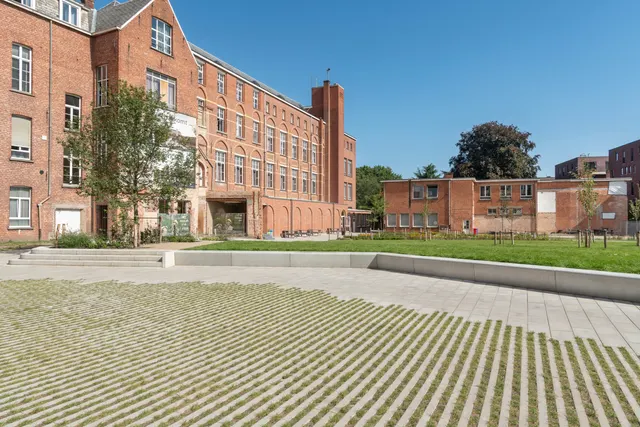
Sewerage & underground infrastructure
Paving takes on a second role as a water buffer
Text Kris Vandekerckhove Beeld ArtStone
A street must carry traffic, a car park must remain accessible and a playground needs space for children. At the same time, rainwater needs somewhere to collect temporarily and infiltrate into the ground. If an above-ground solution is difficult to fit into the design, infiltration blocks beneath the paving can offer a solution. With FluvioStone, ArtStone gives the same surface two functions.
When designing public and industrial sites, designers need to find space for mobility, parking, green space and water management. This is a particularly tricky puzzle on existing or compact sites. “FluvioStone is a solution when a wadi is not feasible,” says Jelene Verbruggen of ArtStone, summing up the rationale.
In her view, a wadi remains a strong option where conditions allow: it combines water management with greening. But a lack of space, sloping ground or restrictions on earthworks can sometimes call for a different approach. Underground infiltration then comes into consideration. This choice must always be justified in light of the specific project circumstances.
Making dual use of the available space
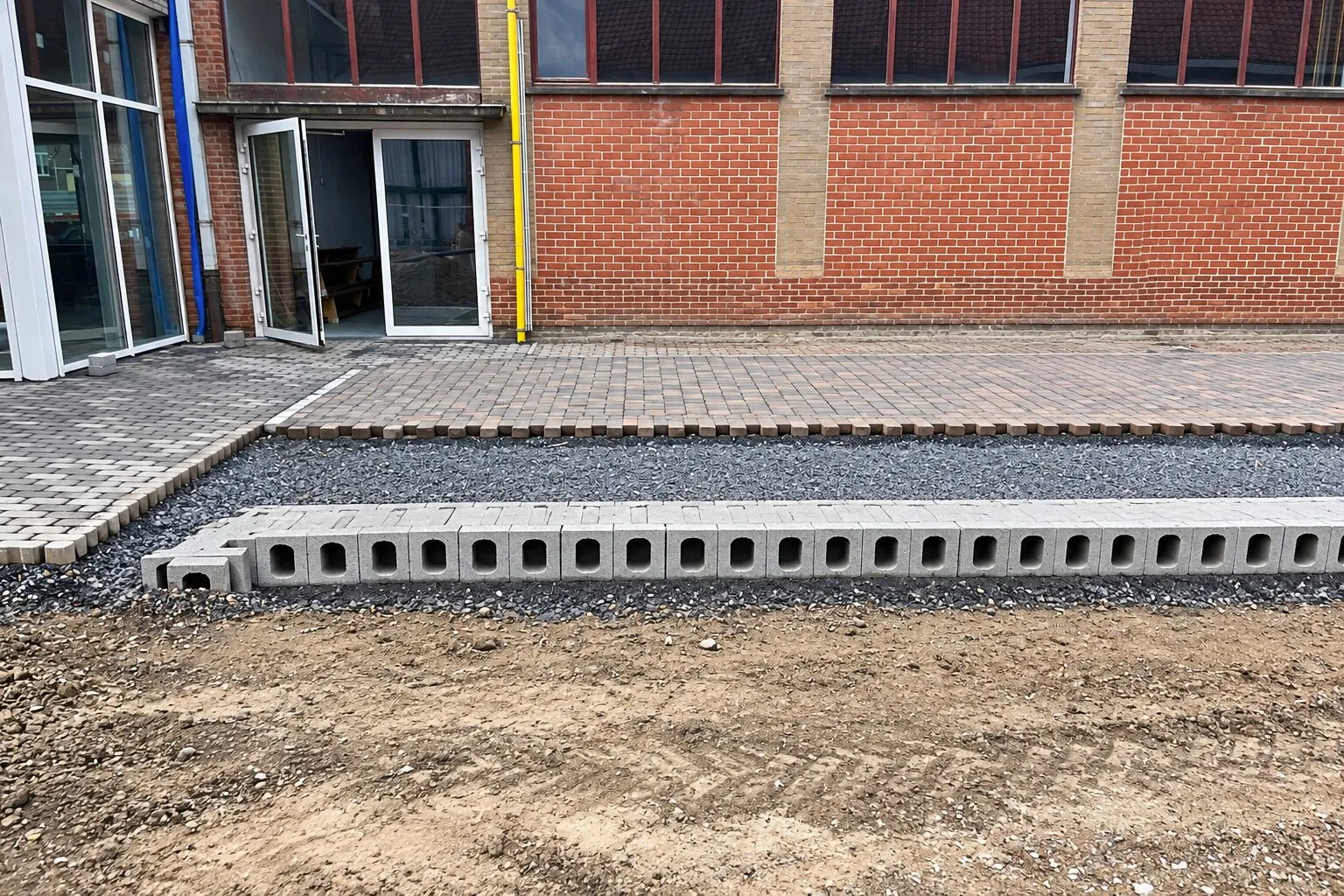
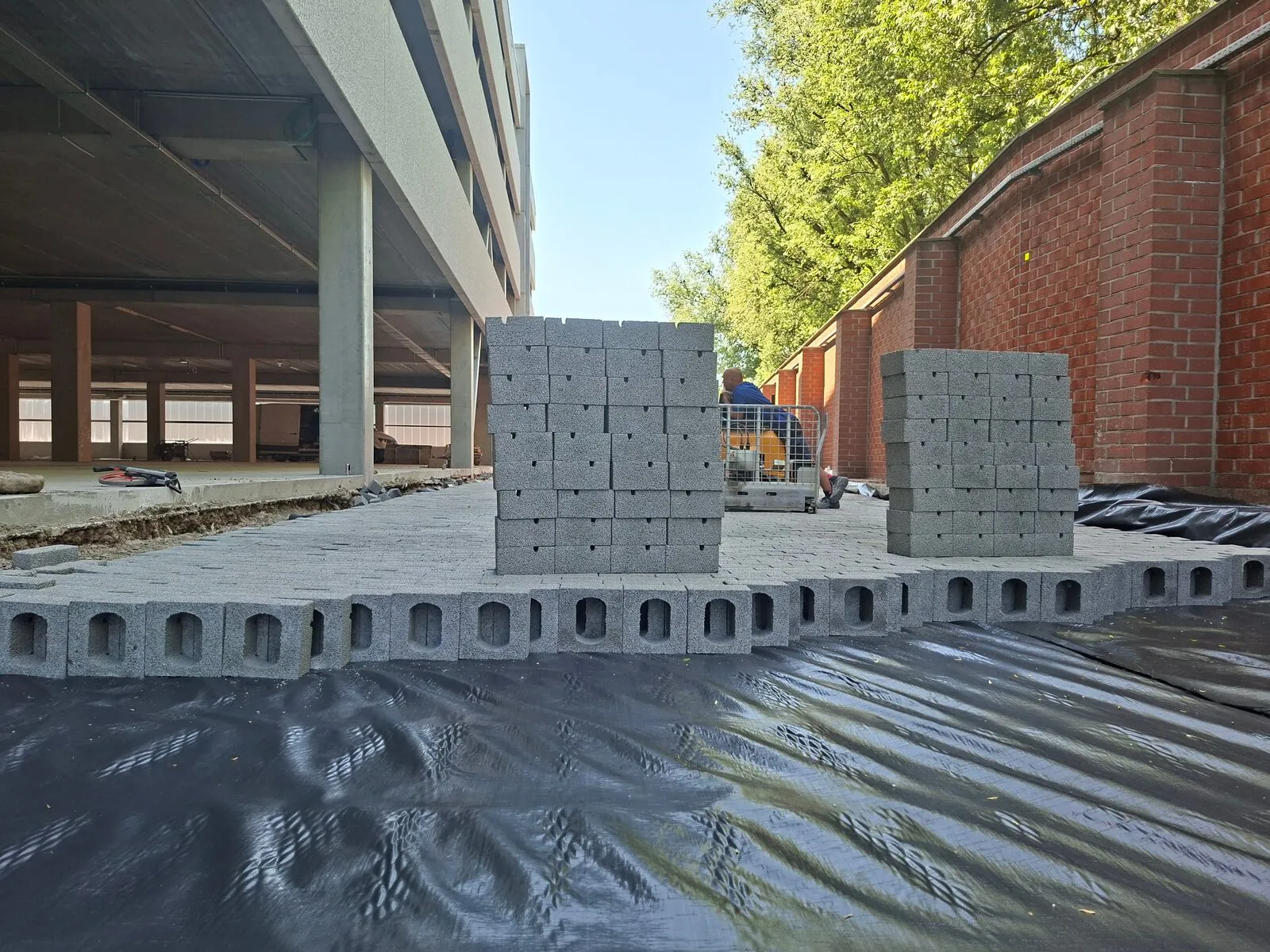
FluvioStone consists of concrete infiltration blocks installed beneath the paving. The system temporarily stores rainwater within the construction and then allows it to infiltrate into the underlying soil. No separate open area is needed.
This makes the principle particularly interesting for sites such as retail parks, where parking spaces and infiltration facilities compete for the same scarce space. The car park remains usable at the surface. Below it, the water has its place, rather like a wadi beneath the paving.
Depending on the chosen construction, the system can store up to 150 litres per square metre. This means infiltration blocks are not necessarily needed beneath the entire connected paved area. Roof water can also drain into the system. The design calculations determine how much surface area the facility requires for the project in question.
Less deep excavation
Excavation can also be a factor in the choice. Jelene points to sites where the removal of soil represents a significant cost, for example because of contamination. A shallower construction can then provide an answer.
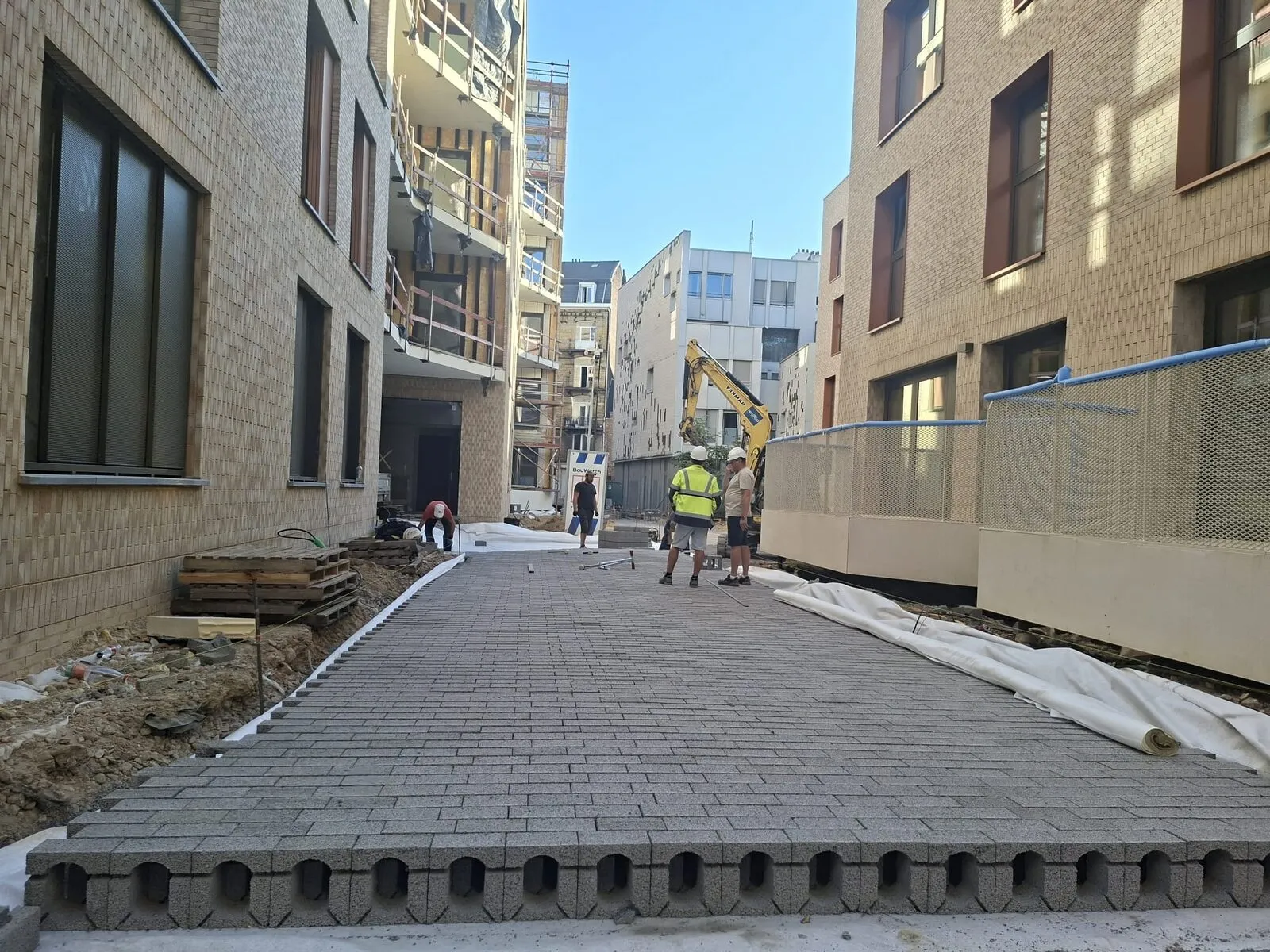
The infiltration blocks themselves are twenty centimetres high. The complete construction, including the paving and foundation, determines the total excavation depth. Verbruggen says: “In certain projects, an adapted construction can reduce earthworks compared with a more deeply excavated facility. The savings need to be assessed for each site.”
Also beneath heavily trafficked paving
Industrial sites and port environments bring another requirement: the pavement structure must withstand heavy traffic. If conventional permeable paving is not sufficient for the load, a sealed surface with an underground infiltration facility can provide a solution.
Jelene cites Nijverheidsstraat in Gavere. There, a channel system directs rainwater to the FluvioStone blocks below. The surface layer, a concrete slab, carries the traffic, while the substructure provides storage and infiltration. This requires a design that coordinates load-bearing capacity and water management.
“ArtStone supports designers and engineering consultancies with construction details, infiltration calculations and documentation to support their application,” Verbruggen continues. “This means water management can be taken into account early in the design.” The company also provides specification texts, standard profiles, cross-sections and DWG files for further design and construction.
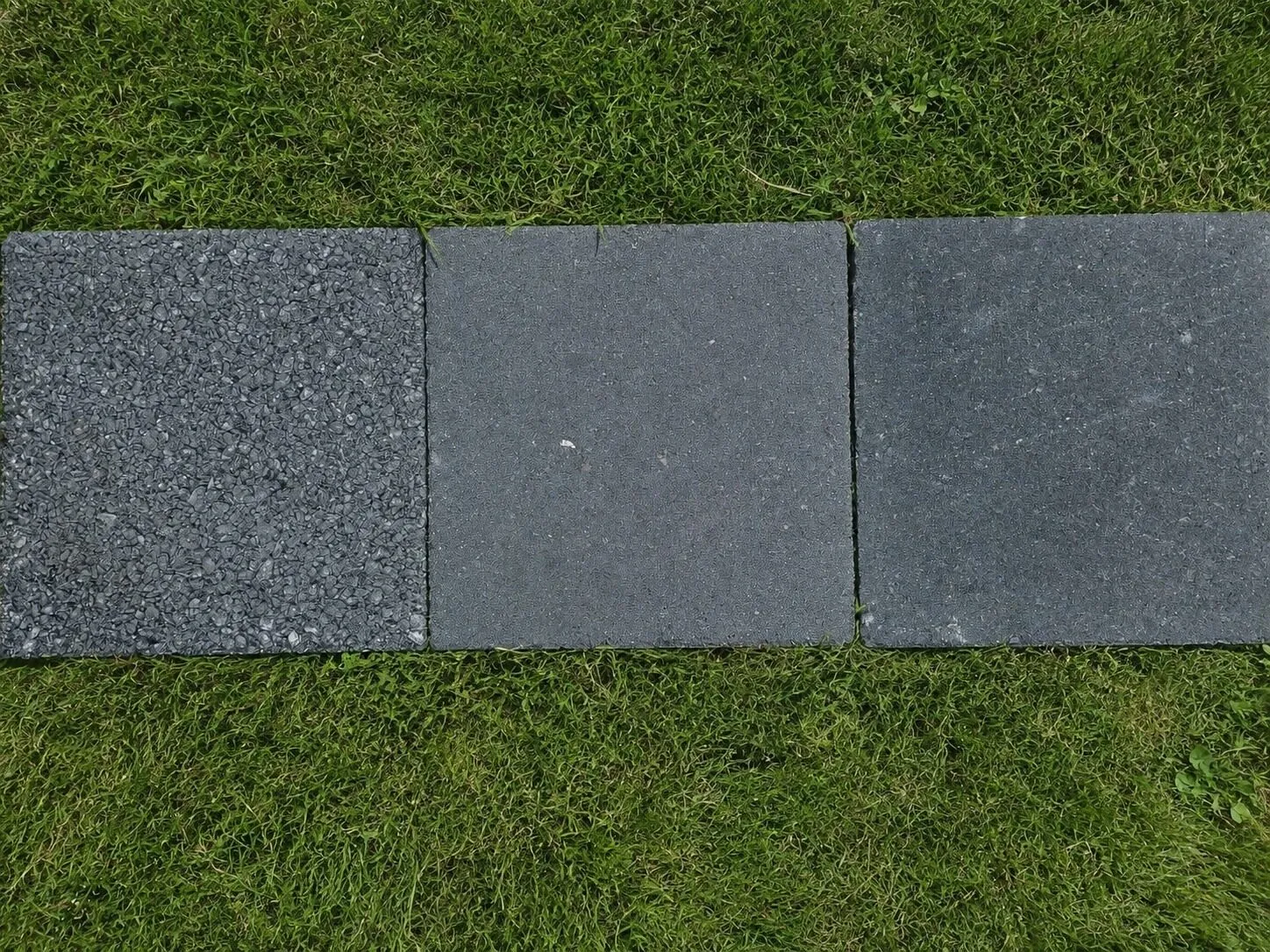
Fine finish, permeable pavers
Meanwhile, ArtStone is also upgrading the visible finish above the infiltration blocks. The family-owned company has invested 2.5 million euros in a new production department in Heusden-Zolder. This is expected to provide additional capacity for FluvioStone and will also produce the new TopDrain. This permeable paver can be used as the finishing layer on top of a FluvioStone construction. It combines a fine top layer with a specially adapted aggregate mix, allowing rainwater to flow straight through the paver. Wider joints are not needed. “We have managed to make the top layer so fine that it looks like, and actually looks even better than, an ordinary paver,” says Jelene Verbruggen. The two products therefore complement each other: TopDrain provides a neat, permeable finish, while the concealed FluvioStone blocks beneath it temporarily store the water and allow it to infiltrate into the ground.
Een zakelijke vraag aan Artstone NV? Get in touch
Companies in this story
Keep following this
Get an email when a new story is published. No account needed.
- ThemeSpace for water and green infrastructure
- SubjectSewerage & underground infrastructure
- CompanyArtstone NV