Hot-dip galvanised steel, the unsung force behind temporary and permanent bridges
Text and images Zinkinfo
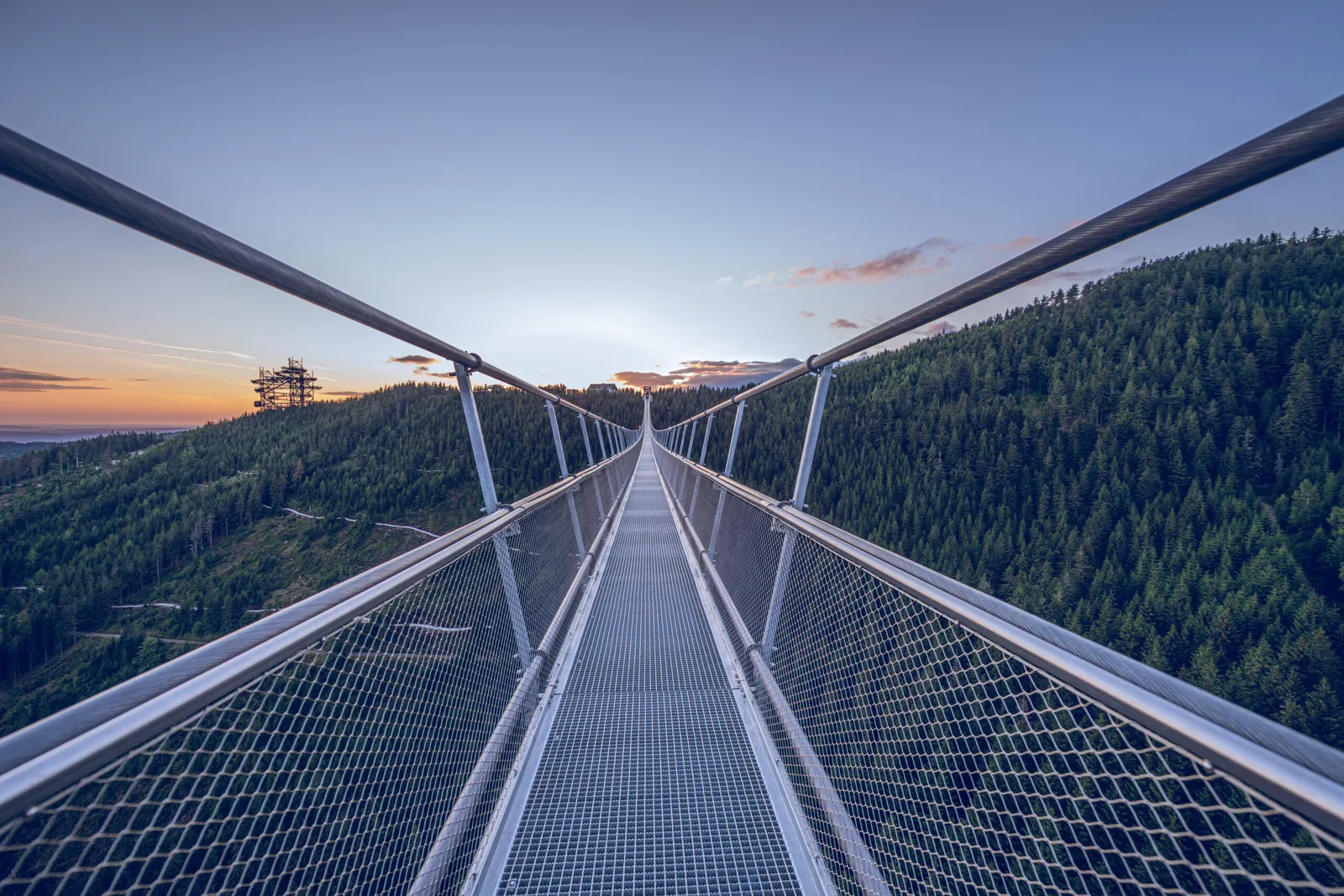
Durable corrosion protection reduces maintenance, costs and environmental impact
Balustrades, balconies, canopies and all kinds of street furniture, as well as safety barriers, lighting columns and traffic gantries, are familiar examples of how batch hot-dip galvanising maximises the service life of steel components in our everyday streetscape.
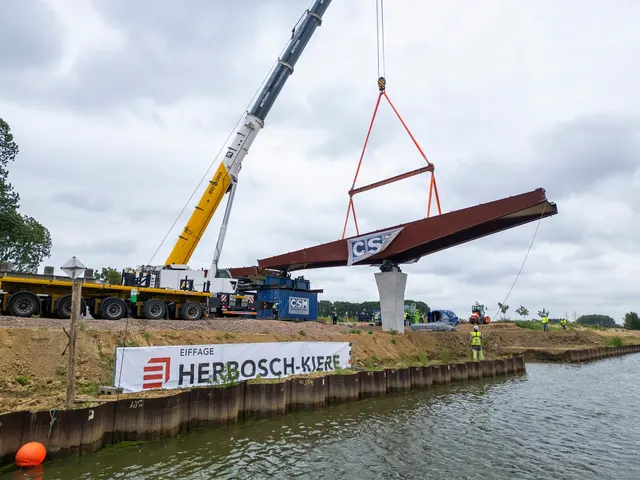
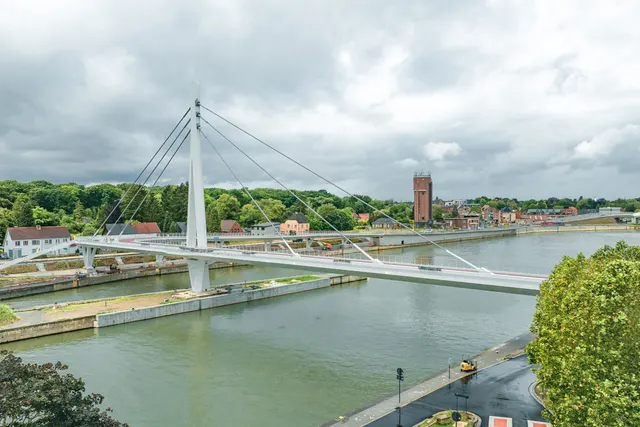
Bridges are also particularly well suited to this form of corrosion protection, provided designers take account of certain requirements, such as the dimensions of the zinc baths into which components must be immersed. Durable corrosion protection is particularly essential for bridges, given the considerable impact that repeatedly repainting the steel has on the Total Life Cycle Cost and the environment.
Hot-dip galvanised steel is also virtually maintenance-free. Repeated repainting of steel components is eliminated, along with the associated impact on mobility and road safety.
Rijkswaterstaat selects hot-dip galvanising as its preferred option
In the Netherlands, Rijkswaterstaat has recently comprehensively revised its Handreiking Duurzaam Staalconserveren. In the new version (2.0, July 2025), hot-dip galvanising has now, entirely rightly, been included as the first and preferred option for protecting steel structures.
According to the new decision-making framework, hot-dip galvanising is the most sustainable choice where technically feasible. It has the lowest environmental impact over a structure’s entire service life and performs better than metal spraying or paint systems. The change follows extensive research, to which ZinkInfo actively contributed with robust data on circularity, service life and environmental effects.
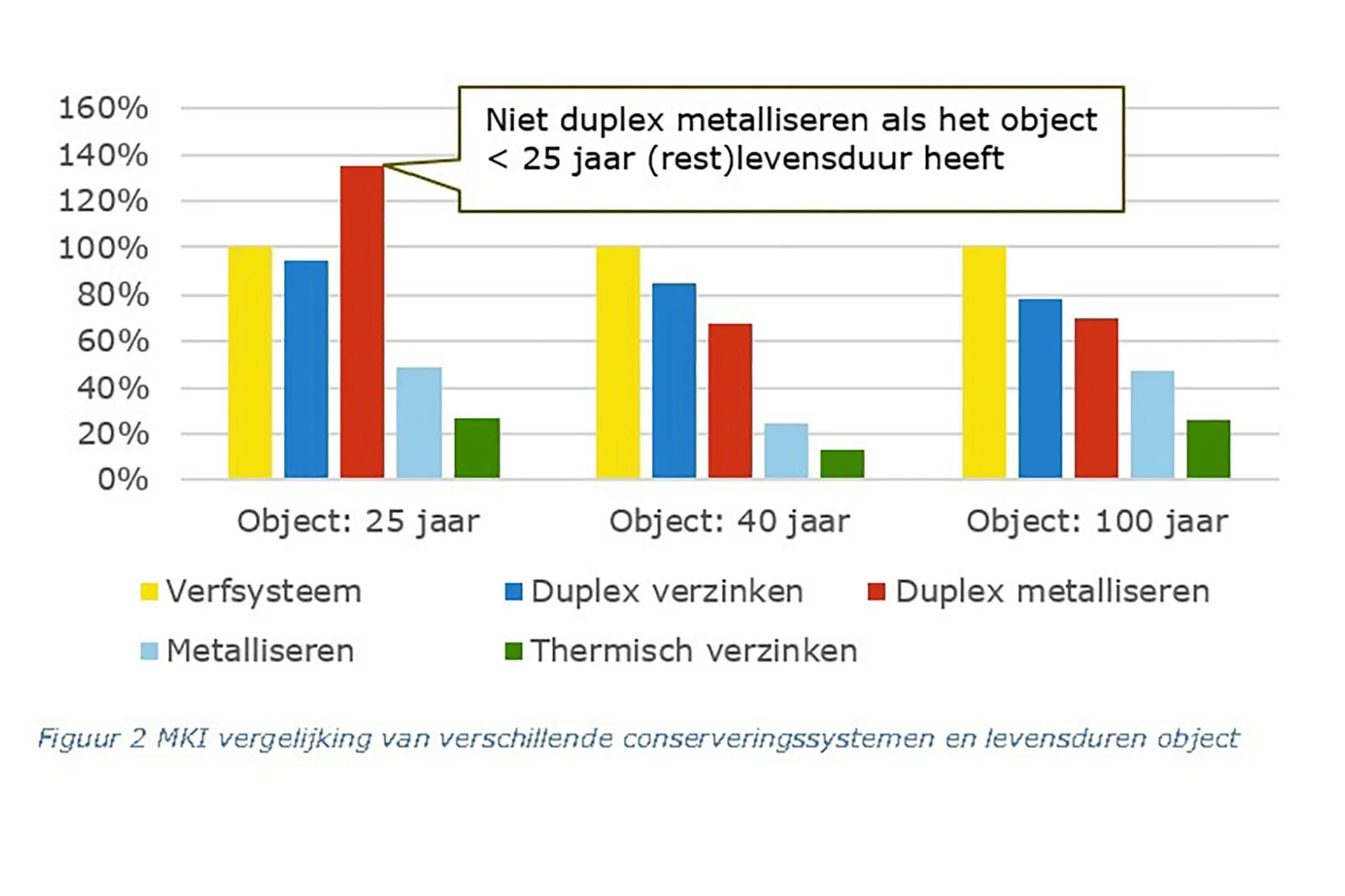
MKI comparison confirms sustainability benefits
The chart alongside shows the MKI comparison between different protection systems suitable for steel structures exposed to atmospheric conditions. Paint systems are used as the baseline, with a value of 100%. A higher percentage indicates a less sustainable system, while a lower percentage indicates a more sustainable alternative to paint.
The MKI value depends on the service life of the structure:
- Left: service life of 25 years
- Centre: service life of 40 years
- Right: service life of 100 years.
In all three scenarios, hot-dip galvanising performs noticeably better than the alternative protection systems.
Ideal for modular and temporary bridges
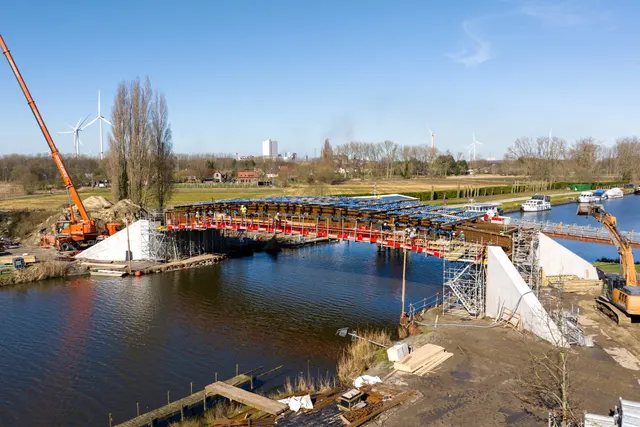
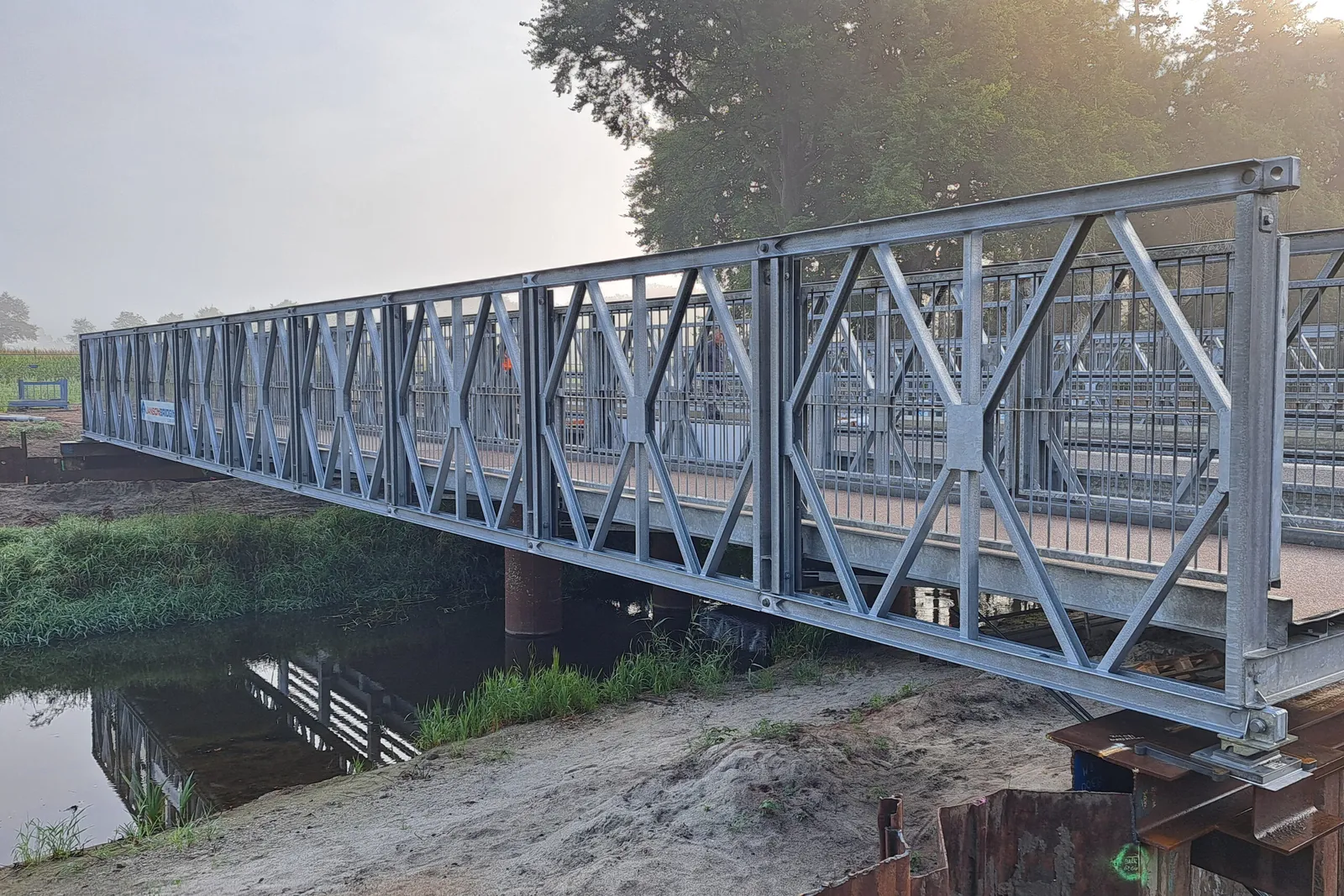
A prime example of the benefits of hot-dip galvanising in bridge construction is the temporary modular bridges that companies such as Janson Bridging have been hiring out or selling to public and private clients worldwide for decades.
Galvanising is an ideal fit for a demountable system. Modular bridges are assembled using bolted connections and require components that can be reused and remain robustly protected. Compared with painting, galvanising is considerably more durable: paint is more easily damaged during assembly and dismantling, while a zinc coating is better able to withstand knocks.
Temporary bridges are also often used in wet, remote or aggressive environments where maintenance is difficult to carry out. In such conditions, hot-dip galvanising offers significant benefits. What is more, some ‘temporary’ bridges remain in use for years or even permanently. In that case, reliable, long-lasting protection is indispensable.
To find out more about the benefits and considerations of hot-dip galvanised steel in bridge construction, watch the webinar “Verzinkt staal in de bruggenbouw, een no-brainer” at www.zinkinfobenelux.com.
Have a business enquiry for ZINKINFO BENELUX? Get in touch
Companies in this story

Keep following this
Get an email when a new story is published. No account needed.
- ThemeExtending the life of bridges and tunnels
- SubjectBridges & tunnels
- CompanyZINKINFO BENELUX