Geotextiles: the most sustainable solution for infrastructure projects
Text Niels Rouvrois Beeld Beaulieu Technical Textiles
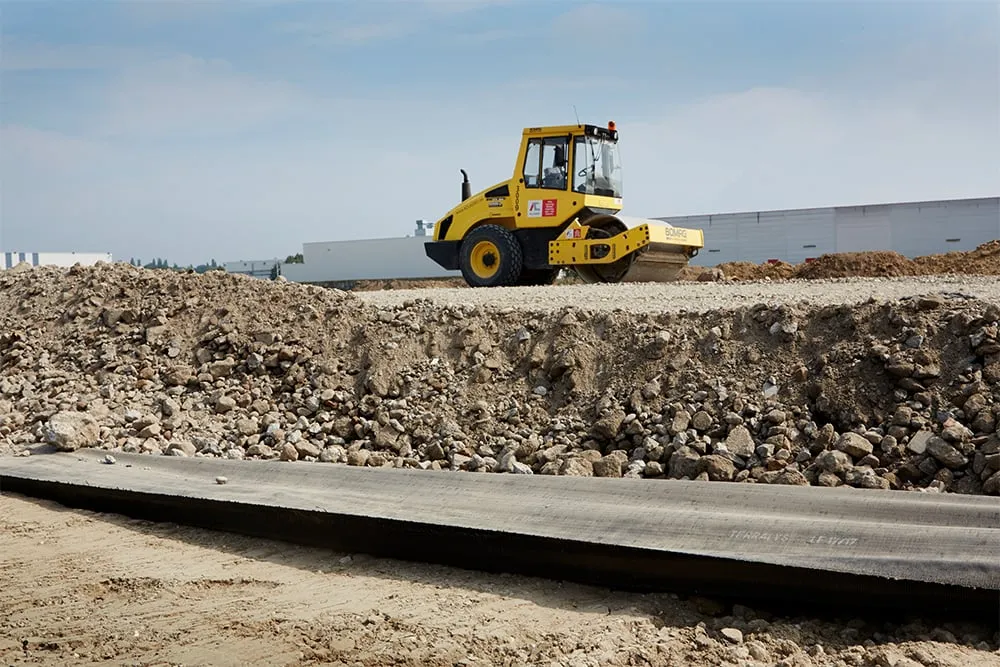
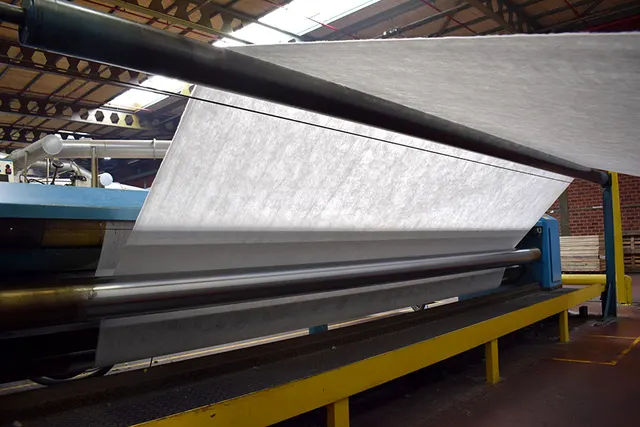
Beaulieu Technical Textiles, part of Beaulieu International Group, has long been a renowned global reference point for geotextile solutions. It is no surprise that geotextiles are becoming increasingly established in the infrastructure sector. Their sustainability credentials, both in terms of environmental impact and service life, are undeniable. “A recent study showed that we could replace 960 lorry loads of crushed stone with 3 lorry loads of woven geotextile and achieve the same result. That represents a huge environmental benefit,” says Francis Denoo, sales manager geotextiles at Beaulieu.
Beaulieu’s woven geotextile has one of the lowest carbon footprints in the sector. This makes it one of the most sustainable solutions for civil engineering projects, particularly compared with conventional materials. The use of polypropylene, a lightweight and recyclable material, helps significantly reduce environmental impact. Production is also optimised by avoiding fossil fuels and using electricity generated largely by solar panels. An in-house recycling line ensures that all waste is reused, demonstrating that sustainability is not just a product feature for Beaulieu, but is deeply embedded in the company’s DNA.
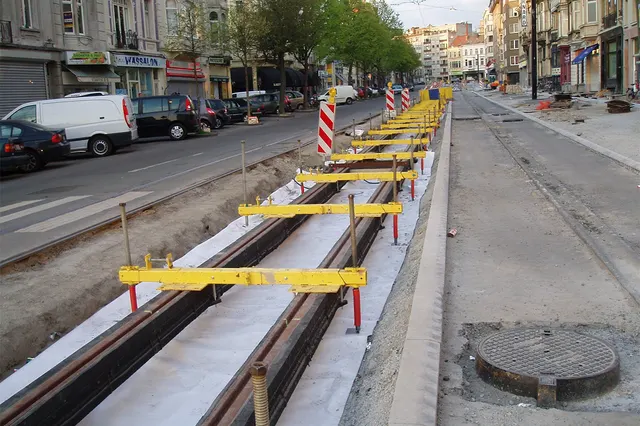
Beaulieu’s woven geotextiles are versatile, making them ideal for separation, filtration, reinforcement and erosion control. With a carbon footprint ranging from 0.37 to 1.40 kg CO2 eq/m², Beaulieu’s products not only reduce environmental impact but also contribute to more efficient use of natural resources, supporting more sustainable infrastructure development. Geotextiles are therefore rapidly gaining ground in the infrastructure sector, driven by growing recognition of their sustainability benefits. Francis Denoo says: “Geotextiles have become increasingly popular in the infrastructure sector in recent years. Their use is clearly becoming more widespread in major infrastructure projects worldwide. A major reason for this is undoubtedly their sustainability credentials. A case study at Ostend-Bruges Airport, where 150,000 m² of asphalt was renewed, showed a significant reduction in CO2 emissions by replacing the transport of 960 lorry loads of gravel with 3 lorry loads of woven geotextile. Those are substantial figures.”
EPD and a 100-year service life
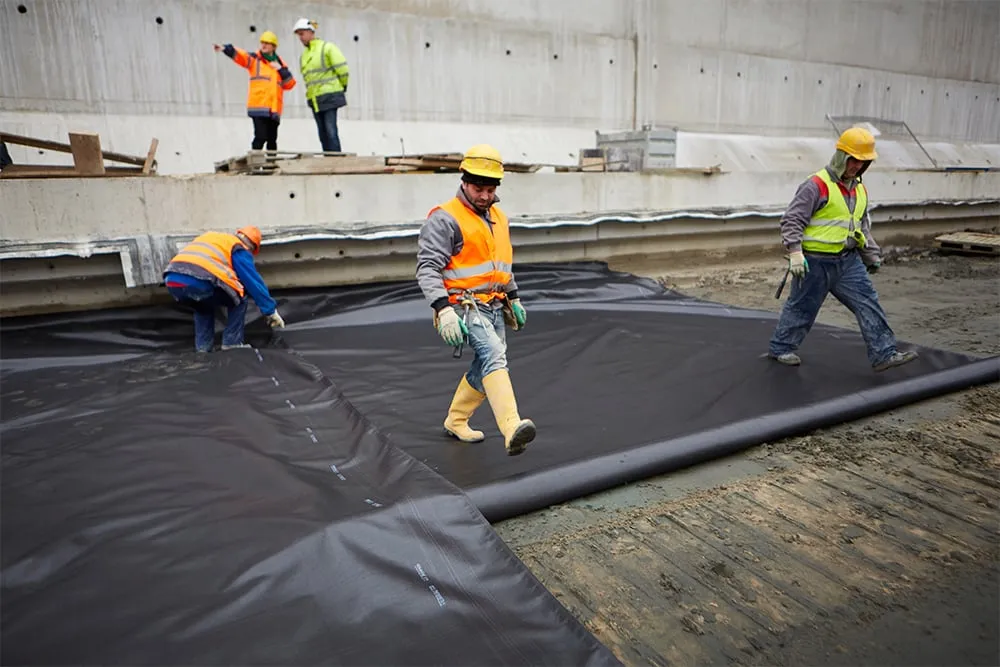
Technical textiles such as geotextiles are not just pieces of fabric. They are engineered products that meet stringent standards and are suitable for a range of applications. Beaulieu focuses primarily on geotextiles, and its R&D team works closely with customers to develop innovative, environmentally friendly solutions. “Our products also come with an EPD (Environmental Product Declaration),” says Simon De Meyer, product manager at Beaulieu. “This transparency is crucial for Beaulieu. It can carry considerable weight in tenders, where sustainability will only become a more important evaluation criterion in the future.”
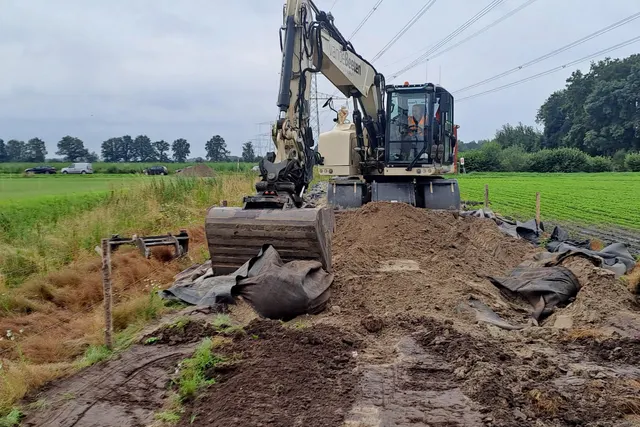
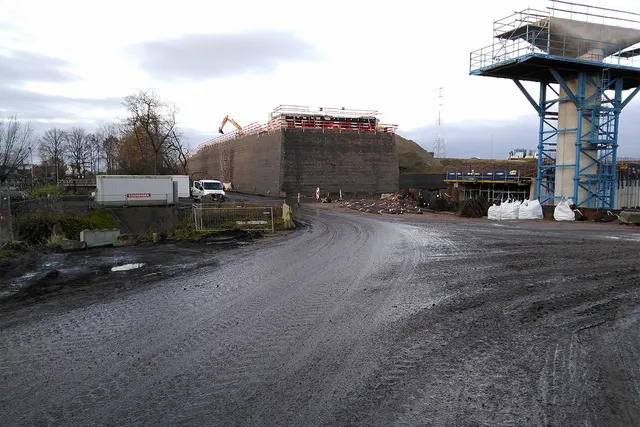
Beaulieu’s strong commitment to product innovation is reflected in its international R&D collaborations with leading institutions and organisations such as Copro, BGS (Belgian Geosynthetics Society), ATA (Advanced Textiles Association), Centexbel, EAGM (European Association of Geosynthetic product Manufacturers) and IGS (International Geosynthetics Society). The result is a range of woven geotextiles offering exceptional quality, durability and versatility. Francis Denoo says: “All our products have a service life of 100 years. Unfortunately, not all infrastructure lasts that long, but this does mean our product cannot be the cause of premature repairs. We are currently investigating the possibility of recovering and reusing our fabrics. We are working with some of our customers on the wider issue of waste management. Geotextiles, for example, are often used for temporary site roads. We are now looking for the best way to recover the fabric afterwards.”
The strength of woven geotextiles
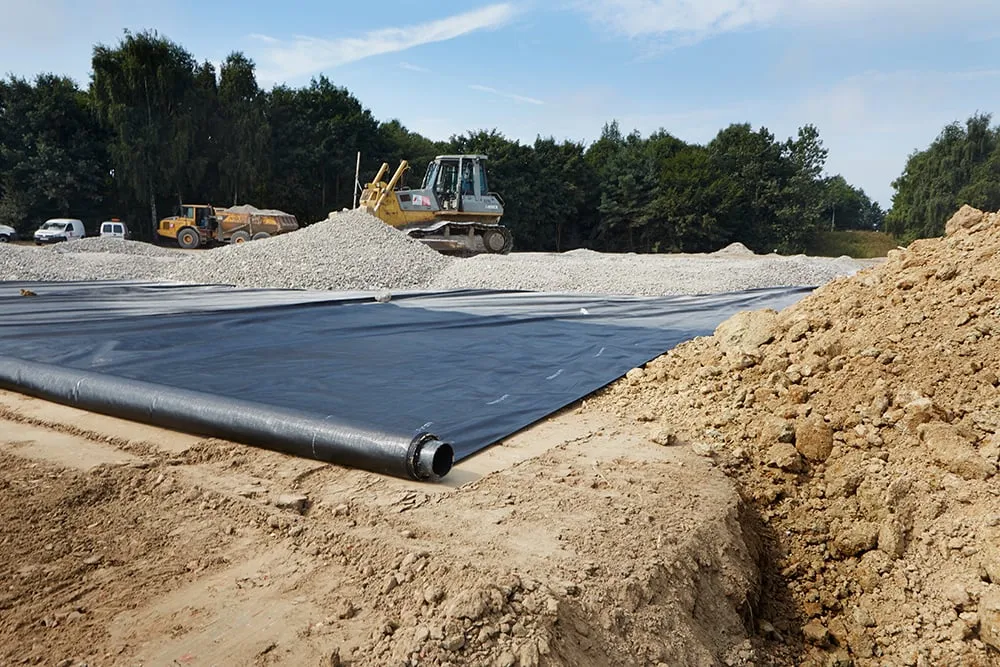
The choice between woven and non-woven fabrics depends on the application and technical requirements. In some cases, either product can be used, while for other applications the choice is clear. Simon De Meyer says: “Where tensile strength is the key parameter, woven fabric usually comes out on top. Woven fabric is proven to be much stronger than non-woven fabric at the same weight. This means you can save up to 50 per cent on raw materials while achieving the same tensile strength. Using less material also means less transport, particularly when compared with the quantity of crushed stone needed to achieve a similar result. This also has a positive effect on microplastic pollution, since tyres are a major source of microplastic dispersal.”
Local supply
Beaulieu has a network of specialist distributors across Belgium. “Having our product close at hand is an important factor for many contractors and clients. Environmental awareness is growing among contractors and clients. Materials such as crushed stone are becoming scarcer and more expensive, and sometimes have to be transported over long distances. That makes choosing sustainable, environmentally friendly local geotextile solutions an easy decision,” concludes Francis Denoo.
Een zakelijke vraag aan Beaulieu Technical Textiles? Get in touch
Companies in this story

Keep following this
Get an email when a new story is published. No account needed.
- ThemeMaterials with a lower environmental impact
- SubjectGeotextiles
- CompanyBeaulieu Technical Textiles
- CompanyCopro