First tunnel tube takes shape at Oosterweel interchange site
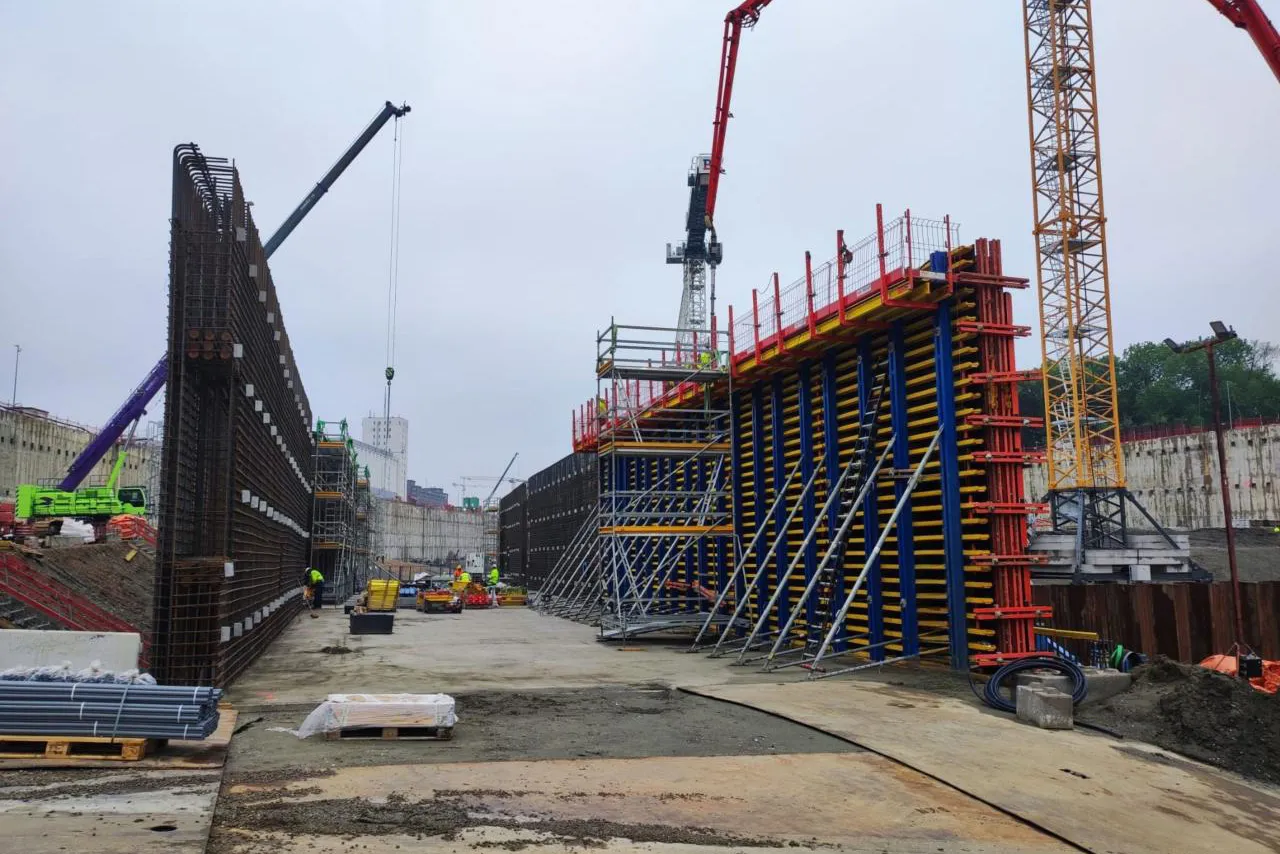
Work on the Oosterweel interchange, the future junction at Noordkasteel, is entering a new phase. Following the first floor slabs, the first walls have now also been poured. This means the first outline of a tunnel tube is becoming visible on site. The Oosterweel interchange will be a crucial junction in the Oosterweel connection, completing the Antwerp Ring. The Scheldt Tunnel and the Canal Tunnels meet here. Together, they form a complex web of tunnels and slip roads connecting the Ring directly to the port and the city.
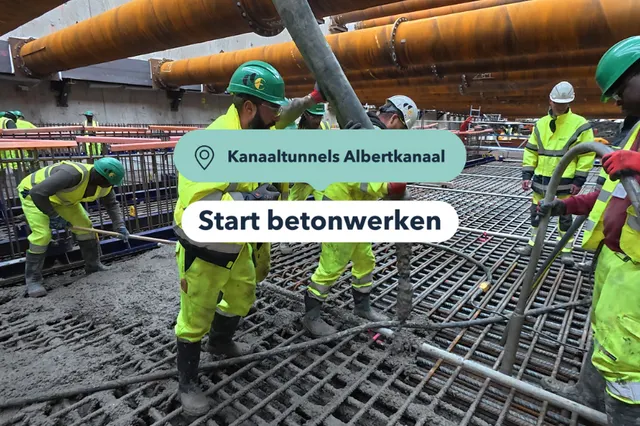
At the Oosterweel interchange site, contractor Rinkoniên Oosterweelknoop* is working in phases across several zones, and this is gradually becoming visible on site. After the first tunnel floor slabs were poured, the first concrete walls were also cast this week. The outline of a tunnel tube is now taking shape for the first time.
First tunnel walls on route from the Netherlands to the Scheldt Tunnel
This is the tube for traffic coming from the Netherlands via the Canal Tunnels and continuing towards Linkeroever through the Scheldt Tunnel. At this stage, the site shows the reinforcement strengthening the concrete walls, as well as the formwork into which the concrete is poured.
Efficient construction
At the same time, the site is being equipped with the infrastructure needed to keep construction running efficiently over the coming years. The first rail-mounted tower crane has entered service, moving around the site to transport reinforcement and formwork to different locations. A total of ten of these cranes will be used to build the various tunnel tubes. The concrete is supplied directly from the site’s own batching plant, which was purpose-built to avoid additional lorry traffic. An estimated 40,000 lorry journeys will thereby be saved.
Smart separation of traffic flows
The Oosterweel interchange distributes all the main traffic flows to and from the city, the port and the Ring. Traffic coming from the Canal Tunnels, whether from the Netherlands or from Ghent/Brussels, can continue from here towards Linkeroever through the Scheldt Tunnel, or turn off towards the port and the city. In the other direction, road users coming from Linkeroever can rejoin the Canal Tunnels towards the Netherlands or Ghent/Brussels, or leave the Ring. Traffic from the port also gets a direct connection to these routes via the interchange.
Giving each of these traffic flows its own tunnel tube avoids vehicles having to cross one another’s paths. This makes traffic flow safer and smoother, but also makes construction technically very complex. At its widest point, the interchange will have eight separate tunnel tubes, each carrying a specific traffic flow.
Question about this story? Ask your question
Keep following this
Get an email when a new story is published. No account needed.
- ThemeExtending the life of bridges and tunnels
- SubjectBridges & tunnels