Electrification of De Lijn: bespoke solutions for firewater containment
Text Deschacht / Niels Rouvrois Beeld Deschacht
The Flemish Government has a clear ambition: public bus transport must be completely emission-free by 2035. De Lijn is fully committed to this transition with an extensive electrification plan. This involves not only purchasing 3.430 electric buses, but also upgrading 138 depots with the necessary charging infrastructure. For this large-scale conversion, De Lijn is working with Equans, its partner responsible for electrifying and managing the depots. Collinet, a sister company of Deschacht, was called on for its expertise in containing firewater in the event of incidents involving electric buses.
Electrifying depots brings new challenges, including containing firewater in the event of incidents involving electric buses. Extinguishing an electric bus requires a substantial amount of water and foam. This water cannot simply be discharged into the sewer; it must be collected and stored in a controlled manner. This is where Collinet’s expertise comes in.
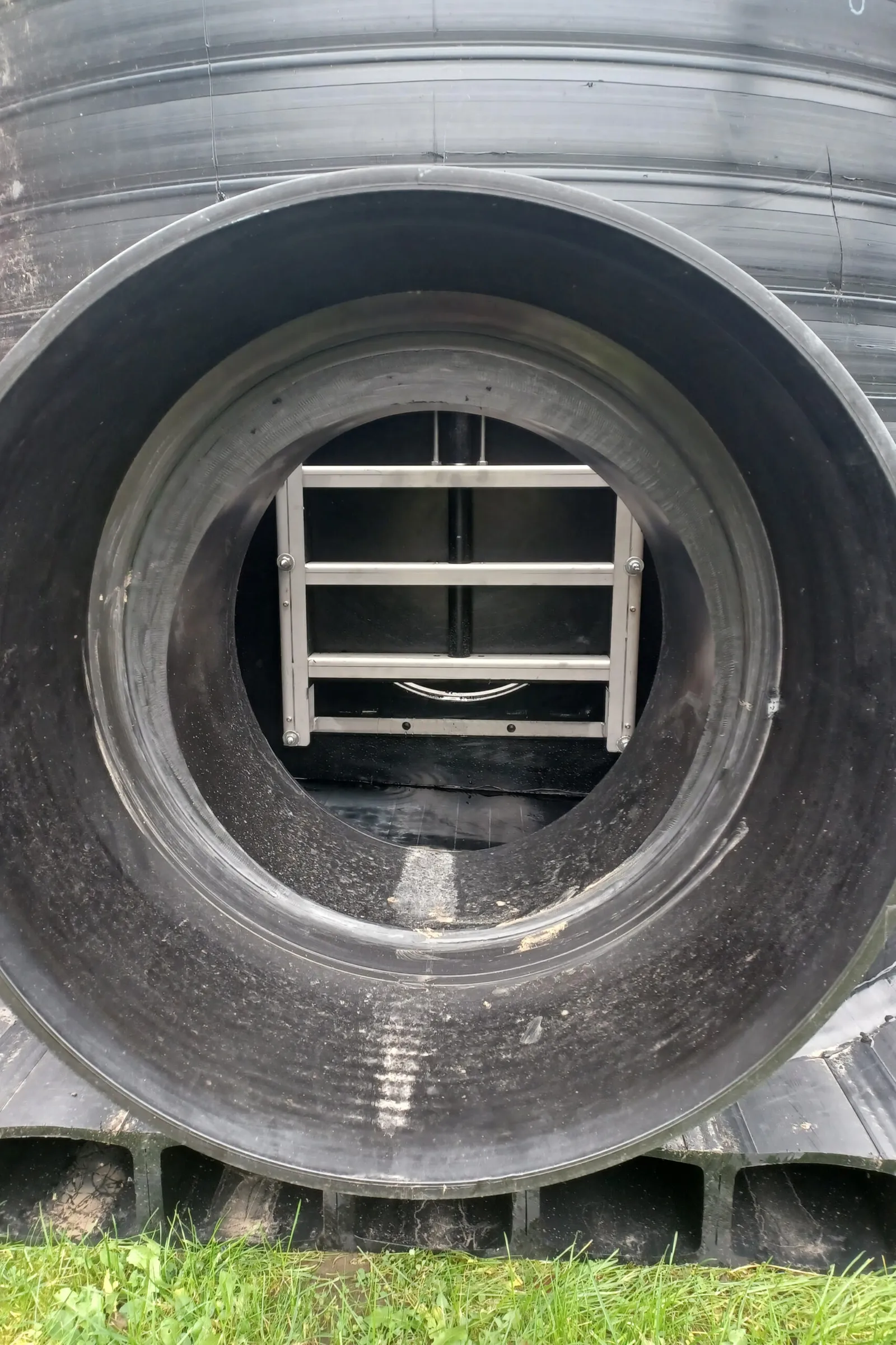
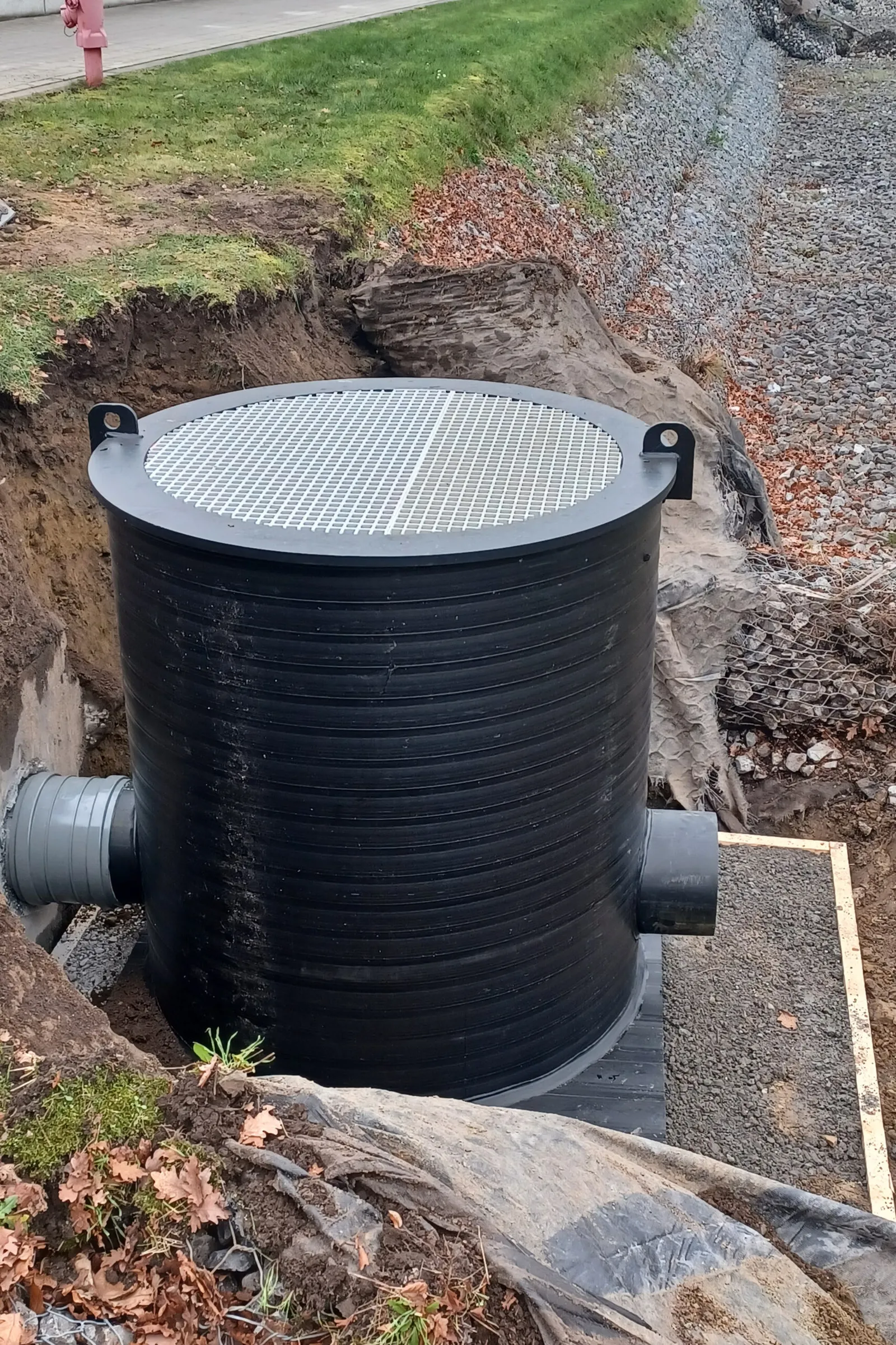
Collinet thoroughly analyses each project and designs bespoke firewater containment solutions. Its engineering department has developed an automatic shut-off chamber, designed and manufactured in collaboration with De Lijn and Equans. These chambers ensure that, in the event of an emergency, firewater is diverted to a buffer tank instead of entering the sewer. They operate on a plug-and-play principle, with as much work as possible carried out in the workshop so that installation on site is smooth and efficient.
Automatic shut-off chambers
A key feature of Collinet’s shut-off chambers is their automatic operation. The valves are connected to the depot’s fire alarm system. In the event of a fire, they can be activated automatically at the touch of a button, closing off the sewer outlet and safely storing the firewater in a buffer tank.
Successful implementation
A practical example of this innovation is the upgrade of De Lijn’s depot in Zomergem. Collinet supplied and installed:
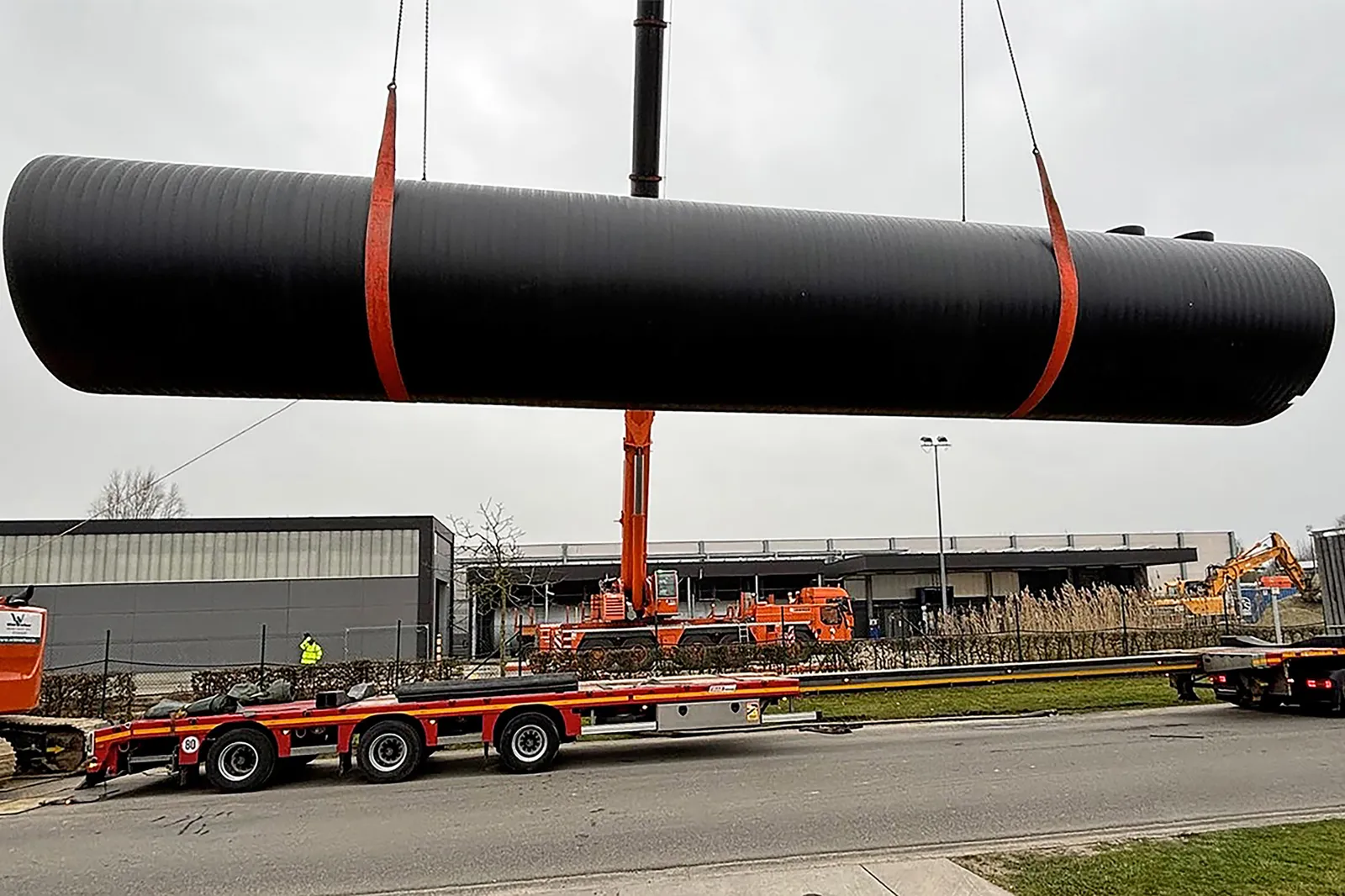
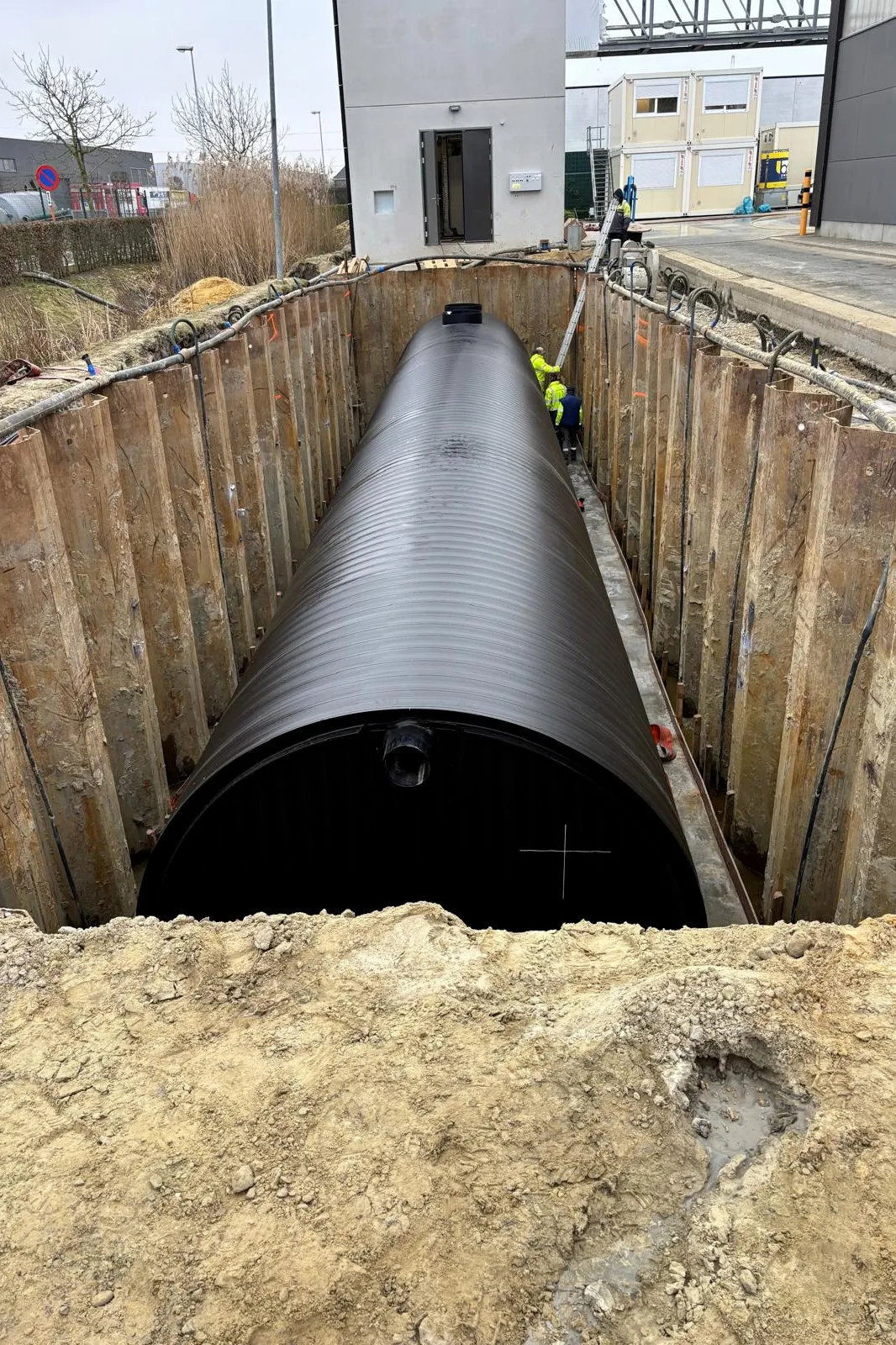
- One double-wall HDPE Weholite buffer tank with a capacity of 138 m³, a diameter of Ø3000/ø3246 mm and a length of 19.6 metres. The tank included an integrated pumping system for efficient water removal.
- Four automatic shut-off chambers, custom-made to fit the existing infrastructure. They were manufactured from double-wall HDPE Weholite pipes and base plates, resistant to chemical exposure and groundwater pressure.
Installing the buffer tank in Zomergem proved challenging because of the high groundwater levels and the nearby swale. Continuous dewatering was carried out and sheet piles were installed to ensure stability. To prevent the tank from floating upwards, a thick concrete cover slab was poured over it.
In addition to meeting the technical specifications, the buffer tank also fully complies with the new VLAREM II regulations. Coming into force on 1 January 2025, these regulations require industrial companies to take preventive measures against leaks and pollution from harmful liquids. Collinet’s buffer tank is designed to safely store firewater and other potentially polluting liquids, and is equipped with advanced leak detection and protection systems. As the only manufacturer in Belgium of double-wall underground storage tanks that meet these standards, Collinet guarantees maximum environmental protection and compliance with the strictest safety requirements.
Innovation and sustainability
The collaboration between De Lijn, Equans and Collinet shows how innovative and sustainable solutions are essential to electrifying public transport. Collinet’s bespoke solutions not only ensure safety at depots, but also limit environmental impact. In this way, Collinet is helping to create an emission-free future for public transport in Flanders.
Een zakelijke vraag aan Deschacht? Get in touch
Companies in this story


Keep following this
Get an email when a new story is published. No account needed.
- SubjectRail engineering
- CompanyDeschacht
- CompanyEQUANS