Construction dock in Zeebrugge fills with 800,000 m³ of water ahead of transport
Text and images Lantis
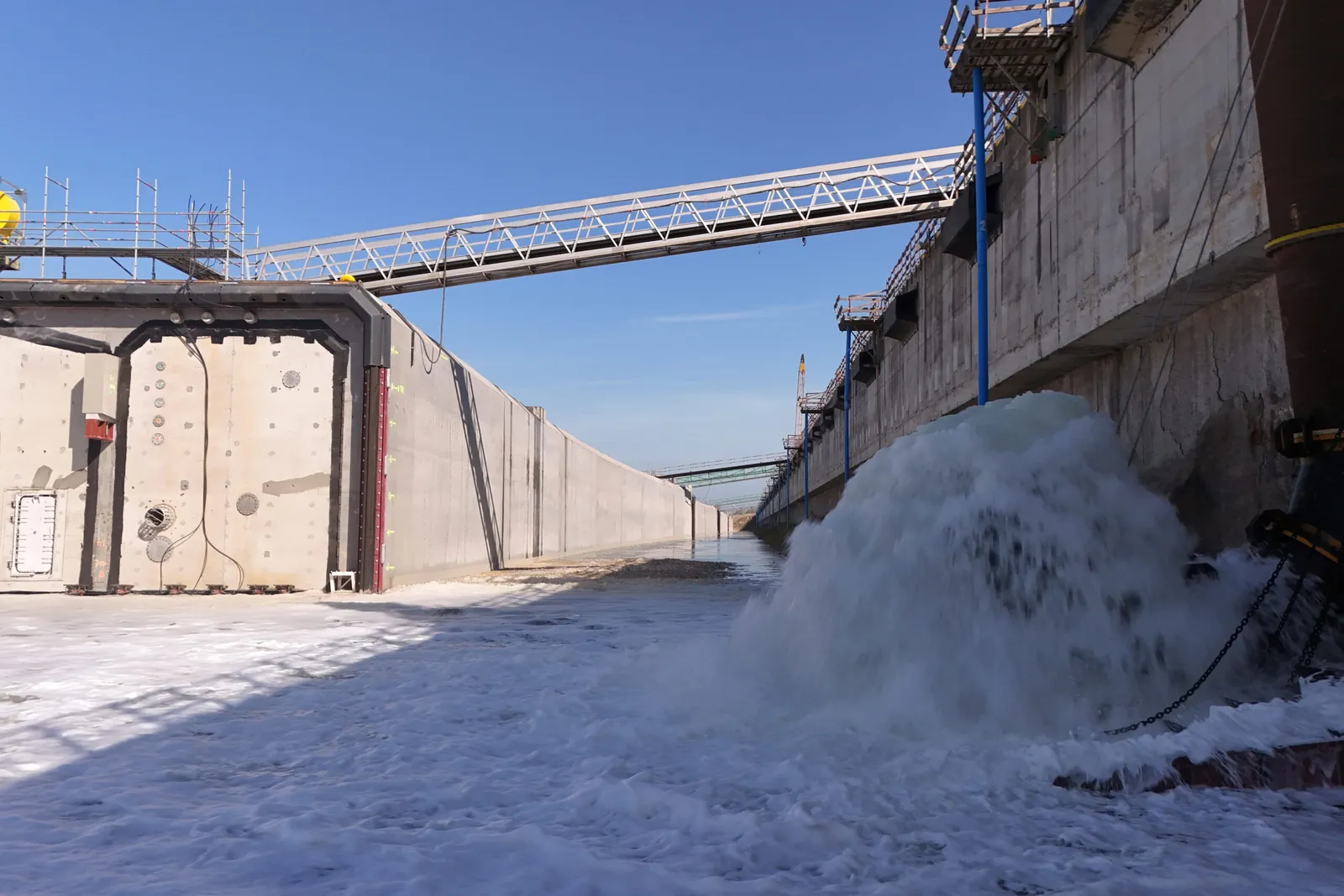
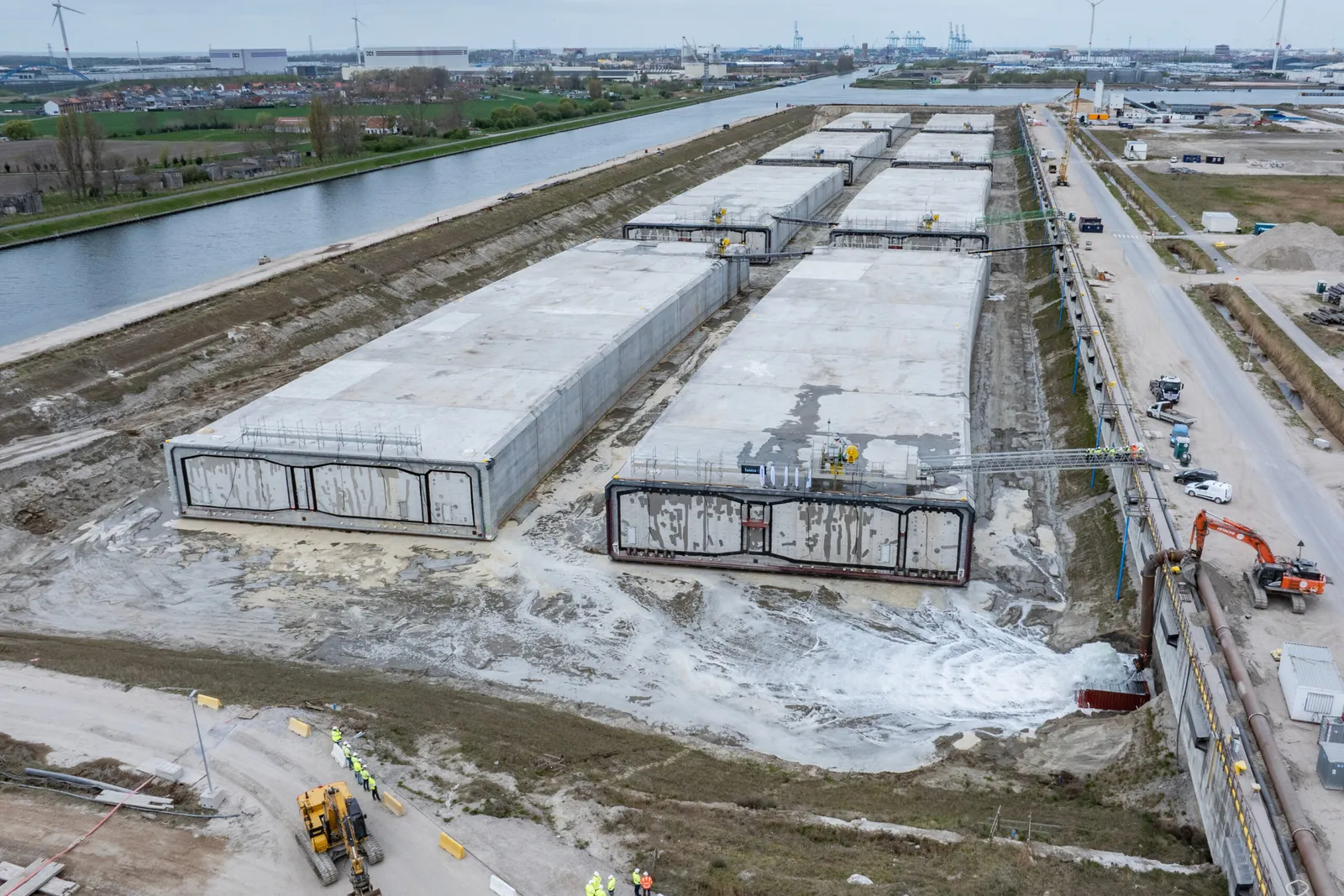
Lantis and contractor TM COTU are flooding the construction dock in Zeebrugge, marking an important milestone for the Scheldt Tunnel project. Over the past two years, intensive work has been carried out in the dock on the eight enormous tunnel elements for the Scheldt Tunnel.
These concrete structures, each the size of a football pitch, are now technically ready for the next stage of their impressive journey: the trip to Antwerp. There, in 2030, they will make a new crossing of the Scheldt possible, forming a crucial link in completing the Antwerp ring road. The Scheldt Tunnel is a key project within the Oosterweel Link, which will make traffic safer, improve mobility and strengthen the Flemish economy.
The construction dock is gradually filling with up to 800,000 m³ of water. Once the dock is completely flooded, the tunnel elements will disappear from view. On Thursday 10 April, the tap was opened for the first time at the construction dock in Zeebrugge, the home base of the eight tunnel elements for the Scheldt Tunnel. The dock is about 900 metres long and 150 metres wide. It is now gradually filling with up to 800,000 m³ of water, the equivalent of 320 Olympic swimming pools, in a process that will take about one week.
A symbolic turning point
“The dock is being flooded step by step,” says Bert Claeys, project manager at Lantis. “We are deliberately keeping the filling process slow and controlled. This allows us to inspect the tunnel elements regularly for any leaks. Once the dock is completely flooded, the tunnel elements will disappear from view. It is a special moment, as this is one of the last times we will be able to see the tunnel elements we have worked so hard on.”
The next step is to remove part of the embankment so that the tunnel elements can leave the construction dock. This will only happen once the dock has been completely filled with water. “That may seem strange,” Claeys explains, “but the sequence is deliberate. By filling the dock first, we create a water buffer. This means the canal water will not suddenly and uncontrollably rush in when we open up the embankment, and everything can proceed safely and in a controlled manner. We used the same approach for the breach in the embankment at Linkeroever.”
An engineering tour de force
The tunnel elements must not only be watertight, they must also be able to float and sink. This is important for their transport and for the point at which they are lowered into their final position in the Scheldt. In recent months, each tunnel element has therefore been fitted with five ballast tanks: two large tanks of 3,000 m³ and three smaller tanks of 1,000 m³. The tanks are connected to a pipe system that allows the weight and buoyancy of the tunnel elements to be regulated precisely. The ballast tanks were also filled with water while the construction dock was being flooded. This keeps the elements stable on the bottom until they are ready to depart.
Question about this story? Ask your question
Who worked on Scheldetunnel
- contractorTM COTUMentioned in Transporting the Scheldt Tunnel’s giant elements: preparations in full swing
- bouwkuipstempelingAlmex MetaalMentioned in Transporting the Scheldt Tunnel’s giant elements: preparations in full swing
- clientLantisMentioned in Transporting the Scheldt Tunnel’s giant elements: preparations in full swing
Keep following this
Get an email when a new story is published. No account needed.
- ProjectScheldetunnel
- ThemeExtending the life of bridges and tunnels
- SubjectBridges & tunnels