









The future of construction starts with trust: COPRO on certification, sustainability, circularity and AI
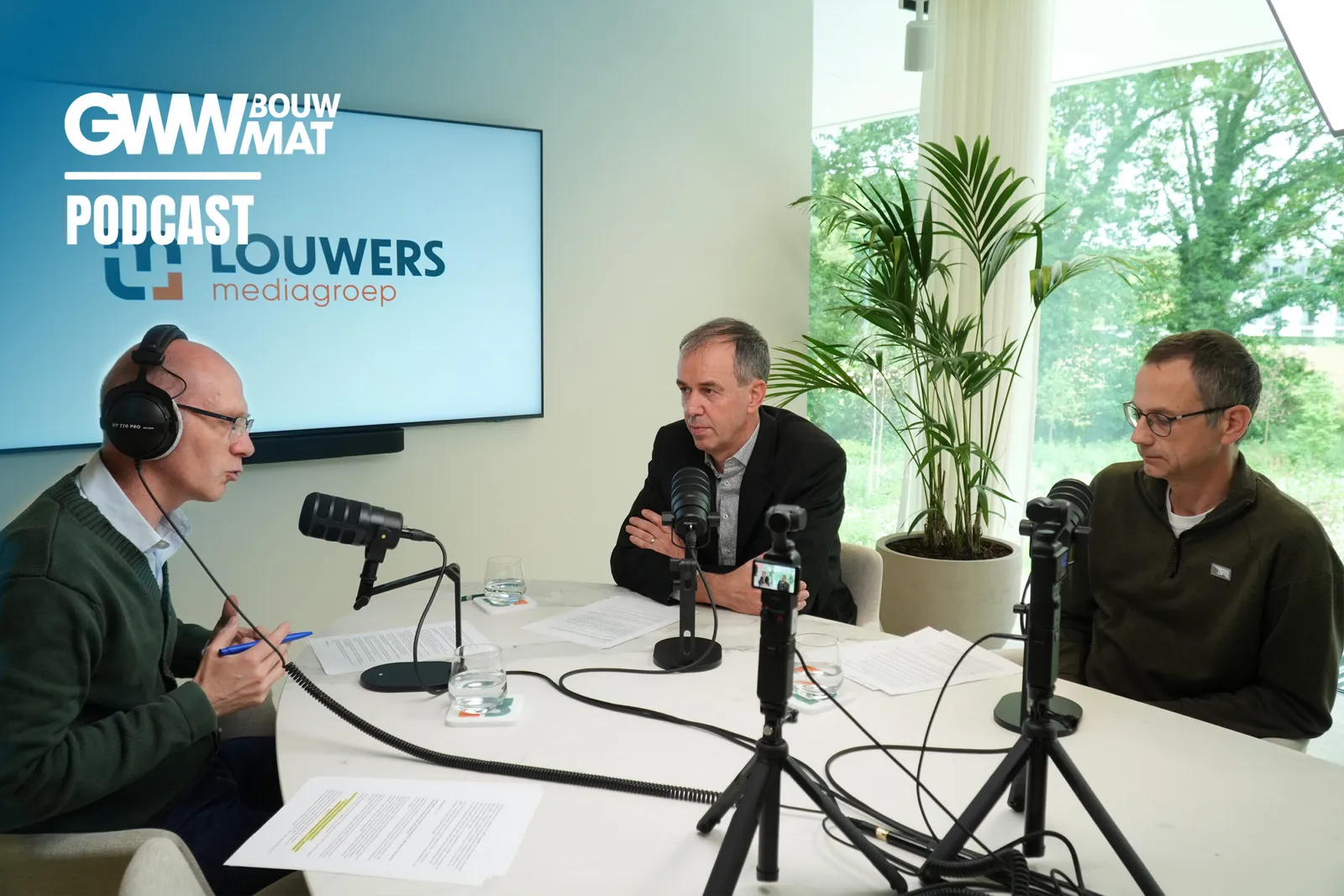
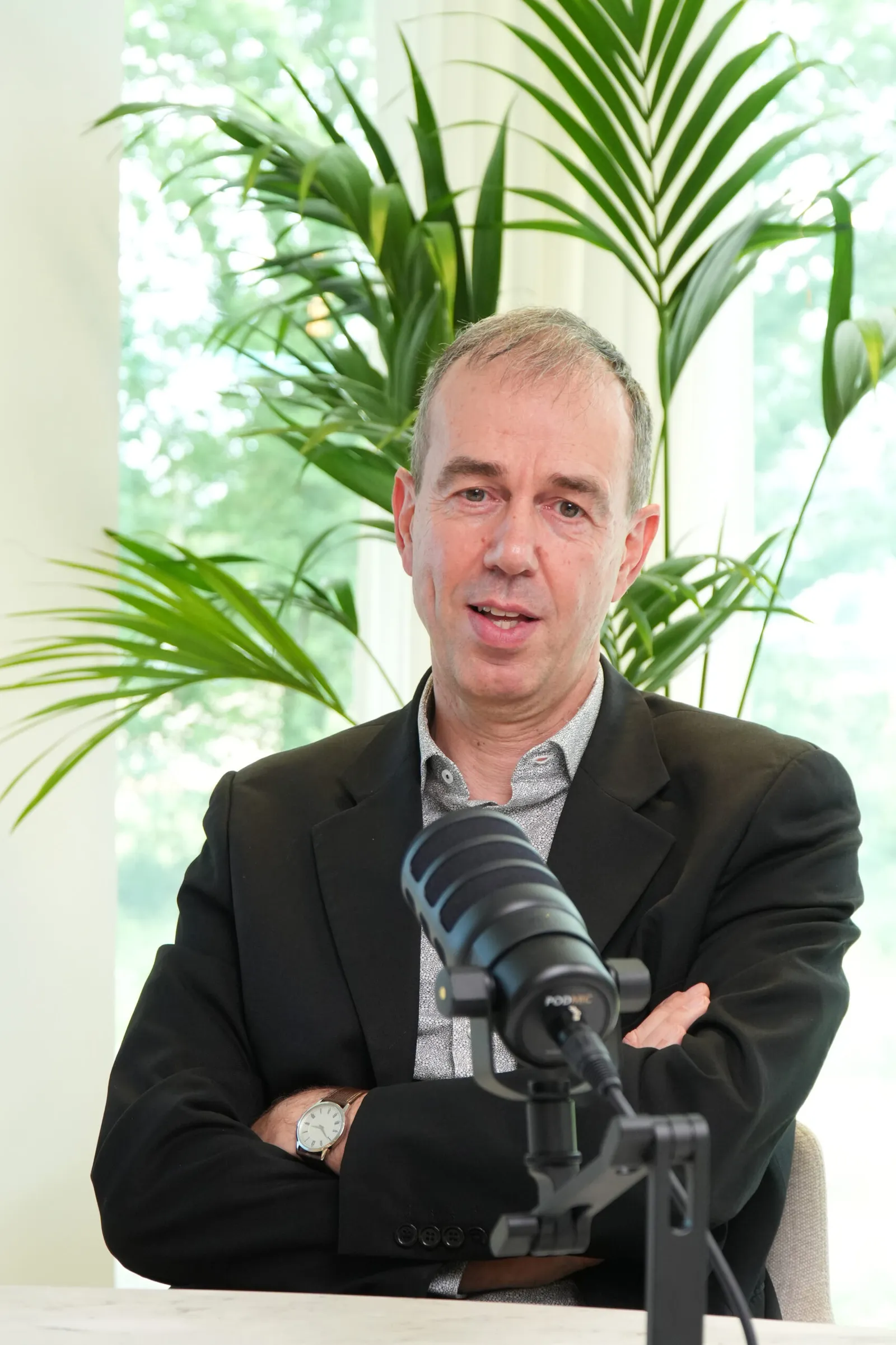
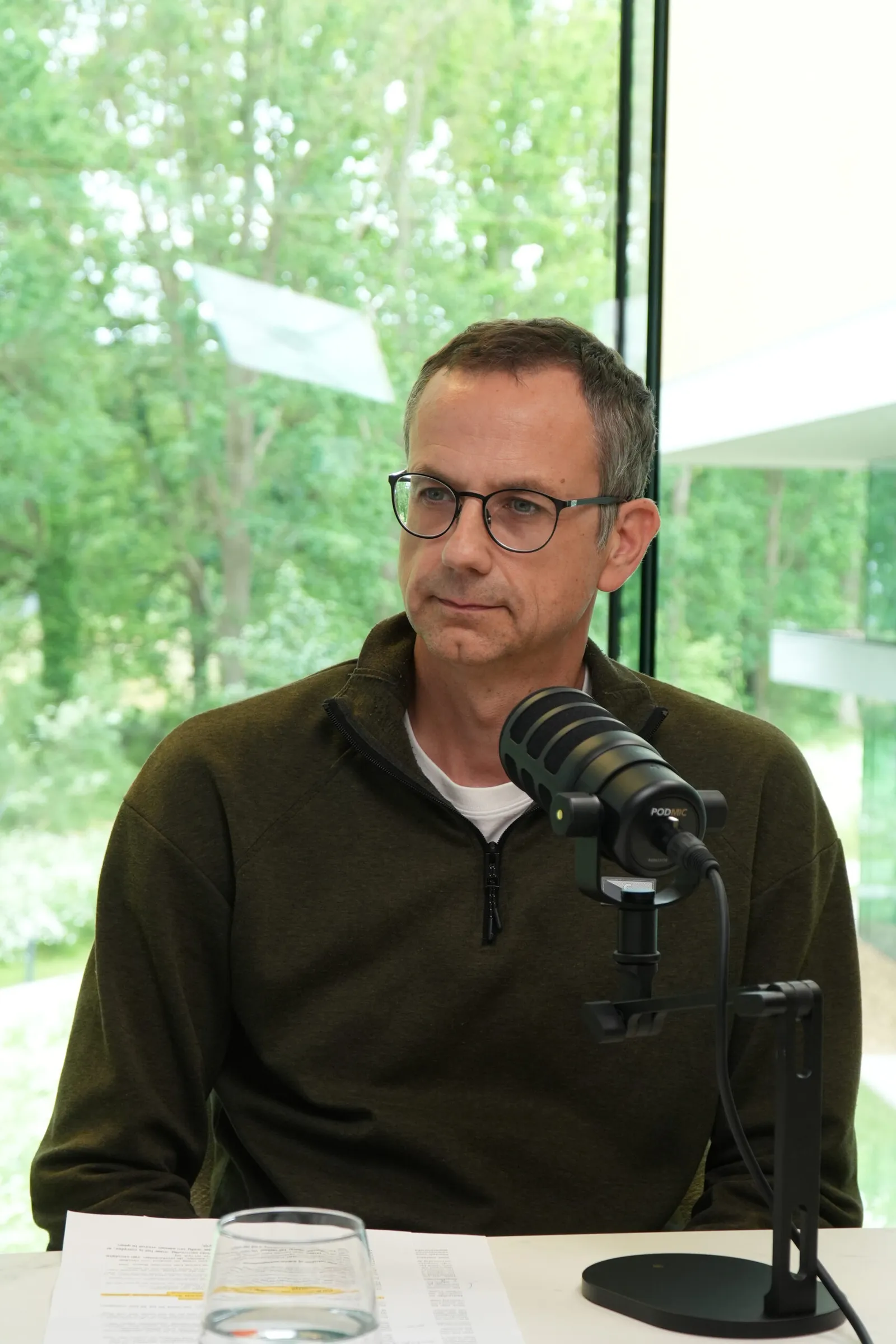
How do you guarantee the quality of construction materials in a sector undergoing rapid change towards sustainability, circularity and digitalisation? In this podcast, Björn Crul talks to Dirk Van Loo, CEO of COPRO, and Pieter Keppens, Sustainability Manager at COPRO. They explain why independent certification remains essential to the construction sector and how topics such as circular construction, recycled aggregates, the CO₂ Performance Ladder, digital quality control and artificial intelligence are helping to shape the future of quality assurance. A fascinating discussion about trust, innovation and COPRO’s role as a link within the construction sector.
Een zakelijke vraag aan Copro? Get in touch
Full transcript
All chapters (22)
- Introducing COPRO
- Why certification is necessary
- Certification in practice
- COPRO as a quality mark
- From product to personnel certification
- A real-life example
- Ten years of change at COPRO
- Sustainability as a new dimension of certification
- The three dimensions of sustainability
- High-quality circular construction
- Living Lab Circulair Beton
- Innovation and certification
- Sustainability goes beyond materials
- Digitalisation in certification
- MyCOPRO
- Reliable data as the foundation
- Artificial intelligence
- Digital support for asbestos experts
- Partnership as a strategic pillar
- Independence as a core value
- Closing message
- Closing remarks
Introducing COPRO
Björn Crul Hello, listeners, and welcome to this new podcast in collaboration with COPRO.
COPRO was founded more than forty years ago with a clear mission: to guarantee and improve the quality of construction materials and construction processes. Today, sustainability and circularity are also high on the agenda.
My guests today are COPRO CEO Dirk Van Loo and Sustainability Manager Pieter Keppens. Gentlemen, welcome.
Dirk, let me start with you. COPRO has been around for more than four decades. Why does your role as a neutral party, an independent certification body, remain essential today?
Dirk Van Loo COPRO may not be familiar to everyone, but I guarantee you that by the end of this podcast, when you empty your letterbox at home over the next few days, you’ll think of COPRO. Let’s start with that.
COPRO’s role is essential. Why? Because trust is so crucial in construction.
For public contracts, the supervising officer has to inspect products before they are used on site. That has been enshrined in law for more than fifty years. It wasn’t straightforward. It caused delays and extra paperwork. Products would, for example, sit on site waiting for approval. And what if a product failed to comply? It would have to go back to the manufacturer, and so on.
This led to a great deal of frustration for both the client and the contractor.
Why certification is necessary
Björn Crul What kind of products are we talking about?
Dirk Van Loo All kinds of construction products. Take manhole covers, for example. When one arrives on site, how can you tell whether it has sufficient load-bearing capacity? You have to test it. You can’t measure that on site.
And what about other products, such as concrete? How do you determine its compressive strength? Or the frost resistance of natural stone? None of this is easy to check on site when goods are delivered.
That’s why those two parties, clients and contractors, looked for a solution and found one. They thought: let’s check the quality at the manufacturer’s premises, rather than on site. That way, you know the product complies and can use it as soon as it arrives on site.
But a check like that is only useful and reliable if it is carried out by an independent party. That is exactly why COPRO was set up by the sector itself, by those two parties: public-sector clients and contractors together.
And so the years have flown by. Today, our people travel all over the world to inspect products manufactured around the globe but ultimately used in Belgium.
Read the full transcriptCollapse transcript20 more chapters
Certification in practice
Björn Crul You ensure that quality is guaranteed, helping construction projects run more smoothly and safely. At the same time, certification can be very complex. Can you give us a few examples of where certification really makes a difference?
Dirk Van Loo The difference often comes down to things people don’t think about.
Take a safety barrier, for example. When it is delivered to site, you can’t just look at it and say that the quality is good and it will do what it is supposed to.
But when a lorry leaves the road, being sure of that can be a matter of life and death.
That’s why safety barrier systems are tested extensively. Cars, buses and lorries are crashed into these structures under controlled conditions at a test site. We attend the tests and check that everything goes as it should.
And that’s not all. We also check and test the quality of the safety barriers during production. We then inspect the site to make sure the structure tested in those crash tests is actually built as tested.
Only once everything complies does the manufacturer receive a certificate and become eligible to supply road authorities.
That way, we can all have confidence in the quality.
COPRO as a quality mark
Björn Crul It’s not just a certificate, Dirk. COPRO is also marked on the product.
Dirk Van Loo Yes, that’s right. It brings certification much closer to home than we might think.
When you empty your letterbox tonight, as I mentioned earlier, take a look at the manhole cover in the pavement. I’m almost certain you’ll see “COPRO” cast into it.
What does that mean? It means a COPRO inspector has visited the manufacturer and checked both the process and the products.
You can’t tell with the naked eye whether a cover is strong enough for heavy traffic. You can’t tell when it arrives on site. You need objective checks for that.
The COPRO mark on the cover tells the road authority, and you too, really, that you can trust its quality.
That confidence matters even more on critical sites, such as asphalt in the Brussels tunnels or on the runways at Brussels Airport.
We carry out additional checks there simply because there is no margin for error. The quality has to be absolutely top-notch. You can’t afford to have to rebuild tunnels or runways because poor-quality asphalt needs replacing.
From product to personnel certification
Björn Crul We’ve talked about products, but you go a step further. One of the newer fields you work in is personnel certification, for example for asbestos surveyors. What is this kind of certification for?
Dirk Van Loo That’s right. COPRO started out by inspecting products. That’s where the name comes from: control of products.
But over the years, people have realised that a good product alone isn’t enough to deliver a good end result.
How a product is installed or traded, and the people who work with it, are also very important.
You can have the best safety barrier in the world, but if it’s installed upside down, you still have a problem.
The same logic applies to professionals such as asbestos surveyors. I don’t know whether you’re familiar with their work, but they prepare an asbestos survey report that you receive when you buy a property. It tells you, as the buyer, whether there is asbestos in your home and where it is. It’s an important report and it can have major consequences for safety.
Here’s a very specific example. When I recently renovated my parents’ home, I had to get an asbestos survey report. I was relieved to read that there was no asbestos in the property.
But a few weeks later, when I arrived at the recycling centre with the flooring I had removed, I was told that it contained asbestos.
A real-life example
Björn Crul And especially not, I would imagine, when you’re the CEO of COPRO.
Dirk Van Loo No, but particularly when you know you removed that flooring in an enclosed space with your son. You don’t want to think that it might have contained asbestos.
Fortunately, it later turned out that the person who prepared the asbestos survey report had got it right, not the recycling centre employee.
Ten years of change at COPRO
Björn Crul Dirk, you’ve now been CEO of the organisation for ten years. How have you seen COPRO evolve during that time? What do you see as the main trends?
Dirk Van Loo There are two major trends.
The first is digital transformation. Many people associate certification with paper, reports, certificates and forms. We’ve been working on that and, in recent years, have completely redesigned and digitised our processes.
Investment in digitalisation has transformed COPRO over the past ten years. We’ve developed a clear strategic vision for it, and it runs like a thread through the organisation.
The second major trend is sustainability.
In the past, the focus was on the technical quality of products. A product had to last a long time, to be durable. Unfortunately, in Dutch we use the same word for durability and sustainability. Today, the question is also whether a product has been made responsibly, whether it can be recycled and whether it fits into a circular strategy.
That has greatly broadened our field of work.
Sustainability as a new dimension of certification
Björn Crul Yes, absolutely. Around a quarter of your activities are now linked to sustainability. What does that tell us about the future of certification and the future of COPRO?
Dirk Van Loo It mainly shows that certification is changing very quickly. That’s a result of the growing importance of sustainability in society. It’s changing the way we work across the board.
Technical product properties are very easy to measure and validate. Want to know the strength of a sewer pipe? The elasticity of a rubber ring? Very easy. You carry out a test, usually described in a standard, so the answer is clear. There’s often plenty of experience too, so we know very well what is good and what isn’t.
But sustainability is much more complex. Was the pipe produced sustainably? But what does sustainable mean? What is its environmental impact? Can the pipe be recycled? Can it be given a second life?
That’s much harder to determine and much harder to check.
Standards are emerging in this area too, but there is less experience and less consensus.
Björn Crul Yes, and there are a lot of organisations working on this.
Dirk Van Loo Yes, that’s right. You also see companies making more and more sustainability claims. Greenwashing everywhere. Logos, reports, certificates, all over the place. Nobody really knows what’s what any more.
That’s precisely why an impartial organisation has such an important role to play in sustainability. And COPRO has to take on that role.
Recycling has always been a key focus for COPRO, too. The construction sector is Belgium’s largest producer of waste. Forty-five per cent of all waste comes from construction.
Belgium, and Flanders in particular, has been a world leader in the circular economy in the construction sector for many years.
You may be surprised, but more than fifteen years ago, ninety-five per cent of construction and demolition waste in Belgium was already being recycled.
Our next task is to recycle to a higher standard.
To give a very concrete example: concrete rubble from a road can be used perfectly well to build a new road. So instead of downcycling it by using recycled concrete aggregate as a sub-base material, we should reuse it at a higher value.
For COPRO, that means moving from the traditional question, “Is this product good?” to a very different one: “Is this product suitable for this application?” That, in my view, is where certification is heading.
The three dimensions of sustainability
Björn Crul When we talk about the future and sustainability, Pieter Keppens, my thoughts naturally turn to you. You’re Sustainability Manager at COPRO. What does sustainability mean in practice across the different fields in which you operate?
Pieter Keppens As Dirk said, a sustainable product used to mean, first and foremost, a product that lasts a long time. A sustainable road is above all one that lasts a long time. That’s still true. Sustainability starts with durability.
Then came the idea of recycling. Construction and demolition waste from the demolition of buildings can no longer be sent to landfill. We turn it into new construction materials, such as recycled aggregates for road sub-bases and capping layers.
Construction and demolition waste may contain potentially hazardous substances, such as asbestos, which Dirk mentioned earlier. We have to ensure that recycled aggregates meet all environmental legislation requirements. That way, we can be sure that using these recycled materials won’t create problems for future generations.
The third dimension is sustainability in terms of the environmental impact of construction materials and structures.
How much energy, how many primary materials and how much water are needed to produce and use a material? How much is needed during the use phase, over the twenty to forty years of a road’s life? And how much is needed to demolish and recycle the road afterwards?
We’re seeing expectations of construction products rise significantly. They must last twenty to forty years, protect the environment for future generations and have as low an environmental impact as possible.
High-quality circular construction
Björn Crul I understand that recycled aggregates have become very important. There are various initiatives linking them to sustainability. Could you tell us a bit more about those?
Pieter Keppens COPRO has a very strong focus on circularity and material recycling.
As I said, recycled aggregates are widely used in road sub-bases and capping layers. The challenge is how, for example, to make truly circular use of recycled concrete aggregate.
Old concrete needs to become new concrete again. That’s the real definition of circularity.
With A+ concrete aggregate and, since the beginning of this year, A+ recycled concrete sand as well, it’s possible to partially replace both the coarse and fine fractions of concrete with circular materials such as recycled concrete aggregate.
Björn Crul Are there materials where we’ve already made a lot of progress?
Pieter Keppens A slightly less familiar, but very good example is reclaimed asphalt. It comes from planing off old asphalt pavements.
More than one million tonnes are put back into circular use every year. Old asphalt is reused in new asphalt.
Another very interesting application is tree soil.
We want more and more trees in cities, but space is limited. We need room for pedestrians, cyclists, cars and buses. At the same time, trees need space for their roots.
Normally, these two functions are kept separate.
Tree soil allows us to combine the two functions. It provides a growing medium for the tree while also serving as a road sub-base.
This gives the tree more room to grow while still leaving enough space for cyclists and pedestrians.
Living Lab Circulair Beton
Björn Crul The circular economy is developing rapidly, and you’re also actively involved in partnerships such as Living Lab Circulair Beton. What are you learning from it?
Pieter Keppens Living Lab Circulair Beton is a VLAIO-supported project that aims to bridge the gap between supply and demand for circular concrete, with the aim of simply using more circular concrete.
A wide range of parties are working together on it: producers of circular materials, producers of circular concrete, users, clients and COPRO as a certification body.
The aim sounds simple: use more circular concrete.
But behind that lies an entire supply chain with bottlenecks that are still holding things up today.
The main lesson is that we need to work together to resolve those bottlenecks and, in doing so, make much greater use of circular concrete.
Innovation and certification
Björn Crul When we look at innovation, we all know that it can sometimes clash with standards based on existing materials. How do you find solutions to that?
Pieter Keppens That’s right.
By definition, innovation does not comply with existing standards.
Existing standards are essentially a summary of what everyone has agreed on after many years of experience. This is set out in a document, which is updated about once every fifteen years based on new experience.
Then an innovation comes along. It’s new and innovative, so there’s no standard for it yet.
With an innovation certificate, we build confidence in that innovative product step by step, project by project.
To do that, we work with a panel of experts who analyse the innovation. We monitor every project.
That way, we build up experience systematically and can develop a new standard more quickly.
Sustainability goes beyond materials
Björn Crul Pieter, sustainability applies to construction materials and aggregates, as you’ve mentioned, but it’s being applied more broadly too. Can you give us a few examples?
Pieter Keppens I think the CO2 Performance Ladder is a very good example. It’s a system that encourages companies to consider the environmental impact of their activities. First, they identify the main factors contributing to that impact, then develop an action plan to reduce it.
A couple of examples. On a site where a new road is being built, transporting materials is very important. This includes both removing excavated soil and bringing in recycled aggregates, other aggregates, concrete and so on. Optimising this can make a big difference.
Another example is a concrete batching plant. For concrete, choosing a cement type with a low CO2 impact and transporting aggregates to the batching plant are both very important factors in reducing its environmental impact.
Both of these actions can make a big difference to concrete’s environmental impact.
Of course, everyone talks about environmental impact. We also need to make it objectively measurable. Standards for this now exist. One of COPRO’s roles is to ensure that everyone applies those standards correctly and that the figures really are comparable.
Digitalisation in certification
Björn Crul Yes, that’s exactly the aim of the CO2 Performance Ladder. Dirk, from what you’ve just said, I understand that sustainability is a very important trend for you, but digitalisation is another.
Like the construction sector itself, COPRO is currently undergoing extensive digitalisation. What certification challenges are already being addressed using digital tools?
Dirk Van Loo I see three main challenges.
The first is very simple. Digitalisation should make life easier, not more complicated. The aim is to get reliable information, the information we need.
The end user simply wants to know: can I trust this product or not? And, above all, can I use it for the purpose I have in mind? That natural stone tile might be perfect indoors, but completely unsuitable outdoors.
That digital information needs to be available quickly, easily and very clearly. And if the end user doesn’t want any extra data, they shouldn’t have to receive it.
A green or red light, so to speak. That’s what they need.
If I order sand-cement, as a customer I simply want to know: is the product suitable for my application or not? I may not need to know what type of cement or sand was used.
If I want more information, such as technical properties, composition, raw materials, environmental impact and so on, I should of course be able to find it easily. Above all, I need to be able to trust that the information is accurate.
Information overload is often a major pitfall here. The asbestos survey for the house I mentioned earlier is forty-nine pages long. We have to ask ourselves: do I really need forty-nine pages to find out where the asbestos is in my house?
The second challenge of digitalisation is efficiency and speed.
A very simple example: COPRO processes ten thousand test reports a year, containing hundreds of thousands of test results in total.
We now ask for these to be submitted digitally so they can be imported into our system and assessed automatically. This speeds up the process and makes it more accurate. Customers get their results sooner, and we can intervene much more quickly too.
Production at the manufacturer and work on site continue apace every day.
A third challenge is that digitalisation opens the door to proactive quality monitoring.
Artificial intelligence enables us to recognise patterns. We can detect problems before they arise on site.
This is a very important change: from the reactive approach we used in the past to proactive, risk-based working.
So we’re going digital to work more efficiently, but above all to make information more useful and reliable for the customer.
MyCOPRO
Björn Crul For producers, or certificate holders, there’s MyCOPRO. What difference does it make to them in practice?
Dirk Van Loo Customers expect the service we provide to be accurate.
If our inspectors fly to China to check whether natural stone is genuinely frost-resistant, we need to be certain that it is. We don’t want that stone in the market square to be destroyed by frost after the next winter.
Customers also want speed and ease of use.
Our MyCOPRO platform helps with that. We’ll answer technical questions automatically. Intelligent search functions make it possible to search through hundreds of documents and so on.
We’ll expand it further in the future. We want to create a platform that supports users in their day-to-day work and helps them take their quality to the next level.
Reliable data as the foundation
Björn Crul I’ve heard you talk about the vast amounts of information you have. People sometimes say that data is the new gold. Why are accurate data and their validation so crucial to the certification process?
Dirk Van Loo Yes, it’s absolutely crucial.
Data is everywhere. We’re inundated with it every day, and artificial intelligence is making it easier and easier to generate all that data.
Want to put together a product information sheet? It can be ready in under a minute.
We also need more and more data. The move towards BIM, Building Information Modelling, requires a huge amount of data. And we want to store all of it for the future.
That’s necessary too, because we may need that data in the future. We need to learn from the mistakes of the past.
Let me give you an example. Many of our roads contain tar. It is highly carcinogenic when heated.
The problem is that we don’t know exactly which roads have been built using tar.
As a result, when we break up a road, we have to test for the presence of tar so that it can be removed from the supply chain.
Digital product passports will solve this in the future.
And what is needed to make that happen? Reliable data.
The drive towards sustainability also generates and requires additional data: life cycle assessments, material passports, CO2 footprints, environmental declarations and so on.
So the question is not so much whether there is data. The question is whether the data is accurate. Is it reliable? Can I use it in my systems, in my BIM models and so on?
Björn Crul And you ensure that the data is reliable? You validate it?
Dirk Van Loo Yes, exactly. That is our responsibility.
Most of that data is already available. Our database, COPRO Extranet, contains information on more than ten thousand products.
And not just one-sided declarations from the manufacturer, but data validated by COPRO.
If you look at the back of a crash barrier, and I hope that never happens, because seeing the back of a crash barrier usually means something has gone wrong, you will see a code.
Anyone can use that code to look up all the product information for the crash barrier, publicly, free of charge and instantly.
Very useful for inspections, reuse and so on.
The aim for the future is to integrate that data digitally into project data, for example in a BIM project.
That is why we are now working to link COPRO’s databases to users’ databases, digital delivery notes and so on from the client.
Artificial intelligence
Björn Crul You’ve already touched on this, Dirk. AI is already playing a role in your work too. Why did you think it was important to take this step now?
Dirk Van Loo As I said, COPRO processes huge amounts of data. Ten thousand inspections a year, in twenty-five countries, at a thousand manufacturers. That generates a vast amount of data.
Artificial intelligence helps us identify patterns that are difficult for our inspectors to spot.
This allows us to flag quality issues at an early stage, before they show up on site.
That makes our approach much more risk-based, and is a major change from the past.
Before COPRO came along, quality issues were discovered on site.
When COPRO was established, we began identifying and flagging issues during production and after production, at the point of delivery.
In the future, thanks to artificial intelligence and collaboration with manufacturers, COPRO will prevent quality problems.
That is why I think artificial intelligence will also enable us to move away from the periodic inspections we currently carry out at fixed intervals towards more continuous quality monitoring.
As a result, we will be able to predict risks even more proactively, rather than measuring and detecting them after the event.
That is why we really need to focus on preventing quality problems.
Of course, artificial intelligence will also assist manufacturers and inspectors with administrative work. That is obvious, it is the low-hanging fruit.
But another interesting possibility is that AI will become not just a tool, but also the subject of certification.
There will undoubtedly be demand for certification of AI systems in construction, for example audits of algorithms, and verification of data quality, driven by the European AI Act.
We need to prepare for that.
As preparation for this podcast, I asked AI chatbots what COPRO could do for them.
The answer was quite amusing: AI itself suggested that COPRO might in future need to assure AI systems and guarantee the quality of their answers.
Digital support for asbestos experts
Björn Crul That could be another new challenge.
Going back to digitalisation for a moment, you also have tools such as Companion and Assistant. How do they help asbestos experts in their work, in practical terms?
Dirk Van Loo We want to provide our experts with smarter support in their day-to-day work.
An asbestos expert processes a huge amount of information. Errors or omissions are bound to creep in.
With our tools, we aim to alert them as they enter and process data if something may be incorrect or illogical.
This makes the work more efficient, but, and this is just as important, it improves the reliability of the final result.
We all benefit from that in the end. Not just the expert, but also the end customer.
Partnership as a strategic pillar
Björn Crul Dirk, let’s look to the future. Partnership plays a crucial role in your strategy. That is no coincidence, of course, as you work with a great many different partners. How important is working with this network to the impact you want to achieve?
Dirk Van Loo Yes, COPRO is built on collaboration.
Many of our activities are based on a consensus model. Stakeholders in a particular sector want us to carry out specific inspections.
Public authorities, contractors, manufacturers and experts agree on what we need to do. What should we test? How? Where? How often?
That is precisely why working with these parties is crucial to our day-to-day work.
We are right at the centre of it all, so our role is not just to inspect, but above all to bring these parties together.
And in a sector like ours, which is changing so rapidly, with manufacturers bringing forward innovative products and clients setting new sustainability requirements, that role in bringing people together is becoming increasingly important.
Independence as a core value
Björn Crul On the one hand, you have this role in bringing together a large network of stakeholders. On the other, you are also expected to be an independent, neutral party. How do you ensure that when you are in constant consultation with so many stakeholders?
Dirk Van Loo Yes, that is not easy.
A set of scales is a very delicate thing. The slightest thing can tip the balance one way or the other. So you really have to work at it every day.
You cannot ensure impartiality simply by including an article in your articles of association or writing a work instruction for the inspector.
Impartiality really is our most important value.
It takes work every day.
Impartiality is at the heart of everything. It is part of everything we do.
If you look at our website, our certificates or our letters, you will see that ‘impartial’ is always the first word.
That is no coincidence.
Because without trust, certification has no value.
And above all, without impartiality, there is no trust.
We keep a very close eye on that.
Of course, other parties also oversee our work. Checks and checks on checks, that is how it works, and it needs to.
But internally too, we do everything we can to safeguard our impartiality as effectively as possible.
It is reflected in our board, which is completely separate from our certification activities, but also, of course, in the people working in the field.
Closing message
Björn Crul Gentlemen, we are almost out of time.
Let me ask you one final question: if you could share one message with the sector, what would it be?
Pieter Keppens?
Pieter Keppens I think the construction industry is changing.
It is moving step by step towards greater sustainability and innovation.
And we need that.
At COPRO, we want to evolve alongside the industry so that we can meet these new expectations.
And in doing so, reaffirm the quality and trust in that quality.
Björn Crul Dirk, one final message?
Dirk Van Loo Societal change does not happen gradually, but in leaps.
Today, we are in the midst of two such leaps.
On the one hand, the transition to circularity, as Pieter has outlined, and on the other, the impact of artificial intelligence on our daily lives.
It is precisely at moments like these that trust is not a luxury, but an absolute prerequisite for moving forward.
That is exactly the role we at COPRO are keen to play.
We cannot do it alone.
We have to do it together with all our partners.
Closing remarks
Björn Crul That seems to me a fitting message to end on.
Dirk Van Loo and Pieter Keppens, all that remains is for me to thank you for this conversation.
And thank you, listeners, for your attention. We look forward to seeing you next time.
Companies in this story
Keep following this
Get an email when a new story is published. No account needed.
- ThemeMaterials with a lower environmental impact
- SubjectGeneral
- CompanyCopro







