Last look at the Scheldt Tunnel sections: Lantis floods construction dock
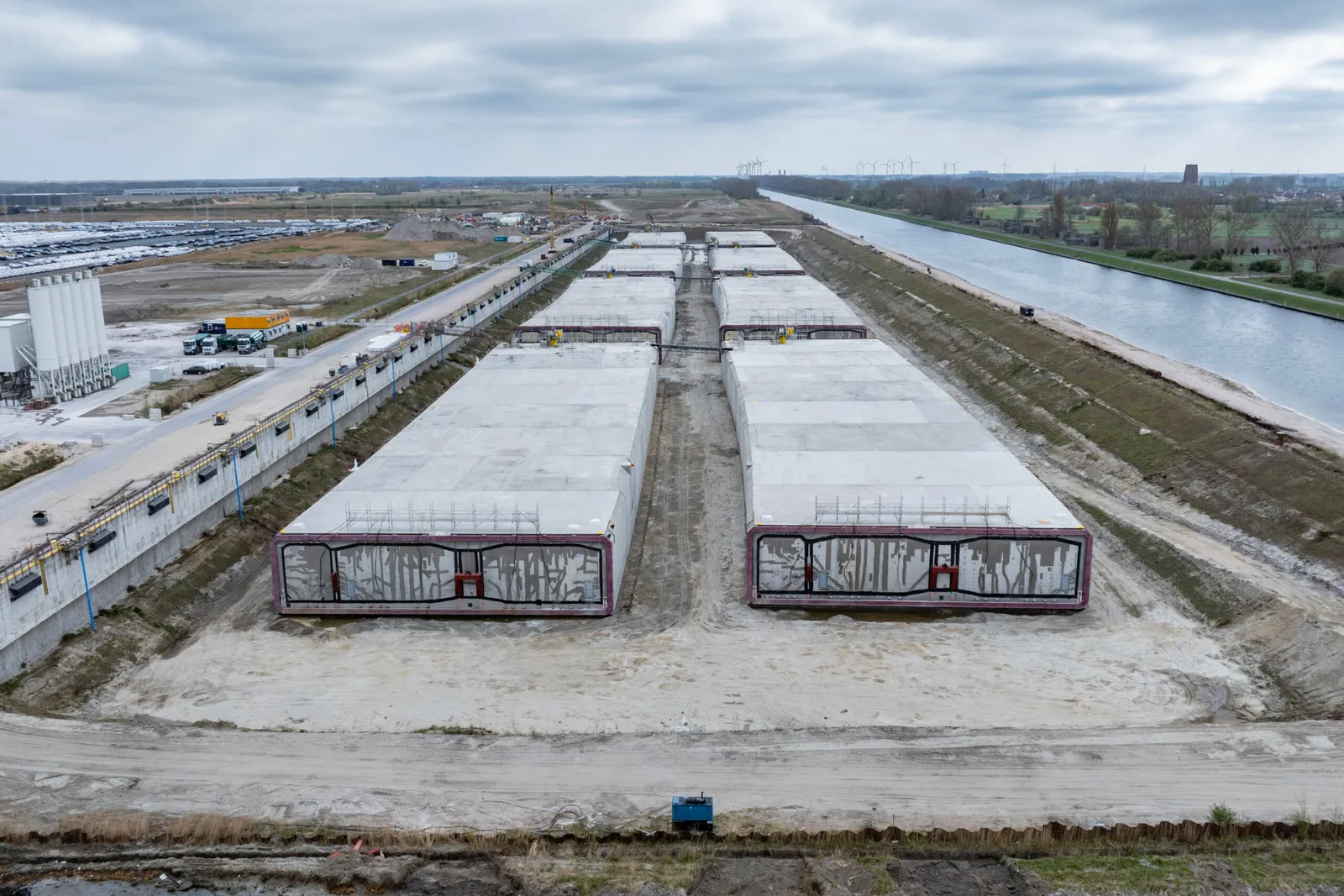
Zeebrugge construction dock fills with 800,000 m³ of water ahead of transport
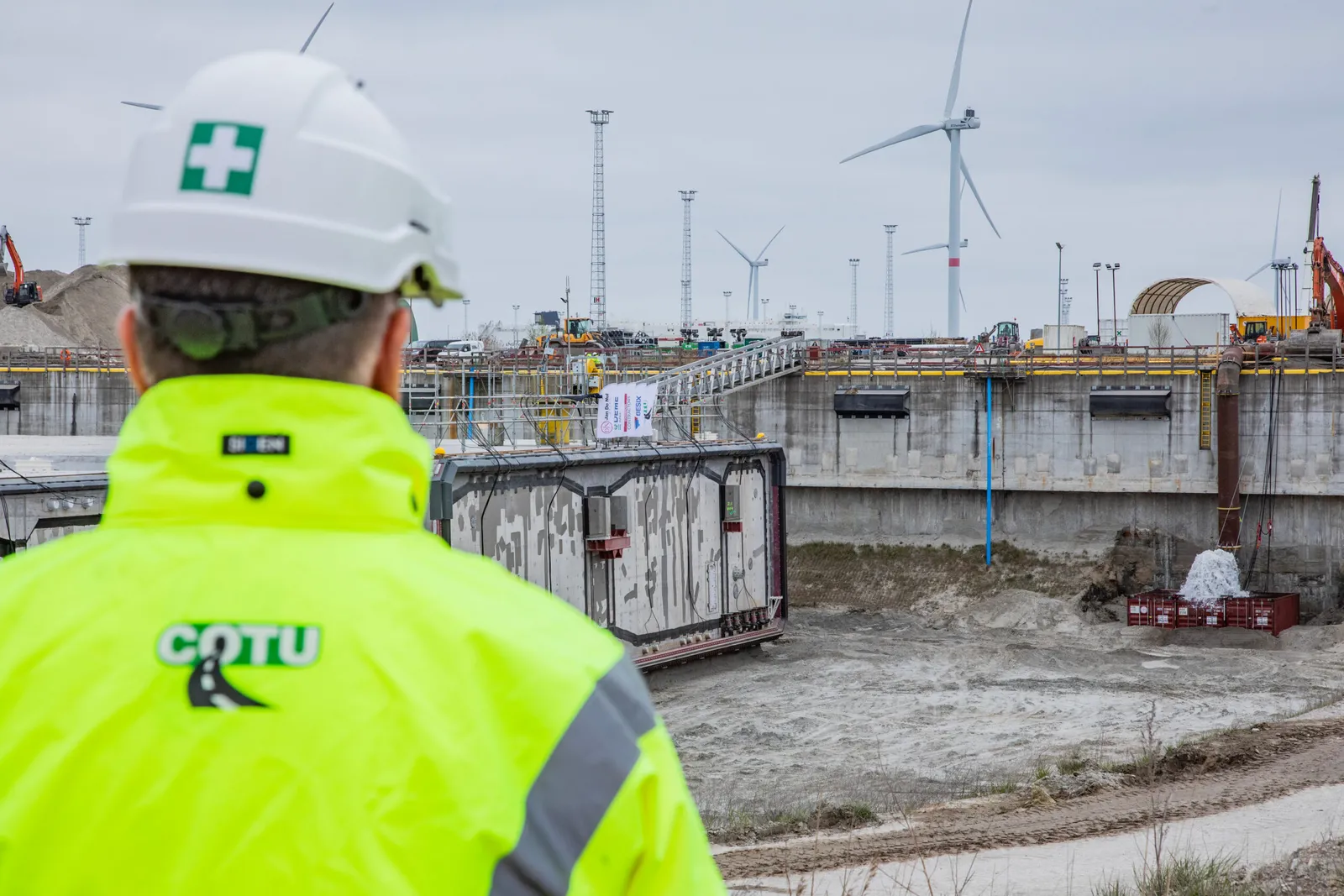
Lantis and contractor TM COTU* are flooding the construction dock in Zeebrugge, marking an important moment for the Scheldt Tunnel project. The eight huge sections of the Scheldt Tunnel have been under construction in the dock for the past two years.
These concrete structures, each as large as a football pitch, are now technically ready for the next stage of their impressive journey: setting off for Antwerp. There, in 2030, they will provide a new crossing of the Scheldt, a crucial link in completing the Antwerp Ring. The Scheldt Tunnel is a key project within the Oosterweel Connection, which will make traffic safer, mobility smoother and the Flemish economy stronger.
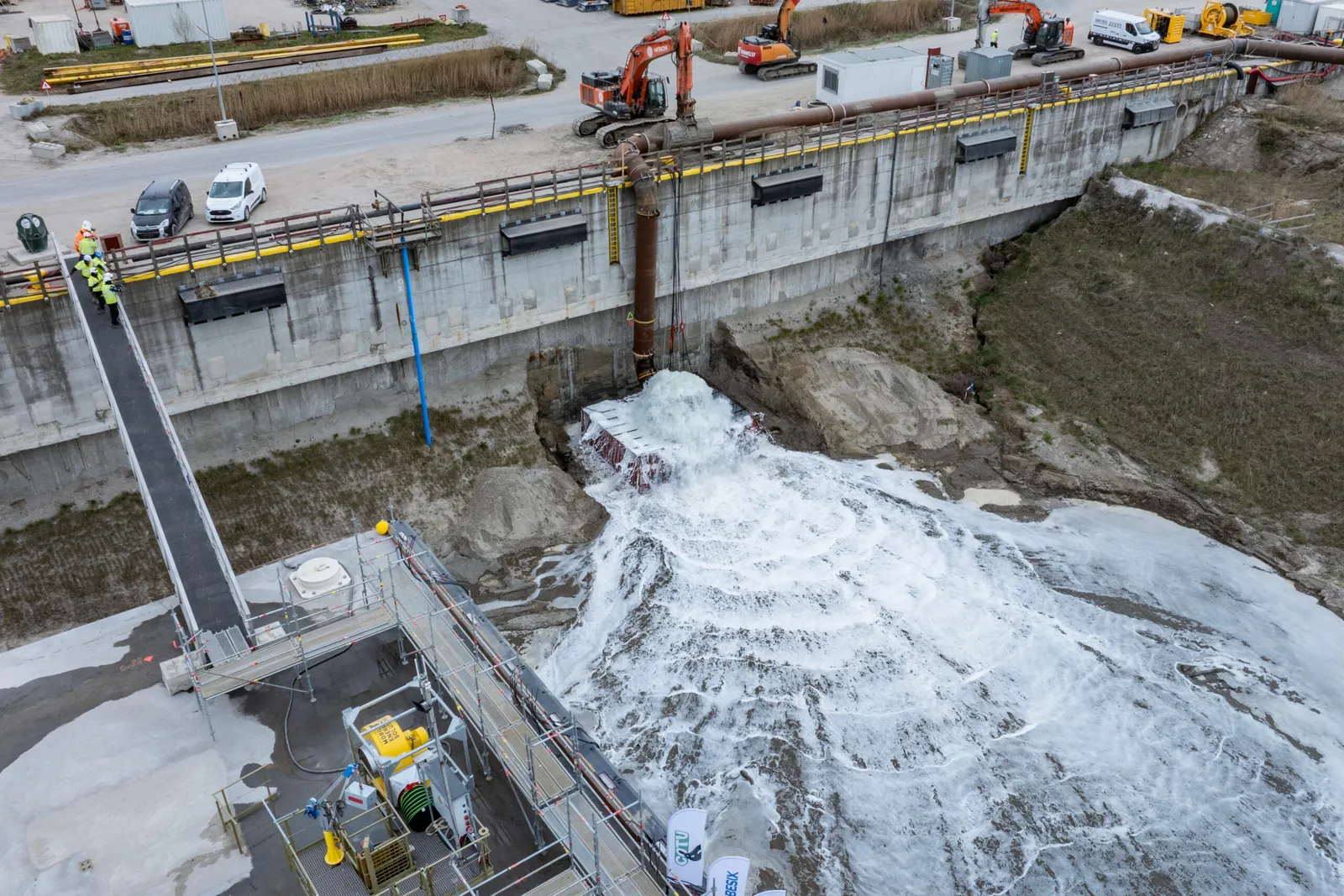
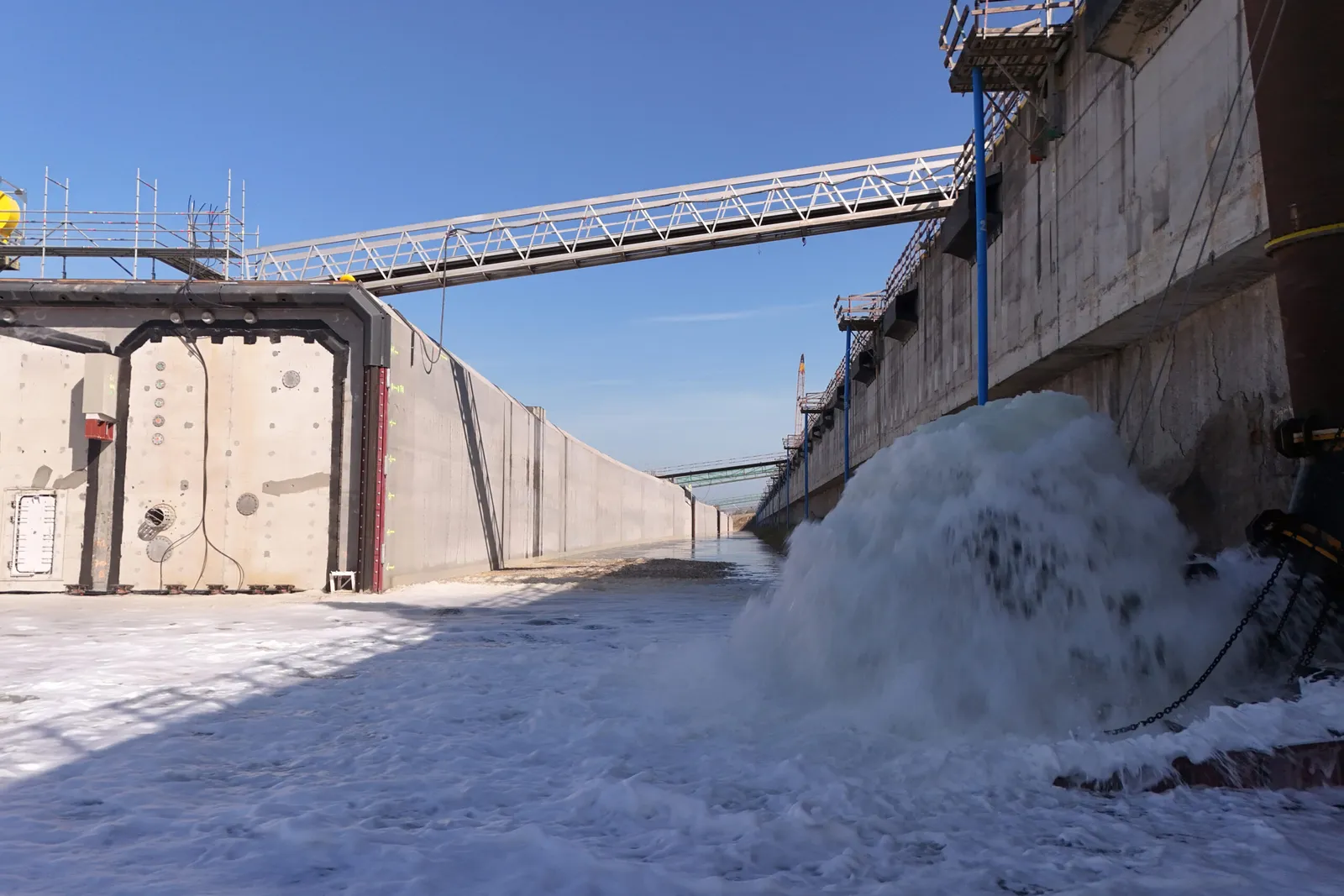
On Thursday 10 April, the sluice gates were opened for the first time at the construction dock in Zeebrugge, home to the eight sections of the Scheldt Tunnel. The construction dock is about 900 metres long and 150 metres wide. It is now gradually filling with up to 800,000 m³ of water, equivalent to 320 Olympic swimming pools. The process will take about a week.
A symbolic turning point
“The filling takes place step by step,” says Bert Claeys, project leader at Lantis. “We are deliberately keeping the filling slow and controlled. That allows us to inspect the tunnel sections regularly for any leaks. Once the dock is completely flooded, the tunnel sections will disappear from view. It is a special moment, as this is one of the last times we will be able to see the tunnel sections we have worked so hard on.”
The next step is to remove part of the dike so that the tunnel sections can leave the construction dock. This will only happen once the dock is completely full. “That may seem odd,” Claeys explains, “but the order is deliberate. Filling the dock first creates a water buffer. This prevents the canal water from suddenly and uncontrollably rushing in when we open the dike, keeping the process safe and controlled. We used the same approach for the breach in the dike on Linkeroever.”
An engineering feat
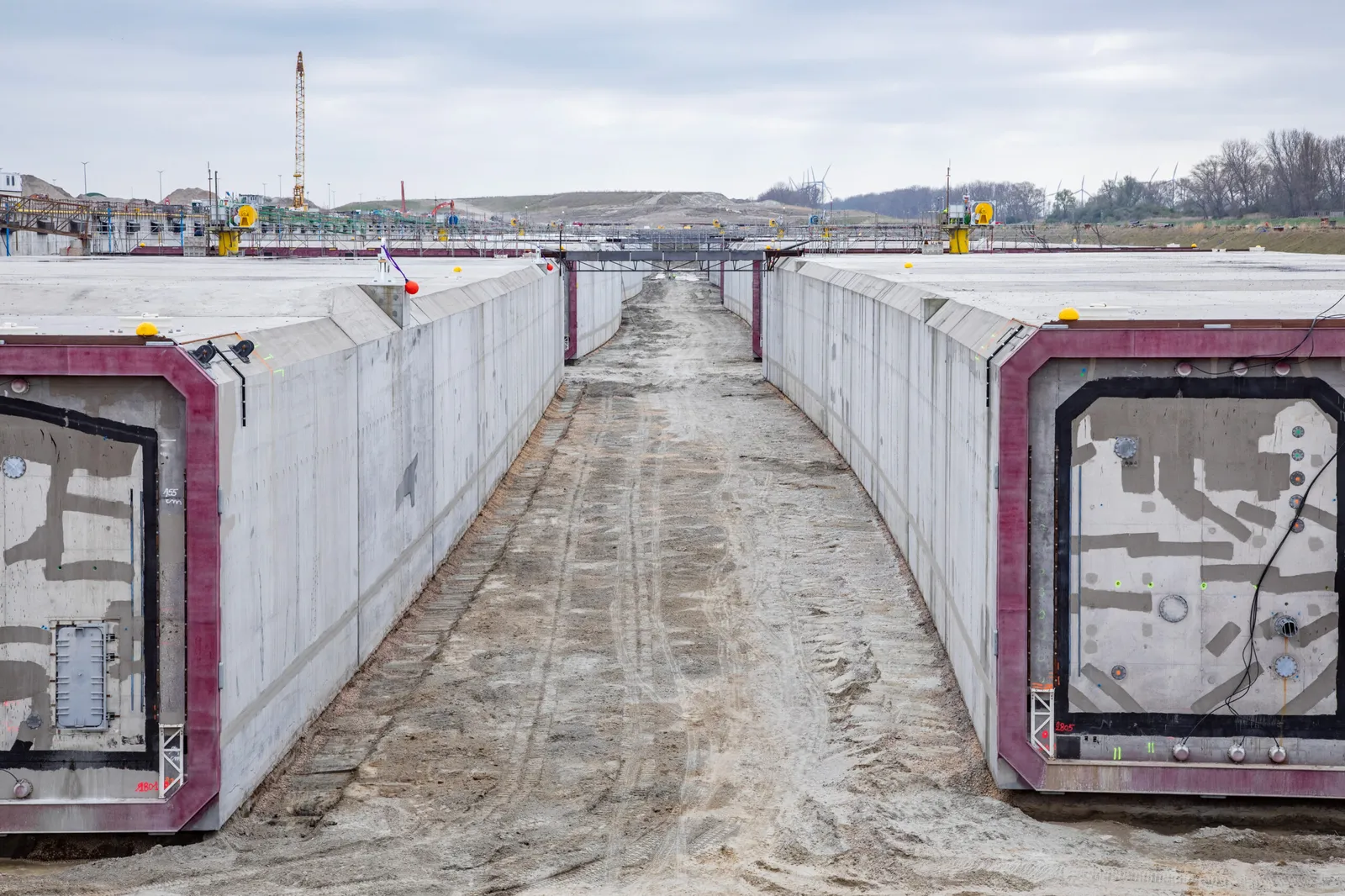
The tunnel sections must not only be watertight, they also need to be able to float and sink. This is important for their transport and for lowering them into their final positions in the Scheldt. In recent months, each tunnel section has therefore been fitted with five ballast tanks: two large tanks with a capacity of 3,000 m³ and three smaller tanks with a capacity of 1,000 m³. The tanks are connected to a pipe system that allows the weight and buoyancy of the tunnel sections to be regulated precisely. The ballast tanks were also filled with water as the construction dock was flooded. This keeps the sections stable on the bottom until they are ready to depart.
Ready for the next phase: the journey to Antwerp
Flooding the construction dock marks the start of a new phase for the project. The tunnel sections, each larger than a football pitch and weighing up to 60,000 tonnes, are ready to begin their journey of more than 100 kilometres to Antwerp. Under the current schedule, the first tunnel section will depart on 19 May 2025.
Each tunnel section will take about 30 hours to travel from Zeebrugge to the Doeldok in Antwerp, stopping at the outer harbour in Zeebrugge and in Terneuzen to wait for high tide. The sections will remain in the Doeldok until they can be immersed around neap tide, which occurs only twice a month. The schedule depends heavily on the tides and weather conditions. The first immersion is scheduled for early July, and all eight tunnel sections are expected to be in position by the end of 2025.
New Scheldt Tunnel completes the Ring
The Scheldt Tunnel consists of two road traffic tubes, a six-metre-wide cycle tube and an escape tube. The tunnel provides an additional crossing beneath the Scheldt and will help complete the Antwerp Ring. By improving traffic flow, the Oosterweel Connection will boost the Flemish economy and make mobility safer.
Cars will be able to use the Scheldt Tunnel in 2030, while cyclists will be able to ride through it from 2028. The entire Oosterweel Connection will open in 2033.
Question about this story? Ask your question
Who worked on Scheldetunnel
- contractorTM COTUMentioned in Transporting the Scheldt Tunnel’s giant elements: preparations in full swing
- bouwkuipstempelingAlmex MetaalMentioned in Transporting the Scheldt Tunnel’s giant elements: preparations in full swing
- clientLantisMentioned in Transporting the Scheldt Tunnel’s giant elements: preparations in full swing
Keep following this
Get an email when a new story is published. No account needed.
- ProjectScheldetunnel
- ThemeExtending the life of bridges and tunnels
- SubjectBridges & tunnels