Lantis prepares the Scheldt for the arrival of Scheldt Tunnel sections
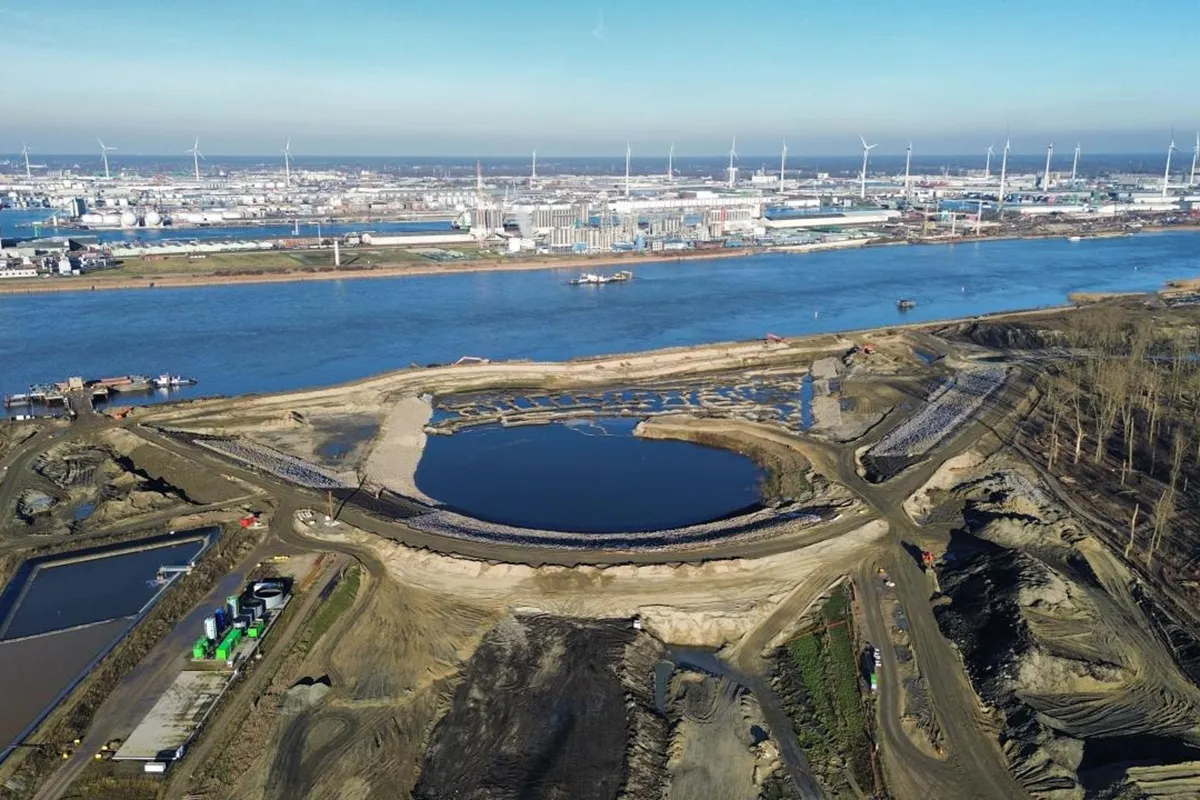
Contractor installs piles in the river and Doeldok
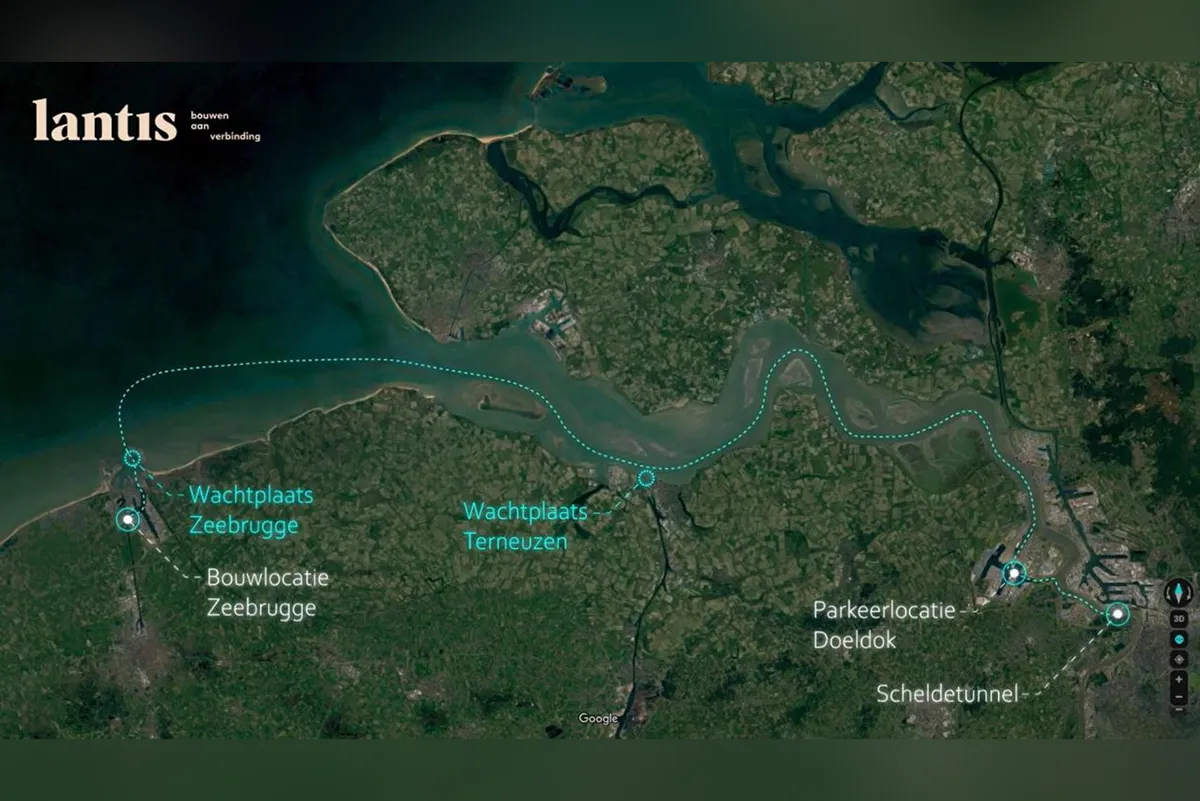
The next major milestone in the Oosterweel works is fast approaching: later this spring, the eight gigantic sections of the new Scheldt Tunnel will begin their journey from Zeebrugge to Antwerp. They will travel via the North Sea and the Scheldt to a temporary holding location in Doeldok in the Waaslandhaven. There, the tunnel sections will wait until they are installed in their final position in the Scheldt, from this summer onwards.
Contractor TM COTU* is preparing Doeldok and both banks of the Scheldt to receive the tunnel sections. In Doeldok, it is installing mooring piles to secure the sections. Similar piles, known as anchor piles, will also be installed in the Scheldt. They are needed when the tunnel sections are sunk into place.
The Scheldt Tunnel will provide the much-needed third crossing of the Scheldt. On the Left Bank, the tunnel will connect to the Sint-Anna interchange (E34 x R1); on the Right Bank, it will emerge at the future Oosterweel interchange and the Canal Tunnels. Together, these will complete the Antwerp Ring.
Tunnel sections to be temporarily held in Doeldok
This spring, the tunnel sections will set off one by one from the port of Zeebrugge for Doeldok in the Waaslandhaven. The journey takes around 30 hours. Unusually, the schedule for transporting and sinking the sections depends not only on technical factors and weather conditions, but also on the tides and the phases of the moon.
En route, each tunnel section will stop twice, once in the outer harbour of Zeebrugge and once in Terneuzen. The transport will preferably take place at high tide, allowing the sections to travel with the current. The sections are then scheduled to be sunk at neap tide, when the difference between high and low water is at its smallest. The current is weaker then. Neap tide lasts around 24 hours and occurs twice a month, around the first and last quarter of the moon.
The tunnel sections will wait for neap tide in Doeldok in the Waaslandhaven, around 10 kilometres from their final location in the Scheldt. The contractor is now installing mooring piles there, sturdy piles commonly used in ports to secure ships, or in this case, tunnel sections.
Anchor piles ensure controlled sinking operation
At the tunnel’s final location, we are installing anchor piles in the riverbed on both banks. These piles can withstand the river’s strong current and play a crucial role in controlling the sinking of the tunnel sections. Special winches, powerful cable systems, will be used to position and hold them securely. This method ensures that each tunnel section can be sunk precisely into its final position.
*TM COTU stands for Tijdelijke Maatschap Combinatie Oosterweeltunnel. The group comprises the Belgian construction companies BESIX, Stadsbader Contractors, DEME and Jan De Nul.
Question about this story? Ask your question
Who worked on Scheldetunnel
- contractorTM COTUMentioned in Transporting the Scheldt Tunnel’s giant elements: preparations in full swing
- bouwkuipstempelingAlmex MetaalMentioned in Transporting the Scheldt Tunnel’s giant elements: preparations in full swing
- clientLantisMentioned in Transporting the Scheldt Tunnel’s giant elements: preparations in full swing
Keep following this
Get an email when a new story is published. No account needed.
- ProjectScheldetunnel
- SubjectBridges & tunnels