









Drinking water from fresh, brackish and North Sea water by 2025
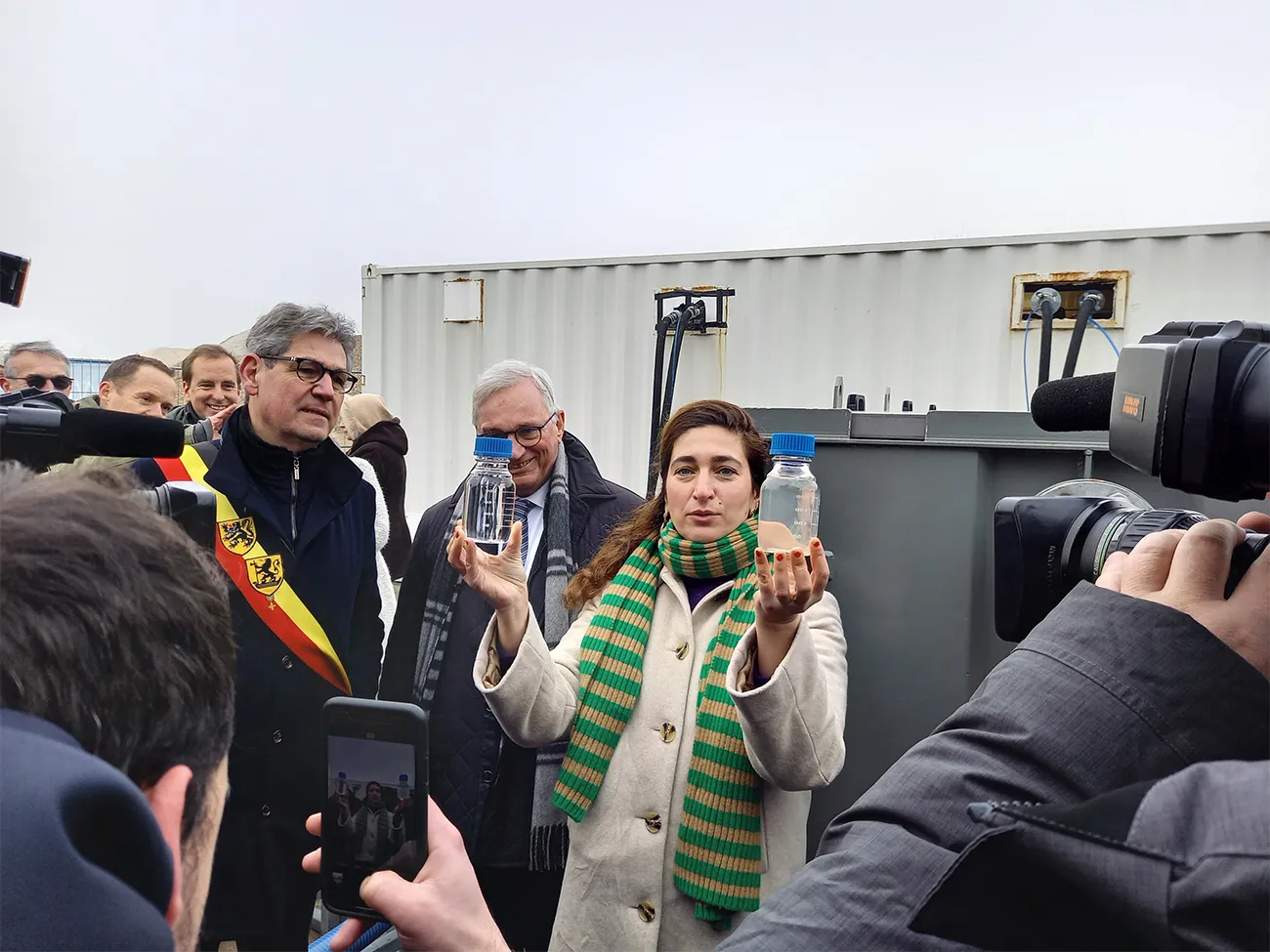
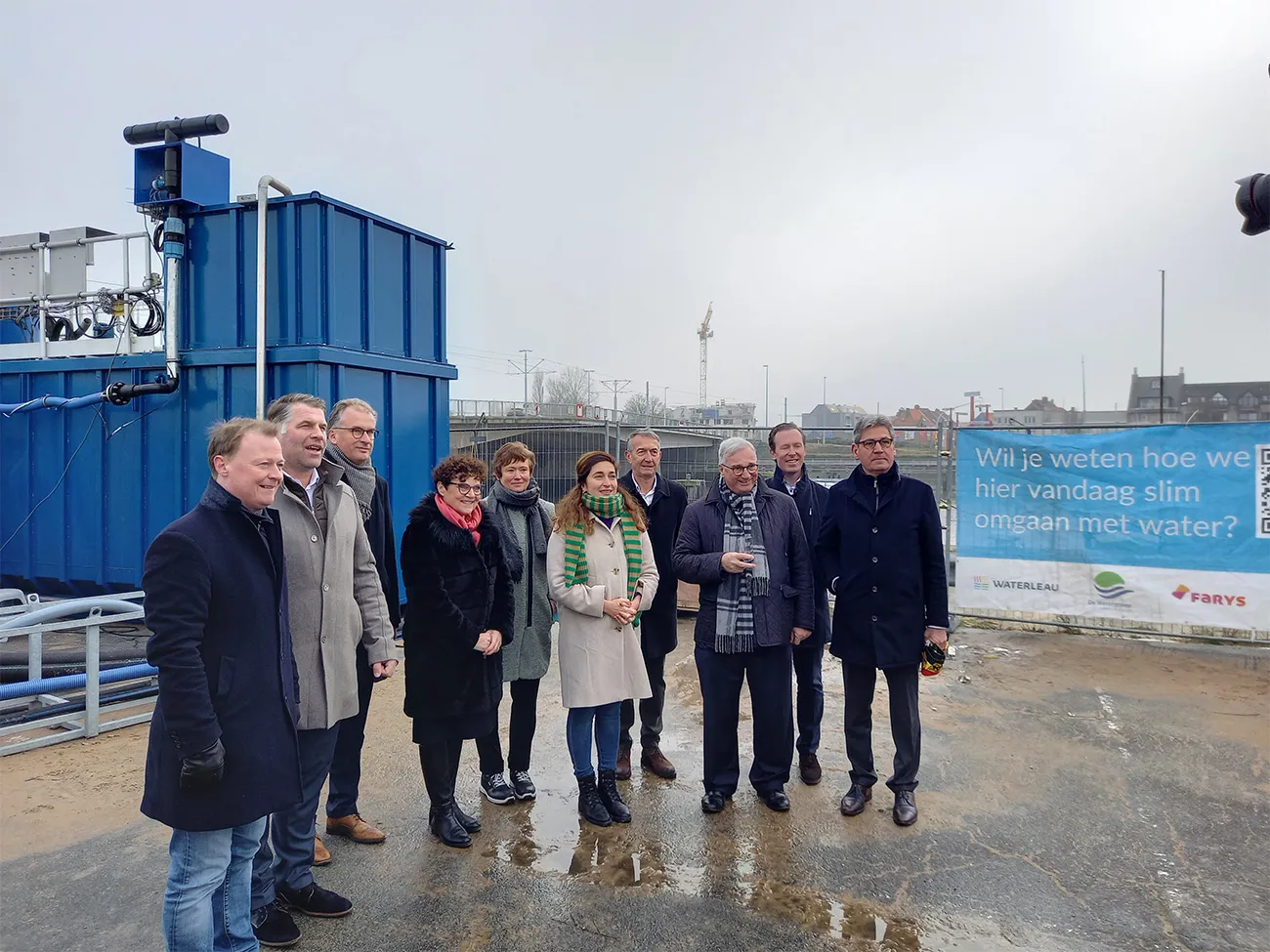
On 15 January 2022, Aquaduin, De Watergroep and FARYS, in the presence of Flemish Minister for the Environment Zuhal Demir, launched a unique pilot project: a pilot plant to purify fresh, brackish and salt water to drinking water standards. The De Ganzepoot pilot project is a key pillar of the 3 water companies’ strategy to build a climate-resilient water supply. This includes tapping new sources that remain available even during prolonged drought.
The pilot plant in Nieuwpoort is now set to run for at least 3 months, replicating the membrane stage of the water production process on a smaller scale. If the innovative technology delivers positive test results, a new water production centre will be built by 2025, supplying drinking water to more than 30,000 households.
The De Ganzenpoot pilot project
At the De Ganzepoot lock complex at the mouth of the IJzer, 6 waterways meet the North Sea. This means an unlimited supply of a range of fresh, brackish and salt water is available all year round for treatment into drinking water. Quality sensors at 9 points in the lock complex monitor the quality of incoming water. The pilot plant, built inside a container, must now use innovative technology to tackle the biggest challenge: treating different qualities of raw water in a single plant while keeping energy consumption as low as possible.
Using innovative technology
Water treatment in this pilot plant uses CCRO technology (Closed Circuit Reverse Osmosis), which uses reverse osmosis membranes. Put simply, this water treatment system uses membrane filtration: water is pumped at very high pressure through a filter with microscopic openings. The membrane is designed to let through only the small molecules of pure water. This technology automatically adjusts the purification process to the composition of the incoming ‘feedwater’.
This innovative technology offers a number of potential advantages over other advanced solutions. CCRO delivers good performance across different salinity levels and also uses less energy. The concept’s main strength is that a single technology can treat different types of incoming water with varying salt content. The best available quality is used: if sufficient fresh or brackish water is available, that is the preferred option. During periods of drought and water scarcity, salt water can be used. Choosing the best available quality keeps the ecological footprint as low as possible. The flexibility of the plant also enables the water companies to ensure greater operational security.
Climate-resilient water supply
For various reasons, West Flanders is vulnerable to a decline in groundwater and surface water reserves, including high industrial consumption and the seasonal pattern of water use in coastal municipalities. Tapping seawater as an alternative source of drinking water means drawing on a new resource that helps build a climate-resilient water supply. Drinking water supplies in other parts of Flanders also benefit from this innovation, as less water needs to be brought in from inland areas. That water therefore remains available for other uses. In an emergency, drinking water can even be sent from the coast inland through the existing distribution network.
Pilot plant commissioned
The pilot plant was commissioned in early January. The 3 water companies are investing a total of 300,000 euros in the pilot plant. The testing phase will last at least 3 months. After that, a new water production centre can be designed and built based on the test results from this and other technologies. By 2025, the three water companies aim to produce around 4 million m³ of drinking water a year from a mix of fresh, brackish and seawater thanks to this project.
Question about this story? Ask your question
Who worked on it
Proefproject De Ganzepoot in Nieuwpoort
- waterbedrijvenAquaduin
- waterbedrijvenDe Watergroep
- waterbedrijvenFARYS
Keep following this
Get an email when a new story is published. No account needed.
- ProjectProefproject De Ganzepoot
- ThemeRenewing pipelines and sewers
- SubjectHydraulic engineering
- CompanyAquaduin
- CompanyDe Watergroep
- CompanyFARYS







