









Works on Ostend harbour entrance channel completed
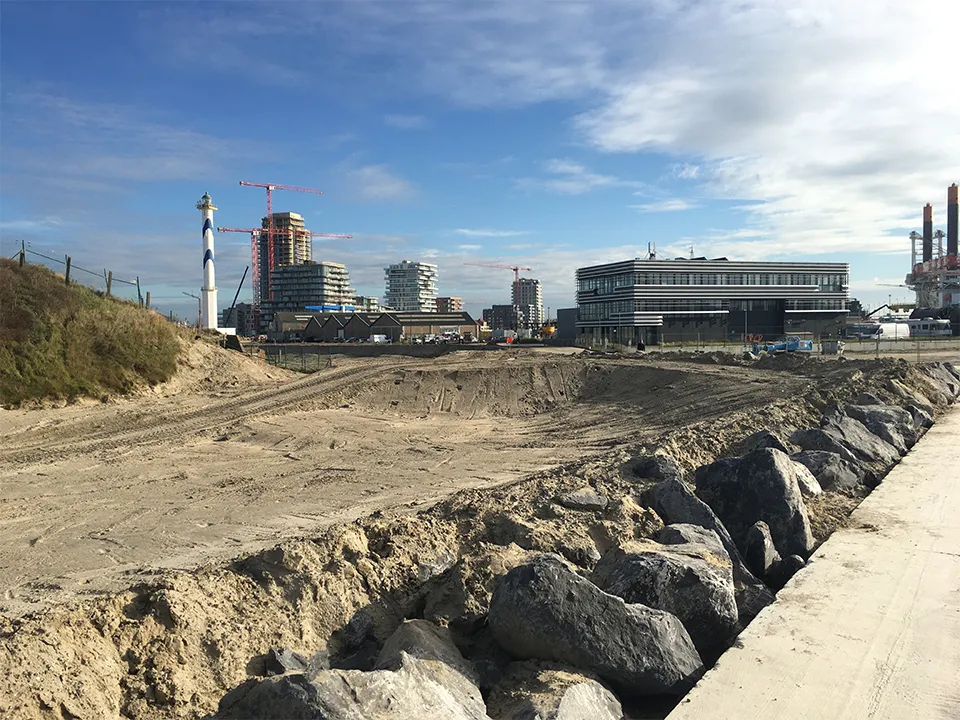
Work on the Halve Maandijk in Ostend is virtually complete. Ostend harbour will soon be accessible to vessels up to 200 metres long. “Flanders invested €23 million to protect Ostend from flooding and enable the harbour to continue growing,” says Lydia Peeters, Flemish Minister for Mobility and Public Works. The City of Ostend will now complete the Groen Lint on the east bank and agree arrangements with Natuurpunt for managing the newly created nature reserve for protected birds and plants.
Good for the harbour and the city
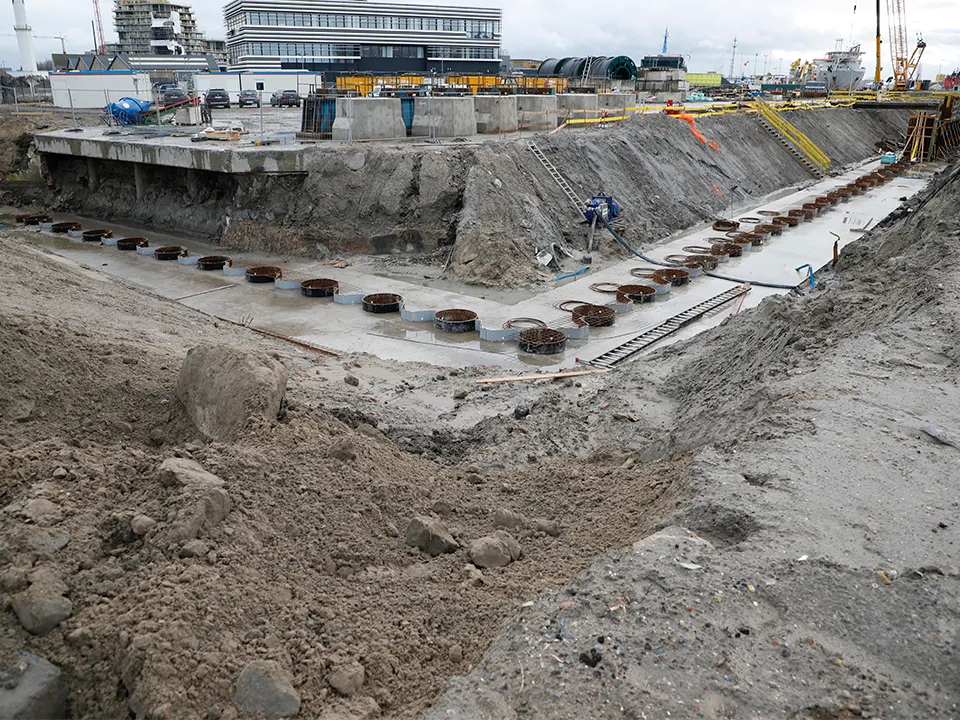
Ostend harbour will soon be accessible to vessels up to 200 m long, including large jumbo ferries, cruise ships, cargo vessels and installation vessels for wind turbines. The entrance channel has been widened to 125 m at the front of the Halve Maan site. At the rear, near the entrance to the Visserijsluis, the channel is now 145 m wide. Only deepening the navigation channel remains to be done. The necessary dredging work is scheduled for next year. “The widening of the harbour entrance channel is the final maritime element of the integrated plan for coastal protection and maritime access in Ostend,” says Flemish Minister Lydia Peeters. “We can be proud of the result. This work protects Ostend from flooding and improves access to the harbour. Both the city and the harbour stand to benefit.”
Completion almost six months ahead of schedule
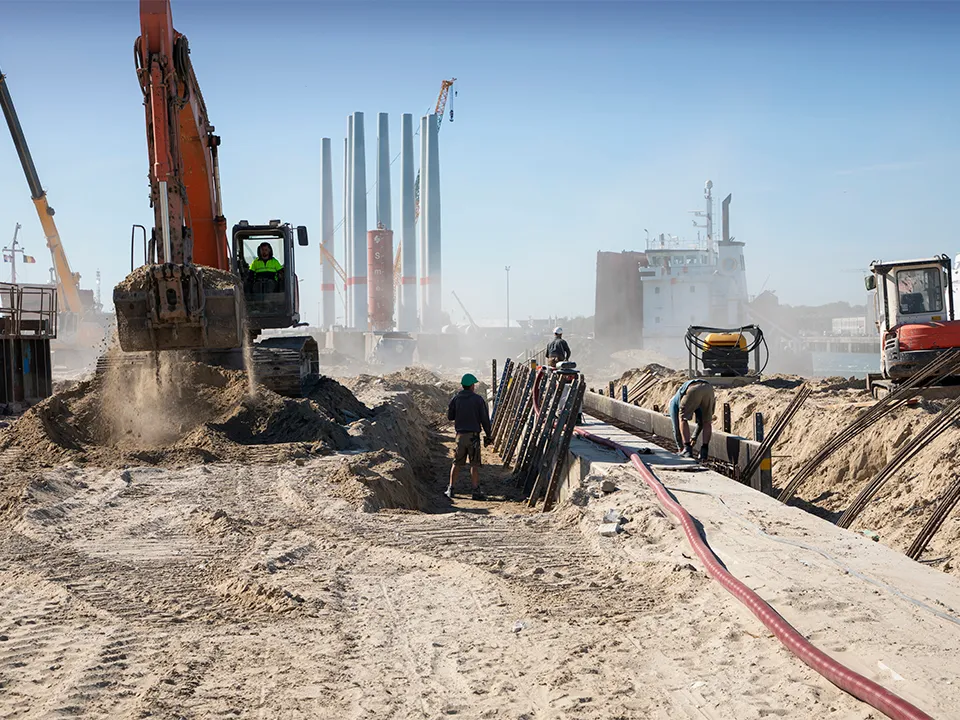
The work on the Halvemaandijk in Ostend was commissioned by the Maritime Access division of the Department of Mobility and Public Works. The Temporary Joint Venture Jan De Nul, Soetaert, Smet carried out the work. The total cost is just under €23 million. Work began in May 2019, and provisional completion is expected almost six months ahead of schedule. “Many construction sites were temporarily closed this spring because of coronavirus. That was not the case here. The contractor continued working throughout, even in sometimes difficult conditions, while adhering to strict safety measures,” says Flemish Minister Lydia Peeters. The work had only a limited impact on shipping. The contractor worked alongside the existing navigation channel wherever possible.
Overview of the work
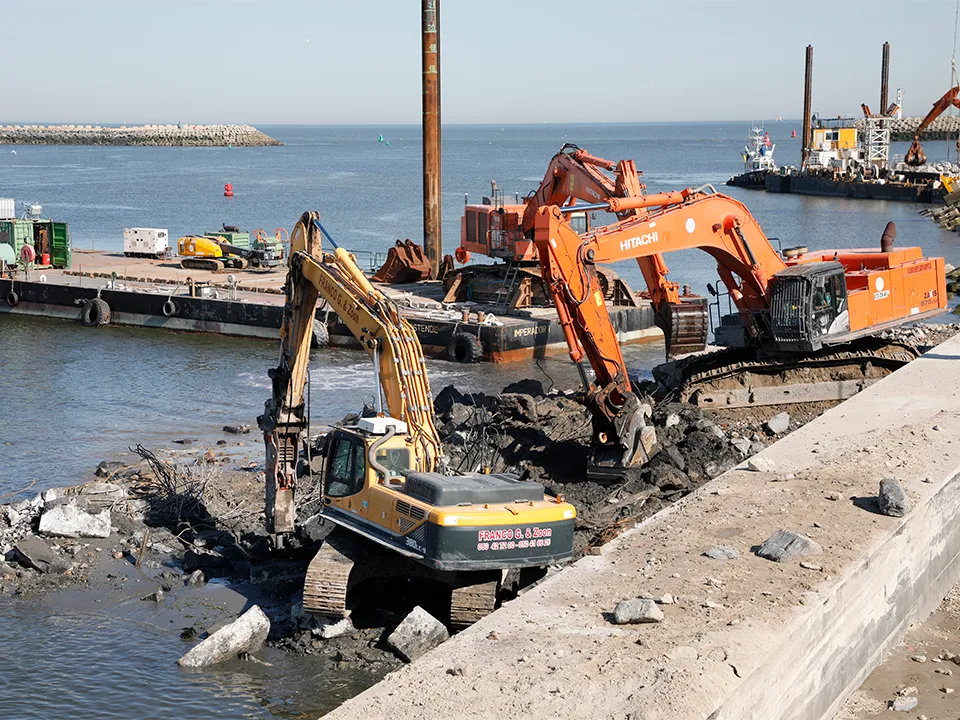
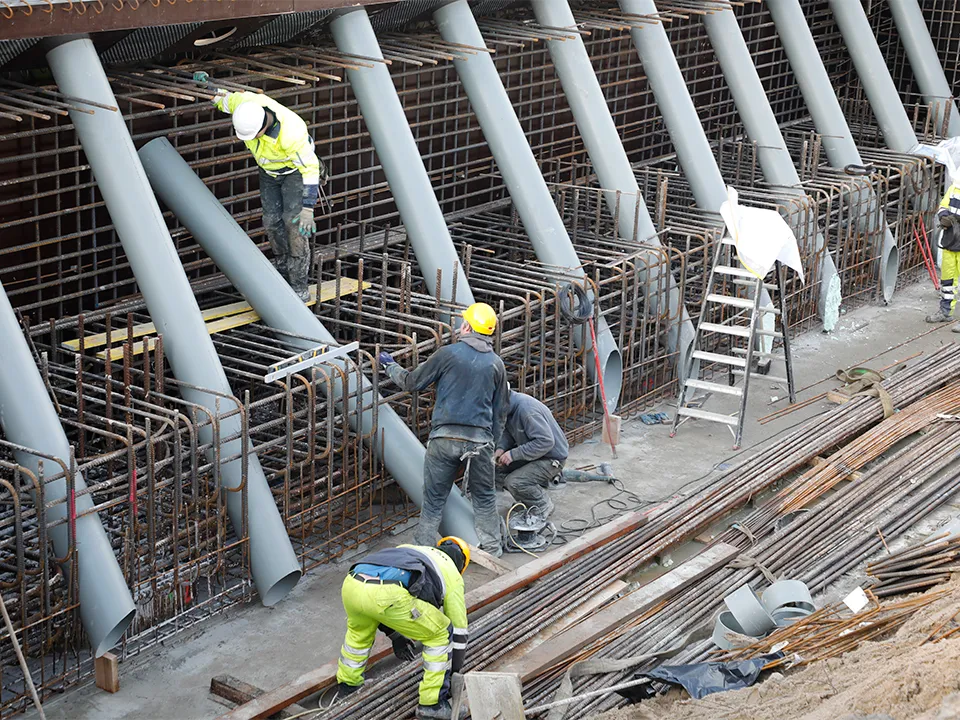
· In the southern section, a vertical wall with an underwater berm was installed.
· A new slope was built alongside the navigation channel. Its surface layer consists largely of concrete HARO blocks.
· The existing slope on the northern side was reinforced with a layer of HARO blocks.
· The area east of the new slope was redeveloped as a nature reserve.
Remains of the Leopoldsluis and unexploded ordnance
Widening the harbour entrance channel was no easy task. “Building infrastructure underwater is never straightforward, but we have always set the bar high and closely monitored the work,” says Jan Goemaere, head of the Ports and Coastal Districts unit at Maritime Access. During the work, remains of the former Leopoldsluis were uncovered. The lock was built between 1853 and 1862, during the reign of King Leopold I, and served as a third sluice basin and discharge lock. In 1922, the Leopoldsluis was filled in to make way for the new fishing harbour (1922-1934). “The remains of the Leopoldsluis were more robust than anticipated. Removing them was labour-intensive. We also found, among other things, an old lock gate and unexploded ordnance. This is not unusual. This area has a rich history and, as a result, contains many objects foreign to the natural ground. The ordnance was disposed of by DOVO, the Belgian Army’s explosive ordnance disposal service, with the necessary safety measures in place.”
1.2 ha of new dunes and extension of the Groen Lint
In recent years, the City of Ostend has also carried out work on Ostend’s east bank and will resume it in the near future. “The aim is to complete the Groen Lint, the car-free cycle route linking Ostend’s green spaces,” says Mayor Bart Tommelein. “Around the lighthouse, we will also create 1.2 ha of new dunes. We will build a boardwalk between the Duin en Zee site and the Spinoladijk, improving accessibility. We are grateful to the Flemish government for its close cooperation and for the infrastructure it has already provided.” Around the Halve Maan battery, the bunker complex built by the Germans during the Second World War, Maritime Access has excavated two depressions as part of nature restoration work. “Together with Natuurpunt and the Agency for Nature and Forests, we want to create a fenced-off area of nature there: a safe haven for the various protected birds and plants that live on our east bank,” says Tommelein.
Question about this story? Ask your question
Wie aan Verbreding havengeul ter hoogte van Halve Maan werkte
- grondankeractiviteitenSMET F&CMentioned in Ostend, De Halve Maan | Ground anchoring works on Halve Maandijk successfully completed
- waterbouwkundige en civiele werkenJan De Nul-SoetaertMentioned in Ostend, De Halve Maan | Ground anchoring works on Halve Maandijk successfully completed
- contractorTijdelijke Vereniging Jan De Nul: Soetaert: SmetIn this story
Keep following this
Get an email when a new story is published. No account needed.
- ProjectVerbreding havengeul ter hoogte van Halve Maan
- SubjectHydraulic engineering
- CompanyTijdelijke Vereniging Jan De Nul – Soetaert – Smet







