









Inland shipping sees strongest quarterly rise since 2016
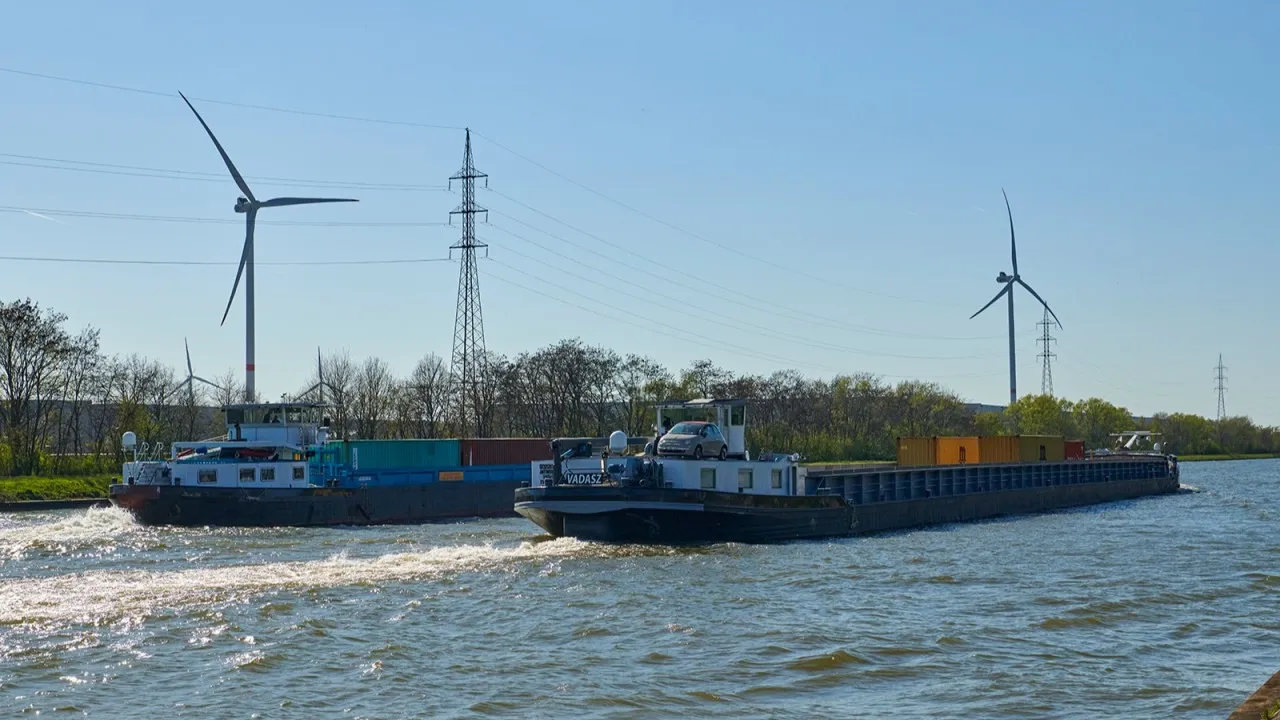
De Vlaamse Waterweg nv reports a favourable trend in inland shipping, despite the challenging economic climate. A total of 66.084.675 tonnes of goods was carried on Flemish waterways in 2024, an increase of 4,90% on the previous year. The trend in the fourth quarter is particularly encouraging. These increases show that inland shipping remains an important pillar of the Flemish economy.
In the fourth quarter of 2024, the tonnage carried rose by 20,25% compared with the same quarter in 2023. Container traffic also increased by 7,99% over the same period. “This is the strongest quarterly rise since 2016,” says Annick De Ridder, Flemish Minister for Mobility, Public Works, Ports and Sport. ”That is a positive trend, but we need to get even more out of our major investments. Transport by river and canal is seamlessly connected to our ports, the engine of our economy. Inland shipping has enormous potential, but it is underused. That is why we will consult the sector in the short term to explore what is needed to increase inland shipping’s share of freight transport.”
Waterborne transport therefore has scope to grow and contribute even more to a more sustainable and efficient transport network in Flanders. Krista Maes, acting chief executive officer of De Vlaamse Waterweg nv, agrees: “Despite a difficult economic climate, with geopolitical tensions and high energy and labour costs, inland shipping remains a stable and reliable transport solution. The 2024 traffic figures give us cause for optimism. The blue motorway is ready for enterprising Flanders.”
Growth across most goods groups
The strong fourth quarter resulted in an overall 4,90% increase in tonnage to 66.084.675 tonnes, while container transport stabilised at 742.689 TEU (-0,16%) in 2024. Looking at the goods groups, the increases were most marked for fertilisers (+29,06%), manufactured goods (+16,37%), petroleum products (+15,05%) and ores (+13,19%). Declines were recorded for miscellaneous goods (-7,77%) and solid fuels (-11,28%).
Ports strengthen links with inland shipping
The positive performance of inland shipping is also reflected in growth figures for Flemish ports. North Sea Port saw a 4,4% increase in inland shipping throughput, with dry bulk and liquid petroleum fuels among the key growth segments. Port of Antwerp-Bruges, meanwhile, reported total cargo throughput of 278 million tonnes in 2024, up 2,3%, with container traffic rising by 8,9%. The synergy between ports and inland shipping highlights how the two sectors work together to support a sustainable and efficient transport network in Flanders.
Investing to grow
As usual, the lion’s share of freight was carried on the Albert Canal (35.463.342 tonnes, +6,62%). The Seine-Scheldt axis and the ABC axis1 carried 18,4 and 12,2 million tonnes respectively (-0,13% and +2,68%). Almost 7 in 10 containers travelled via the Albert Canal (514.433, +2,89%), while 144.130 TEU (-13,40%) and 85.503 TEU (+2,96%) were carried on the ABC axis and the Seine-Scheldt axis respectively.
“With De Vlaamse Waterweg nv, we are creating the smooth, safe and innovative waterway network of the future,” says Koen Anciaux, Chair of the Board of Directors of De Vlaamse Waterweg nv. “We are not only expanding capacity on all the main waterways, but also introducing remote control and traffic management, in the interests of a prosperous Flanders,” Anciaux concludes.
Question about this story? Ask your question
Keep following this
Get an email when a new story is published. No account needed.
- ThemeStrengthening waterways and coastlines
- SubjectHydraulic engineering







