









Sewerage & underground infrastructure
VLARIO Day: Mayor, will you also choose clean, resilient water?
Text VLARIO / Niels Rouvrois Beeld VLARIO
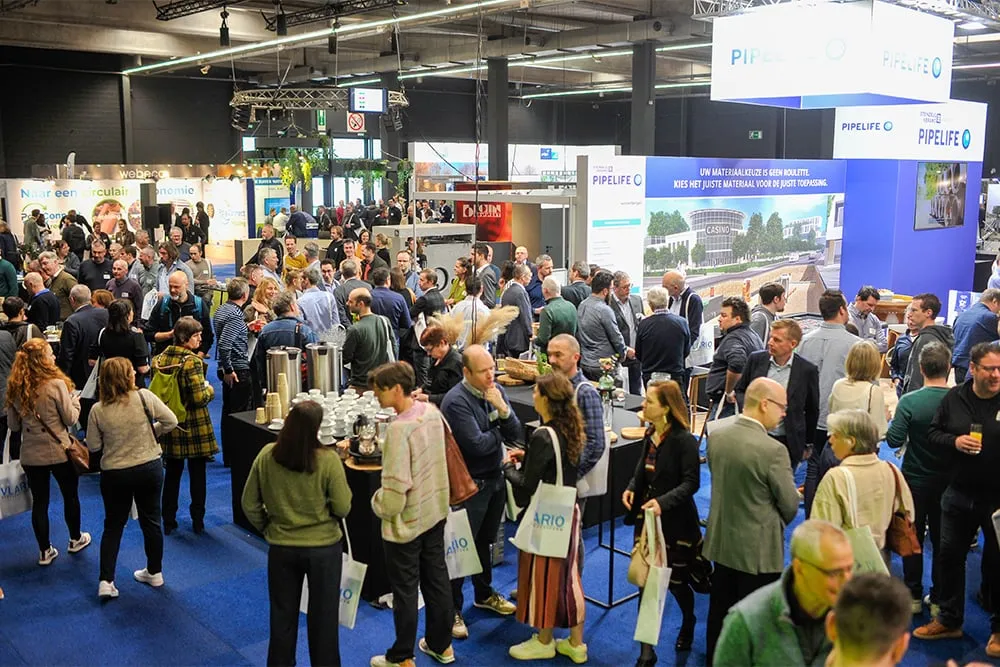
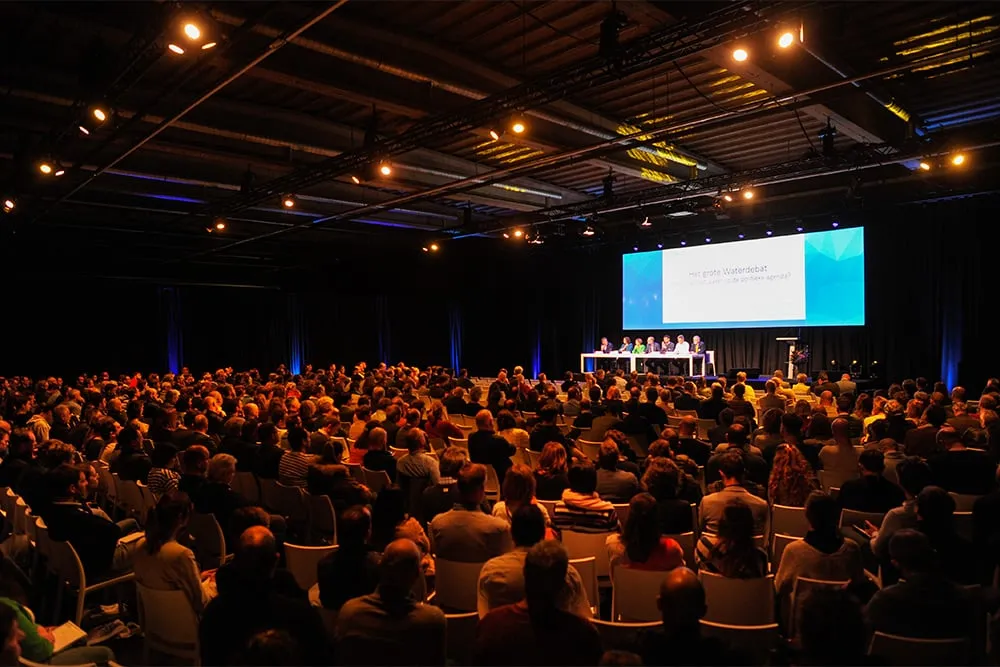
On 26 March, Antwerp Expo hosted VLARIO Day, now a fixture in the events calendar. Flemish Minister for the Environment Zuhal Demir opened the event and called the sewerage sector an important partner in achieving policy objectives. Prof. Dr. Patrick Willems, chair of VLARIO, once again put the Resilient Waterland recommendations in the spotlight. Setting clear, achievable goals is crucial.
In her opening remarks, Minister Demir looked back at the achievements of the previous legislative term, highlighting the Blue Deal’s focus on creating space for water. Significant efforts have been made, but the work is certainly not finished. An investment programme must also be drawn up and implemented in the next legislative term to retain more water. The government must lead by example. It is important that the Flemish Urban Development Regulation on Rainwater also sets requirements for storage and infiltration in public spaces. The technical background document was amended to ensure this can be done in a practical way.
There are also major challenges in wastewater collection: good governance means that existing sewers must be properly maintained and replaced in good time. Investment in extending the network must continue. This year, the Flemish Government made 25% more funding available for sewerage projects, bringing the total to 153 million euros.
Resilient Waterland
In his presentation, Professor Willems briefly looked back at the past year, which saw a long period of drought followed by an exceptionally wet winter. The wet winter brought plenty of water, but does not sufficiently prepare us for future droughts, as too much water still runs off or is drained away. “To become climate-resilient, we need to retain 10 to 20% more rainwater through measures such as weirs in ditches, small-scale landscape features, wetland restoration and smart control,” he said with conviction.
Willems championed the Resilient Waterland recommendations, which call for clear targets to be translated by regional coalitions into an action programme for each sub-catchment. These should preferably include green-blue measures that take advantage of opportunities to combine benefits. The priority is to retain water and increase storage capacity in valleys. Only if that proves insufficient should more dykes and (temporary!) water discharge be considered.
Using water mindfully
Riet Lismont, knowledge management project leader at VLARIO, presented the results and solutions on behalf of the Water-conscious Building Coock project consortium. The aim is to increase resilience to drought and flooding in built-up areas by promoting the use of innovative individual and collective techniques. Riet Willems said: “We have the solution in our own hands, because we can meet 60% of our water needs with rainwater and second-circuit water instead of drinking water. And that is precisely the challenge in Flanders: protecting ourselves against the effects of drought and using water more mindfully. There are many possibilities, but the reality today is that obstacles still need to be removed before these techniques can be put into practice. There is currently little or no incentive for property owners. The consortium also made a number of policy recommendations to help make progress in this area.”
Decentralised treatment
Geert Wellens, Plan W manager at Aquafin, demonstrated the decision-support toolbox for the installation of decentralised treatment systems. Decentralised treatment can help speed up wastewater treatment in rural areas. The toolbox helps sewerage managers make an informed choice between installing individual wastewater treatment plants (IBA’s), constructing a connecting sewer to the existing central network, or building a separate sewer network connected to a small-scale wastewater treatment plant (KWZI). For each of the possible solutions, the toolbox shows the treatment efficiency and financial impact.
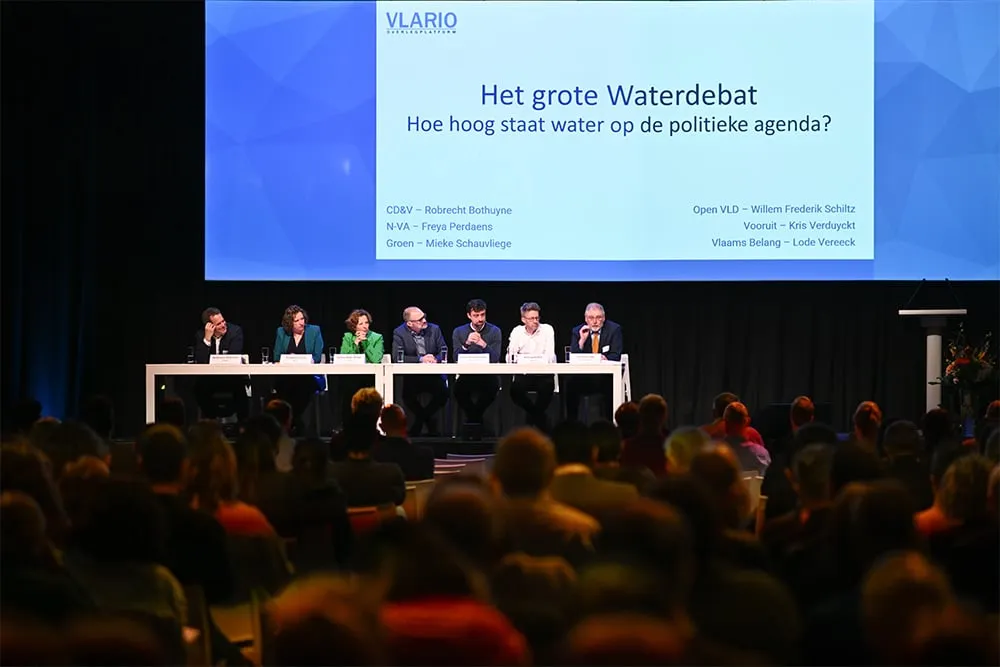
Kris Van den Belt, head of water supply and municipal wastewater treatment at the Flemish Environment Agency, in turn introduced the main new elements of the revised European Urban Wastewater Treatment Directive. He explained a series of articles, focusing on their impact on sewerage managers. The policy debate brought the substantive part of the programme to a close, with Robrecht Bothuyne (CD&V), Freya Perdaens (N-VA), Mieke Schauvliege (Groen), Willem Frederik Schiltz (Open VLD), Kris Verduyckt (Vooruit) and Lode Vereeck (Vlaams Belang). The debate covered three topics: funding, organisation and rainwater management. A report is available at www.vlario.be.
Question about this story? Ask your question
Keep following this
Get an email when a new story is published. No account needed.
- ThemeRenewing pipelines and sewers
- SubjectSewerage & underground infrastructure







