









Sewerage & underground infrastructure
The benefits of vacuum excavation over digging
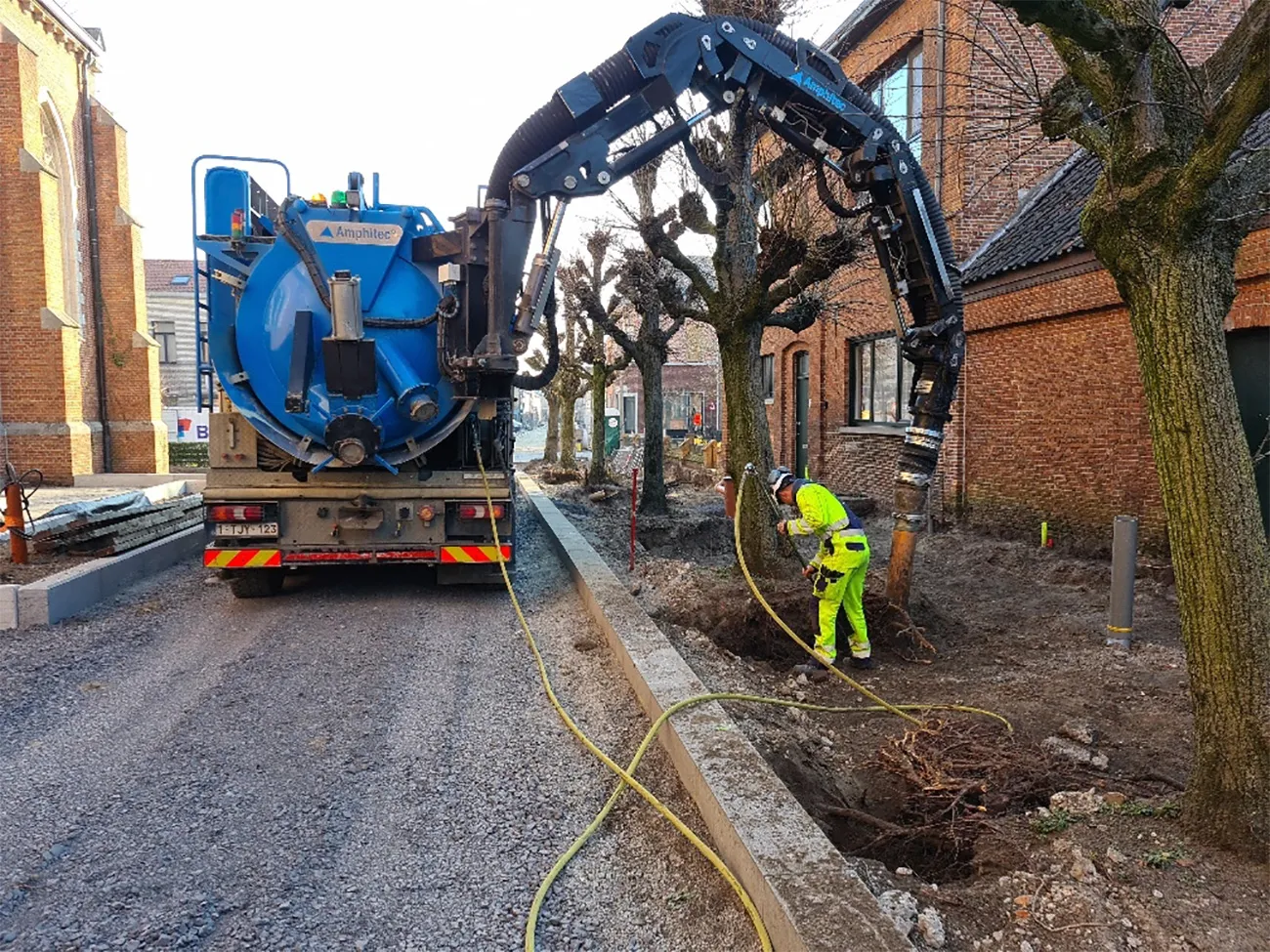
According to specialist Prima-Clean, the benefits of vacuum excavation are still not widely known enough. But a great deal of work is being done to convince contractors, network operators and public authorities of its many benefits. And this is necessary, because the ground is becoming increasingly congested with utilities, which also increases the risk of damage. “Using a vacuum excavator can prevent a lot of problems,” says Cris Van Durme, managing director of Prima-Clean.
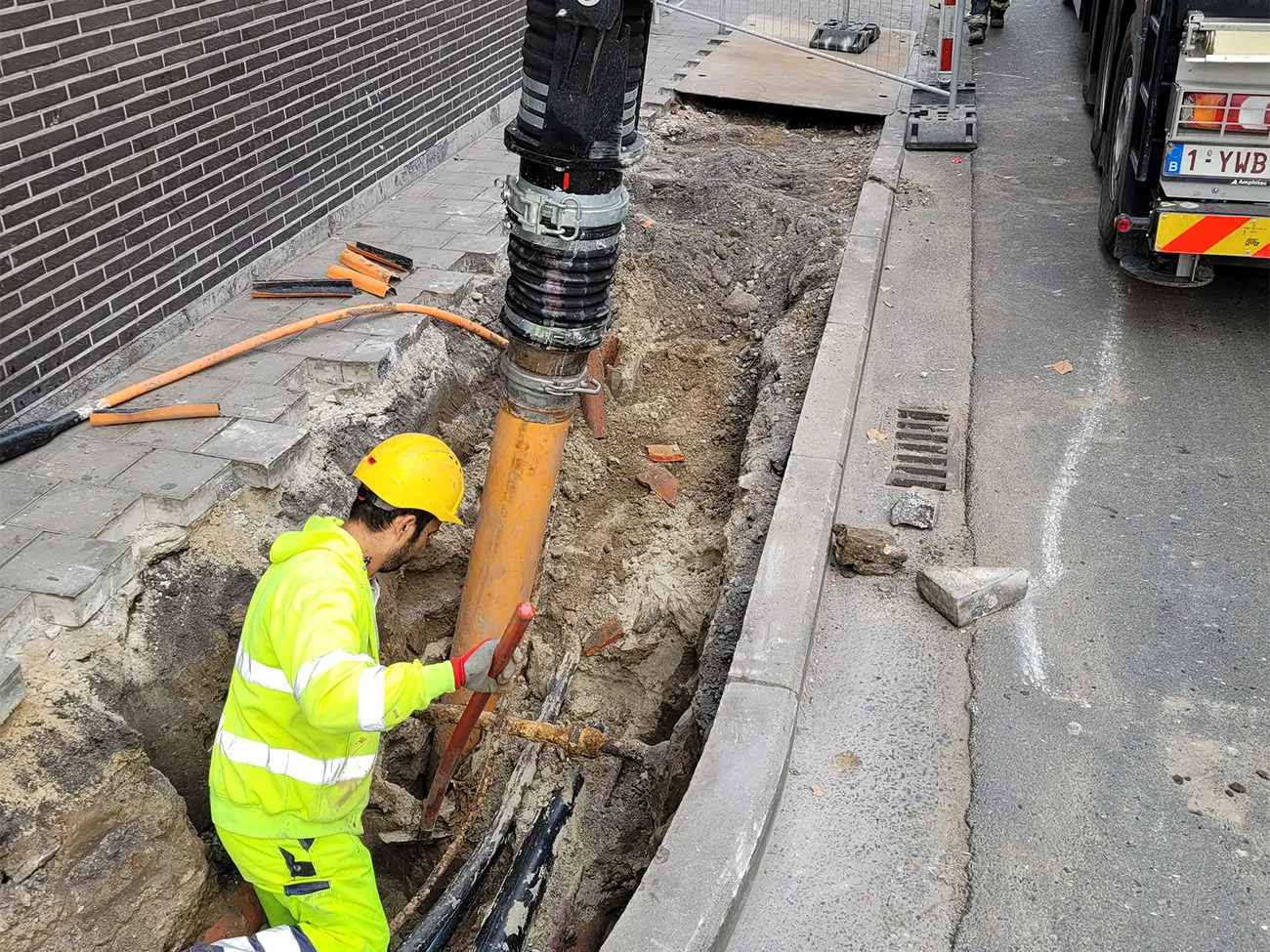
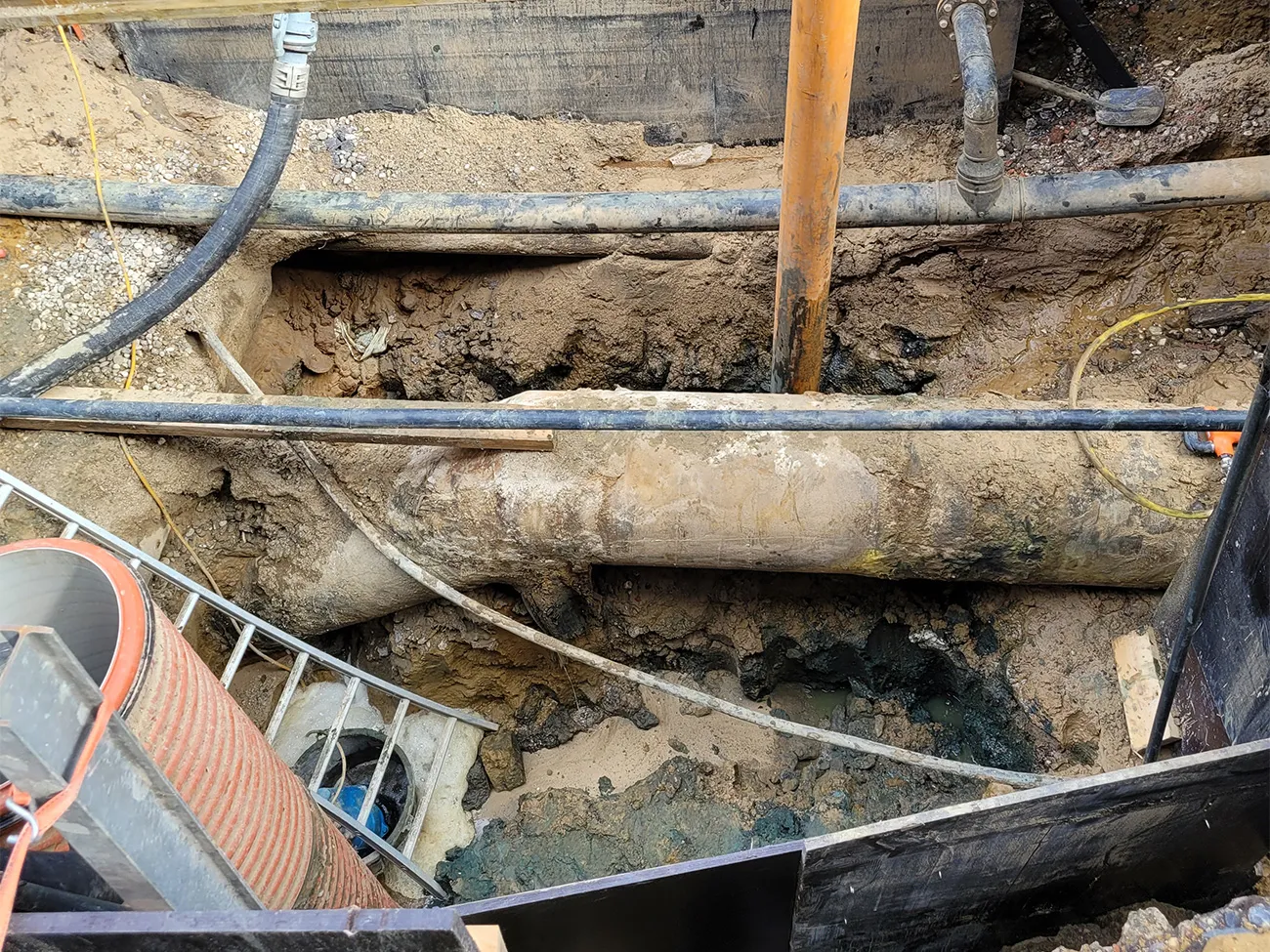
Where there is little room to manoeuvre, such as between and beneath cables and pipes, and around valves, vacuum excavation is an efficient, safe and ergonomic way to excavate without causing damage. Cris Van Durme says: “And at a pace no shovel can match. Where there is enough space and no utilities underground, it is better to dig with an excavator. But vacuum excavation is an ideal alternative for delicate jobs, which are becoming increasingly common.”
There are several reasons to choose vacuum excavation. Cris Van Durme says: “In industry and petrochemicals, safety is the main reason, as there are often pipes carrying gas, liquids or hot water underground. Damage to these pipes can cause very serious injuries. In addition, these sites often have many high-voltage cables and data cables underground. Downtime caused by excavation damage can result in major financial losses for companies, which is why vacuum excavators are often chosen.”
Underground infrastructure
Vacuum excavation is becoming increasingly popular in the civil engineering sector. Cris Van Durme says: “We are increasingly being asked to excavate trial trenches ahead of works, so that investigations can be carried out. This gives the contractor a clearer picture of the underground infrastructure. We are also seeing an increase in damage incidents as excavation work increases. This is cause for serious concern, given the consequences such damage can have. Insurance companies are also monitoring the situation closely and increasing contractors’ excesses, leaving many damage incidents uninsured. This can take a huge bite out of the budget each year.”
Multifunctional
That budget might be better spent on preventing excavation damage. “The five most common types of excavation damage are damage to data cables, low-voltage cables, low-pressure gas pipes, water pipes and medium-voltage cables,” Cris Van Durme continues. “If you hit one of these, companies and private individuals can be left without power or internet for hours. We are also seeing our vehicles used more often in hard-to-reach places, or to vacuum soil away from tree roots near mature trees. There can be several reasons for this. For example, improving growing conditions, laying cables or pipes beneath the roots, or removing trees whose roots have grown around cables and pipes. Our vehicles are also used to vacuum out basements, crawl spaces and silos, remove roof gravel, and empty elevator pits at concrete plants, among other things.
Continuing to improve
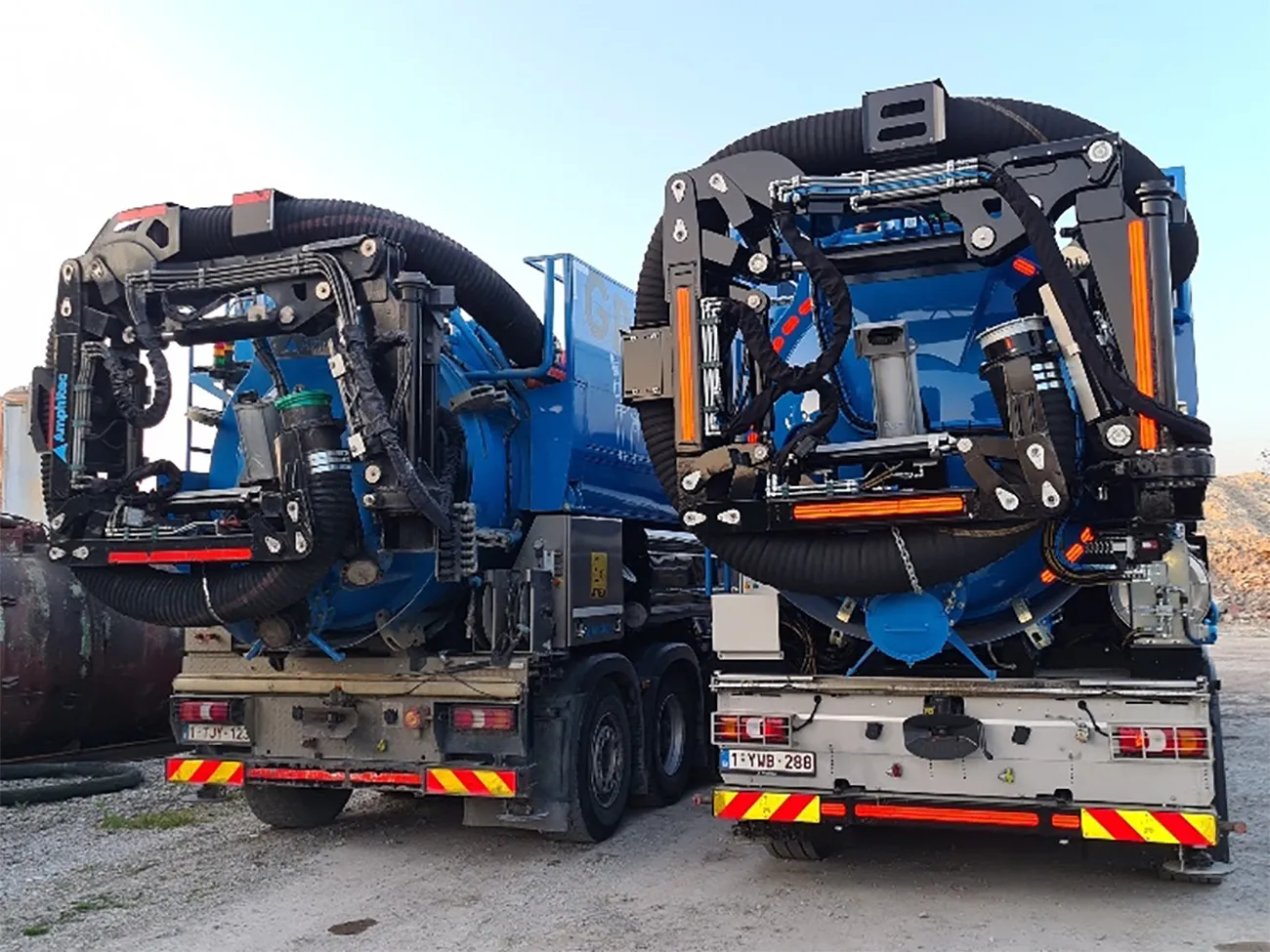
Prima-Clean’s vacuum excavators have made enormous progress in their development over the past 8 years. Cris Van Durme says: “We are always striving to improve because we remain committed to our motto: good work can only be done with good equipment, and the best is just good enough! That is why Prima-Clean excavates soil using vortex 18000 vacuum excavators. These machines are specially designed, with a 10-inch remote-controlled suction arm, to remove soil, sand, clay or stones around cables and pipes as safely and efficiently as possible in all conditions. They are special and unique in their class because they can generate a full vacuum of up to 96%, which loosens the soil. This greatly reduces the amount of preliminary digging required.”
Continuing to grow
A major advantage of Prima-Clean’s unique vehicles is that they can also vacuum up wet material and clay with ease. “Our vehicles are all built on a reliable Mercedes Arocs 8×4 with a tridem axle configuration and all the necessary equipment. Reco-drive, compressor, high pressure, high lift for tipping into containers … They are even ATEX-equipped for carrying out the most delicate work in places where there is a risk of explosion. Gas leaks are one example. We were already proud to announce in Grond/Weg/Waterbouw that we had purchased a second vehicle. It is now fully operational, and a third is on the way so that we can keep pace with the growing market,” concludes Cris Van Durme.
Question about this story? Ask your question
Keep following this
Get an email when a new story is published. No account needed.
- ThemeUsing and protecting the subsurface
- SubjectSewerage & underground infrastructure







