









Sewerage & underground infrastructure
New technology is a breakthrough for underground works
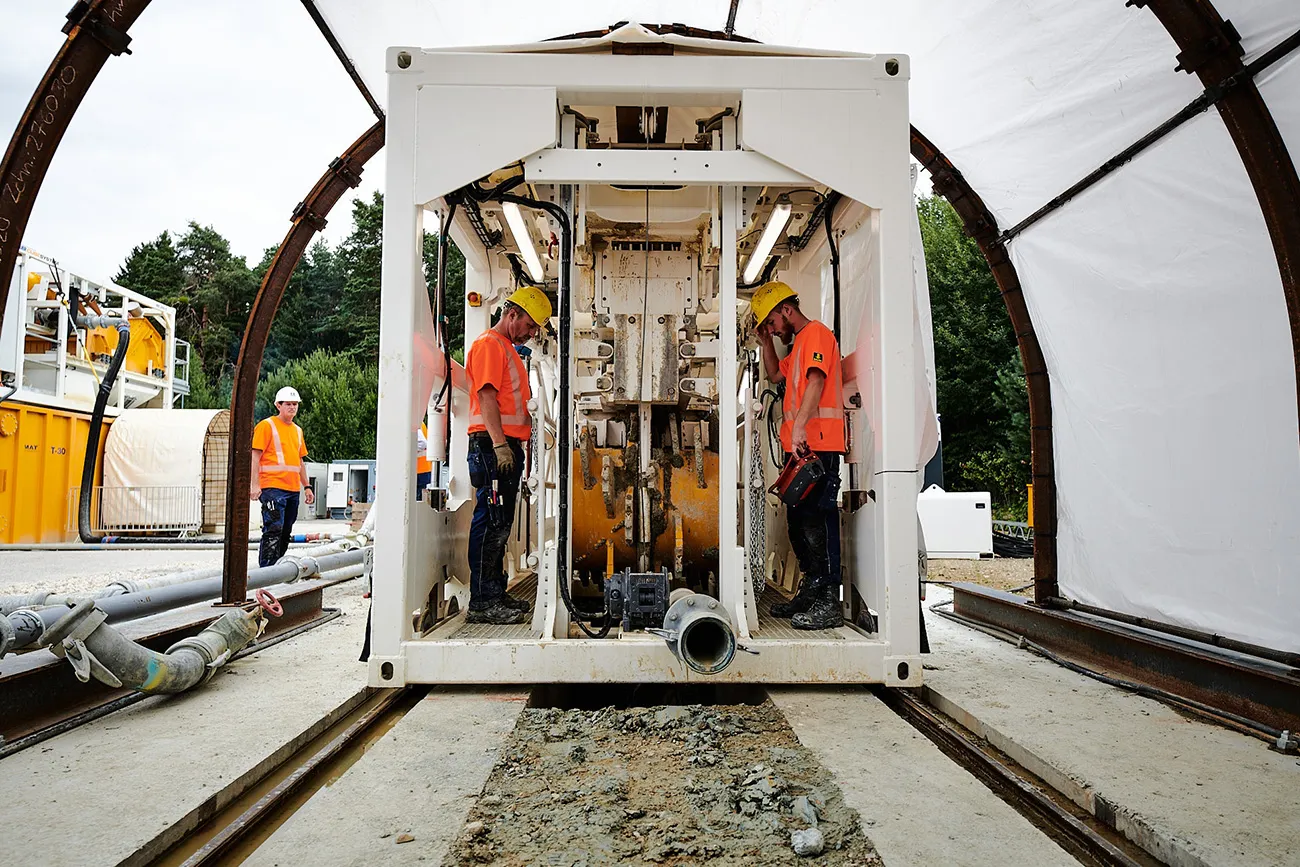
Carrying out underground works in densely built-up cities is becoming increasingly difficult because of the disruption they cause above ground. To address this, infrastructure specialist Denys developed Dreamcutter technology together with machine manufacturer Bauer. It makes underground projects faster and safer, and can also be used below the water table.
Denys came up with the idea around ten years ago, during a project to connect a pre-metro line to an existing route on the Schuman-Josaphat railway line in Brussels. To build this underground junction, the company still used the conventional technique of a braced trench. “That is obviously not the safest technique,” says Maarten Vanneste, R&D manager at Denys. “A trench 1.5 metres wide and sometimes 20 to 30 metres deep is not ergonomic for the workers who have to work in it. There is also a risk of collapse and of falling objects. A 20th-century technique, still being used in the 21st, you might say.”
Combining innovations
At Denys, they decided that things had to be faster and safer. “In response, we built the WallSlotRobot, a mechanised alternative to the braced trench. But we also wanted the option of excavating the wall below the groundwater level.” A few years ago, the R&D team approached Bauer, known for its Hydrocutter technology, in which two large cutters excavate the ground. Vanneste says: “We were looking for a way to combine both innovations.”
Verticality
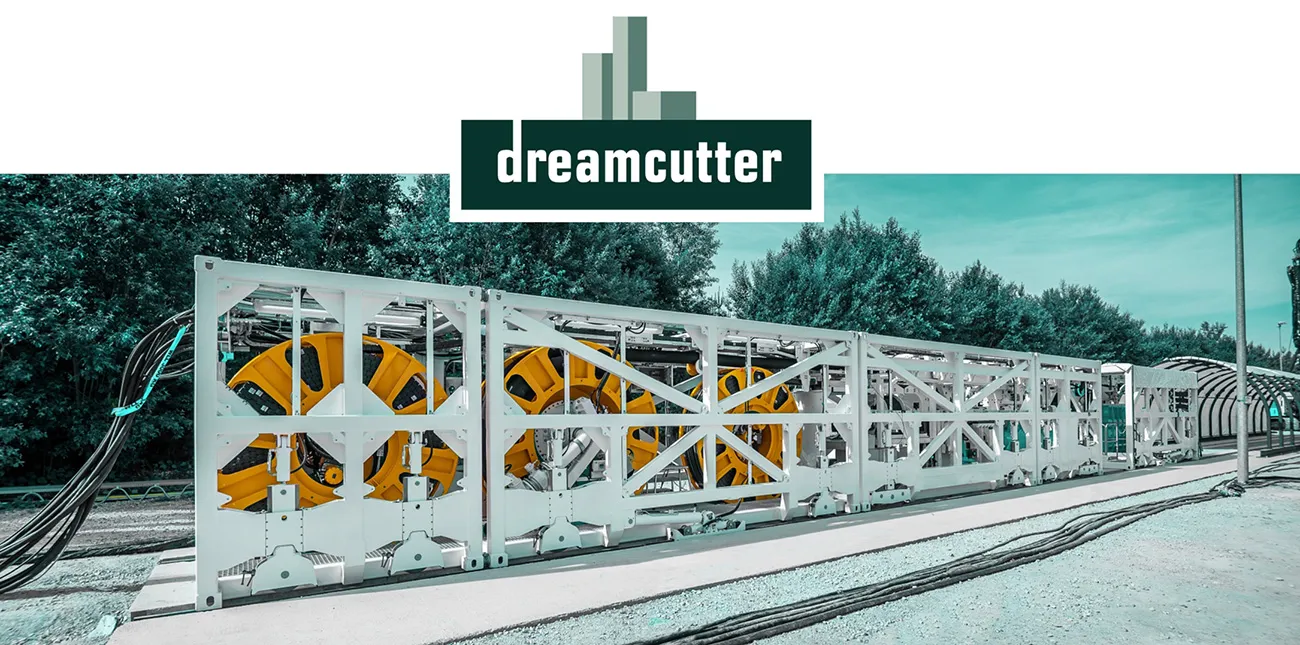
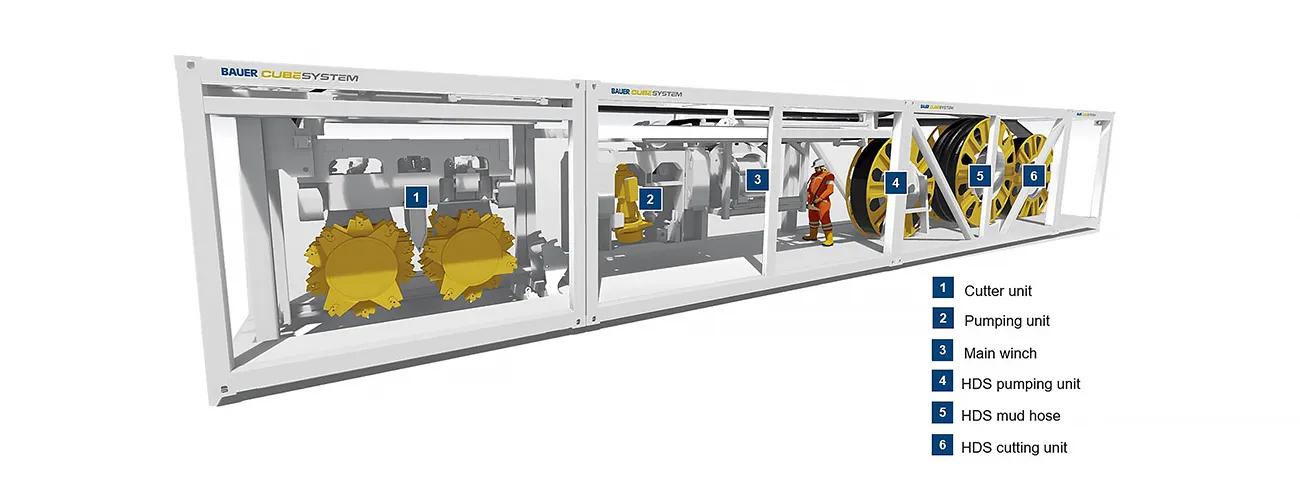
The result of this collaboration is Dreamcutter technology, which adapts the existing Hydrocutter in scale and orientation so it can fit into a low-clearance tunnel. The machine comprises four separate containers, the Cube System, each 2.9 metres high and together barely 18 metres long. Workers lower them one by one into the shaft, then slide them along a guide wall in the tunnel. The cutter and pump are two separate units, positioned one on top of the other. “This gives you sufficient height, which is important for keeping the wall vertical,” says Vanneste. “A fourth container holds the hydraulic hoses for the bentonite. There is also a concreting and reinforcement container, where the reinforcement cages are connected to each other and lowered into position.”
Milled into concrete
A major advantage of this technique is that no one needs to be in the trench, significantly improving safety. “By scaling down the Hydrocutter technology and using bentonite as a support fluid, Dreamcutter also enables us to take on projects where the wall needs to extend below the water table,” says Vanneste. “We create a watertight joint between the panels by milling about twenty centimetres into the primary panel when constructing the secondary panels: an established concept that we have adapted for our Dreamcutter technology.
Underground challenges
Denys hopes to use this innovation in a wide range of projects, from underground car parks and metro lines to data centres and water storage facilities. “In other words, all underground challenges in densely populated areas,” says Vanneste. “We also see potential for above-ground applications where headroom is limited, such as under bridges.”
Denys will soon present Dreamcutter technology to the general public. Vanneste says: “We have already tested the technology extensively at Bauer’s site in Germany. But at the end of September, we will do the same at our site here in Belgium. This will allow clients and engineering consultancies to see for themselves what innovation we have to offer.”
Question about this story? Ask your question
Keep following this
Get an email when a new story is published. No account needed.
- ThemeUsing and protecting the subsurface
- SubjectSewerage & underground infrastructure







