









Sewerage & underground infrastructure
Complex dewatering for a wastewater treatment plant project
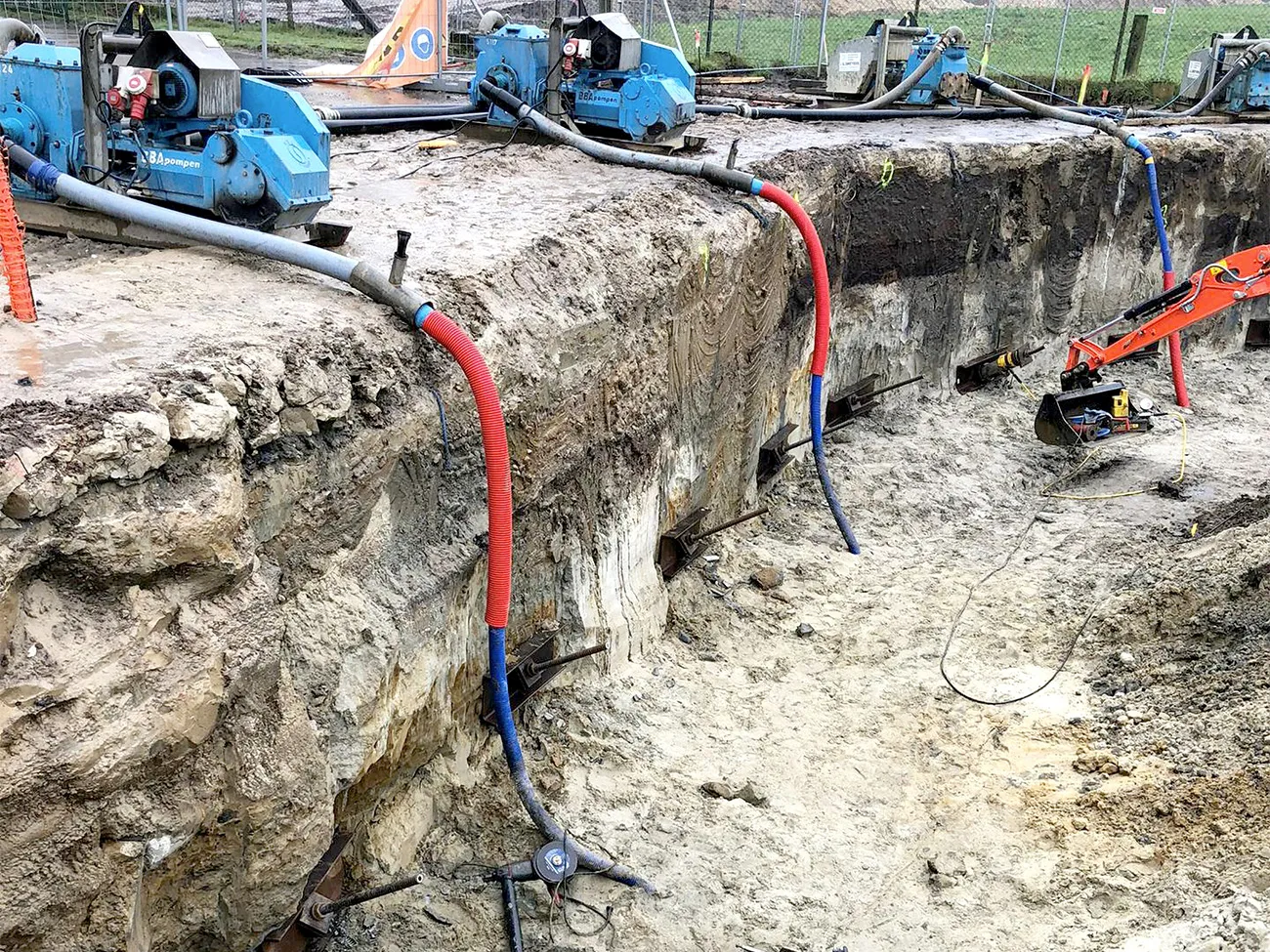
Aquafin built a wastewater treatment plant (WWTP) in Lichtaart in 1981. However, the plant no longer meets current discharge standards, so it had to be upgraded and refurbished.
The new civil engineering works comprise the construction of an additional selector tank, mechanical treatment facilities, additional aeration basins and secondary clarifiers. The existing sludge treatment and digestion facilities are also being upgraded, while the new structures are being integrated into the operation of the existing WWTP via newly installed underground pipelines.
Keeping the plant operational
Several old structures also had to be demolished to make way for the new structures, but the WWTP had to remain operational throughout the renovation works. The contract to upgrade the WWTP was awarded to Colas, Agentschap Noord-Oost in Heusden Zolder. Colas called on G. Smeyers of Zandhoven to carry out the dewatering works.
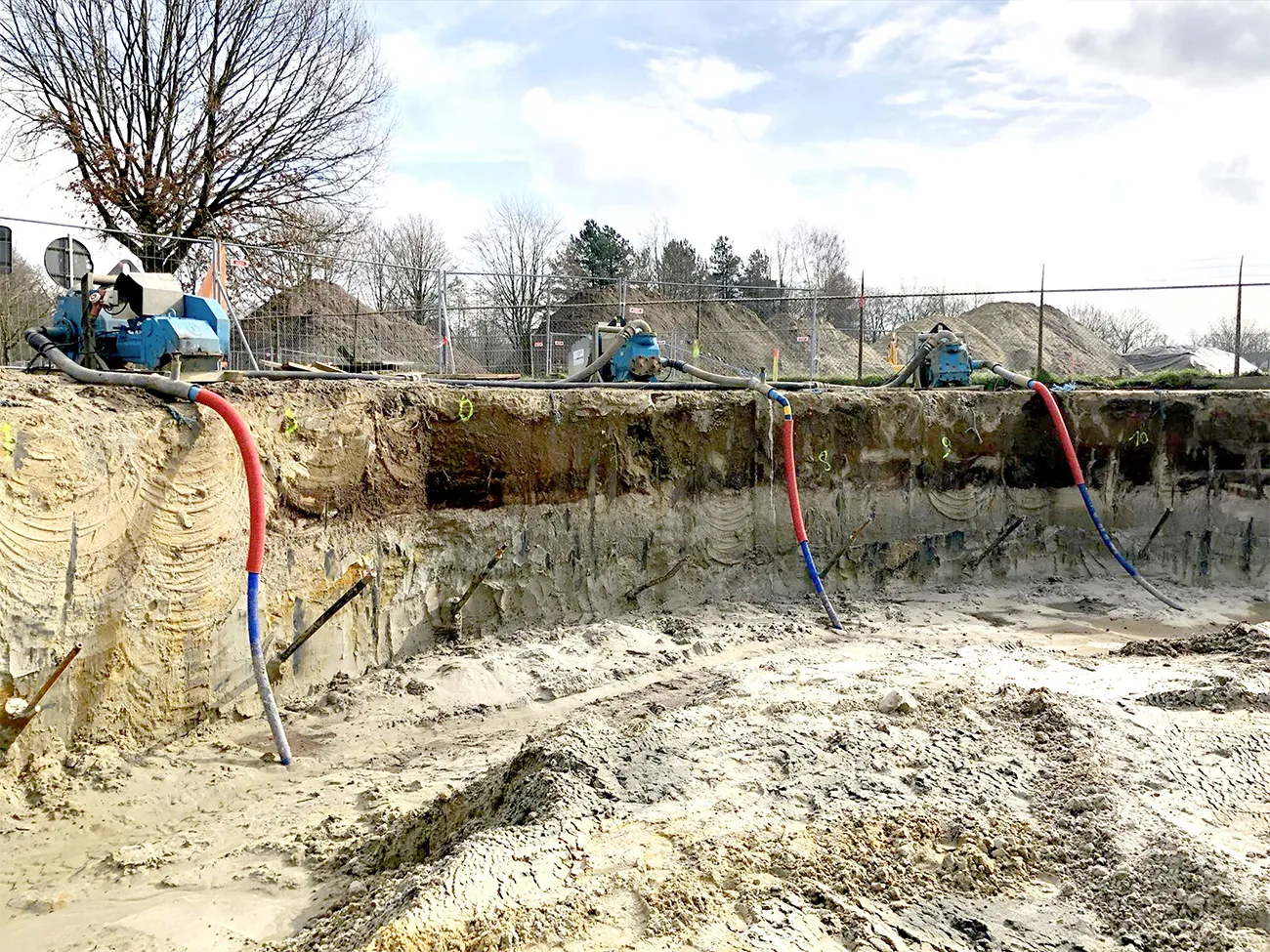
The dewatering works were carried out in several phases. Depending on the location of the works, the groundwater had to be lowered from 1 m to between 4 and 7 m below ground level. The local subsoil comprises an approximately 4 m-thick Quaternary cover layer, underlain by clayey fine sand to a depth of 15 m below ground level, belonging to the Kasterlee Formation. Below this, coarse sand belonging to the Diest Formation is found down to a depth of 25 m.
Different techniques
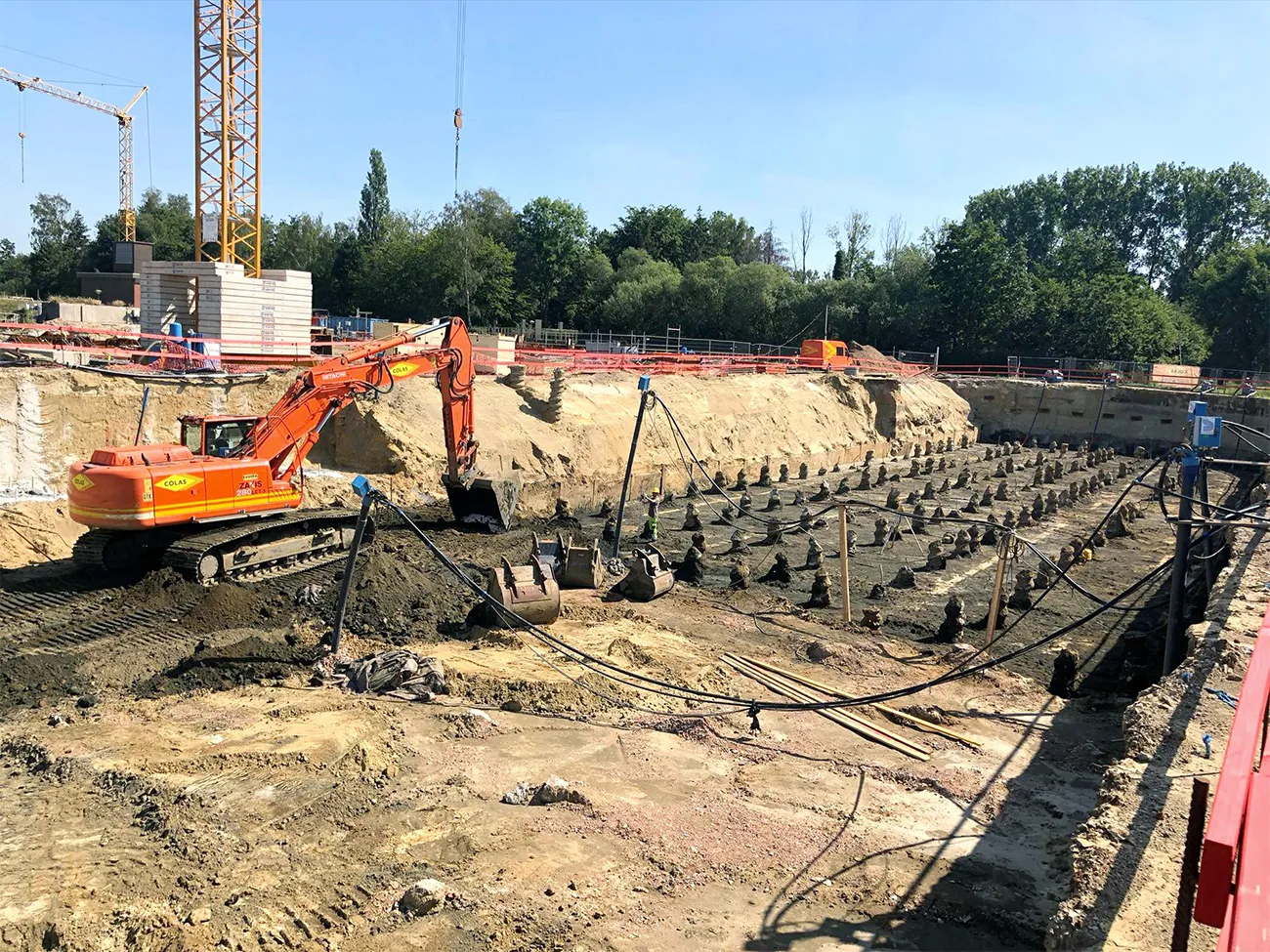
Several dewatering techniques were used: vertical wellpoints, gravity and vacuum deep wells, and horizontal drains. G. Smeyers designed the required installations in-house using its own 3D computer simulation model. This made it possible to accurately estimate the required pumping rate at each phase of the renovation project, ensuring that the dewatering works always remained within the limits of the permit obtained.
The pumped groundwater is discharged through collector pipes to a buffer tank, which releases the dewatering water into an infiltration ditch excavated on site at the WWTP, with an overflow to the Broekloop. Electromagnetic flow meters record both the flow discharged from the buffer tank into the infiltration ditch and the flow discharged from the ditch into the Broekloop via the overflow. A series of monitoring wells was installed on site to monitor groundwater drawdown.
Flawless dewatering
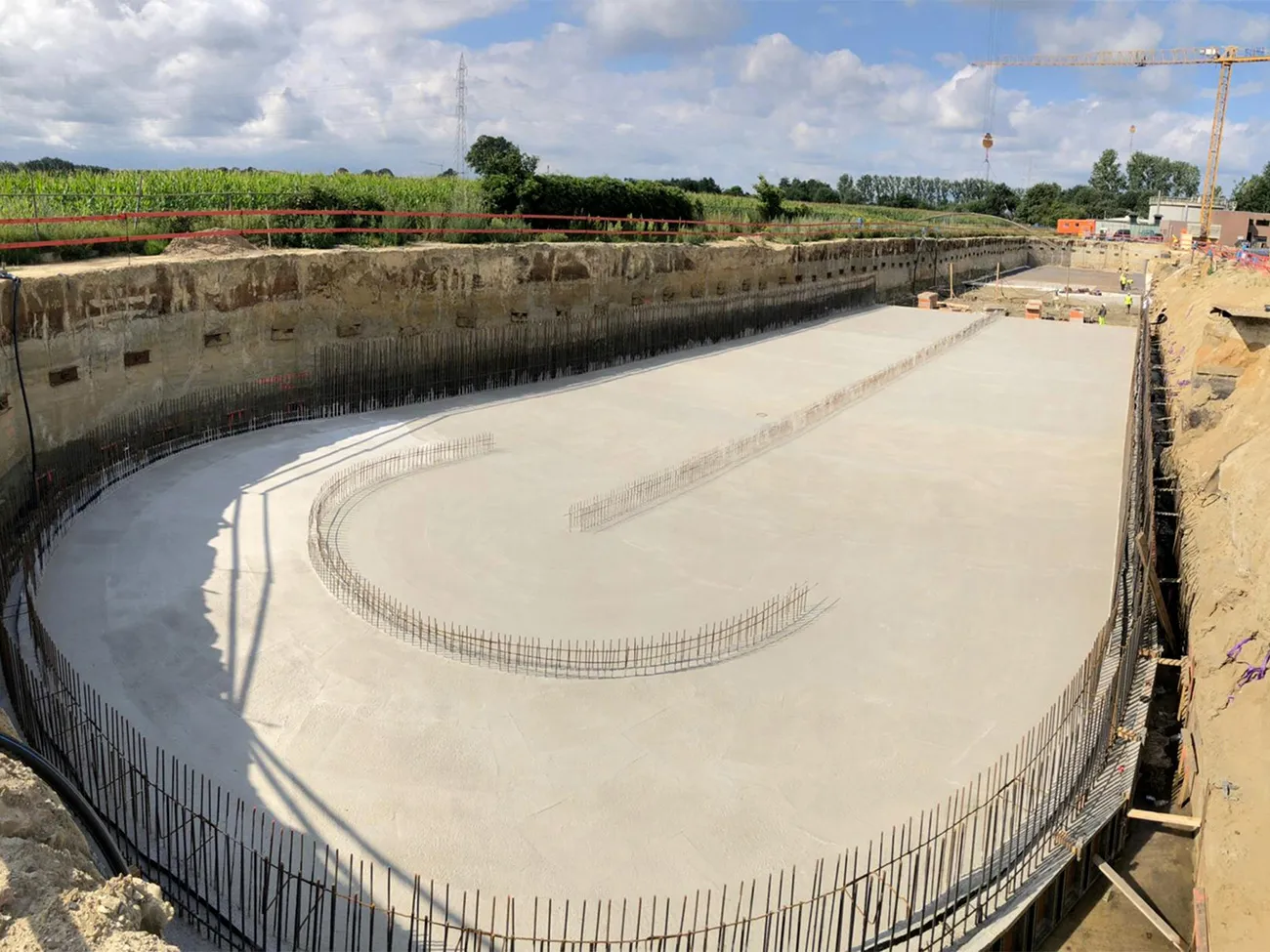
The major dewatering works began in early 2020 and will continue throughout 2022. To date, despite complex site conditions, the dewatering has proceeded without any significant problems. The required groundwater drawdown has been achieved without difficulty in all the excavations completed so far, using the planned installation.
The Lichtaart WWTP project is an important reference for G. Smeyers. The complexity of the works and their phased execution made it necessary to use several dewatering techniques. “G. Smeyers was the ideal partner to carry out the dewatering works for this project, as the company has all the standard dewatering techniques in-house and the expertise to design the required installation for every construction phase,” the company says.
Een zakelijke vraag aan Smeyers nv? Get in touch
Wie aan RWZI Lichtaart werkte
- burgerlijke bouwkundewerkenColasMentioned in New final settlement tanks taking shape at Lichtaart WWTP

Keep following this
Get an email when a new story is published. No account needed.
- ProjectRWZI Lichtaart
- ThemeRenewing pipelines and sewers
- SubjectSewerage & underground infrastructure
- CompanySmeyers nv







