









Precast concrete remains crucial to the sewerage sector
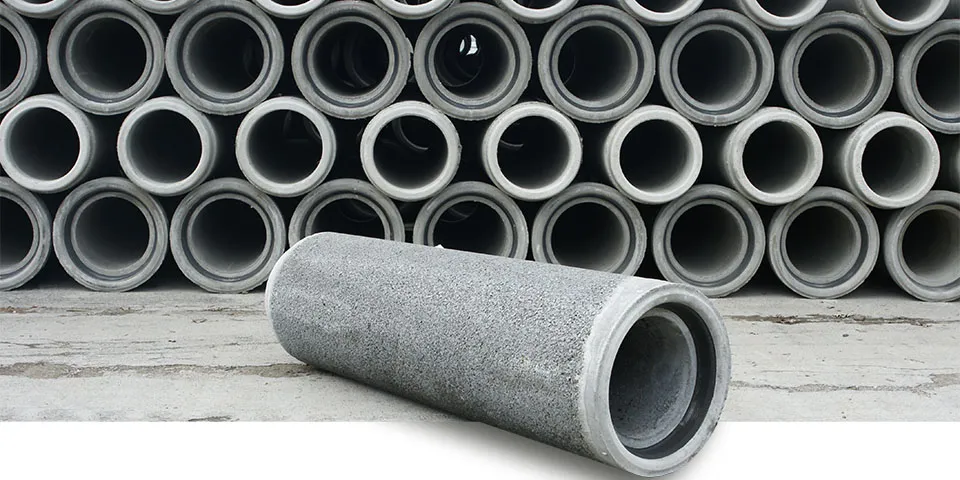
Porous concrete pipes are proving ideal for groundwater infiltration in the sewerage and drainage sector. FEBELCO, the professional association within FEBE that brings together manufacturers of concrete pipes and fittings, highlights the qualities and importance of (precast) concrete to the sewerage sector. “Concrete is undoubtedly a rewarding product to work with,” says Luc Lemmens, chairman of FEBELCO and managing director of Tubobel Group.
FEBE is the recognised professional association for manufacturers of precast concrete products and represents the interests of the sector. Within FEBE, FEBELCO brings together manufacturers of concrete pipes and fittings. The association represents all manufacturers of concrete products needed for water collection, conveyance, treatment, storage and infiltration.
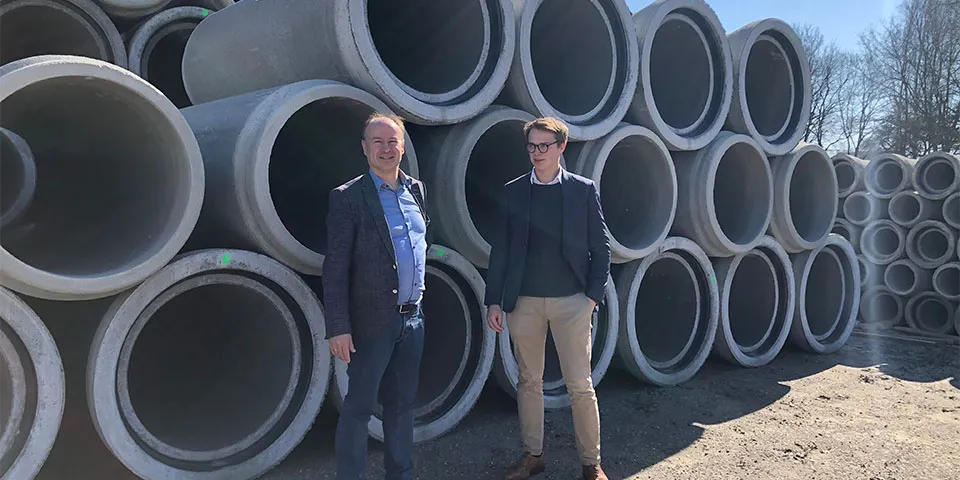
Luc Lemmens, chairman of FEBELCO and managing director of Tubobel Group, and Evert Lemmens, CCO at Tubobel Group.
Porous concrete pipes
Infiltration has been a hot topic in the sector for some time. FEBE generally, and FEBELCO in particular, are strongly focused on it. “The development of porous concrete pipes has made great strides in recent years,” says Luc Lemmens. “Production of porous pipes with a diameter of 1,000 mm is now in full swing, and they are already specified in several tenders. Authorities are gradually realising that this product can help raise groundwater levels. And concrete remains a rewarding product for contractors to work with.”
Has producing porous pipes with a diameter of 1,000 mm reached a critical limit? “Porous pipes must meet the same strength requirements as reinforced pipes,” explains Gert Joos, technical sales manager at Tubobel Group. “This means that porous pipes have thicker walls while still needing to remain porous. To meet these requirements, 1,000 mm is currently the largest diameter achievable. A new development is porous pipes with a diameter of 900 mm. With this addition, we can now offer porous pipes from 400 mm up to and including 1,000 mm.”
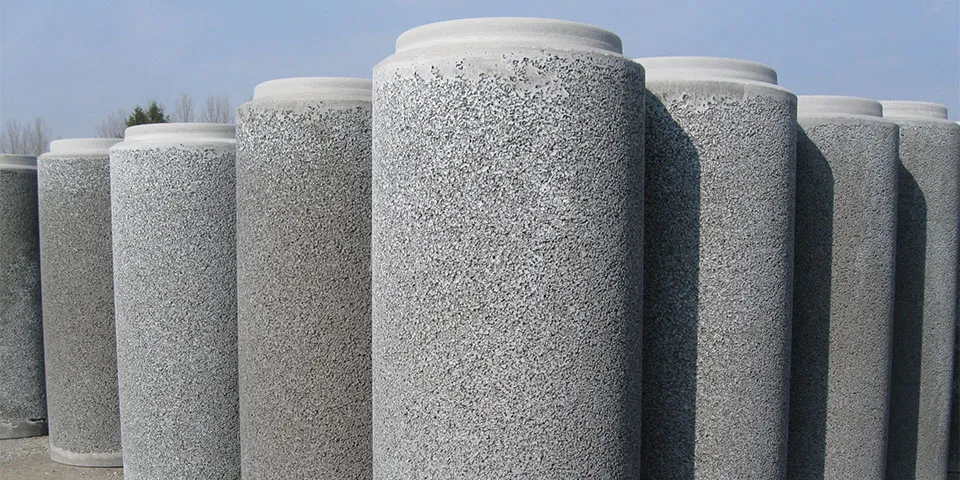
Porous pipes allow water to seep into the groundwater.
Infiltration capacity
Porous pipes are an excellent solution for infiltration and maintaining groundwater levels. “On paved surfaces, rainwater is carried away through drains and sewers,” says Evert Lemmens, CCO at Tubobel Group. “Using reinforced concrete pipes in these areas is detrimental to groundwater levels. Porous pipes, by contrast, allow water to seep into the groundwater.”
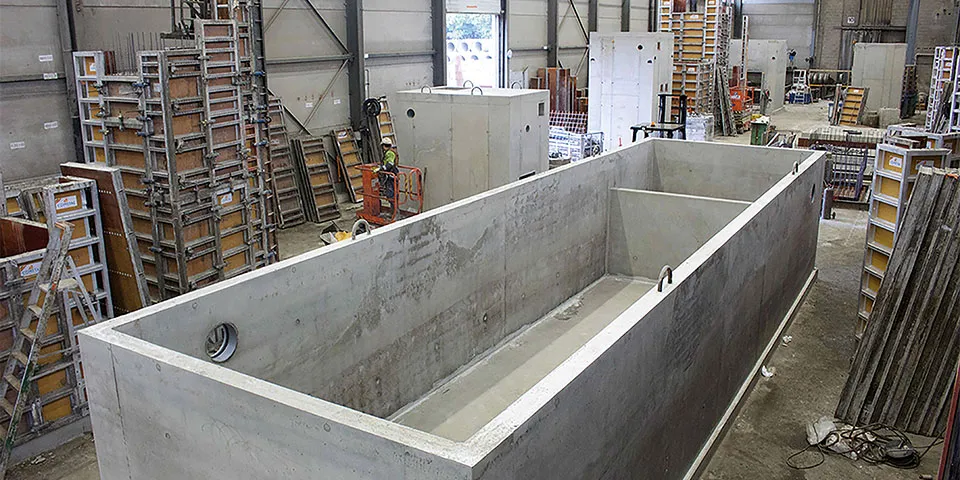
Precast concrete is also ideally suited to bespoke solutions. (Image: Tubobel)
Cradle to cradle and bespoke solutions
Long service life, economic added value, a sustainable life cycle, load-bearing capacity and dimensional stability, resistance to wear and corrosion… the benefits of precast concrete are clear. “We also use local raw materials, and when the pipes are excavated after 100 years, they can be crushed into a new raw material,” says Luc Lemmens. “In this way, we also contribute to the cradle-to-cradle principle. The precast concrete sector can also play its part in terms of mobility. For example, we can make precast structures weighing up to 60 tonnes at our site, then transport them ready for installation to the site overnight and install them straight away.”
The fact that precast concrete lends itself to bespoke solutions also has other advantages. Evert Lemmens says: “Authorities are asking us to consider other ways of infiltrating water. This led to the idea of porous house connection inspection chambers, so that water can infiltrate locally, right outside every front door. The fact that a traditional product such as concrete can be used for innovation is also demonstrated by our excellent precast solution for oil and grease separation, which we are strongly promoting through Tubobel Ekotek. This solution separates oil and grease from water, allowing the filtered water to be discharged without any problems.”
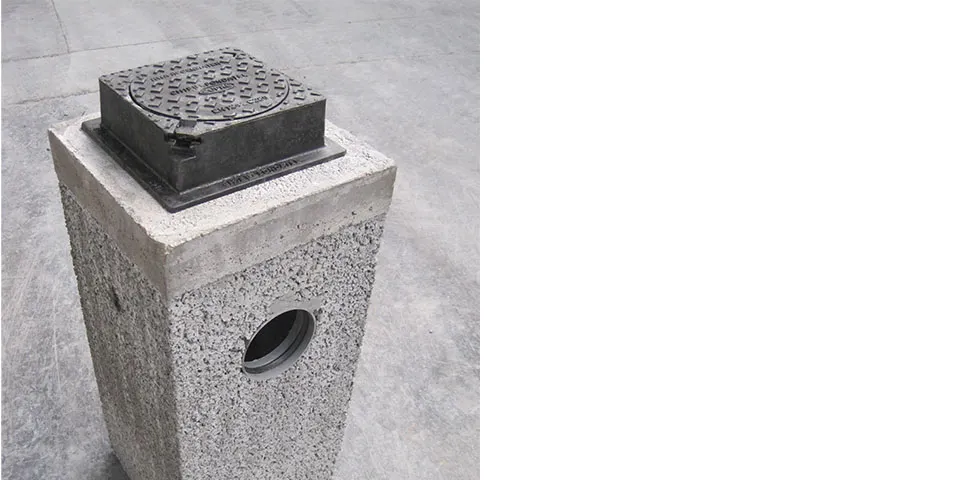
Long service life, economic added value, a sustainable life cycle, load-bearing capacity and dimensional stability, resistance to wear and corrosion… the benefits of precast concrete are clear.
Tubobel Group
There is plenty happening not only in the concrete sector as a whole, but also within Tubobel. “Following the acquisitions in 2018, Bovin Beton, Stradus Aqua and Tubobel itself came together under the Tubobel Group umbrella. The group now comprises five divisions with one vision: Tubobel Aqua, Tubobel Ekotek, Tubobel Infra, Tubobel Transport and Tubobel Natura. We are now consistently communicating to the outside world that we are one group working towards the same goal. Succession is also assured, as my son Evert joined Tubobel Group in mid-2019,” concludes Luc Lemmens.
Question about this story? Ask your question
Companies in this story
Keep following this
Get an email when a new story is published. No account needed.
- ThemeRenewing pipelines and sewers
- SubjectConcrete
- CompanySTRADUS







