Concrete work to the rhythm of a busy airport
Text Joris Hendrickx Beeld ZABO
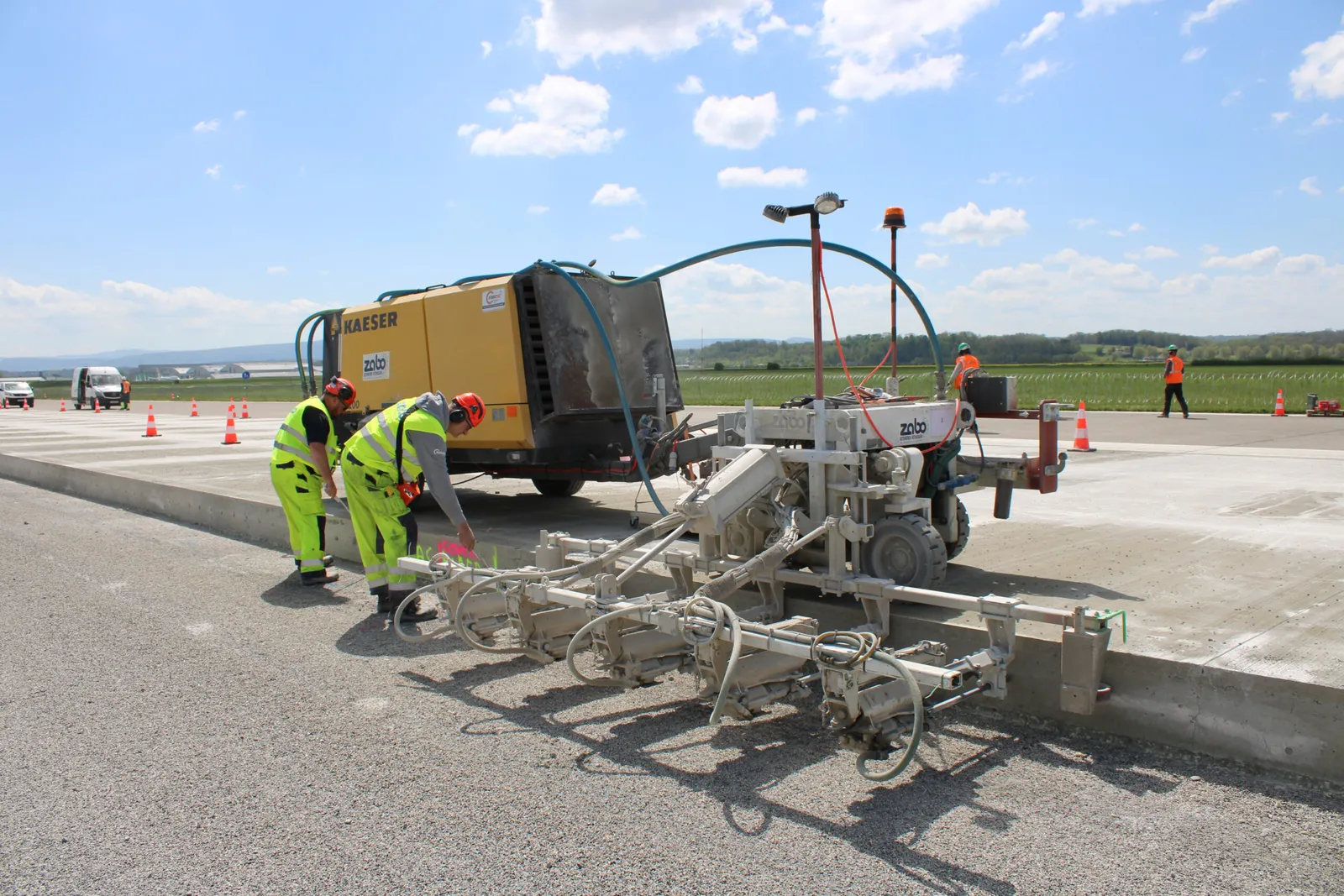
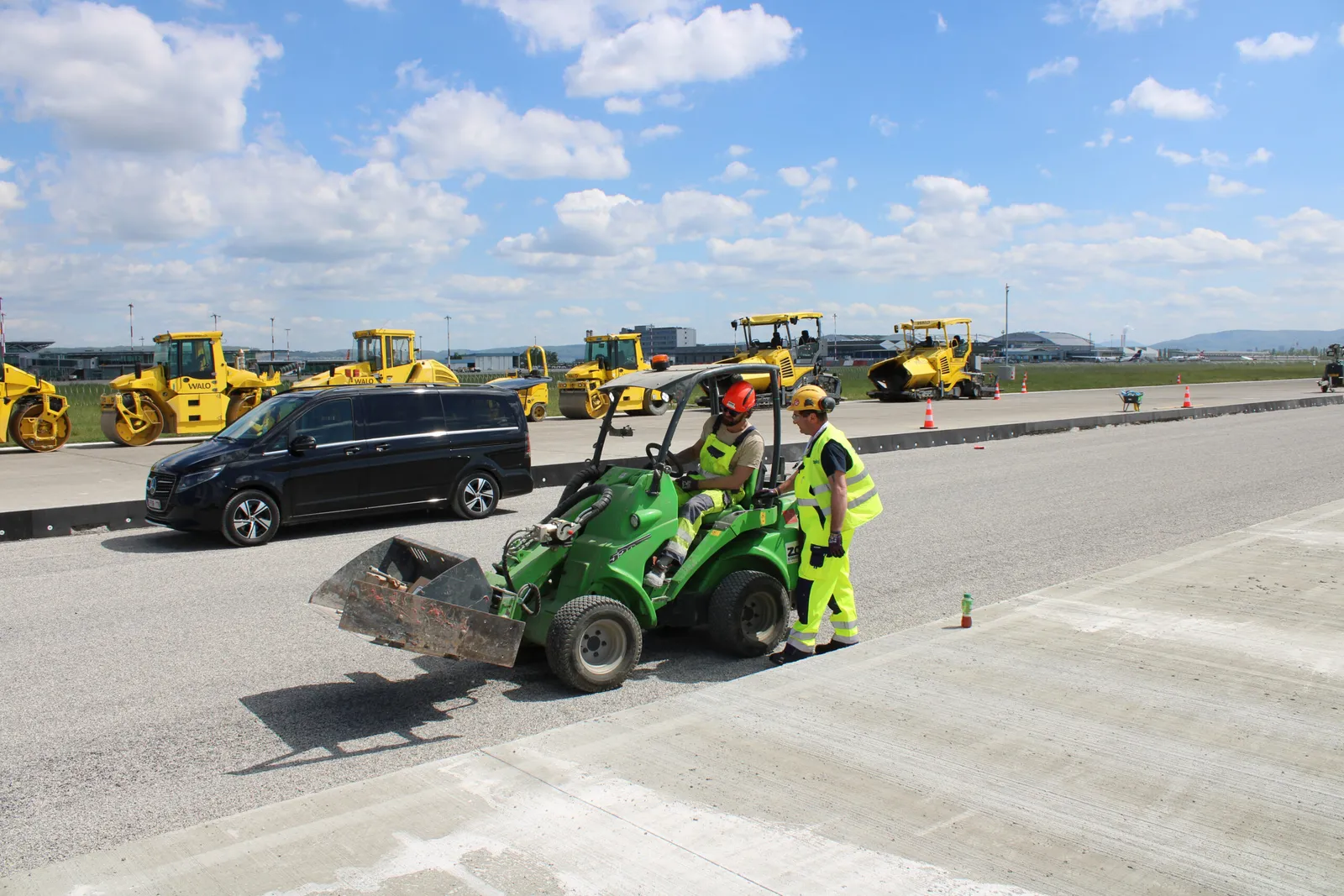
Working at an active airport calls for tight scheduling, reliable machinery and flawless execution. ZABO proved this during a challenging project at Mulhouse Airport in France. Commissioned by contractor TRBA, the Kortrijk-based company carried out both sawing and dowel installation as part of the renewal of a section of the runway. According to project manager Alexander Roose, thorough preparation and a flexible approach on site were key to success.
Night-time sawing under pressure
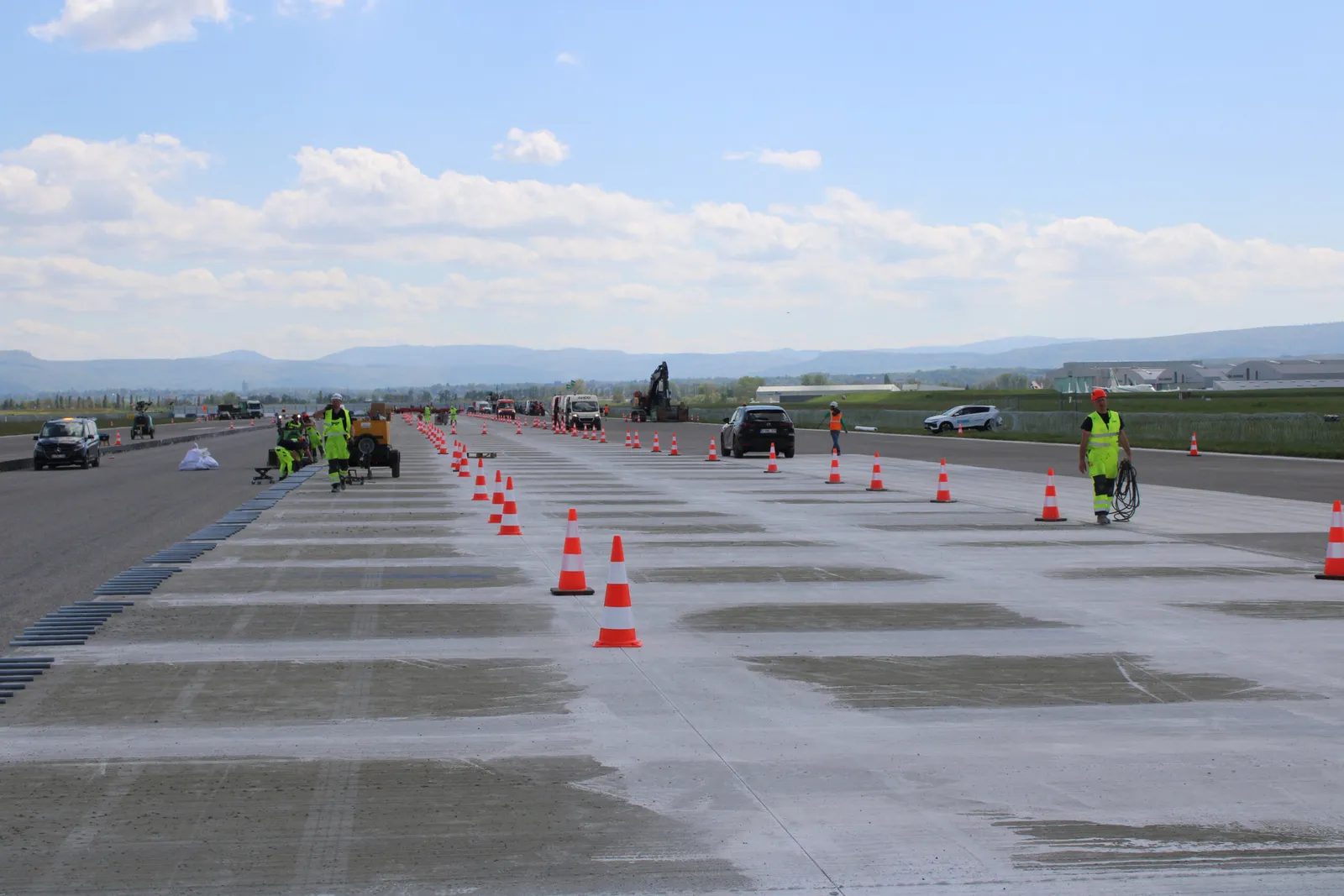
The work began with sawing into the existing concrete pavement. As the airport remained operational, ZABO was only allowed to work at night, between 00:30 and 04:00. During this limited window, at least 250 metres of concrete had to be sawn each time. “That was undoubtedly one of the biggest challenges,” says Alexander Roose. “Everything has to be ready as soon as the window opens. There is no room for delays.” In total, the work involved almost 3,000 metres of saw cuts. With a crew of two, ZABO managed to meet its production target almost every night.
“We often exceeded the target,” says Roose. “That gave TRBA enough confidence to entrust us with the additional deepening of the saw cuts later on.” Initially, the concrete had to be sawn to a depth of 27 centimetres. This was later increased to 37 centimetres.
Unknown concrete calls for thorough preparation
Before the work began, no one knew exactly how hard the concrete at the airport would be. “We had not worked at this location before,” explains Roose. “That made it difficult to assess the properties of the concrete. On projects like this, the quality of the saw blade is one of the factors that directly affects productivity.” ZABO therefore took several types of saw blade to France and consulted a number of suppliers in advance.
The different options were tested on site. “That preparation really made the difference,” says Roose. “Working with the supplier, we quickly found the best combination. This meant we could operate at full capacity straight away.”
Thousands of dowels in a short time
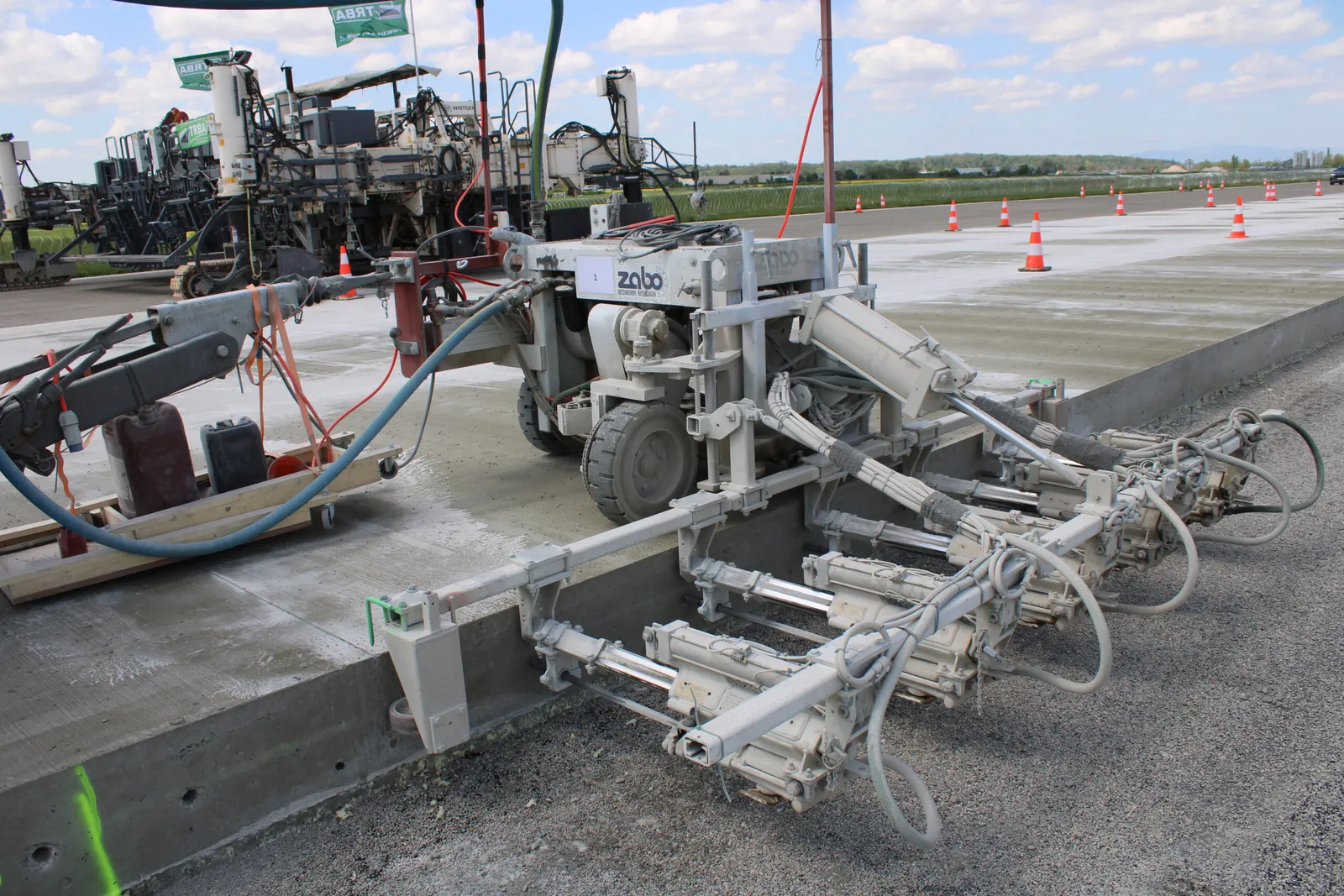
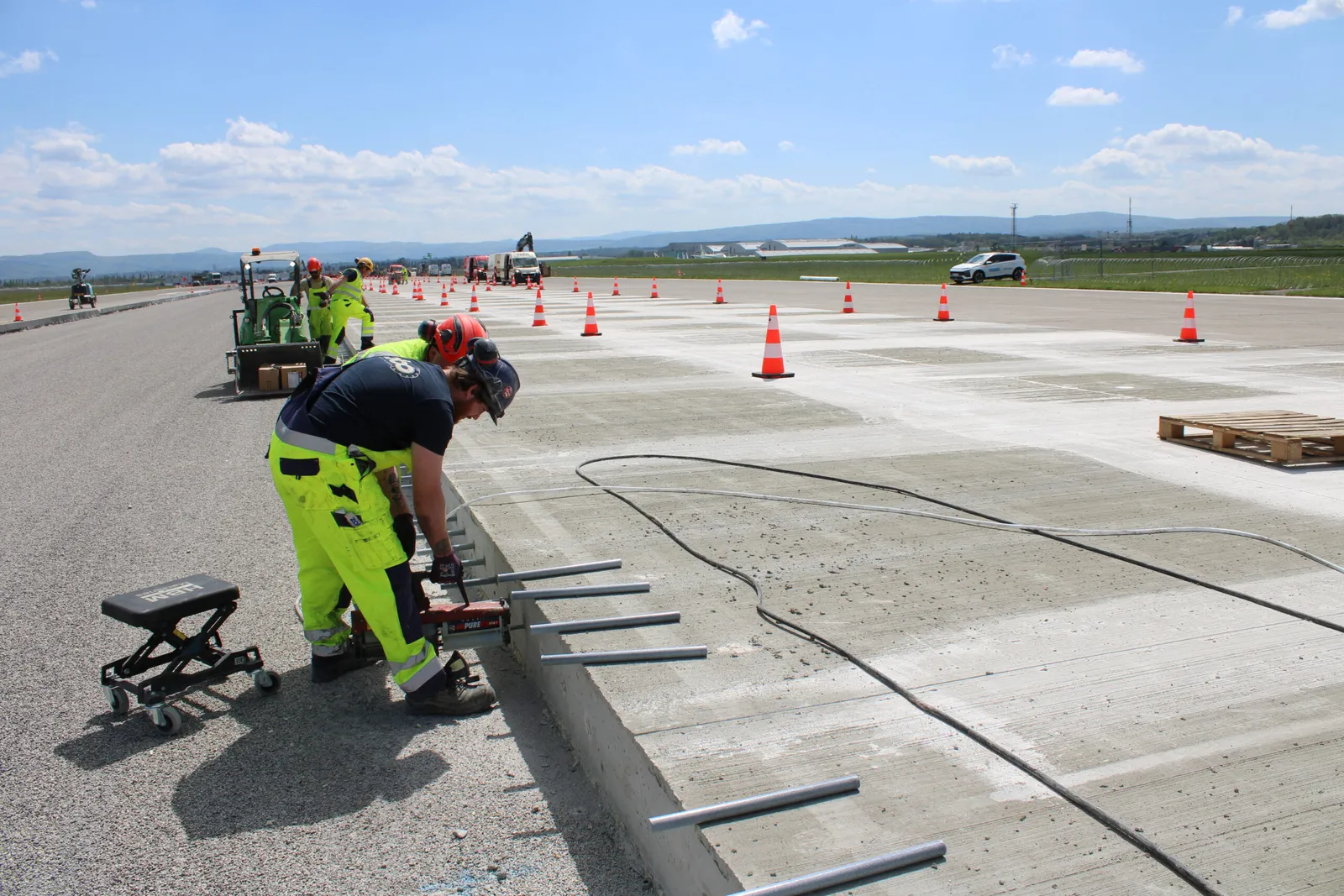
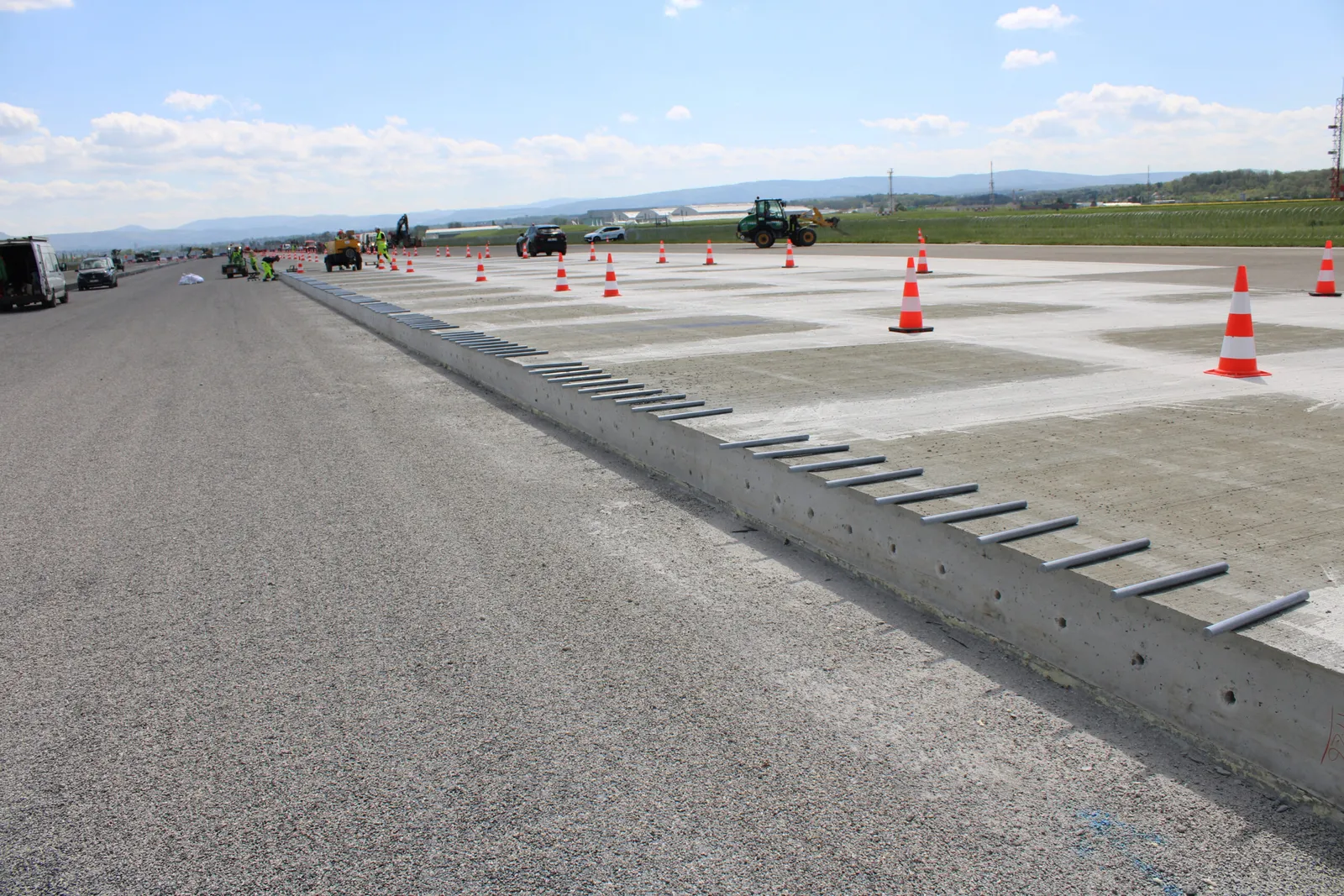
The sawing was followed by a second phase. ZABO installed around 3,300 coated dowels, 30 mm in diameter and 50 cm long. The dowels were drilled in to a depth of 25 centimetres and then chemically anchored. For this work, ZABO used an automatic percussion drilling machine with five drill heads.
The machines were thoroughly checked and adjusted in advance. A technician spent weeks working on the optimum machine configuration. “At this stage, the main priorities were speed and organisation,” says Roose. “There was little time between the different concrete pours. So we deployed a crew of nine, working in two shifts. The combination of experienced staff and specialist equipment meant everything was completed on schedule.”
No risk of downtime
With such a tight schedule, ZABO wanted to eliminate every risk. The company therefore headed to Mulhouse with two identical sets of machinery. “If a machine breaks down, you lose valuable time,” says Roose. “That’s why we always build in redundancy for this kind of work. Fortunately, we didn’t need the backup machines.”
For ZABO, the project fits perfectly with its growing presence at airports. Previous projects have taken place in Florennes, Chièvres and Zaventem. “At airports, planning, engineering and precision come together. These are exactly the kinds of projects where our expertise comes into its own,” concludes Roose.
Question about this story? Ask your question
Keep following this
Get an email when a new story is published. No account needed.
- ThemeMaterials with a lower environmental impact
- SubjectConcrete