









Watertruck+ is innovating inland waterway transport with flexible push barges
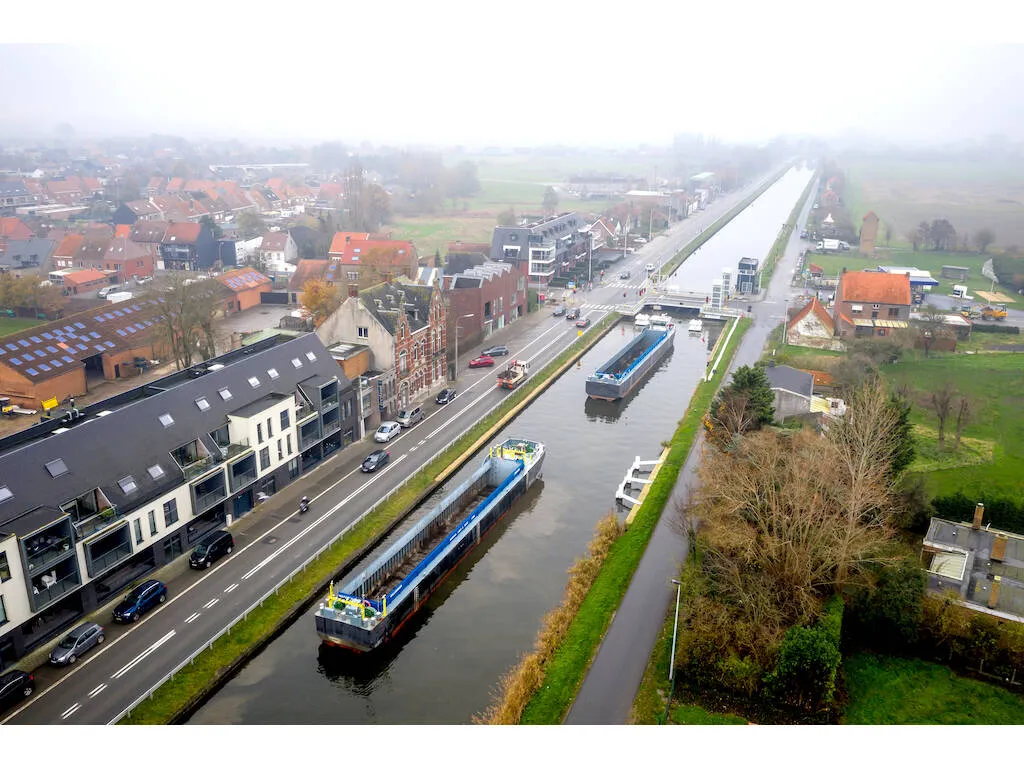
Flanders has a dense network of waterways, and no less than 80 % of businesses are located less than 10 km from a navigable waterway. This represents enormous potential for inland shipping, but realising it requires innovation and investment. That is why Watertruck+ was developed: a flexible, efficient and economical concept using push barges to navigate smaller waterways or, when coupled together, larger waterways. The concept was realised through a public-private partnership involving Group De Cloedt, Groep André Celis, Antwerp Management School and De Vlaams Waterweg nv, with support from INEA (Innovation and Network Executive Agency) and Europe. We spoke to Dominique Van Hecke, managing director of De Vlaamse Waterweg nv and chair of the Watertruck+ board of directors.
Can you explain briefly what Watertruck+ is?
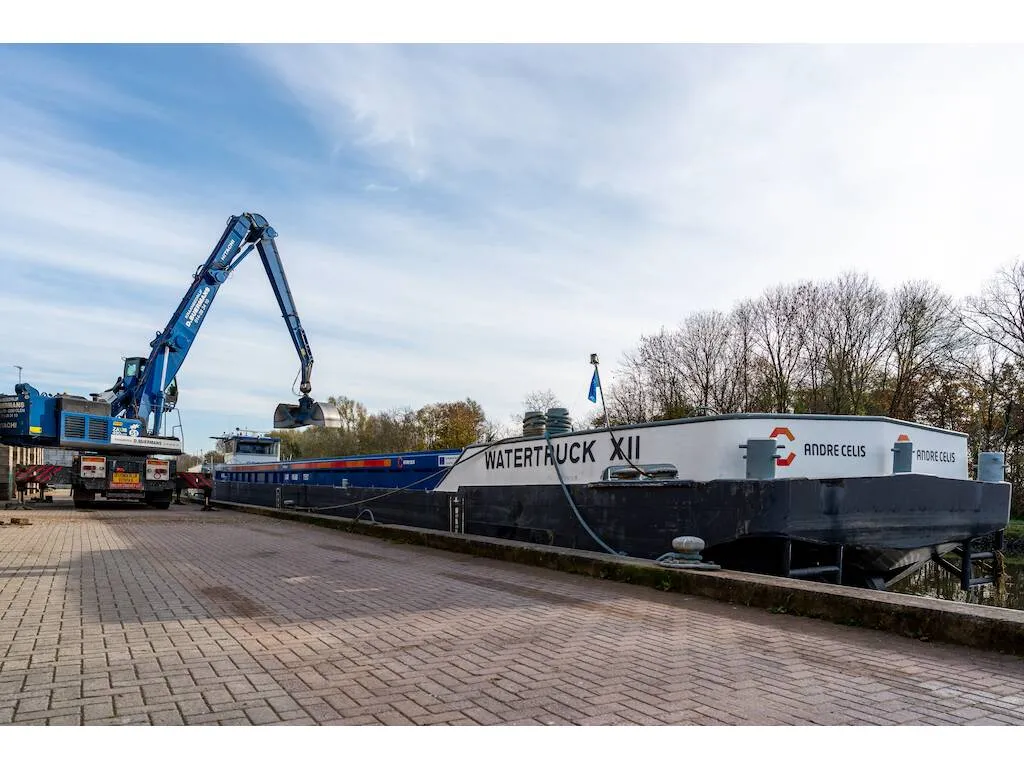
Dominique Van Hecke: “Watertruck+ is a European project featuring an innovative concept for transporting goods along smaller waterways or, when coupled together, along larger waterways. One of the aims of the Watertruck+ project is to strengthen and expand the small inland shipping fleet. A new vessel was therefore developed: a push barge designed specifically for smaller waterways, capable of carrying bulk goods, pallets and containers. The barges are built to a standard design that can be adapted to the customer’s needs. This makes them quick and flexible to deploy and, among other things, shortens lead times.”
What other advantages does Watertruck+ offer?
Dominique Van Hecke: “Watertruck+ links smaller waterways to the TEN-T network. This provides maximum flexibility and regional coverage. The barges are specially designed to collect cargo under their own power on smaller waterways, then continue their journey to their destination coupled with other barges and pushed by a pusher tug. Coupling and uncoupling the barges creates new logistics concepts on the water, comparable to lorries or trucks. That is also where the name ‘Watertruck’ comes from. Care has also been taken to ensure efficient and economical navigation, both in the design and in the barges’ propulsion systems.
Why was a project like this needed?
Dominique Van Hecke: “Roads are becoming congested and traffic jams are getting longer. In many cases, inland shipping is a smooth, safe and sustainable alternative to road transport. That is why Flanders and Europe are committed to increasing transport by water. The potential of smaller waterways is estimated at three million tonnes! To realise this potential, we need to develop new logistics concepts.”
When did the idea for this ambitious project take shape?
Dominique Van Hecke: “The Watertruck+ project began in 2014 and went through several phases, from research and tests with scale models to the gradual introduction of the concept, which was completed in 2020 with 18 operational push barges. During the pilot phase, we learned how to optimise the design in terms of functionality and cost, and established the precise operational benefits. We then looked at new logistics concepts to further improve efficiency. Four of the 18 barges are equipped to operate under their own power. The remaining barges have only a bow thruster or are unpowered, and must be pushed by a pusher tug.”
Now that you have succeeded, what is the project’s goal?
Dominique Van Hecke: “Taking into account the sector’s challenges and the lessons learned from the pilot results, Watertruck+’s main aim is to drive the gradual introduction of the concept on a large scale. For 2021, we are already aiming to take 6,000 lorry journeys off the road.”
How is Watertruck+ already demonstrating its value today?
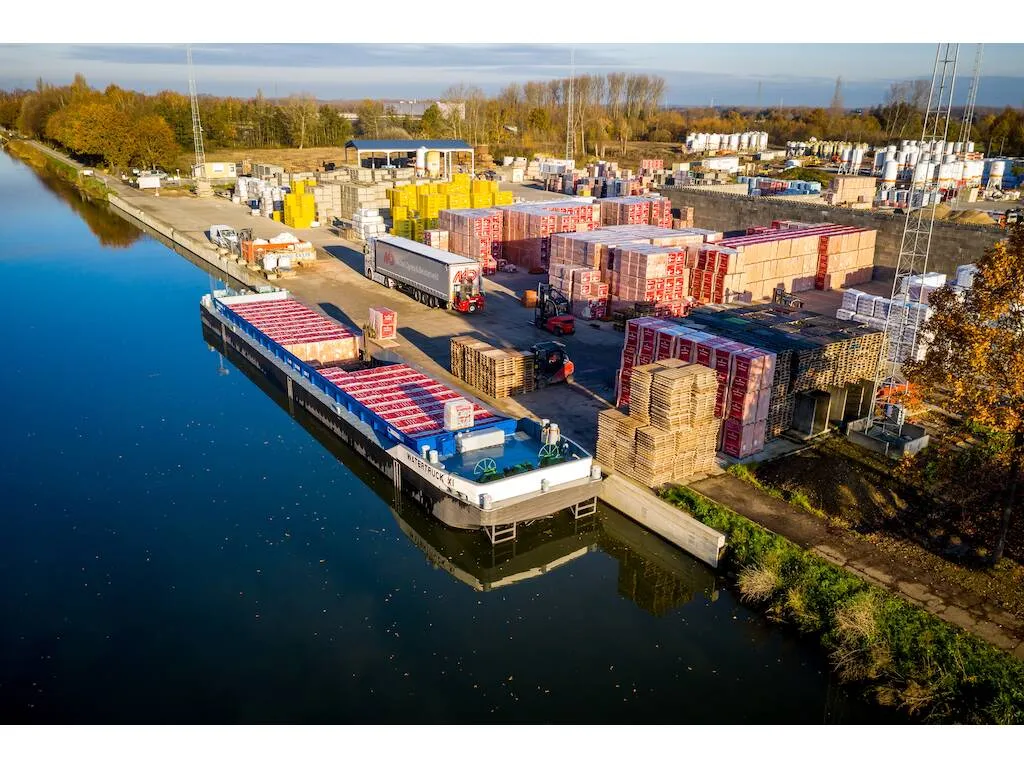
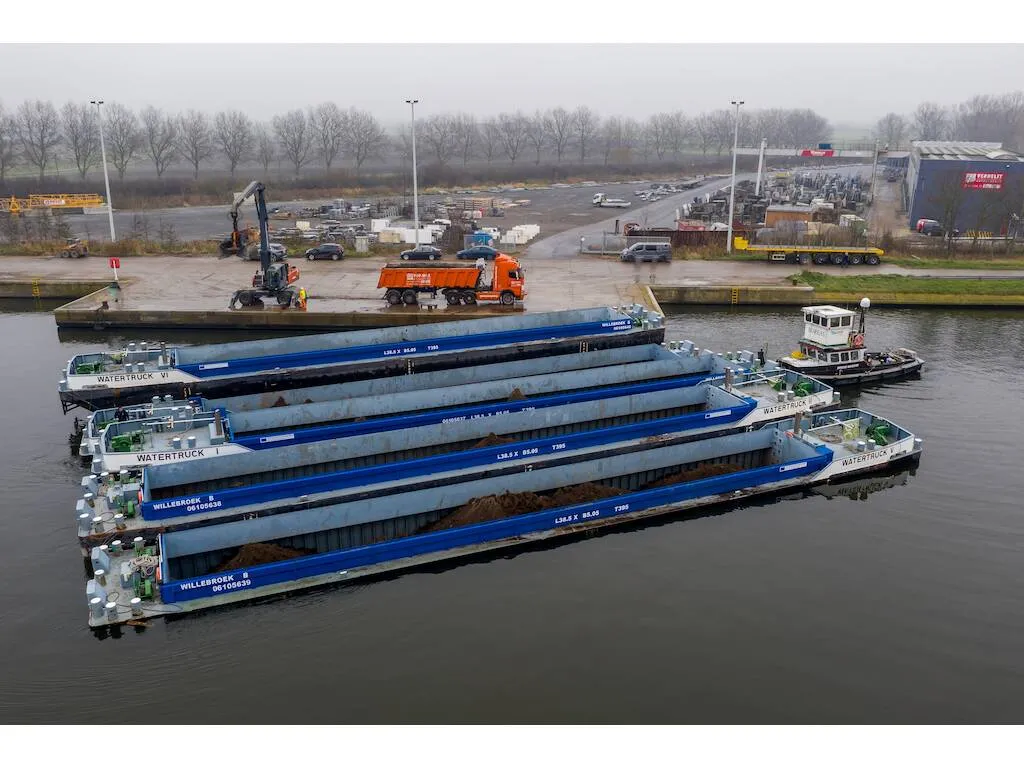
Dominique Van Hecke: “In 2021 alone, the project will deliver a modal shift of 120,000 tonnes of goods. Watertruck vessels are a valuable addition to the existing fleet in Flanders because they create new transport flows or can take over existing flows currently carried by road. For example, André Celis Group uses its Watertruck barges to supply its building materials depot along the Leuven-Dijle Canal and to transport waste for AC Recycling. Groep De Cloedt mainly uses its Watertruck fleet to transport soil from Diksmuide to Oostende. Bioterra in Genk also uses Watertruck barges to transport soil along the Albert Canal.
Are further steps needed to develop the project?
Dominique Van Hecke: “The priority now is to continue promoting the Watertruck+ concept and to keep investing attention and resources in smaller waterways. I am convinced that thanks to Watertruck+, more businesses will use waterways for their transport in the future, and that is good for all of us.”
Question about this story? Ask your question
Keep following this
Get an email when a new story is published. No account needed.
- ThemeStrengthening waterways and coastlines
- SubjectHydraulic engineering







