









Water recovery and green electricity through a combined pumping station and hydropower plant
Text Niels Rouvrois / De Vlaamse Waterweg Beeld De Vlaamse Waterweg
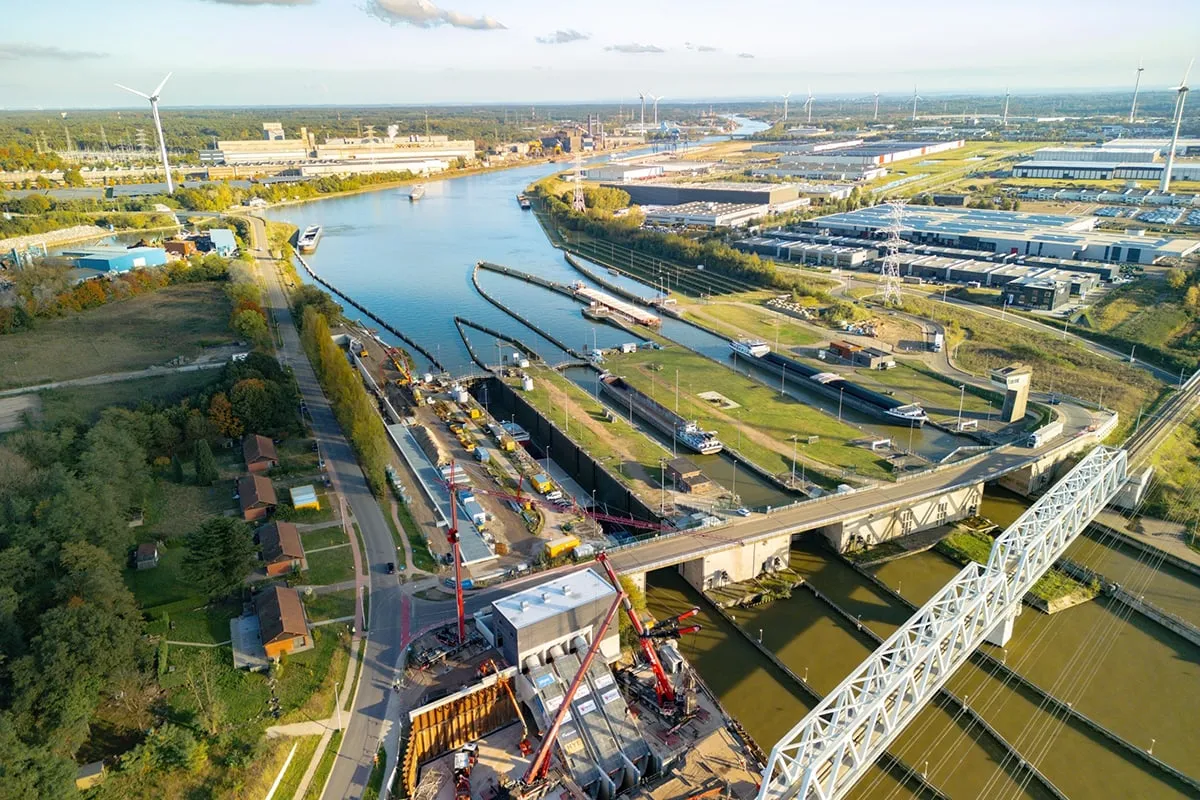
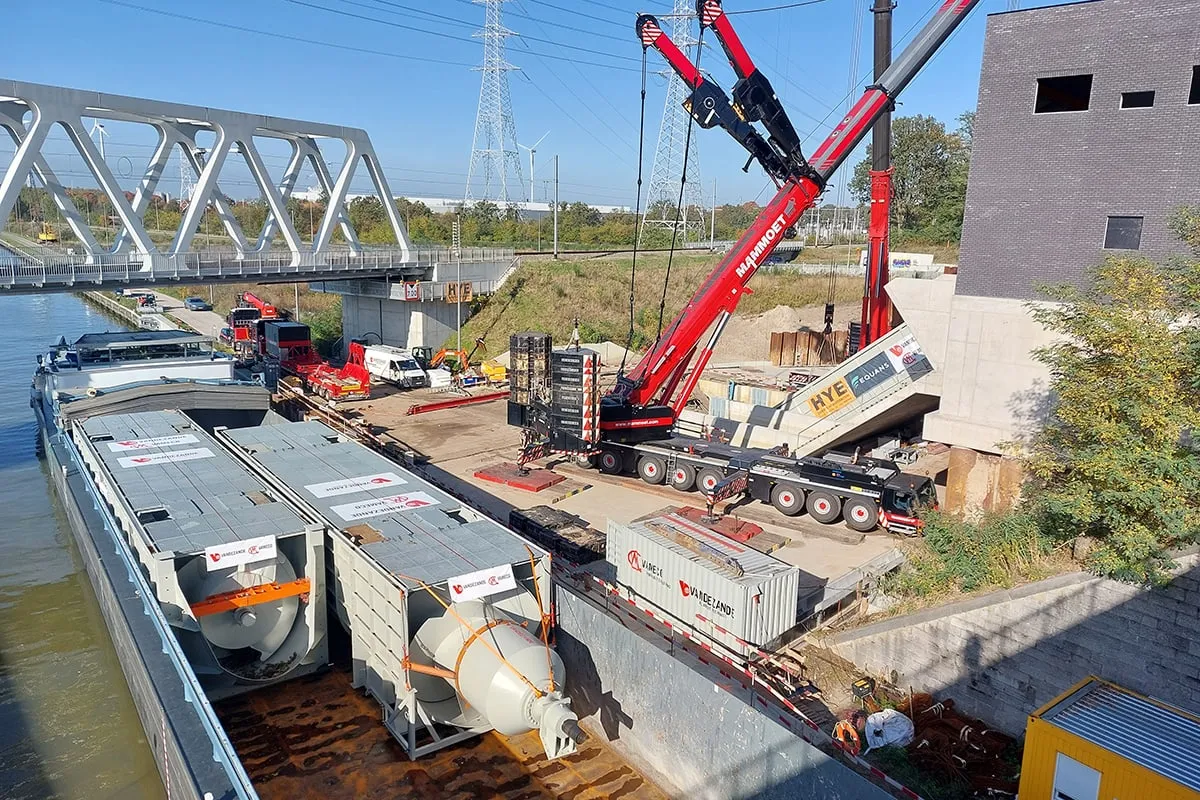
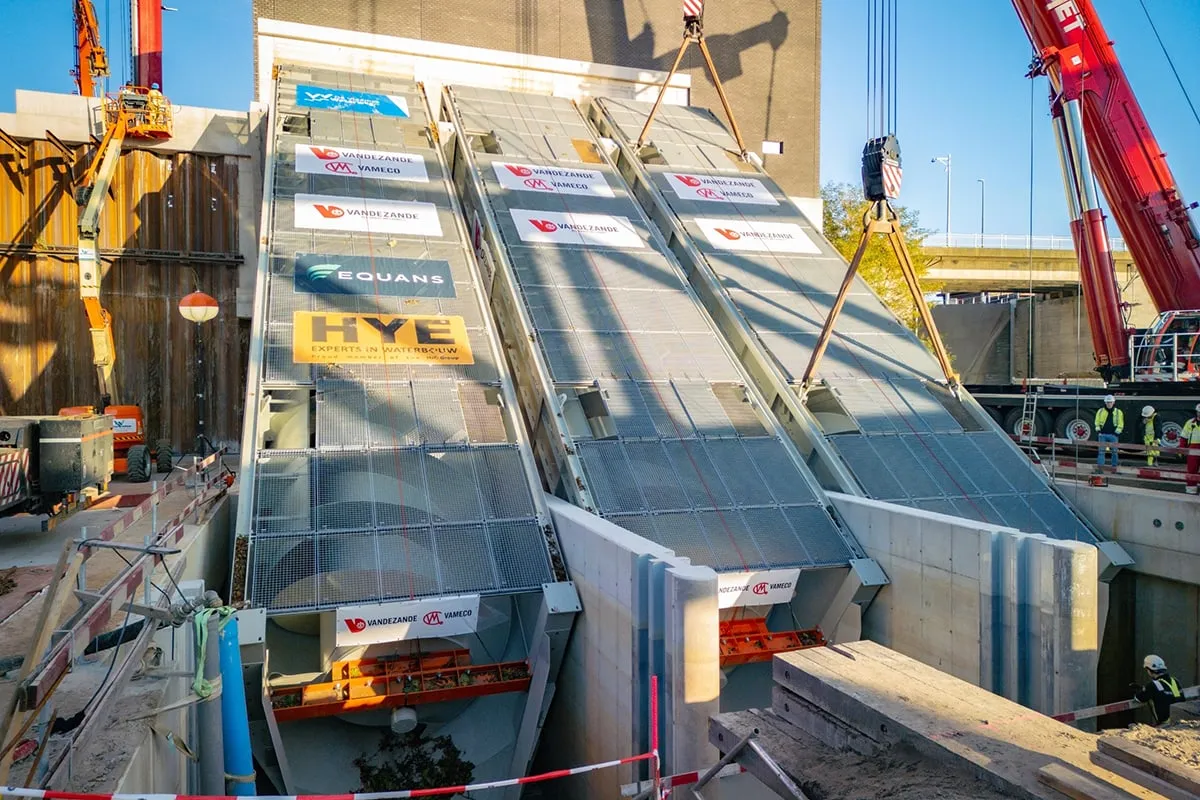
At the end of October, three enormous Archimedes screws were installed at the new combined pumping station and hydropower plant along the Albert Canal in Genk. The facility will keep shipping running smoothly and safely, whatever the water conditions. It will also generate green electricity and make optimum use of water. With a diameter of 4.3 metres and a length of 28 metres, these screws are among the largest in the world for applications of this kind.
De Vlaamse Waterweg is building a combined pumping station and hydropower plant at the Genk lock complex along the Albert Canal. On the one hand, the pumps ensure that water levels in the Albert Canal are maintained even during periods of drought, avoiding the need to impose water-saving measures on other water users wherever possible. On the other hand, the facility generates renewable energy when sufficient water is available.
As climate change intensifies, Flanders is increasingly experiencing fluctuating water levels. Through the Sigma Plan, river widening works on the Meuse, the strategic Ruimte voor Water Dendervallei plan, the Weerbare Westhoek plan and the construction of combined pumping stations and hydropower plants at the Albert Canal locks, De Vlaamse Waterweg, with the support of the Flemish Government, aims to reduce both the risk of flooding and problems caused by drought.
Making optimum use of waterways
De Vlaamse Waterweg has no choice but to take measures to limit water consumption on the Albert Canal and the Campine Canals. Initially, temporary or partial restrictions are imposed on shipping. For example, inland vessels are grouped together for lock passages, which leads to waiting times at the locks. In periods of extreme drought, vessel draught must be restricted. Ships are then allowed to carry less cargo, so they sit less deep in the water. Depending on water availability, restrictions must also be imposed on water abstraction from the canal. All these measures have a negative impact on both the economy and the environment, and they also have their limits.
“As waterway manager, we see it as a challenge to provide all our stakeholders with the best possible waterways,” says Liliane Stinissen, spokesperson for De Vlaamse Waterweg. “We want to ensure that both our infrastructure and the services we provide to all users of our waterways are customer-focused and of the highest quality. Above all, we want to provide reliable waterways that enable smooth and safe inland navigation. That also means ensuring an adequate water supply, even during periods of water scarcity.”
Killing two birds with one stone
The construction of pumping stations at the lock complexes on the Albert Canal plays an important role in this. The combined pumping stations and hydropower plants at the six lock complexes (Olen, Ham, Hasselt, Diepenbeek and Genk) are an excellent example of water recovery. During periods of water scarcity, water used to pass ships through the locks can be pumped back to the upper reach, reducing lockage losses. This means De Vlaamse Waterweg needs to take fewer measures, or none at all, to limit water consumption on the canals.
In addition, these facilities generate green electricity when sufficient water is available. Liliane Stinissen explains: “When operating in turbine mode, the screws are driven by water entering at the top. The volume of water is regulated by a large gate. To keep the screws at a predetermined speed, they are braked, otherwise they would continue to accelerate. The motor, which now acts as a generator, converts the ‘braking energy’ into ‘electrical energy’. As much of the green electricity as possible is first used to operate the locks themselves, and any surplus is fed into the public electricity grid. At the maximum flow rate of 15 m³/sec, each hydropower plant generates 1 megawatt of green electricity, when all 3 screws at a plant are running at maximum flow.”
Generating green electricity
The three enormous Archimedes screws were installed in the screw troughs. These screws form the ‘heart’ of the plant and, with a diameter of 4.3 metres and a length of 28 metres, are among the largest in the world for a combined application of this kind. Each screw and trough assembly weighs 95 tonnes, and each screw can pump 5 m³ of water per second over a height of more than 10 metres. This difference in height makes it possible to generate hydropower, contributing to Flanders’ renewable energy targets.
The facility in Genk is being built by the Tijdelijke Handelsvereniging Eureka (EQUANS-HYE nv). The screws are being manufactured by Vandezande in Diksmuide. The project has a total cost of 7.5 million euros, and the works are expected to be completed by summer 2025.
Een zakelijke vraag aan EQUANS? Get in touch
Companies in this story

Keep following this
Get an email when a new story is published. No account needed.
- SubjectHydraulic engineering
- CompanyEQUANS







