









Redevelopment of the Scheldt riverbank in Wichelen enters the home straight
Text Arno VerheijImage Herbosch-Kiere
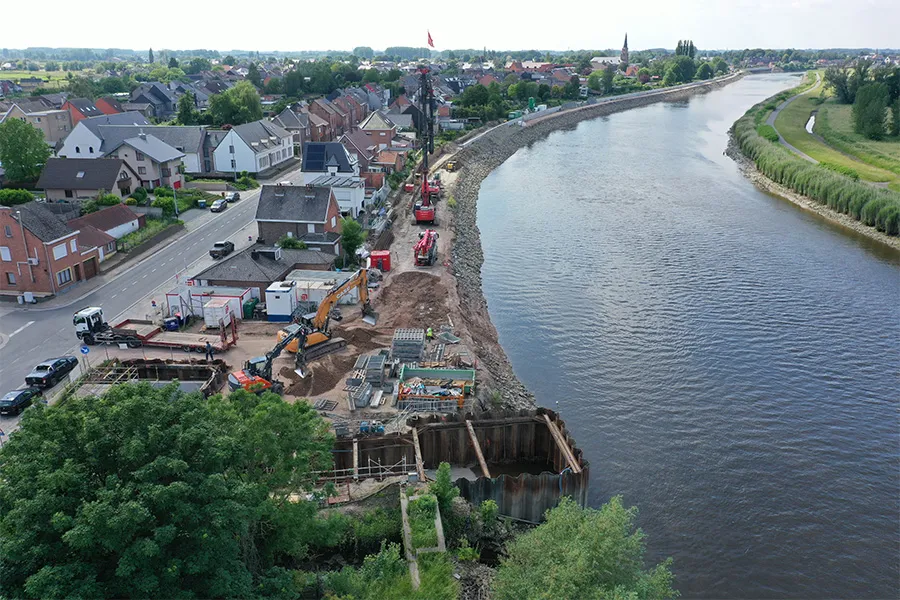
In Wichelen, marine contractor Herbosch-Kiere is putting the finishing touches to a major project under the Sigma Plan. The existing Scheldt riverbank dike has been strengthened and the flood defence raised. A new pumping station has also been built on the Bosbeek. These measures were needed to protect residential areas inland from flooding. The crowning glory: a towpath along the dike and a makeover of the public space, including a riverside promenade. “The biggest challenge on this project was the limited space. Sometimes you have only 4 to 5 metres to build in,” says site manager Jonas Deryckere.
The stabilisation works are part of the Sigma Plan, through which the Flemish Government aims to improve Flanders’ protection against flooding. The Scheldt is a tidal river that can reach dangerously high water levels, and even flood, in extreme weather conditions.
In addition, the Scheldt riverbank in Wichelen is continuing to erode at several locations under the force of the tide.
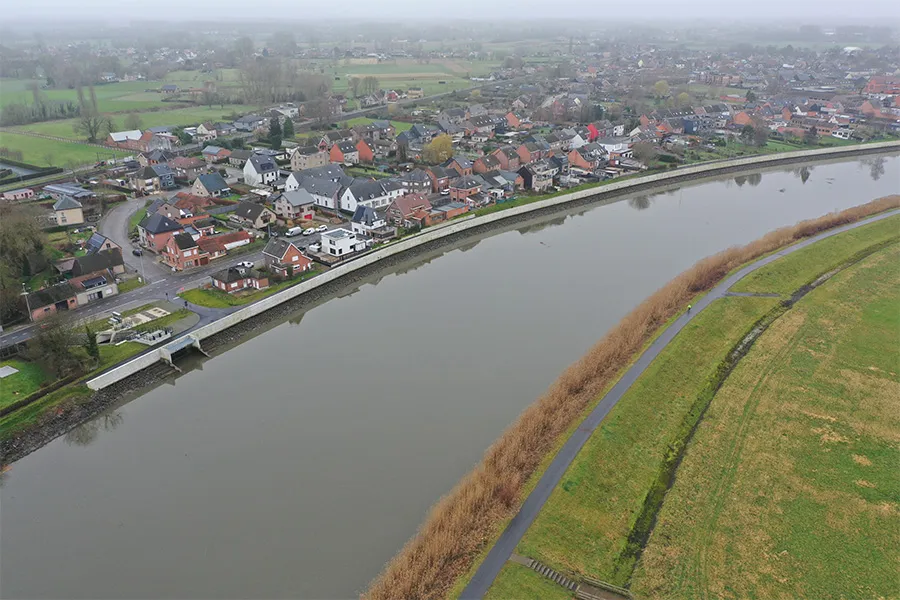
To counter this, the bank slope was strengthened and partly rebuilt over a length of 2 kilometres. A robust wall of steel sheet piles was anchored into the ground, with mattresses laid on the bank. The slope on the river side was covered with riprap.
A connection with the Scheldt
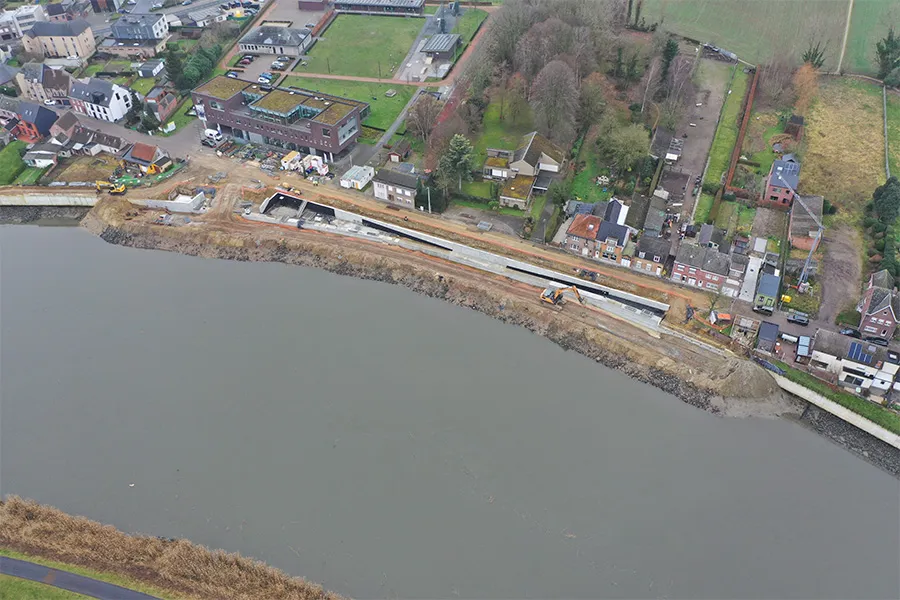
The final part of the water engineering works was the construction of a pumping station and a new outfall sluice on the Bosbeek. Jonas Deryckere says: “That was urgently needed. The area around the Bosbeek regularly suffered from flooding. More water was flowing from the Scheldt into the stream than the other way round. The new pumping station will eliminate the risk of flooding in winter, when the Scheldt is very high and there is heavy rainfall.”
Work is also currently under way to complete the new towpath along the dike, behind the old town hall. A riverside promenade is also being built at the Sociaal Huis. The steps down to the Scheldt riverbank create a connection with the water, strengthening residents’ bond with the river. These works are also due to be completed by 30 September. The mayor will then officially open the site.
Limited space
Herbosch-Kiere has also carried out other Sigma works, but Wichelen is one of its larger projects. “We started in early 2020,” says Jonas Deryckere. “We’re now well into the finishing phase. First, we installed sheet piles and retaining walls. Because of problems with the expropriation of a house, a 150-metre section near the town hall has only just come up for work.”
“The biggest challenge on this project was the limited space,” says Jonas Deryckere. “For 2 kilometres, you have to work behind private plots. Sometimes you have only 4 to 5 metres to build in.
All the bank works were carried out from the water, but we did a large part of the work from a specially constructed working platform. The Scheldt is a tidal river, and carrying out everything from the water would have taken too long.”
At times, it was unavoidable to work in the middle of the navigation channel, but the impact on shipping was limited overall. “We coordinate this with the shipping inspectorate. The closures lasted about 3 hours, always at low tide.”
Never 100% the same
Because the work was being carried out fairly close to homes, there was a significant risk of damage. Jonas Deryckere says: “That’s why, in the most densely built-up sections and near vulnerable houses, we used concrete secant piles and individual bored piles. We switched from the sheet-pile concept to a bored-pile foundation to avoid vibration.”
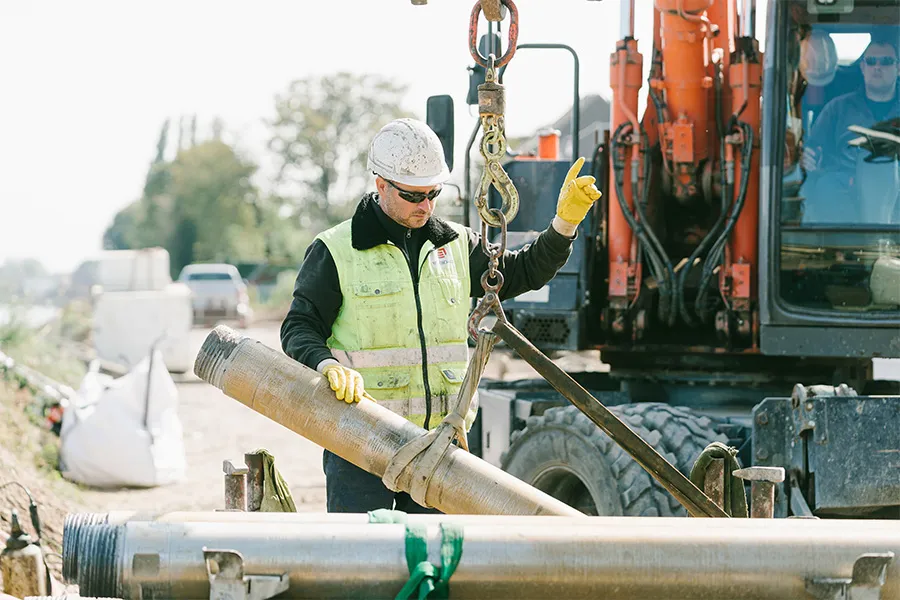
“We used quite a few different construction methods on this project, including trench boxes. When working by the water, you often encounter unforeseen situations. You need to be able to think innovatively and find solutions, and that’s one of our strengths. That’s also what makes water engineering so rewarding. Dikes, bridges or quay walls, no two jobs are ever 100% the same. It’s demanding work, but also fascinating and varied. I’ve been doing it for 19 years!” ■
Een zakelijke vraag aan Herbosch-Kiere? Get in touch
Companies in this story

Keep following this
Get an email when a new story is published. No account needed.
- ThemeStrengthening waterways and coastlines
- SubjectHydraulic engineering
- CompanyHerbosch-Kiere







