New wave flume at the Flanders Hydraulics Research opens the door to innovative research into coastal safety and climate impacts
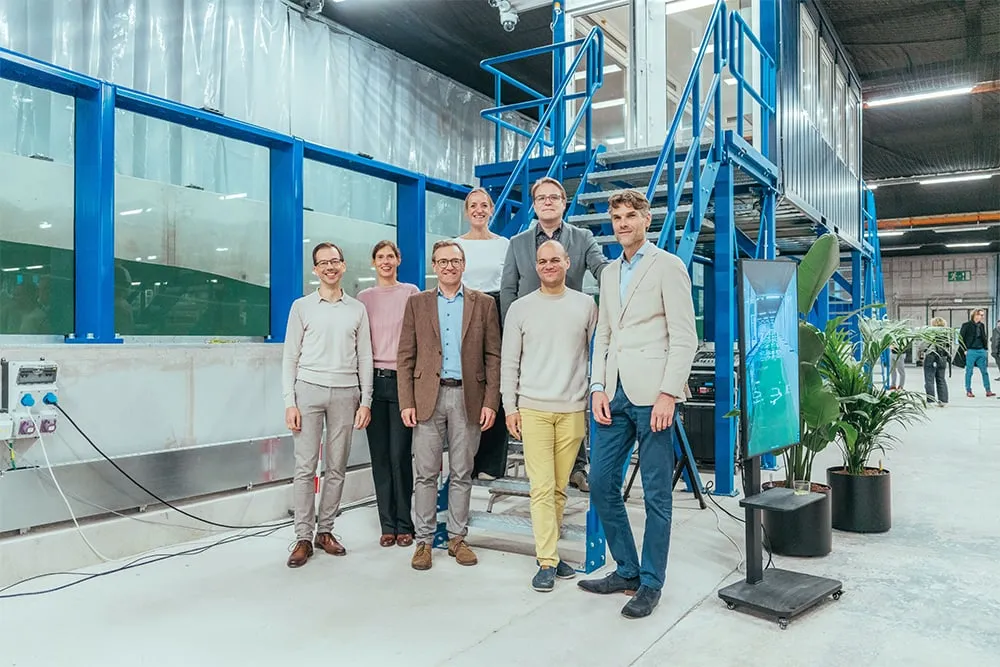
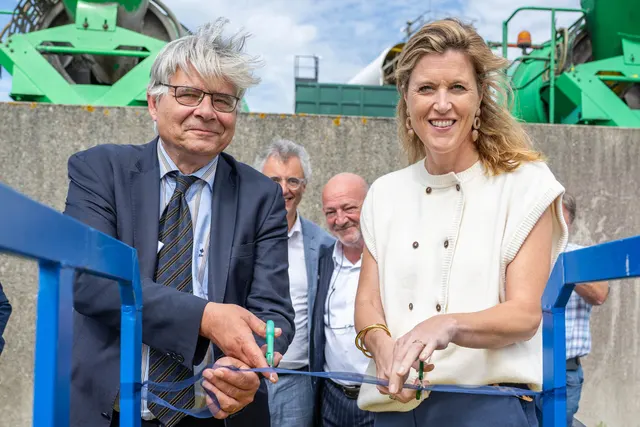
Flanders Hydraulics Research (WL), part of the Department of Mobility and Public Works (MOW), today unveiled its new, larger and more modern wave flume. This research facility is designed to simulate complex wave and water movements in a controlled environment. The official opening took place at WL’s headquarters on Berchemlei in Antwerp. The new wave flume was built with support from the Innovative Public Procurement Programme (PIO) and the Flemish Agency for Maritime and Coastal Services (MDK).
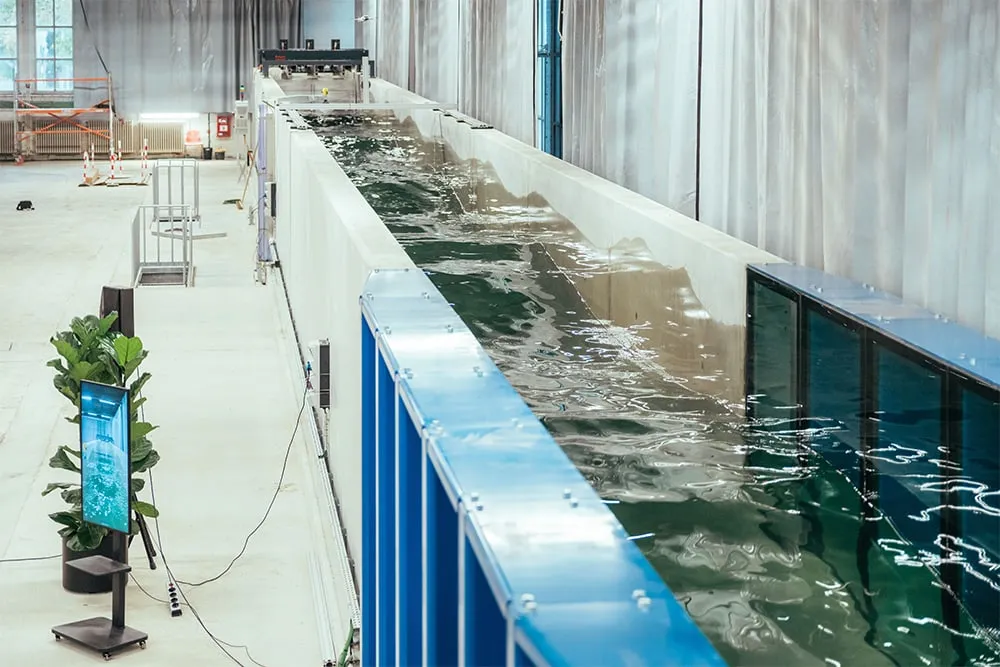
Filip Boelaert, Secretary-General of the Department of Mobility and Public Works: “I am very proud of this impressive feat of innovation. The new, larger wave flume will enable us to map the impact of wave and water movements on sea dikes, harbour breakwaters, quay walls and other structures with even greater accuracy. This opens the door to research into the impact of climate change and rising sea levels on our coast.”
Mark Andries, Administrator-General of VLAIO: “Through the Innovative Public Procurement Programme, we contributed to the transparent glass walls of the wave flume. These enable Flanders Hydraulics Research to use advanced optical measurement methods to map wave movements even more effectively. Investing in research is investing in the future.”
Nathalie Balcaen, Administrator-General of the Agency for Maritime and Coastal Services (MDK): “Coastal safety and protection against flooding and rising sea levels are an absolute priority for MDK. We strongly believe in so-called natural solutions such as dunes in front of dikes. We therefore very much welcome any additional research by Flanders Hydraulics Research.”
A reliable tool for researching wave movements
A wave flume is a long, narrow laboratory facility in which different types of waves are reproduced at scale using a computer-controlled wave generator. Researchers use wave flumes to test the impact of waves, or wave overtopping, on scale models of sea dikes, breakwaters, quay walls and other structures. Wave flumes can also be used to test the stability of dike revetments and harbour breakwaters, and erosion protection around the foundations of offshore wind turbines.
Extremely precise
Flanders Hydraulics Research already has two small wave flumes, each 41 metres long, 0.70 metres wide and 0.86 metres deep. The new wave flume is located at its headquarters in Antwerp and is larger: 84 metres long, 2 metres wide and 2.50 metres deep. The standard water depth is 1.50 metres.
The new wave flume can simulate waves and structures at a larger scale (up to approximately 1:10 to 1:15), leading to more accurate results. In addition, the new wave flume is built to a level of precision that exceeds the standards normally used in the construction industry.
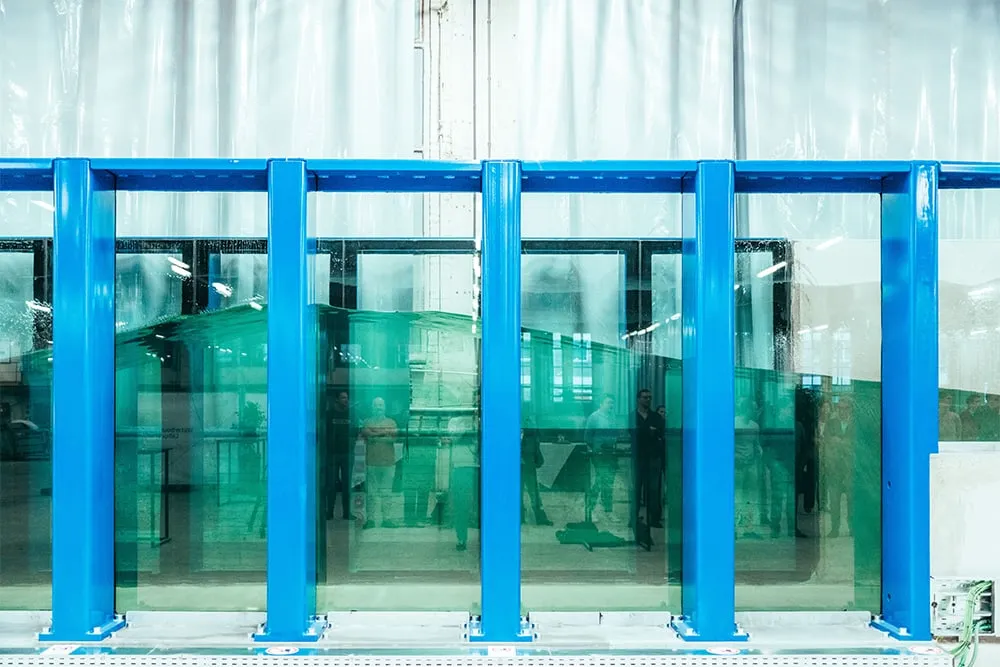
The wave flume was built by Consmema of Hattemerbroek (the Netherlands). The company used innovative technologies and bespoke solutions, including the installation of 42-metre-long glass sections specially designed for optical measurement methods such as Particle Tracking Velocimetry (PTV). This technique visualises water movement and accurately measures water velocities. The glass sections, which join seamlessly to the concrete walls of the wave flume, give researchers a better view of wave movements.
The wave generator was built by HR Wallingford of Oxfordshire (United Kingdom). It can move 2 metres forwards and backwards and generate waves up to 80 centimetres high. Its computer control system can generate both regular and irregular waves and incorporates an integrated wave absorption system that simultaneously neutralises reflected waves.
The wave flume also has a pumping system for automatic filling and emptying, a modern wave generator and a raised platform with a control cabin that gives researchers an unobstructed view of the flume.

Wave flume opens the door to research into climate change
In the context of climate change and Kustvisie, the Flemish Government’s strategic policy plan to protect the coast from rising sea levels, the new wave flume could provide fresh insights. Under Kustvisie, the Flemish Government proposes moving the coastline an average of 100 metres seawards over the long to very long term. Dunes and dikes would be raised and widened, and the beach moved seawards to keep the hinterland dry as sea levels rise. A wave flume can be used to further investigate the impact of waves on ‘nature-based’ solutions, such as a dune, with or without a dike.
WL is also participating as a research partner in the European DuneFront project. As part of the project, WL will carry out a test programme in the new wave flume in 2026. The knowledge gained could eventually be used to adapt coastal defences to the effects of rising sea levels.
Question about this story? Ask your question
Keep following this
Get an email when a new story is published. No account needed.
- ThemeStrengthening waterways and coastlines
- SubjectHydraulic engineering