New from 1 April: watertight traceability for millions of tonnes of dredged material, enabling high-grade reuse
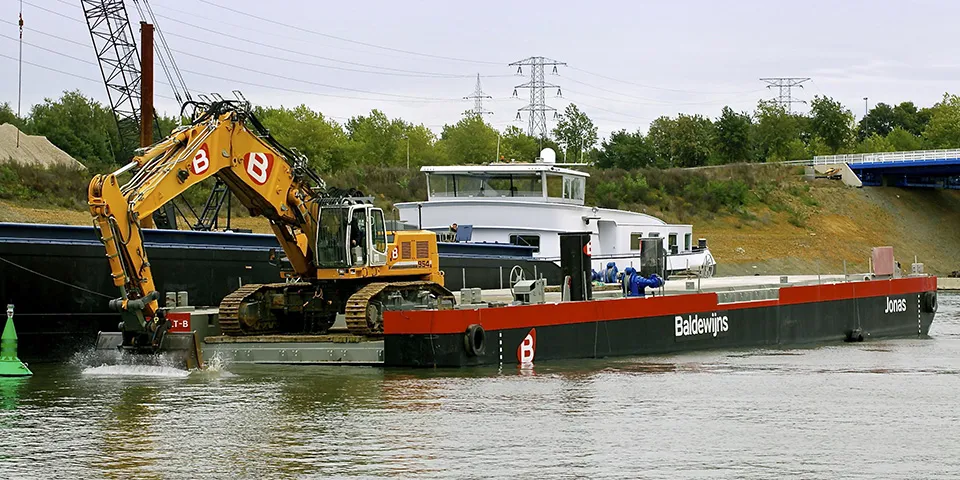
From 1 April, soil management organisation Grondbank will trace dredged material and clearance spoil from Flemish waterways to carefully safeguard quality for reuse. Flanders has 10 million tonnes of dredged material and clearance spoil available each year. The construction sector uses more than 60 % for high-grade applications such as foundation and stabilisation layers. Applying Grondbank’s traceability system will give the circular construction economy in our region further momentum.
Grondbank backs a watertight circular approach to dredged material in Flanders
Grondbank has been successfully applying its system to the transport of excavated soil for 15 years. This soil management scheme is based on the European standstill principle, which safeguards the preservation of soil quality. Regular sampling is crucial. With clear standards, this system makes Flanders a European leader in the smooth and safe transport of excavated soil from one location to another. As a result, the construction sector currently reuses more than 90 % of excavated soil. The system will soon also be applied to dredged material and clearance spoil, making Grondbank the leading hub for the high-grade reuse of soil and dredged material. Altogether, this covers almost 27 million tonnes transported.
Reuse has increased since 2010
Anyone wishing to give dredged material and clearance spoil a new destination must comply with VLAREMA legislation and therefore apply to OVAM for a raw materials declaration. This has been the case for some time. What is new is Grondbank’s crucial role, with its traceability system and quality monitoring, in streamlining and further encouraging high-grade reuse. High-grade reuse of dredged material and clearance spoil is finding an increasing number of applications.
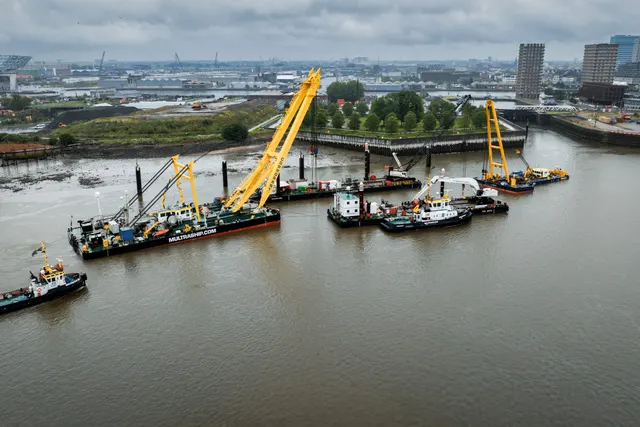
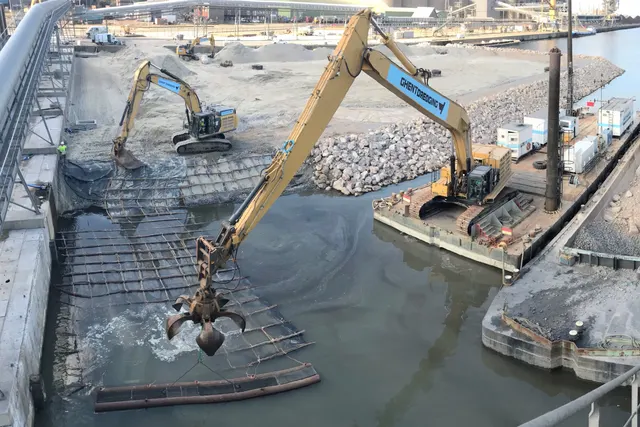
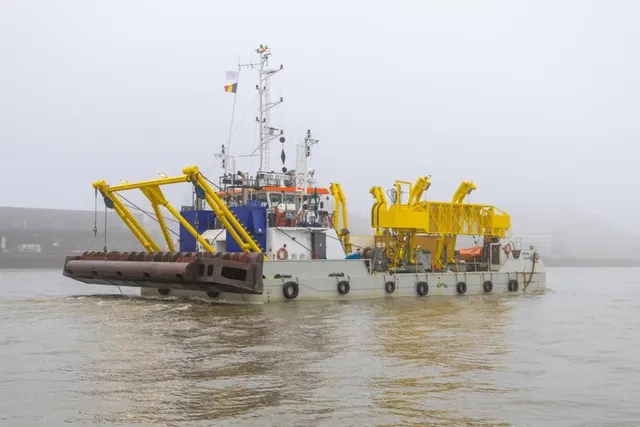
Dredged material and clearance spoil consists of material dredged or removed from navigable and non-navigable waterways. One example is the operators extracting Scheldt sand, companies that recover sand from the Scheldt. This material comes from maintenance dredging, which is essential to maintaining access to the port. The material is dewatered so it can serve as an alternative raw material. This usually takes place at a sludge or soil recycling centre.
According to the latest figures, from 2015, Flanders has 10,280,828 tonnes of dredged material and clearance spoil, of which 6,776,612 tonnes are used as an alternative raw material. Contractors are the main users. The rest of the reused material is used mainly to fill quarries, excavations, docks and pits. In 2010, the figure for use as an alternative raw material was still 2,170,000 tonnes. The striking increase in the years that followed was due to a threefold increase in dredging works. This has significantly reduced the sector’s use of primary raw materials such as sand for drainage, foundation and stabilisation layers. Dredged material is also an alternative to clay in the construction and finishing of landfill sites.
A wide range of applications for dredged material
Alongside established construction applications, such as using it as an alternative raw material for foundation and stabilisation layers, the sector is exploring new possibilities:
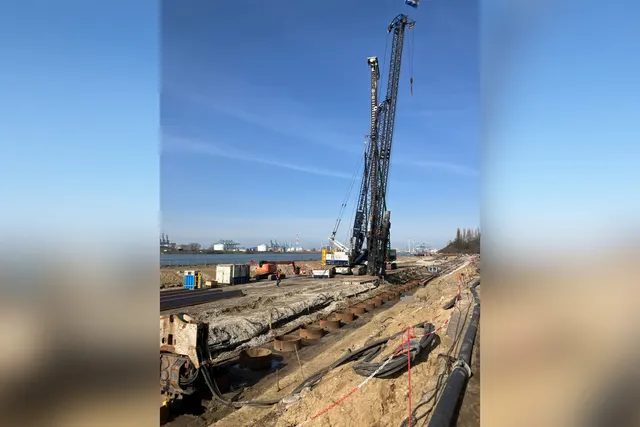
- Sand recovered during dredging works can be used as construction material for dike works, provided it meets certain environmental and hygiene criteria.
- KU Leuven and VITO are currently running a pilot project to use filter cakes, the residue from sludge, as a cement substitute. The technology used grinds the filter cakes. Heating them to a high temperature and then cooling them produces a glassy substance that reacts with cement, allowing some of the cement to be replaced. This appears to reduce CO² emissions. Researchers are currently testing the durability of this new building material.
- In the Netherlands, researchers are investigating how dried dredged material can be used to restore peat meadow areas to their former level. To do this, the material is mixed with other locally sourced waste, such as manure and green waste. Trials are being carried out with local dairy farmers.
- In Great Britain, researchers are looking at how erosion in ecologically valuable creeks can be halted by using dredged material to reinforce natural banks.
- Etc.
Find out more about Grondbank: www.grondbank.be
Question about this story? Ask your question
Companies in this story
Keep following this
Get an email when a new story is published. No account needed.
- ThemeStrengthening waterways and coastlines
- SubjectHydraulic engineering
- CompanyOVAM