









Innovative sensor project on the gates of Evergem’s large lock
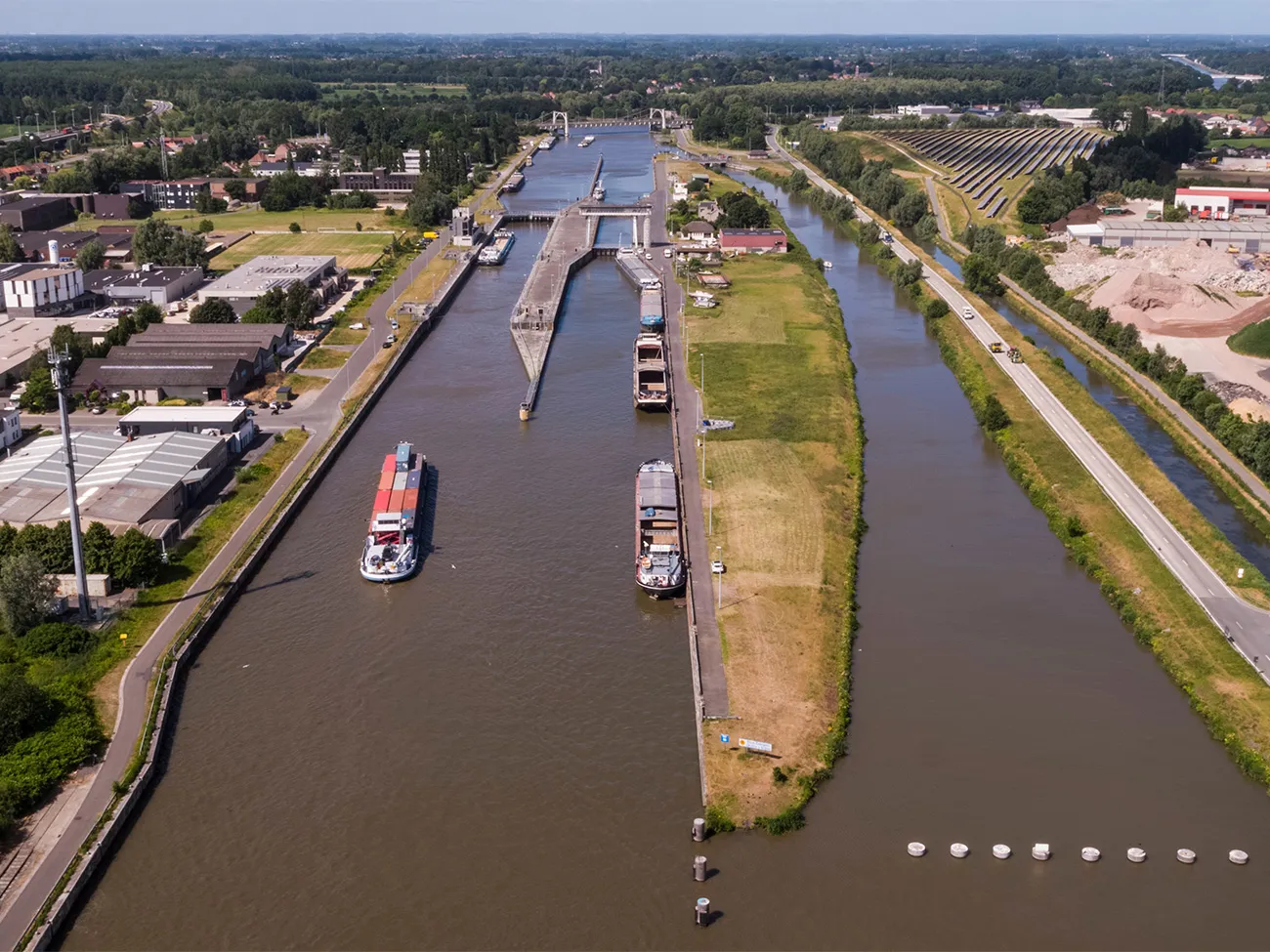
Since early May, De Vlaamse Waterweg nv has been carrying out maintenance work on the large lock in Evergem. The work involves draining the lock, providing an opportunity to equip its gates with sensors. The Department of Mobility and Public Works (MOW) aims to develop a predictive maintenance model for locks using advanced data analysis. The Flemish Government’s Innovative Public Procurement Programme (PIO) is helping MOW achieve this ambition by co-investing in the sensor system.
The large lock in Evergem lies on the main inland waterway connection between North Sea Port and the southern hinterland. Tens of thousands of inland vessels pass through Evergem every year. Following frequent use and several incidents of damage, the lock was due for major repairs. De Vlaamse Waterweg nv and the Department of Mobility and Public Works are using the opportunity to install additional sensors on the lock gates, with a view to more efficient and effective maintenance and management of the lock in future.
Major works
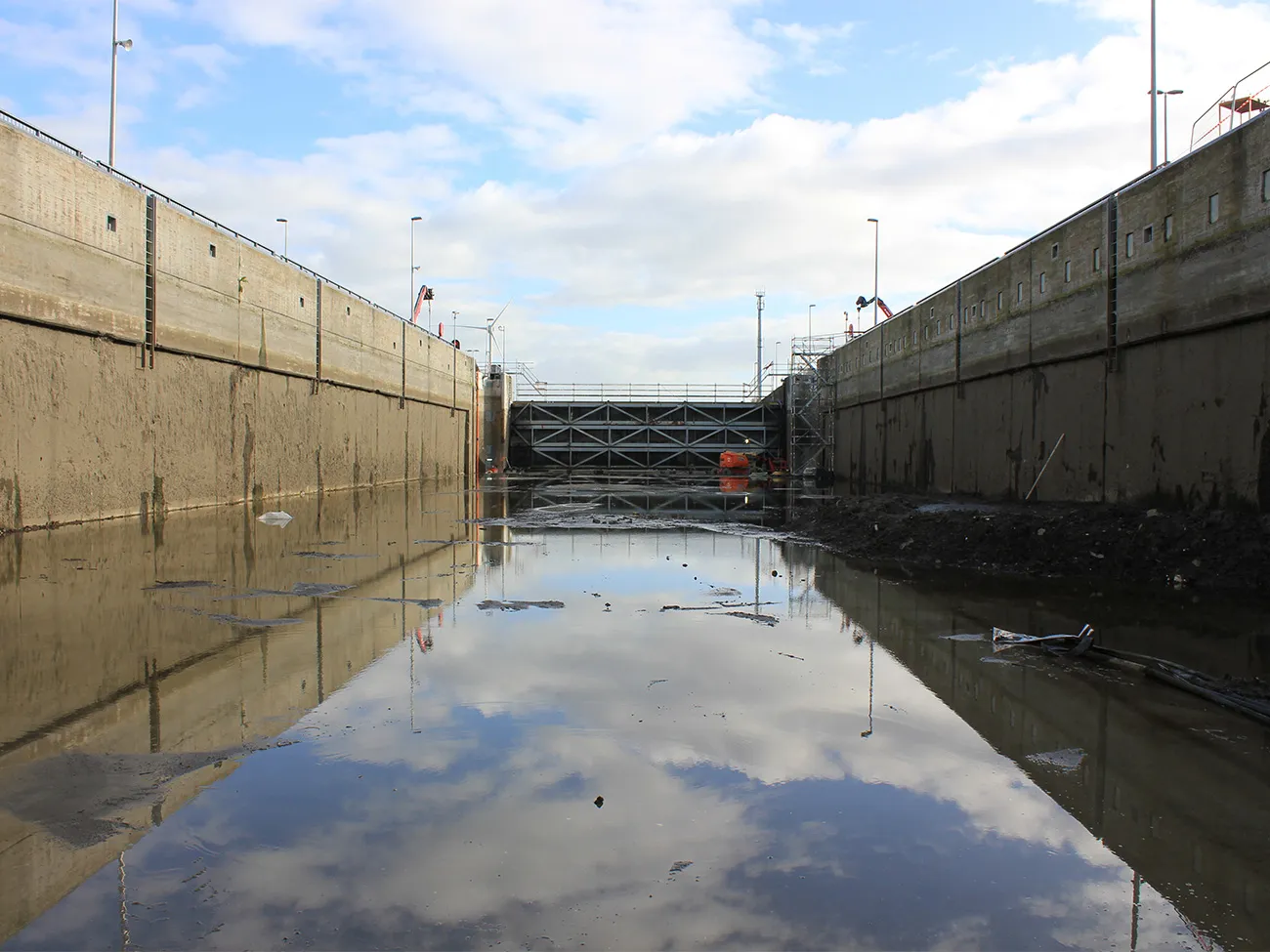
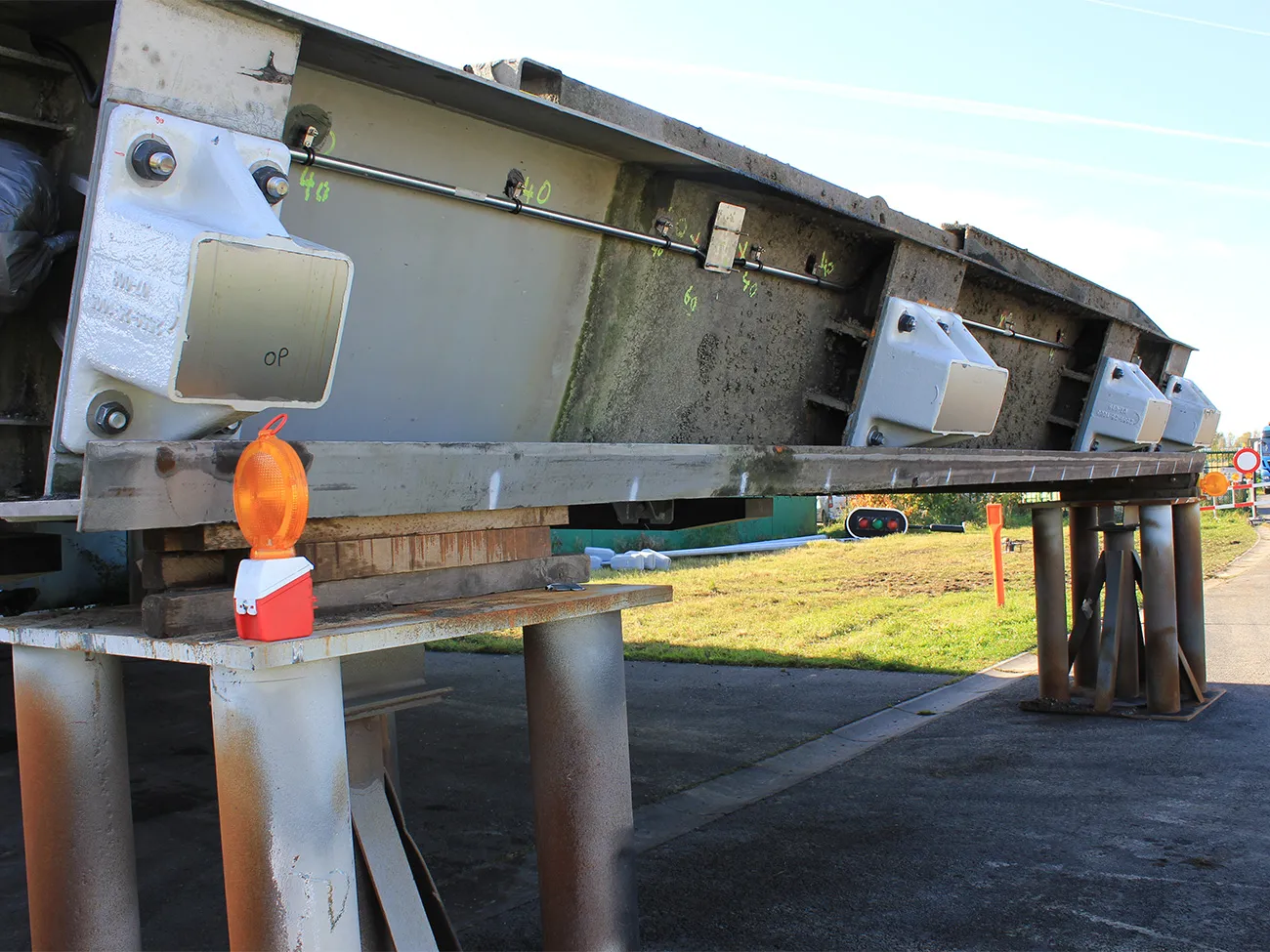
The work was carried out in three phases. The first phase began in early May, with the upper pivot points of the lock gates partially replaced. In the second phase, the lock was completely drained and the gates removed. The lower pivot points were also replaced. The gates were then modified and fitted with sensors before being reinstalled. The large lock has been back in operation since 2 November, and the third phase can now begin. This involves a thorough overhaul of the hydraulic and electromechanical components of the gates. The work will be fully completed in August 2022.
“Repairs to the lock in Evergem are crucial for inland shipping. The lock is the gateway to the southern hinterland of the Ghent port area, or, if you like, the back door to the Port of Ghent. It handles no less than 16 million tonnes of cargo every year. This work will safeguard this connection and allow us to continue promoting freight transport by water rather than by road,” says Lydia Peeters, Flemish Minister for Mobility and Public Works.
Innovative approach using sensors
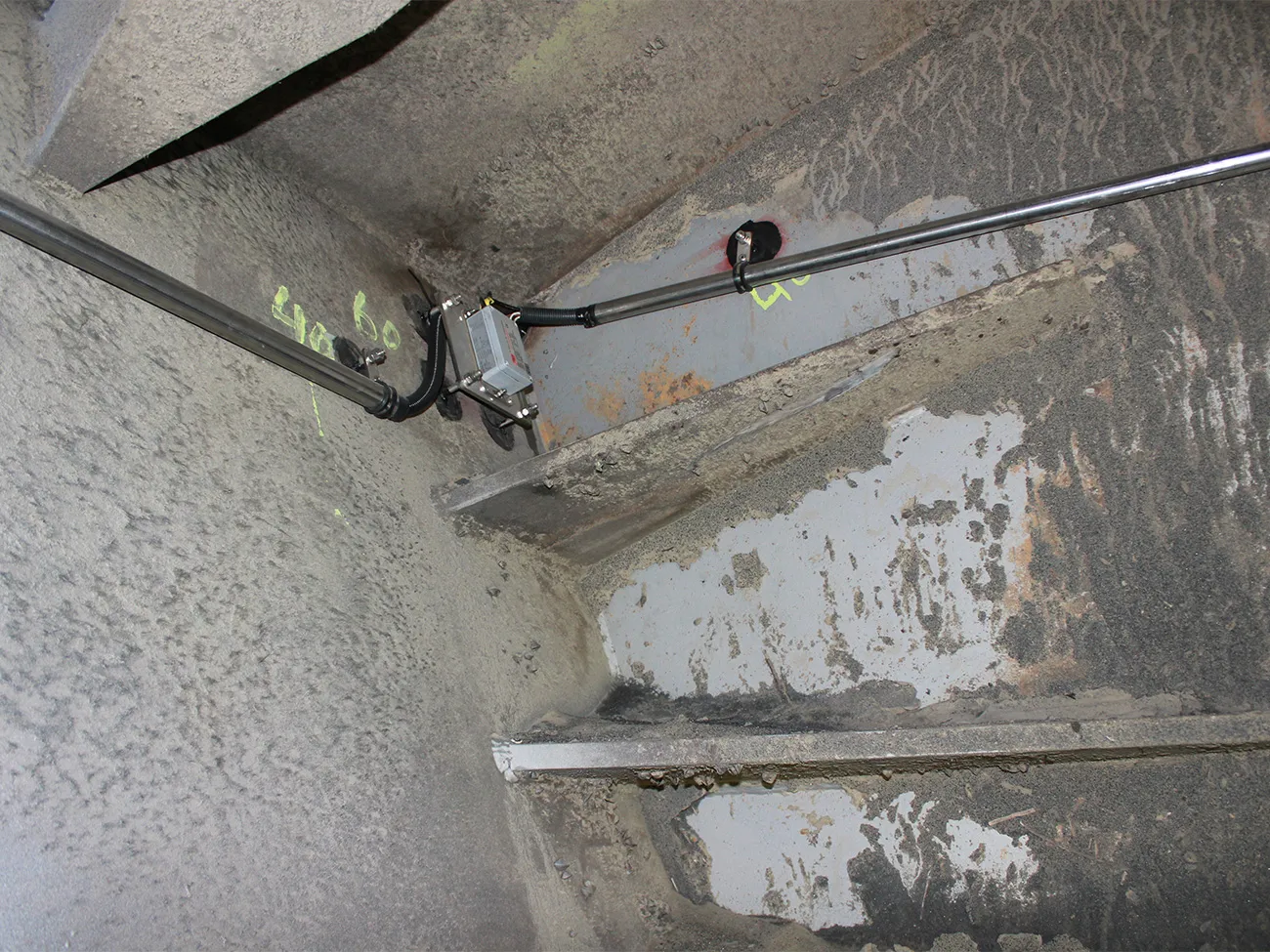
The Department of Mobility and Public Works (MOW) aims to develop a predictive maintenance model for locks using advanced data analysis. Many locks in Flanders are already fitted with sensors for control purposes, and waterway managers record this data for a limited period. The gates themselves, however, are not equipped with sensors. Moreover, the available data is rarely used for maintenance or management of the lock gates. This may now change. The lock gates are to be fitted with various sensors. Sensor data can be relevant to direct applications, but the new and existing data will also be used to define predictive variables.
The sensors are varied in type and include strain gauges, accelerometers, inclinometers, rotary encoders and distance meters, among others. They will provide the most accurate possible estimates of the position of the gate leaves and the forces acting on them. “This project is a perfect example of how choosing an innovative solution can help us work with the future in mind and therefore save costs. Specifically, we want to use this pilot project to learn which information is crucial for the management and maintenance of Flemish locks, and which is not. We can then use that information to fit lock gates at other locations with the right sensors more simply and efficiently. I am therefore very pleased that PIO can contribute its expertise,” says Hilde Crevits, Flemish Minister for Innovation.
Part of a wider initiative
The pilot project in Evergem is part of a wider initiative. MOW’s data lab and the Concrete and Steel Expertise Division are currently developing a maintenance alert tool based on existing data. The aim is to capture additional data using additional sensors, helping to underpin preventive and predictive maintenance from a Structural Health Monitoring perspective. If successful, this project will enable MOW to use predictive models to maintain and manage Flemish locks more efficiently and effectively, with less disruption to shipping.
MOW can count on support from the Flemish Government’s Innovative Public Procurement Programme, which is co-financing the pilot installation in Evergem. The contract was awarded to Zensor nv. The remaining sensors above the waterline will be installed in November, and the data acquisition system will be further rolled out.
Question about this story? Ask your question
Keep following this
Get an email when a new story is published. No account needed.
- ThemeStrengthening waterways and coastlines
- SubjectHydraulic engineering







