









Hydraulic engineering specialist gets stuck into new waiting basin along the Scheldt-Rhine Canal
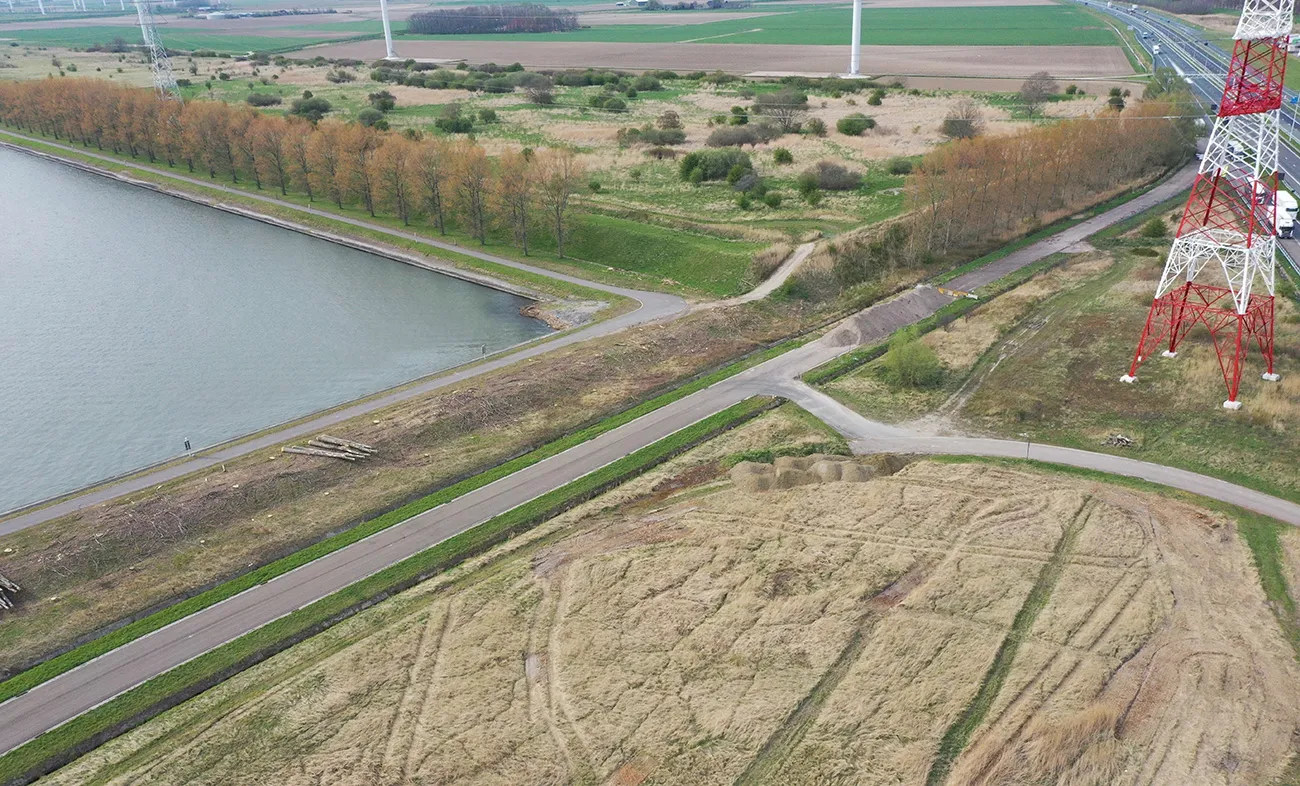
Herbosch-Kiere, in a temporary joint venture (TM) with Hens, is currently hard at work on a new waiting basin along the Scheldt-Rhine Canal, north of the Noordlandbrug, on behalf of De Vlaamse Waterweg and Port of Antwerp. The waiting basin will accommodate around 25 inland vessels, which can stop there for crew changes, statutory rest breaks and to wait until they can take up their berth at the quay to begin loading and unloading operations.
More inland waterway transport has a positive impact on both mobility and the climate. And things are moving in the right direction: transported volumes are increasing, and businesses are increasingly realising that inland waterway transport is a highly viable alternative to road transport and fits in with climate-friendly business policies. The construction of the new inland waterway waiting basin along the Scheldt-Rhine Canal is an important link in this wider picture. Work began this year and is due to be completed in spring 2024. The project is estimated to cost 23 million euros. The European Commission has recognised the importance of this waiting harbour for inland waterway transport by awarding a subsidy of approximately 9 million euros. De Vlaamse Waterweg and Port of Antwerp are each contributing 7 million euros.
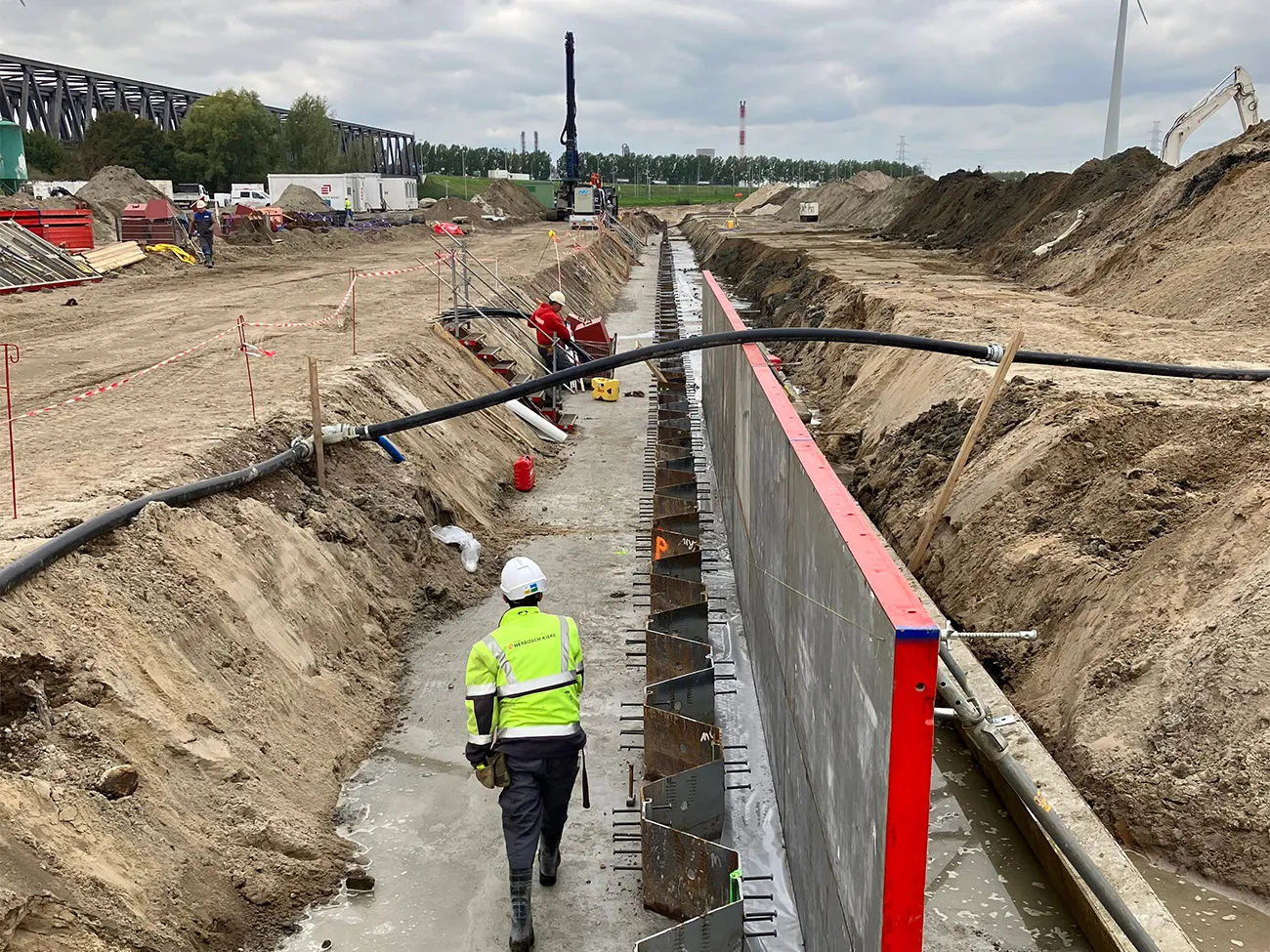
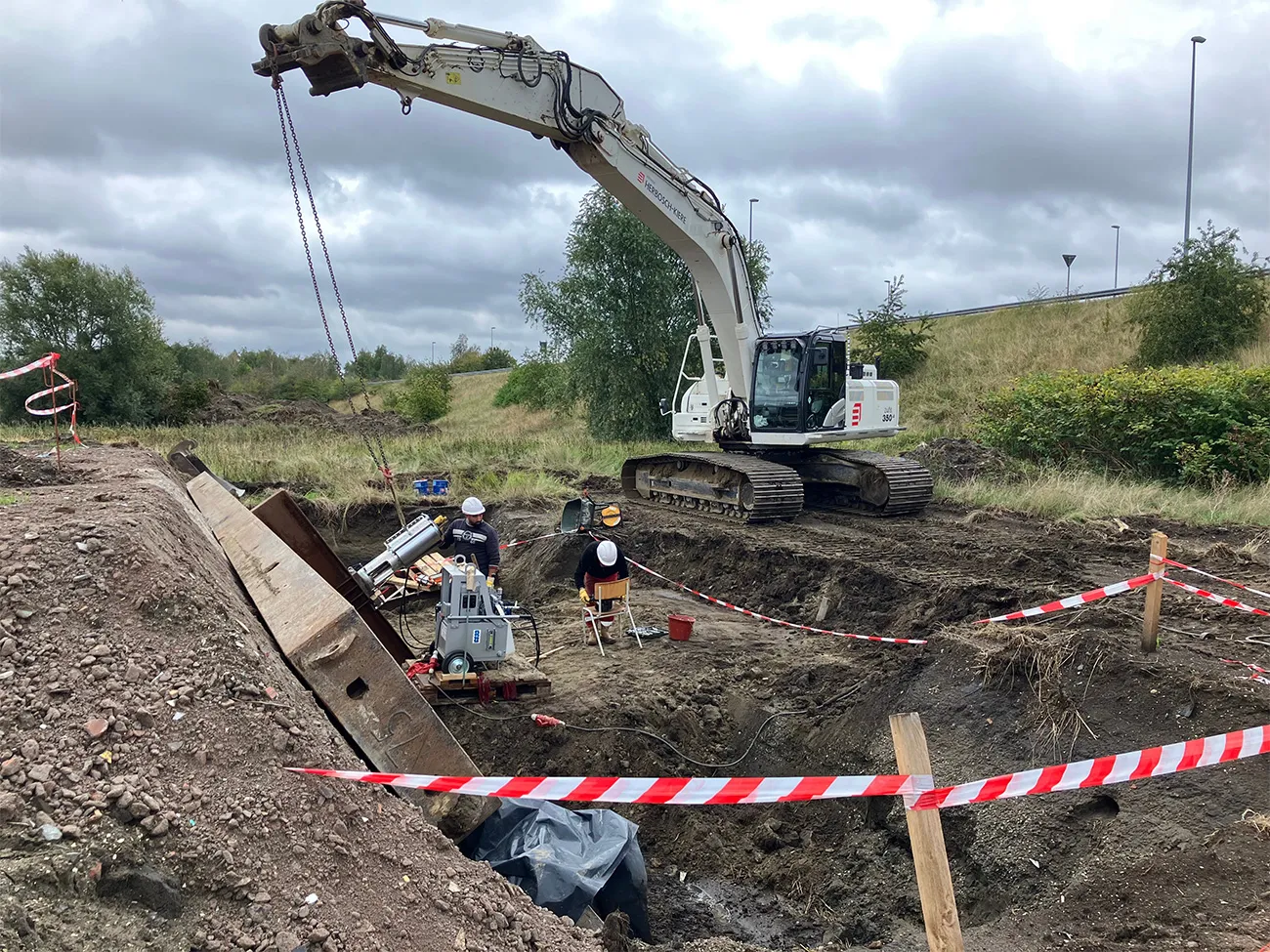
“While Hens is handling the earthworks and dredging, Herbosch-Kiere is responsible for all the hydraulic engineering works, including sheet piles, tubular piles, concrete works and ground anchors,” says Hans Busschots, project manager at Herbosch-Kiere. “That accounts for around 70% of all the work. We are still in the early stages. The studies and construction drawings have been finalised, the site access roads have been built, and we have now also started installing the new sheet pile wall.”
400,000 cubic metres of soil
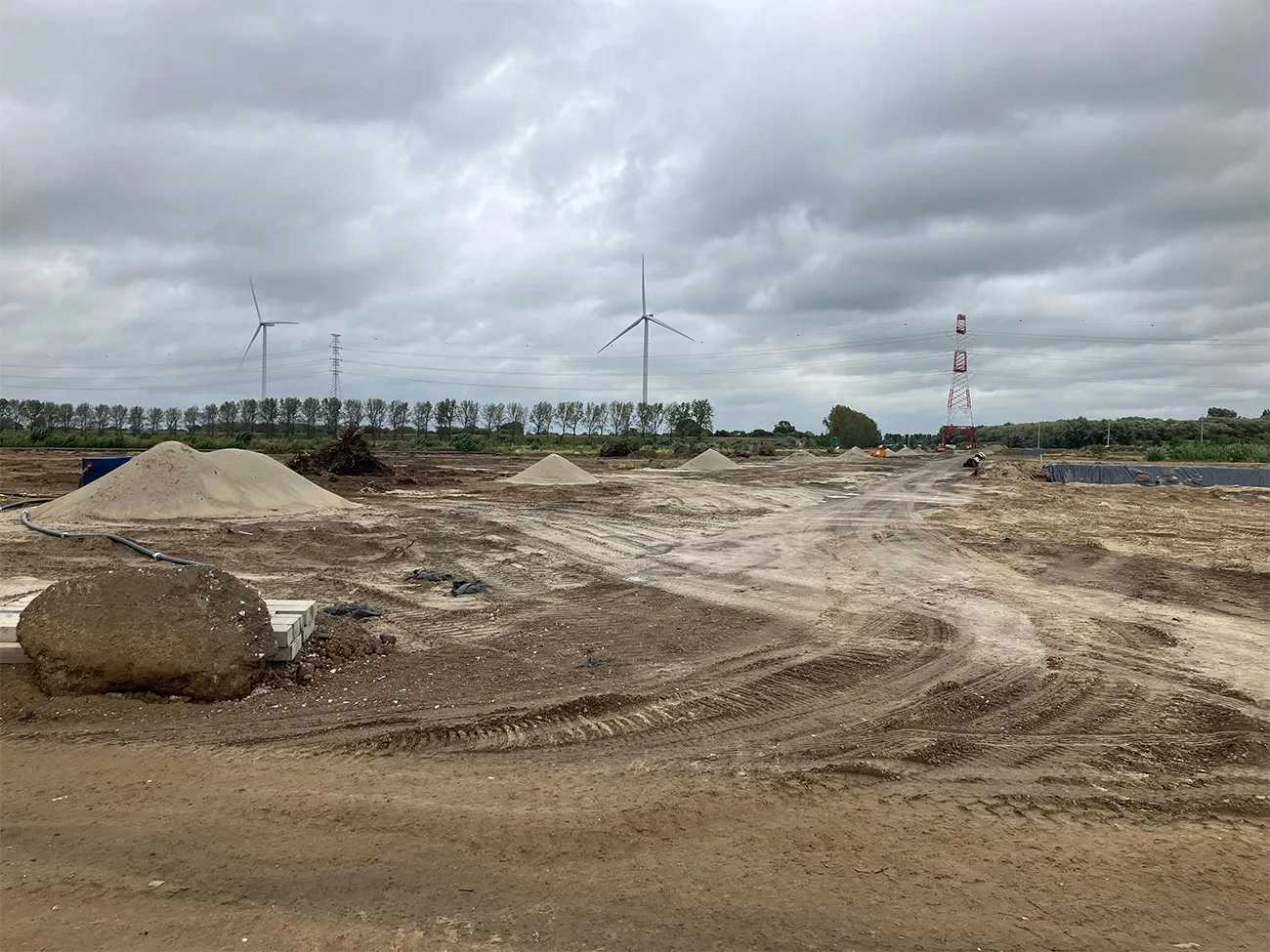
In addition to creating extra berths, the new waiting basin will provide shore power, a drinking water outlet and a collection point for crews’ household waste. The project also includes the construction of a fish spawning ground to improve the structural quality of the ecosystem of the Scheldt-Rhine link and dock complex. Hans Busschots says: “Broadly speaking, the main aim is to move the existing dock further inland so that we can build 7 waiting berths with space for around 25 vessels. To do this, around 400,000 cubic metres of soil will have to be removed, of which approximately 100,000 cubic metres will be reused on site to build an embankment along the A12.”
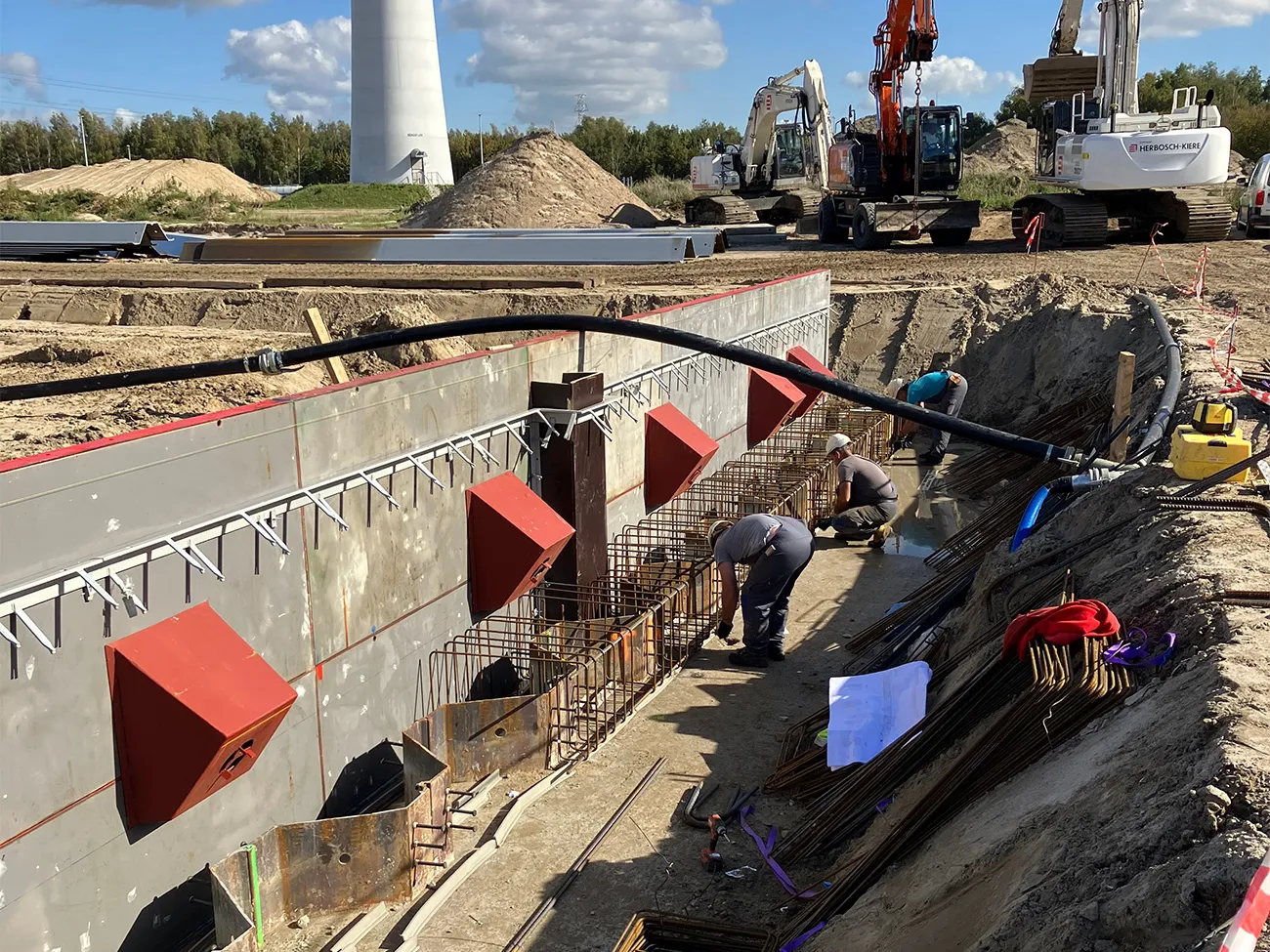
“To carry out the earthworks more or less in the dry, we are installing the new sheet pile wall in the first phase while leaving the old one in place,” says Hans Busschots. “Once the concrete capping beam has been poured on the sheet pile wall and part of it has been anchored, we can start excavating within a more or less enclosed cofferdam. As we will be excavating to a canal depth of 5.30 m, a fair amount of pumping will be needed. Building this wall is routine work for Herbosch-Kiere, but keeping the water level as low as possible is certainly a challenge. The upper layers consist of sand, but below that is loose, wet polder clay. Keeping the excavation dry is not easy, but it is certainly not impossible. We will also start installing the tubular piles in October, following the sheet piling works. This should be more or less completed before the Christmas break.”
Extensive experience
The pile caps will then be constructed off site, ready for installation on site in early 2023. This will complete the steelwork. Hans Busschots says: “There are also the footbridges, which will only be installed after the earthworks. That will be towards the end of 2023 or early 2024. Looking at the project as a whole, it is ideally suited to Herbosch-Kiere. Tubular piles, sheet piles, concrete works, ground anchors: the project involves many aspects of hydraulic engineering, and our extensive experience is a major asset.”
Herbosch-Kiere’s broad range of expertise remains a major advantage. “We have taken on many challenges in the past, including earthworks. So, in a TM with an earthworks contractor such as Hens, we are also very familiar with that type of work. Herbosch-Kiere is therefore an ideal partner to lead a TM on projects like this. We can also handle complex work. For example, the protective structure for the berths consists of a tripod made from tubular piles. The upper section is prefabricated in a workshop and has to be fitted with great precision,” concludes Hans Busschots.
Een zakelijke vraag aan Herbosch-Kiere? Get in touch
Companies in this story
Keep following this
Get an email when a new story is published. No account needed.
- ThemeStrengthening waterways and coastlines
- SubjectHydraulic engineering
- CompanyHerbosch-Kiere







