Ghent Dredging opens new waterside sludge processing centre in Aalter
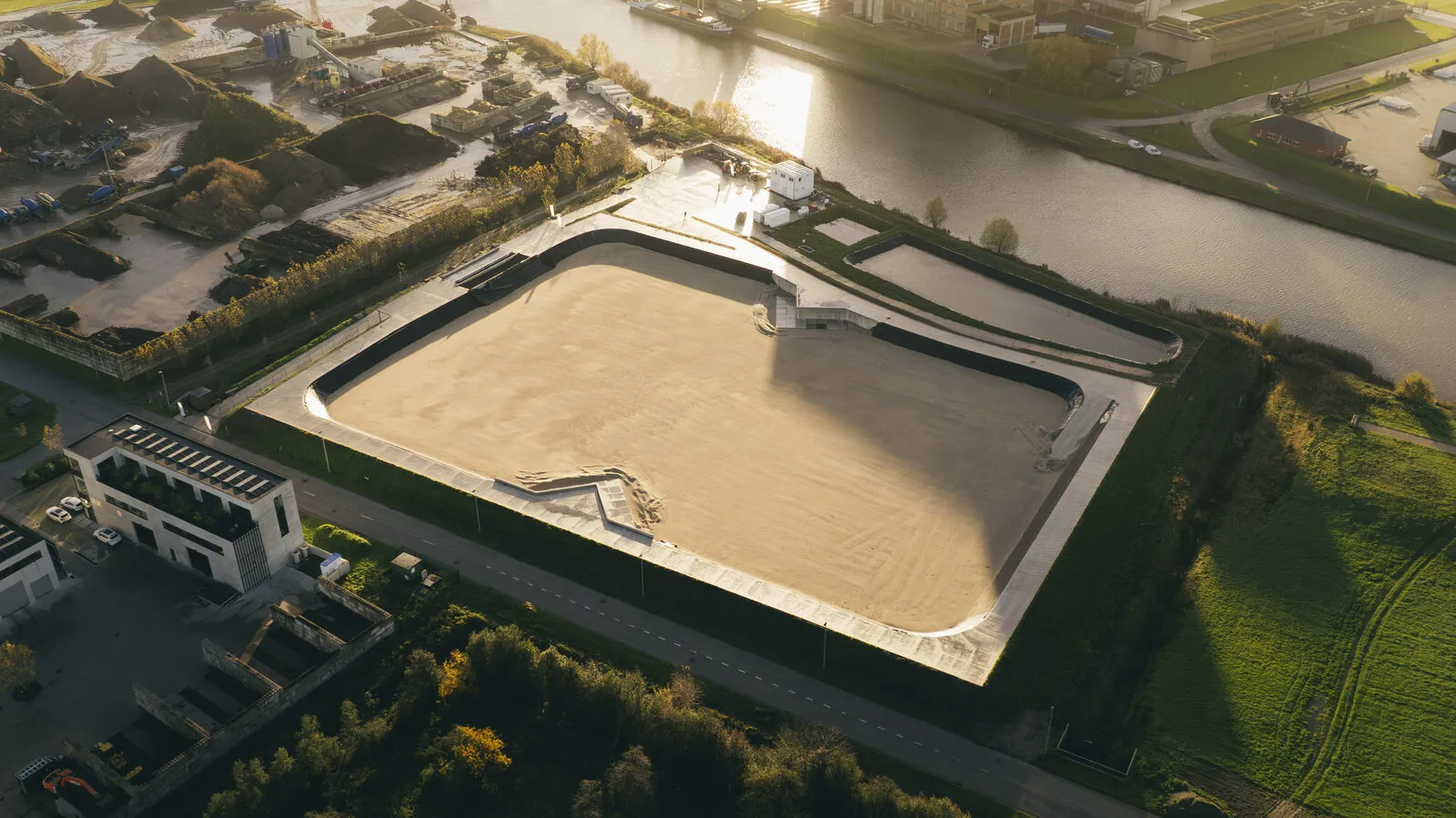
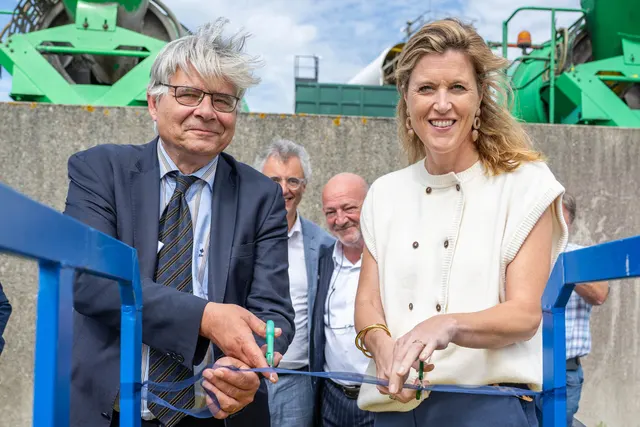
Ghent Dredging has opened GSC Woestijne in Aalter, a centre where the company dries and/or cleans sludge from dredging works so that it can be reused as a construction material. The site is located on the Ghent-Ostend Canal. Wherever possible, Ghent Dredging will deliver and remove material by water. Solar panels will follow shortly and will cover as much of the site's own power consumption as possible. The centre processes up to 60,000 tonnes a year.
GSC Woestijne is Ghent Dredging's second lagooning centre. The company has been part of Aertssen Group since 2026. The first centre, GSC Rodenhuize, is located on the Rodenhuizedok in the port of Ghent (North Sea Port). There, Ghent Dredging processes sludge and soil from West Flanders, East Flanders and Antwerp. Because Ghent Dredging has also carried out several dredging projects in the port of Zeebrugge (Port of Antwerp-Bruges) in recent years, the company was looking for a second waterside location between Zeebrugge and Ghent. In 2024, De Vlaamse Waterweg marketed a number of water-linked plots in the Woestijne industrial zone in Aalter.
"With GSC Woestijne we are taking the next step," says Diederik Bracke, General Manager of Ghent Dredging. "Alongside GSC Rodenhuize in Ghent, we now also have a processing centre between Ghent and Zeebrugge, on a waterside site. This spreads our processing capacity more evenly across the region and puts us closer to the worksites in the area. As a result, we can respond better to the scheduling of our dredging works and organise transport more efficiently."
From sludge to construction material
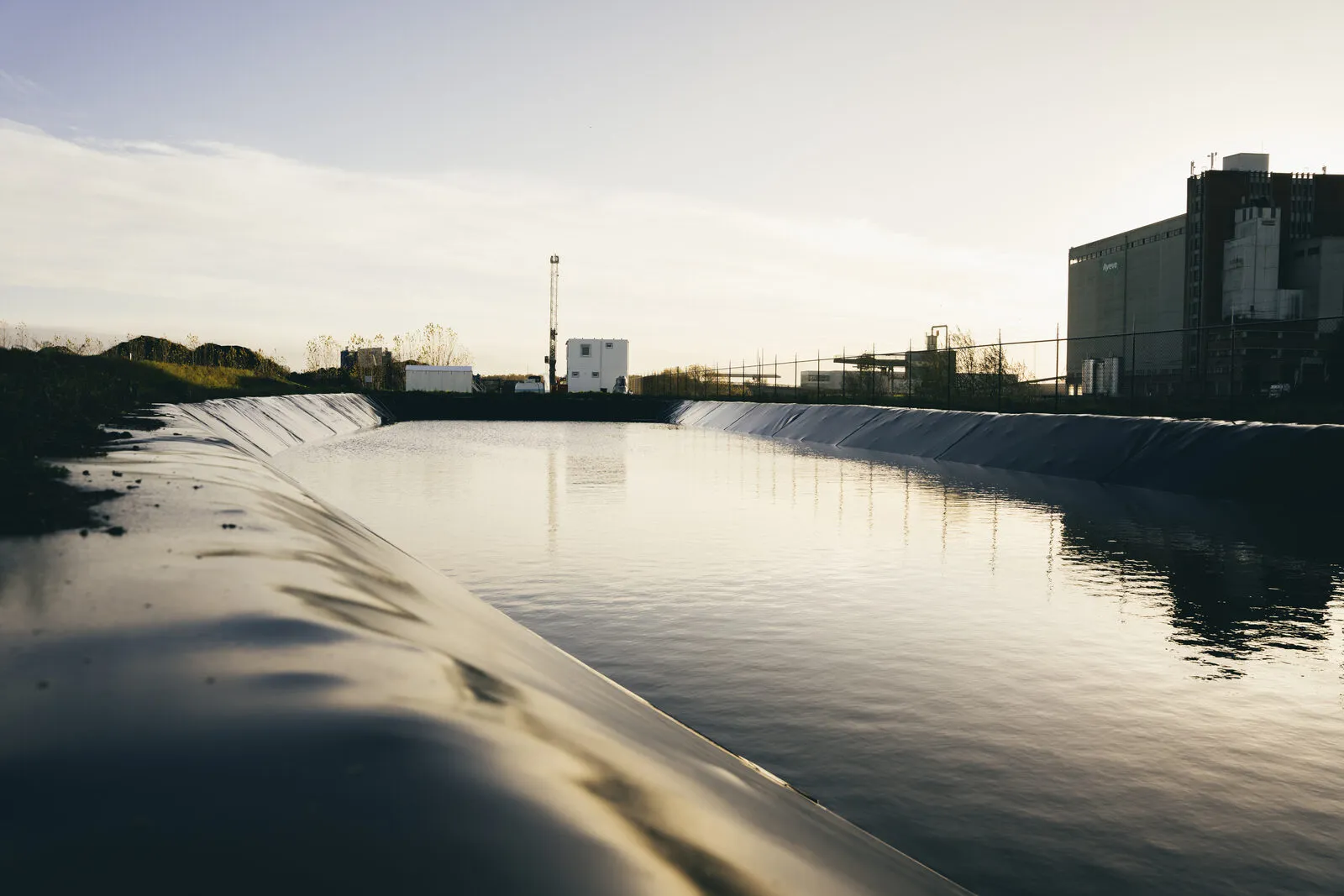
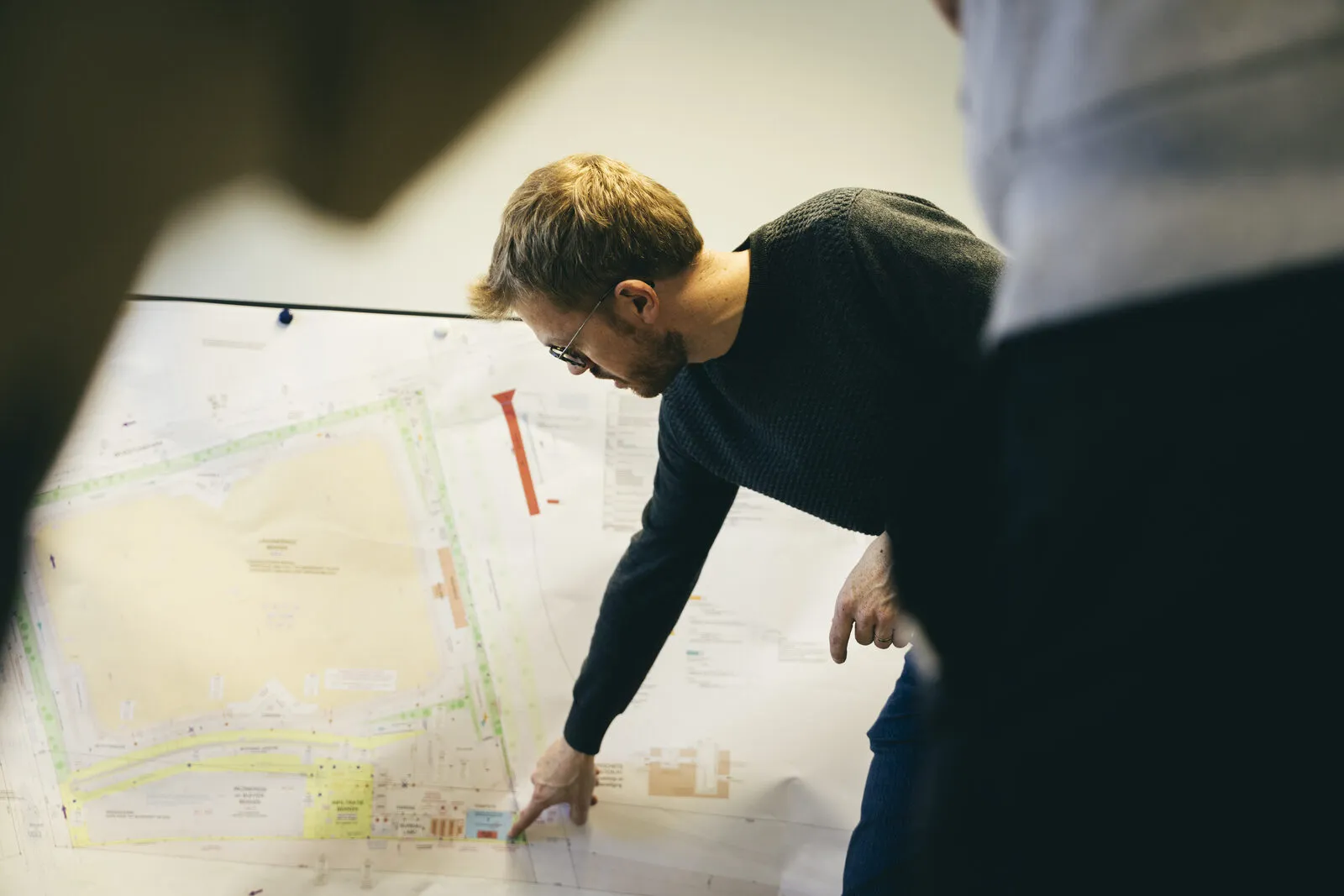
GSC Woestijne (Grond- en Slibverwerkingscentrum Woestijne, a soil and sludge processing centre) covers 21,145 m², has one lagooning basin of 9,586 m² and processes up to 60,000 tonnes of sludge a year. The sludge comes from dredging works for port authorities and Flemish public bodies.
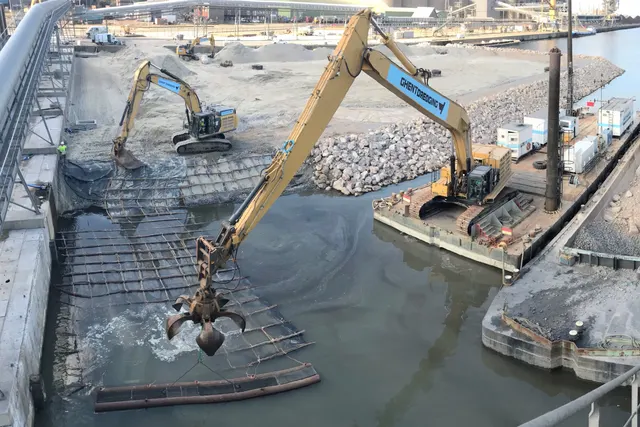
Sludge-tight trailers discharge the sludge at one of the two unloading quays in the basin. Excavators spread it evenly across the whole basin. Ghent Dredging then leaves it to rest for several weeks. During this period a crust forms on top, the sludge consolidates and a large part of the water drains out. Excavators then mix the sludge and a new rest period follows.
"After several rest periods we form the sludge into ridges, like in a potato field," says Alexander Deloof, Project Manager for GSC Rodenhuize and GSC Woestijne. "We turn these ridges regularly so that the remaining water can evaporate. We continue until the sludge is 80 to 85 per cent dry matter. On average this takes two to four months."
Exactly how long depends on the moisture content on arrival, the composition (clay, loam or sand) and the weather. The dried sludge can then return to the market as a construction material, for example for raising industrial sites, building embankments and dykes, road foundations and sub-bases, constructing bridge abutments, filling quarries and capping landfills.
By water
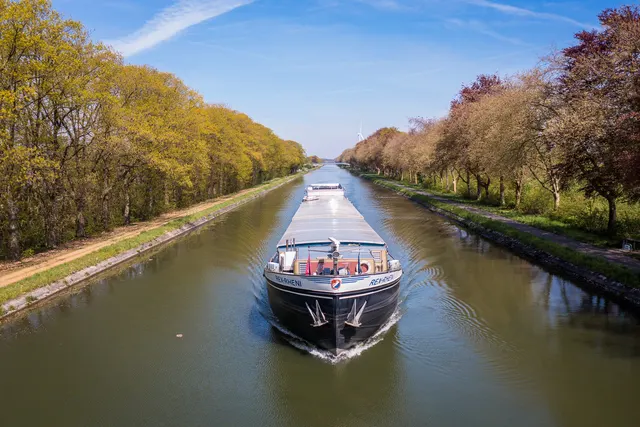
For the delivery and removal of these 60,000 tonnes a year, Ghent Dredging is relying primarily on the quay of the nearby Regionaal Overslagcentrum (ROC) Aalter, a regional transhipment centre.
"We want to give everything released by dredging works a second life wherever possible: from waste material to secondary raw material," says Vincent Lepère, newly appointed Operations Director Environment at Ghent Dredging. "By delivering and removing these materials by water as much as possible, we also keep a great many lorries off Flemish roads."
Water, energy and consideration for the neighbours
Solar panels will shortly be installed on the site and will cover as much of its own power consumption as possible. When that is not enough, Ghent Dredging will buy electricity from renewable sources. The machines run on HVO diesel (biodiesel) to limit CO₂ emissions and use AdBlue to reduce NOx emissions. Water from the basins passes through a water treatment plant designed by Ghent Dredging itself before it is reused or discharged again. The company uses this treated process water, among other things, to clean vehicles and machinery and to spray against dust nuisance. It also collects rainwater for reuse and has a wadi (infiltration swale). The site and the offices are lit with LEDs. Charging points for hybrid and electric cars will follow shortly.
"GSC Woestijne fits two pillars of our sustainability strategy: 'Water as a precious resource' and 'A circular future'," says Demi Vandenbossche, Environment & Sustainability Coordinator at Aertssen Group. "Water we treat ourselves is reused wherever possible, and dried and/or cleaned sludge can serve again as a construction material. On behalf of the group, we are delighted to see this new site start operating."
To limit the impact on the neighbourhood, green screens line the plot boundaries and Ghent Dredging works only on weekdays, from 7 a.m. to 5 p.m.
Ghent Dredging is investing around EUR 850,000 in the site, which will eventually create more than ten jobs.
Question about this story? Ask your question
Keep following this
Get an email when a new story is published. No account needed.
- SubjectHydraulic engineering