









Flemish dredging specialist helps shape Seine-Scheldt link
Text Niels Rouvrois Beeld Ghent Dredging
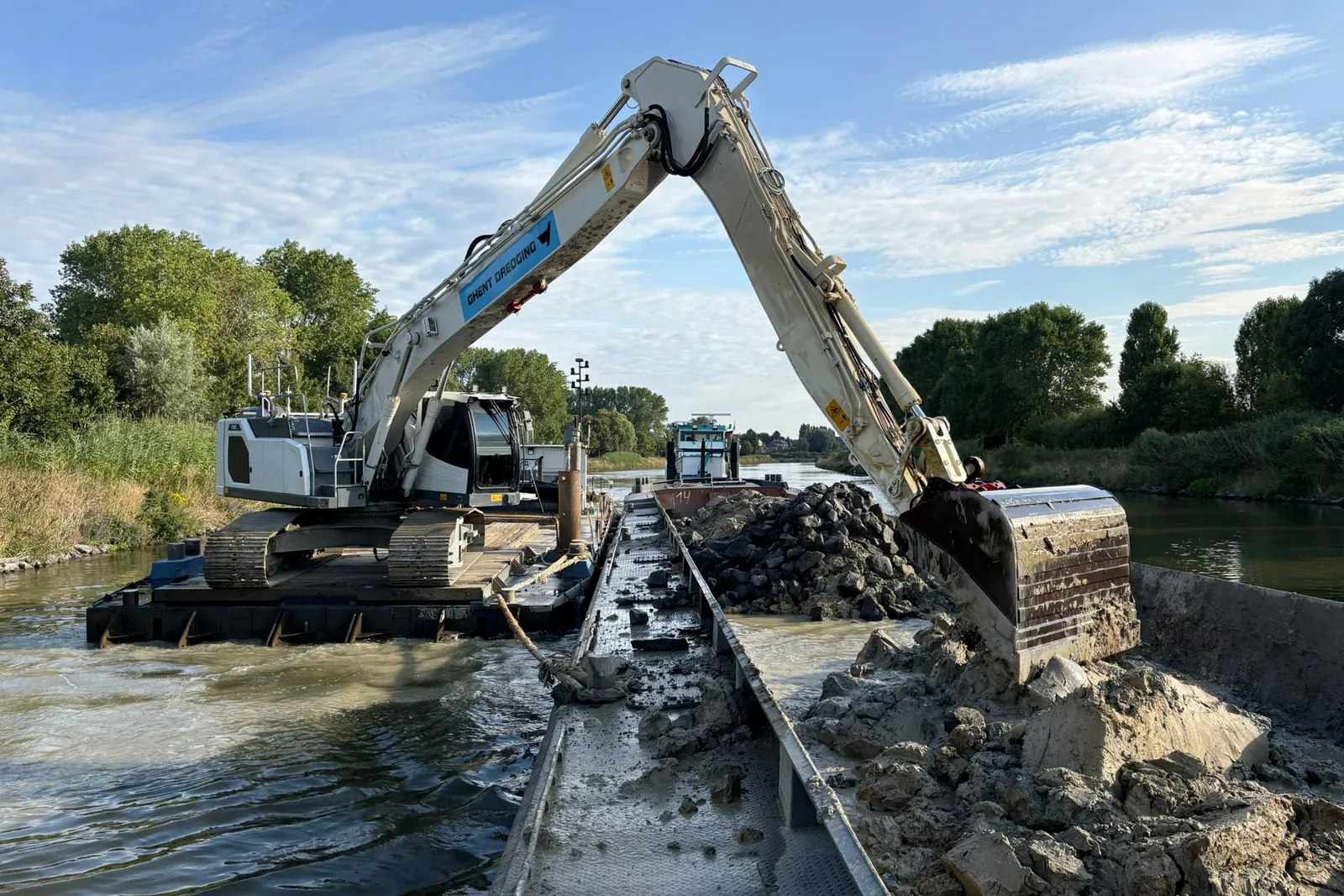
By carrying out various dredging works on the Deûle and the Lys Mitoyenne for Voies Navigables de France, Ghent Dredging is giving a major boost to the Seine-Scheldt link, a cross-border project that will improve navigation for large inland vessels between northern France and Flanders. “From dredging and transport to processing and recovering the material, we manage the entire chain ourselves, which adds considerable value for the client,” says Diederik Bracke, managing director of Ghent Dredging, which is becoming increasingly active in the northern French market.
In future, inland vessels will be able to travel further into France, all the way to Paris. This will be made possible by the Seine-Scheldt project, which is developing a European inland waterway link between the Seine and Scheldt basins. At present, only vessels of 400 to 600 tonnes can reach Paris, using small, outdated waterways with numerous locks. By 2030, the route between North Sea Port (Ghent) and Deûlémont on the French border will be navigable by vessels of up to 4,500 tonnes.
120,000 cubic metres of material
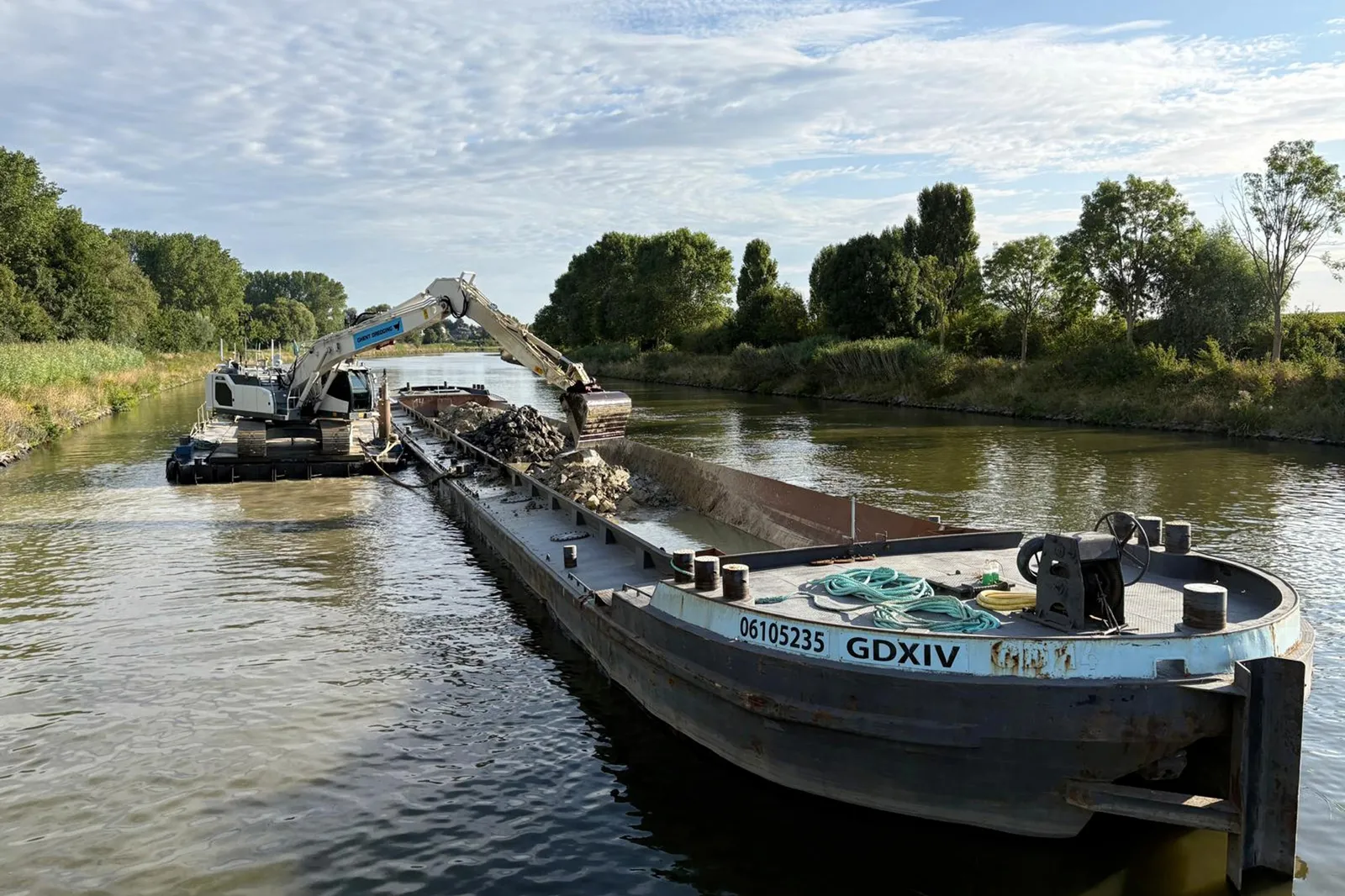
Ghent Dredging has been carrying out dredging works as part of the project since 2020. Diederik Bracke says: “Our most recent project is the re-profiling of the Lys Mitoyenne, which we started in early 2023 and expect to complete in 2026. In June, we began a new phase of this sub-project, dredging 120,000 cubic metres of material between Deûlémont and the reach upstream towards the Comines lock. Some of the material we dredge is taken to the client’s recovery site, and the rest to our own treatment site in Belgium. Our self-propelled dredging pontoon Titan, equipped with a long-reach hydraulic dredging excavator, is also the right equipment for dredging on inland waterways, without disrupting through traffic.”
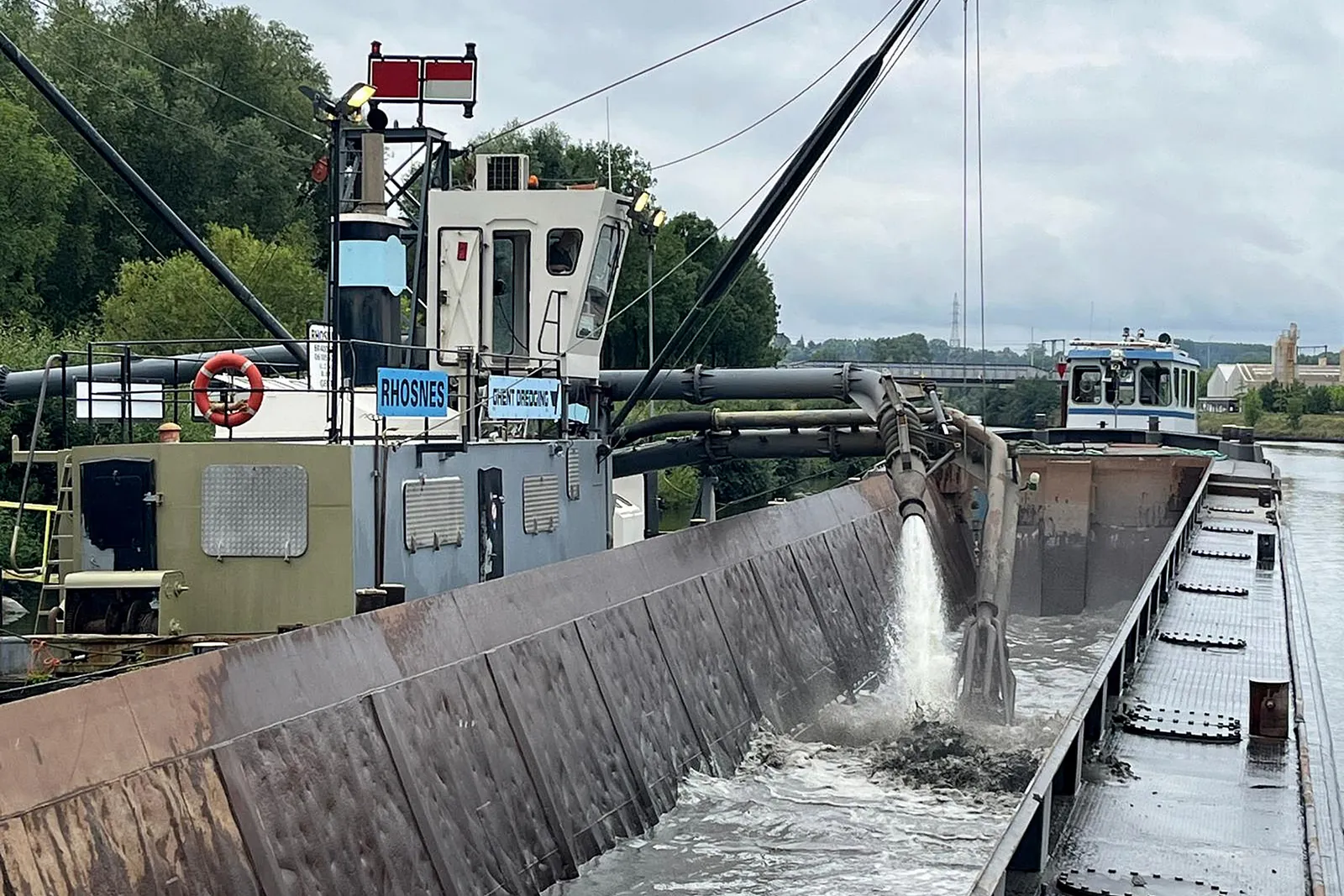
The works on the Lys Mitoyenne follow earlier dredging works on the Deûle, carried out by Ghent Dredging from 2020 to 2022. After the banks of the Deûle were rebuilt, Ghent Dredging began deepening and widening the waterway to make the canal navigable for heavier vessels. Initially, only the Comines reach was dredged. The dredged silt was stored at the Quesnoy-sur-Deûle disposal site. Once it reached capacity, Ghent Dredging permanently capped the silt deposit with clay soil. Further dredging was also carried out, with the silt taken to the Saint-Omer outlet site.
A logistical challenge
This also highlights one of the biggest challenges in inland waterway projects of this kind: ensuring sufficient capacity to receive the material. “You always have to plan ahead for where you can take the material, depending on the timing and progress of the works,” explains Diederik Bracke. “That means the work requires maximum flexibility, particularly when it comes to transport. Ghent Dredging meets this need with its own transport fleet and, wherever possible, aims to move material by water. We avoid road transport whenever we can, and in this project we have managed to do so.”
According to the current schedule, Ghent Dredging’s dredging works on the Lys Mitoyenne will be completed in 2026. Preparations are also under way for the further development of the route in France. Ghent Dredging is likely to remain involved. Diederik Bracke says: “We have been active in the Nord-Pas-de-Calais region since 2003. The Seine-Scheldt project is naturally a major part of that work. Our strength lies in having full control over the delivery chain. This allows us to respond quickly, work efficiently and anticipate the challenges posed by these large-scale inland waterway projects.”
A huge impact
The expected impact of the Seine-Scheldt link once completed is considerable. “Once finished, freight volumes along the route will rise from 5 million to 12 million tonnes a year. That means 500,000 fewer lorry journeys annually and a saving of 200,000 tonnes of CO2 emissions. By focusing on integrated water engineering and circular sediment management, Ghent Dredging is helping Belgium and France meet wider climate and mobility targets and make inland shipping the beating heart of logistics in north-west Europe,” concludes Diederik Bracke.
Een zakelijke vraag aan Saint-Gobain PAM Belgium? Get in touch
Companies in this story
Keep following this
Get an email when a new story is published. No account needed.
- ThemeStrengthening waterways and coastlines
- SubjectHydraulic engineering
- CompanySaint-Gobain PAM Belgium







