









Flanders pioneers promising coastal protection approach
The Flemish Government has given its initial approval to the draft strategic vision for long-term coastal protection, the Kustvisie strategic policy plan. The plan sets out a strategy for adapting each zone along our coast step by step over the next 100 years, enabling Flanders to protect itself from flooding from the sea at all times, despite rising sea levels, whether they rise by one, two or three metres. This puts Flanders at the forefront, making it a pioneer in Europe and far beyond.
Kustvisie builds on the Coastal Safety Master Plan
Kustvisie builds on the Coastal Safety Master Plan, which comprises a series of measures to protect our coast until 2050 against severe storm surges and a 1-in-1,000-year storm, while allowing for sea-level rise of up to 30 cm. Through Kustvisie, the Flemish authorities are examining how to protect our coast against further sea-level rise in the long term. By early 2023, earlier research for Kustvisie had identified several options for continuing to protect our coast against flooding from the sea over the next 100 years and beyond. For beach areas, two promising alternatives remained: keeping the high- and low-water lines where they are today, or gradually moving them seawards over time. For each of the four coastal ports, two to four promising alternatives remained. Further research in 2023 has now informed the preferred option put forward in the draft Kustvisie strategic policy plan.
The beach will move seawards
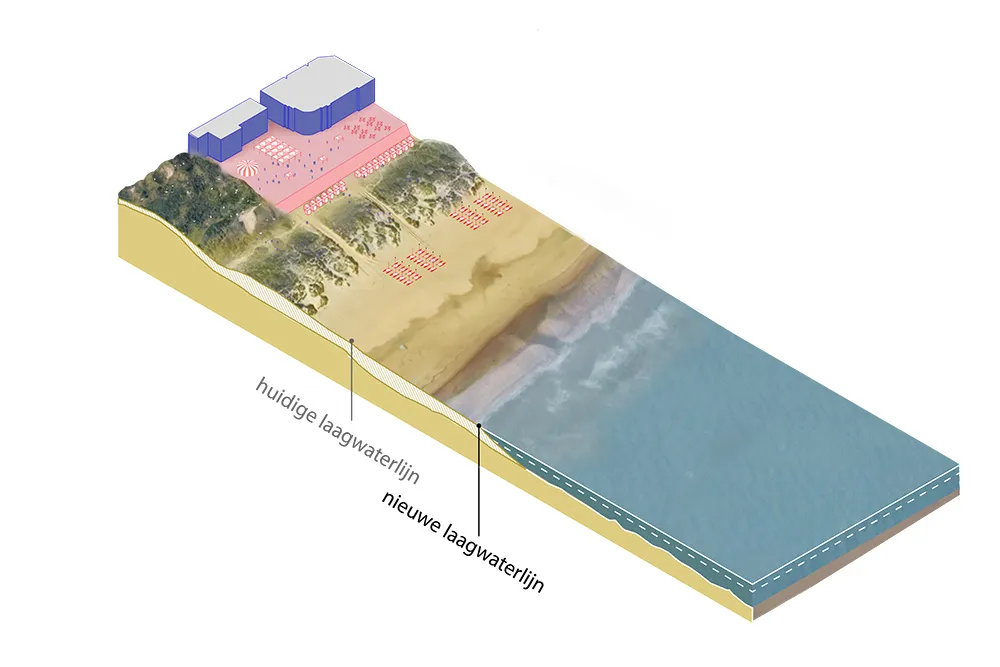
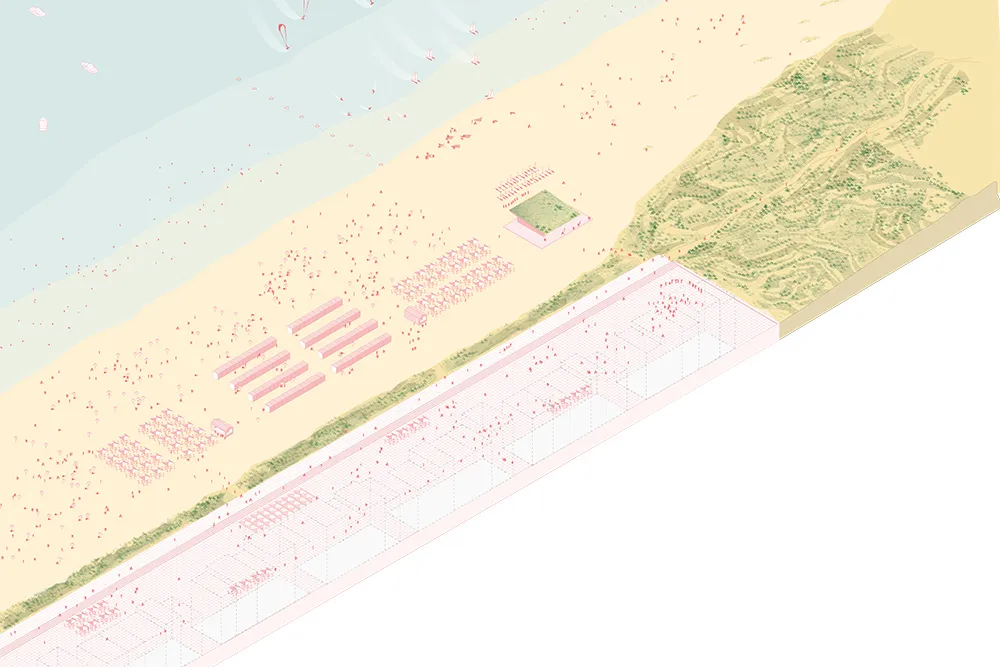
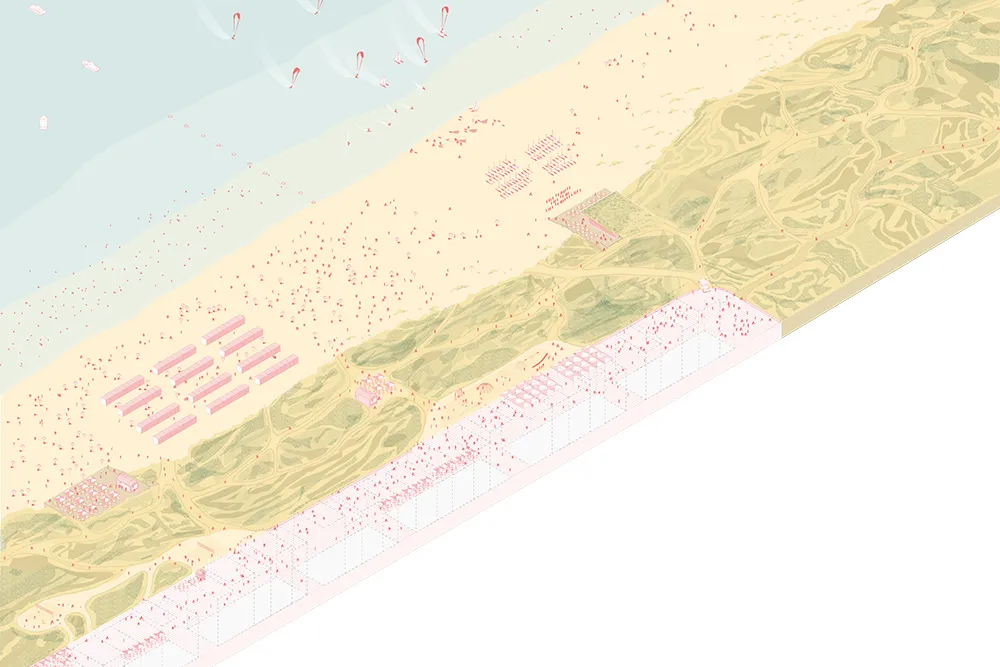
In the long to very long term, we will move the coastline an average of 100 metres seawards by raising and widening the beaches. There is still plenty of time before action will be needed in many beach areas. In seaside resorts, options for the future include raising and widening the sea wall, creating a dune, or combining a sea wall and dune. This is set out in the strategic policy plan given initial approval by the Flemish Government. “In future, our beaches will be at least as wide as they are today, even if sea levels rise significantly. We will need some of that extra space for higher and wider dunes and sea walls. Where dunes already exist, we are already opting to create new, additional dune formations over time. A belt of dunes could eventually protect every seaside resort. But hard sea walls or combined solutions can also be selected to suit specific locations in seaside resorts. The optimum timing and phasing will be developed further in the coming years in the first action plan for 2024-2034. We will also leave future generations with a choice”, says Edward Van Keer, Kustvisie project leader at the Department of Mobility and Public Works. Over the coming decades, beach areas will mainly need additional beach nourishment so that beaches and dunes can gradually keep pace with rising sea levels.
Lydia Peeters, Flemish Minister for Mobility and Public Works: “With the draft Kustvisie strategic policy plan, we aim to protect our coast in the long term. The proposed measures are feasible and also offer every opportunity to keep our coast attractive to everyone over the long term. I would like to thank all the people and organisations who contributed to this intensive process. We can be proud of this milestone. It is a truly remarkable achievement!”
Coastal ports will need many measures in the coming decades
The preferred option indicates that the ports of Oostende, Blankenberge and Zeebrugge in particular will need many additional coastal protection measures in the coming decades.
Over the next 35 years, the outer harbour at Zeebrugge will need to be raised in many places. A lock or storm surge barrier will need to be operational in 35 years’ time at the marina in Zeebrugge, which lies at the back of the outer harbour. A lock or storm surge barrier will also need to be ready at the Blankenberge marina in 25 years’ time. To decide between a lock and a storm surge barrier for both marinas by 2030 at the latest, a vision for the future of all coastal marinas will be prioritised in the coming years.
Three options remain for the port of Oostende. The first is to have raised the entire area around the port by an additional amount within 25 years. The second is to build a very large storm surge barrier at the harbour entrance by 2050. The third is to build a lock complex. A decision must be made by 2030 at the latest. To inform that decision, an economic vision for the future of the port of Oostende will be prioritised in the coming years. An economic vision for the future of the port of Zeebrugge will also be developed.
A storm surge barrier is already under construction in the port of Nieuwpoort. It will protect Nieuwpoort over the coming decades. In the longer term, a higher, stronger storm surge barrier will be needed at the same location, together with a lock at Langbrug, to continue protecting the hinterland. Recent flooding in De Westhoek highlights the urgent need to build permanent pumping stations in Nieuwpoort to discharge sufficient water towards the sea during heavy rainfall.
First action plan through to 2034
Alongside its long-term vision, the plan also includes a first action plan for 2024-2034, with short-term measures among other things. The action plan ensures an integrated approach to coastal protection, nature management and development, tourism and recreation, economic development along the coast, managing salinisation and ensuring effective drainage. The plan contains 24 actions in total. A new, specific action plan will be drawn up every 10 years.
Public consultation from 27 February to 26 April
A public consultation for the general public will run from 27 February to 26 April 2024 inclusive. During the consultation, people can view the strategic policy plan and submit their comments. Each coastal municipality will also hold an information session during the consultation, with an opportunity to ask questions. After the public consultation, the final Kustvisie policy plan will be submitted to the next Flemish Government for final approval.
Question about this story? Ask your question
Keep following this
Get an email when a new story is published. No account needed.
- ThemeStrengthening waterways and coastlines
- SubjectHydraulic engineering







