









Coppicing begins along roads and waterways
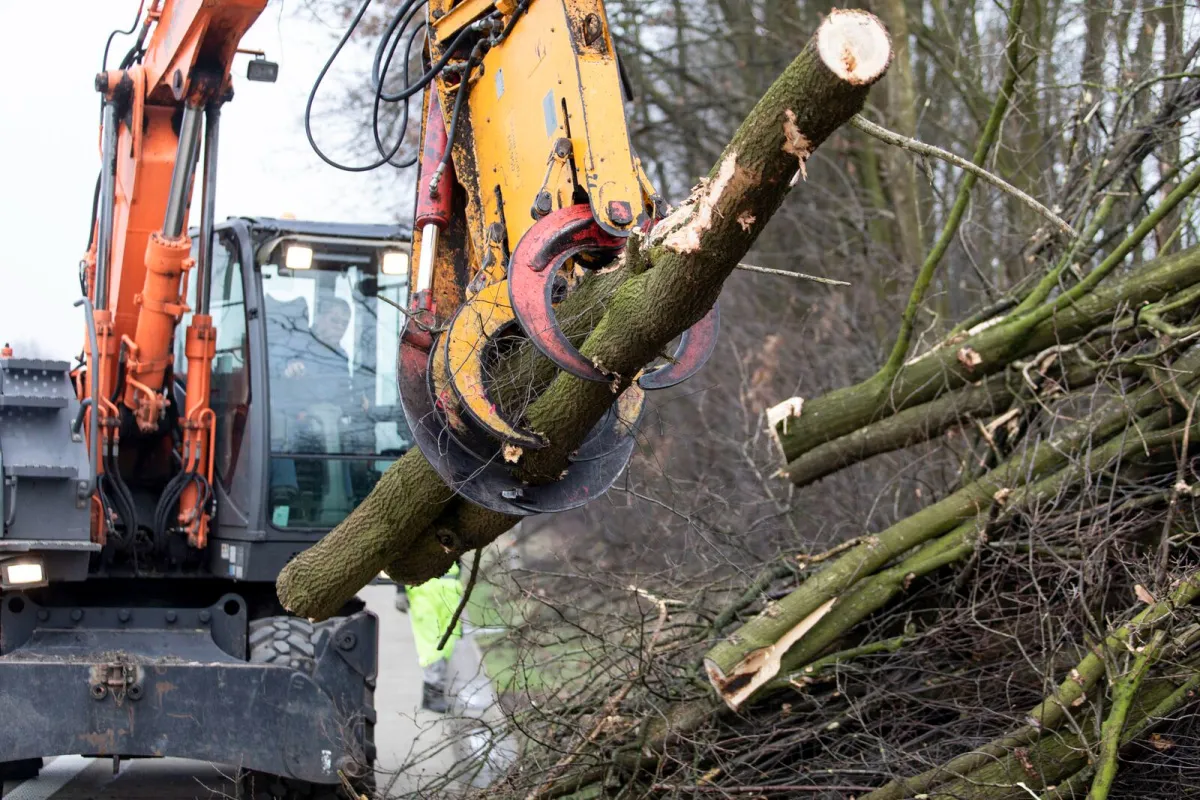
From today, you may see coppicing work along roads and waterways in Flanders. This work is necessary to ensure the safety of road and water traffic. Coppicing also increases the biodiversity of our verges.
Tall trees alongside roads and canals pose a risk to traffic safety. In strong winds, heavy branches can break off and land on the road or in the canal. In these locations, Agentschap Wegen en Verkeer and De Vlaamse Waterweg nv cut trees and shrubs back to a height of 10 to 20 centimetres. The work takes place each year between November and March, as laid down in legislation.
Temporary visual impact, no impact on noise
Coppicing is an age-old method and one of the ways of managing trees and shrubs alongside roads and waterways. Whether coppicing, pollarding, pruning, thinning or no management (allowing trees to grow freely) is chosen depends on the type of vegetation and the location. Coppicing is often the best option for woody vegetation such as trees.
Good coppice management is necessary not only for traffic safety, but also improves biodiversity. The pruning may seem drastic, but new shoots emerge from the stumps after a few months. The vegetation becomes younger and denser, eventually resulting in richer and more diverse flora and fauna. Coppicing also has no effect on road traffic noise. To reduce noise, you need dense woodland around 100m thick.
Limited zones
The authorities work in sections of no more than 500m. Along roads, these strips are often limited to 200m. Working in sections means that one zone has already started to grow back by the time the next section is tackled, a few years later. A mix of young and old plants creates greater variety and provides a habitat for more plants and animals.
Question about this story? Ask your question
Keep following this
Get an email when a new story is published. No account needed.
- ThemeStrengthening waterways and coastlines
- SubjectHydraulic engineering







