









Construction of the New Terneuzen Lock enters a new phase
From civil engineering to mechanical engineering
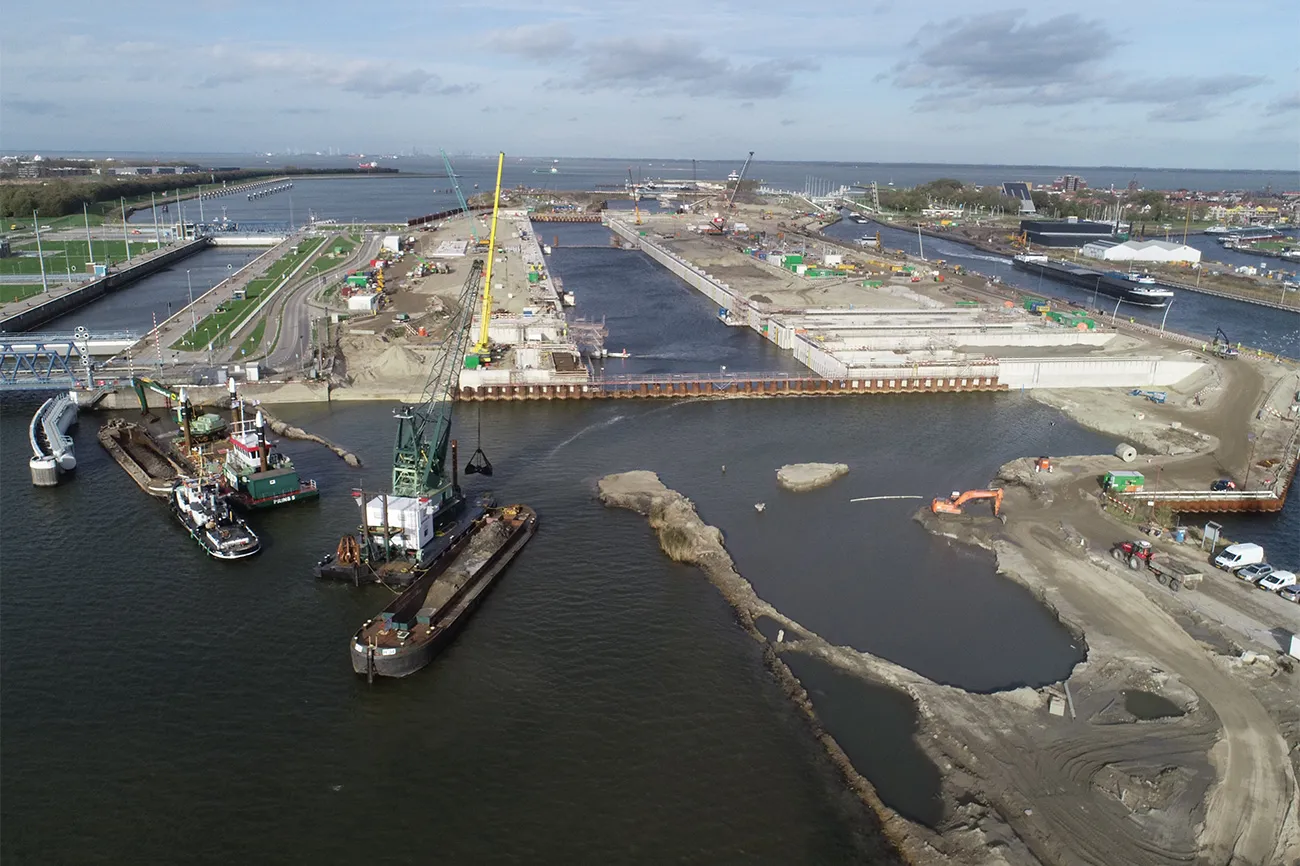
Completion of the New Terneuzen Lock is getting closer. Before it is ready, there are still a number of important milestones and challenges ahead. We look back on the past year with environmental manager Harm Verbeek and look ahead to the coming period, when, according to Verbeek, “the New Lock is increasingly starting to look like a lock”.
“We have now reached a turning point in the project,” says Harm Verbeek. “In recent years, we have mainly been working on the civil engineering, or concrete, but now mechanical engineering is coming into play. This includes the gates and bridges that have been installed, along with all the associated technology.” As environmental manager, Harm Verbeek monitors feedback from the outside world. He keeps his finger on the pulse of local residents in Terneuzen, the municipality, businesses in the port and shipping in the lock complex.
Impressive dimensions
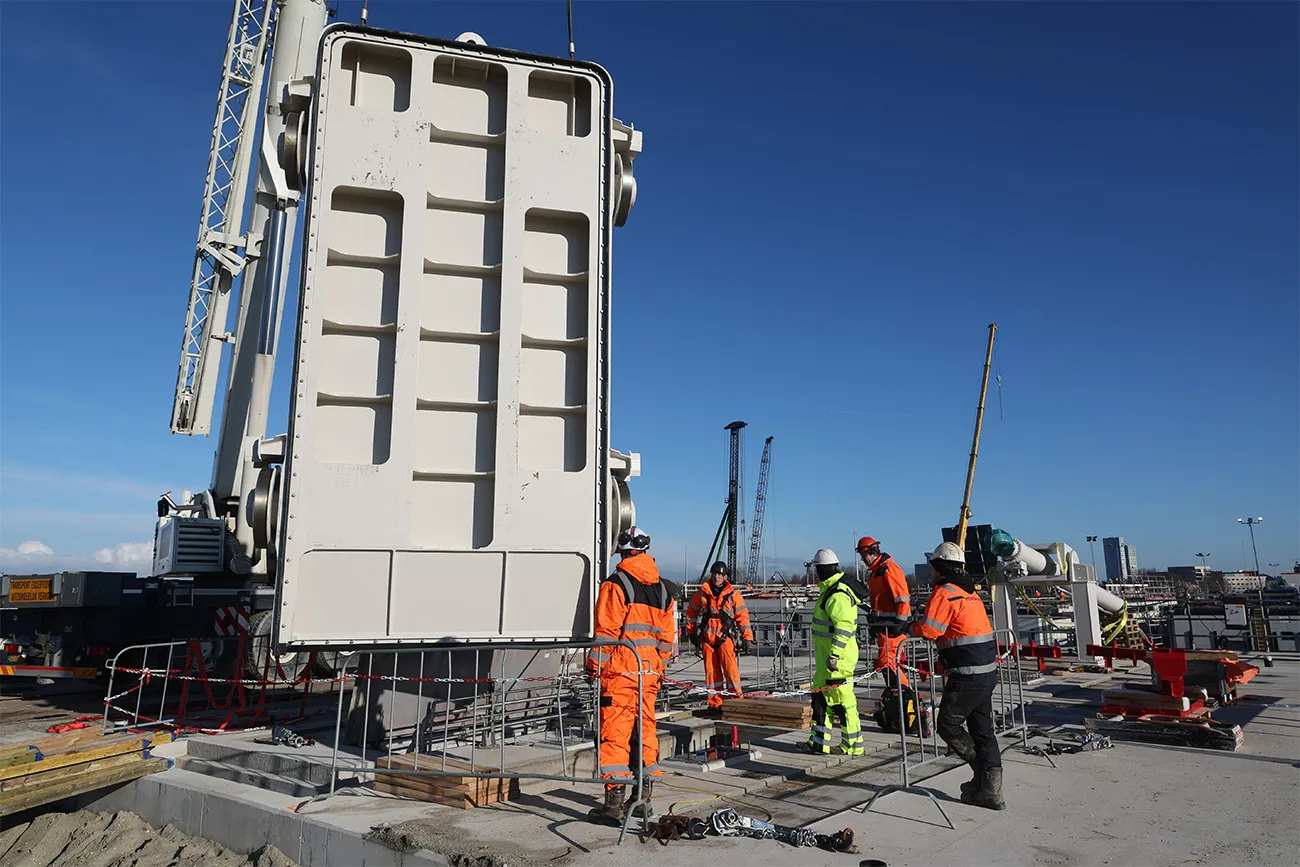
Asked about the key milestones of 2022, Verbeek says the completion of the major concrete works on the New Lock’s inner and outer heads made a big impression on him: “The project as a whole is remarkable because of its scale and the fact that it is taking place on the edge of Terneuzen. The construction pits for the inner and outer heads, for example, were 130 m wide, 80 m long and 25 m deep. Another great milestone was the arrival of the four gates and two bridges at the storage site in Westdorpe at the end of January. The bridges are 86 m long and 17 m wide. Each bridge weighs 1,540 tonnes. The lock gates are each 62 m wide, 26 m high and 9 m deep, and each weighs 2,000 tonnes. That is one example of what I mean when I say that ‘the New Lock is increasingly starting to look like a lock’. The New Lock is also taking shape with the completion of the service harbour and its associated building, as well as the construction of a control building next to the New Lock.”
Dredging away the land spits will be a major undertaking
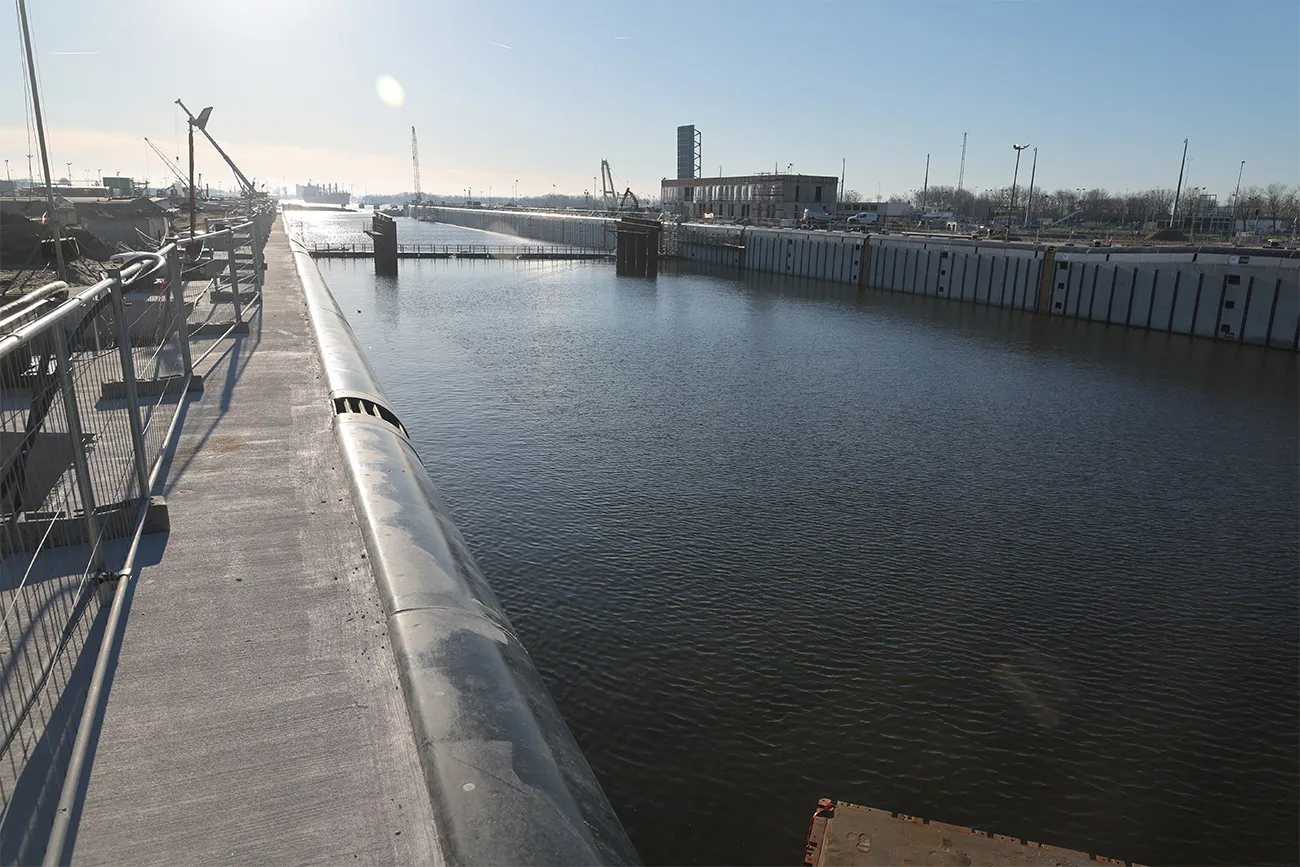
The project is a series of remarkable milestones and challenges. Earlier this year, a series of test explosions using explosives took place in preparation for the demolition of the eastern lock wall of the Middle Lock this spring. After the summer, the spits of land to the north and south of the New Lock entrance will be completely cleared and dredged away. Harm Verbeek says: “This is a major undertaking because of what we may find in the different soil layers. In recent years, we have already carried out extensive surveys of soil quality and any old foundations or other remains we might encounter.” Dredging away the land spits will generate a total of almost 7 million cubic metres of soil. Of this, 4 million cubic metres will go to the Western Scheldt, where, in technical terms, it has a ‘beneficial use’ in helping to limit tidal currents. The remaining sand will be transported to Knokke, where it will serve a valuable coastal protection function as a beach nourishment scheme.
Safety
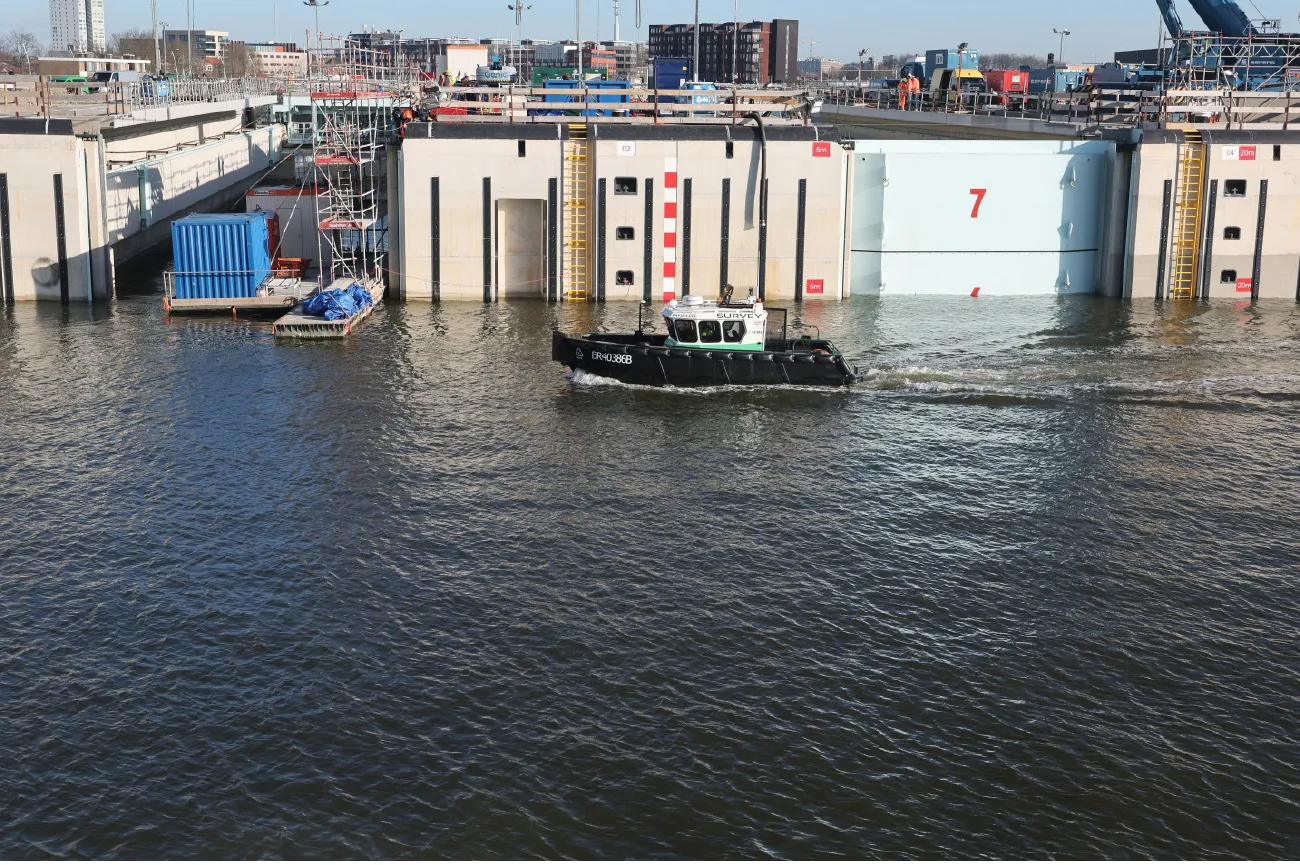
Safety is a major focus throughout the project. Prevention is key, which is why so-called Safety Walks are held. Every incident is also analysed to prevent a similar accident from happening again. One significant difference from previous phases is that many different, smaller contractors are now working on site. This calls for a strong focus on coordinating and aligning all the work effectively.
Follow the construction
As well as the work described above, there are many more steps to be completed before the New Lock is handed over. Until then, you can follow construction on the website www.nieuwesluisterneuzen.eu.
Question about this story? Ask your question
Keep following this
Get an email when a new story is published. No account needed.
- ThemeStrengthening waterways and coastlines
- SubjectHydraulic engineering







