









A historic milestone for Flanders and inland shipping
Text De Vlaamse Waterweg / Niels Rouvrois Beeld De Vlaamse Waterweg
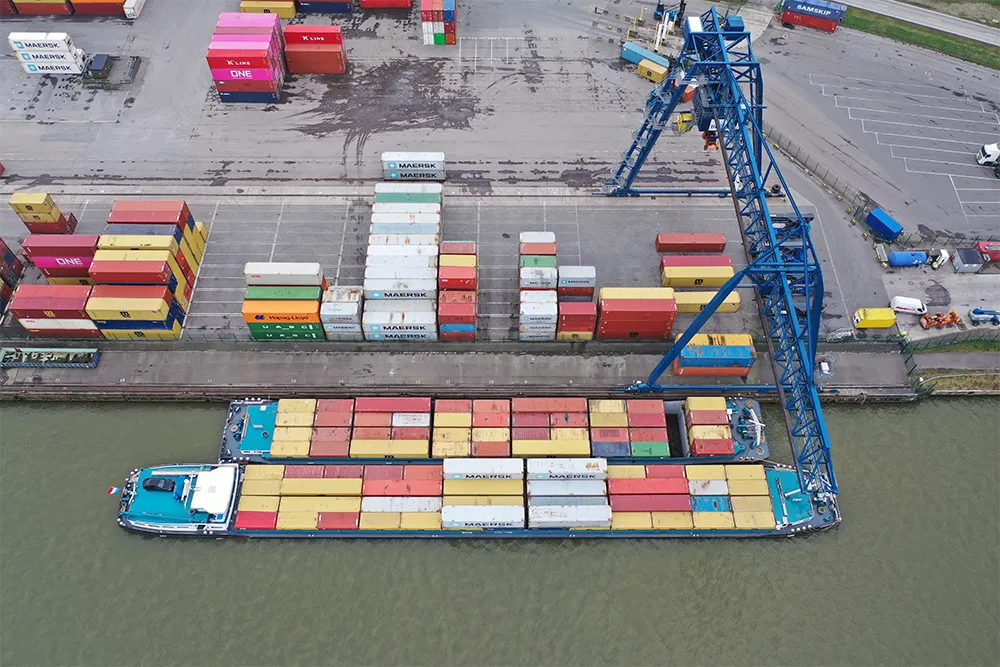
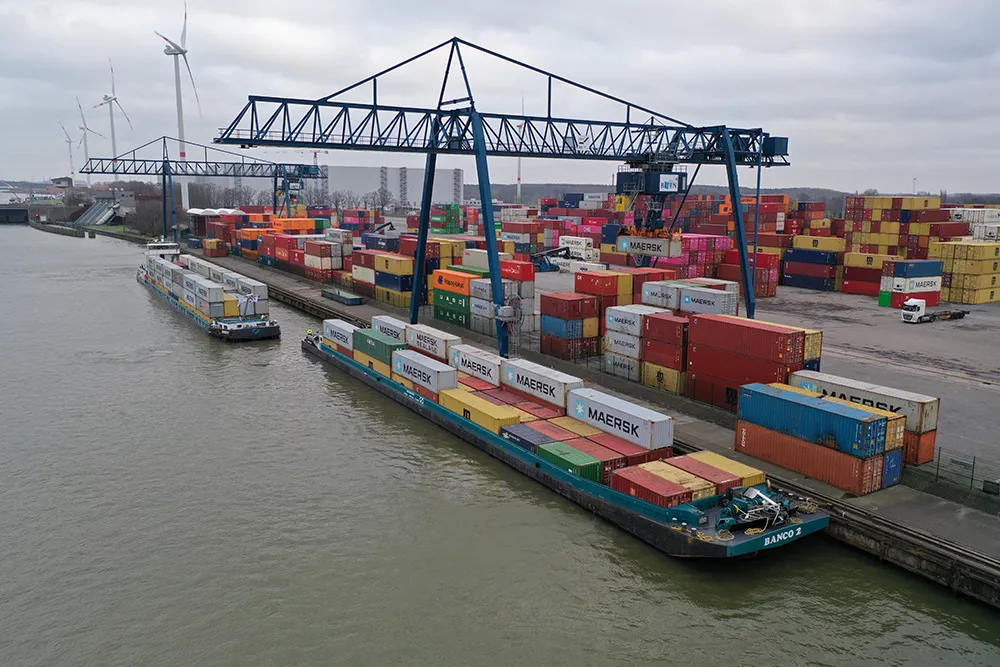
At the beginning of February, De Vlaamse Waterweg celebrated a crucial milestone in the continued growth of inland shipping via the Albert Canal. Since 2007, no fewer than 50 bridges have been raised to provide a headroom of 9.10 m. Following the recent demolition of the bridge in Wijnegem, a maiden voyage immediately demonstrated that inland container shipping with four tiers is now possible. The Albert Canal is more than ever a waterway motorway between seaports and the hinterland.
With almost 40 million tonnes of goods transported each year, the equivalent of around two million lorries, the Albert Canal is Flanders’ most important waterway in economic terms. It accounts for more than 50% of inland waterway transport in Flanders. The canal is a crucial hinterland connection for Port of Antwerp-Bruges and is part of the European core network.
A successful project
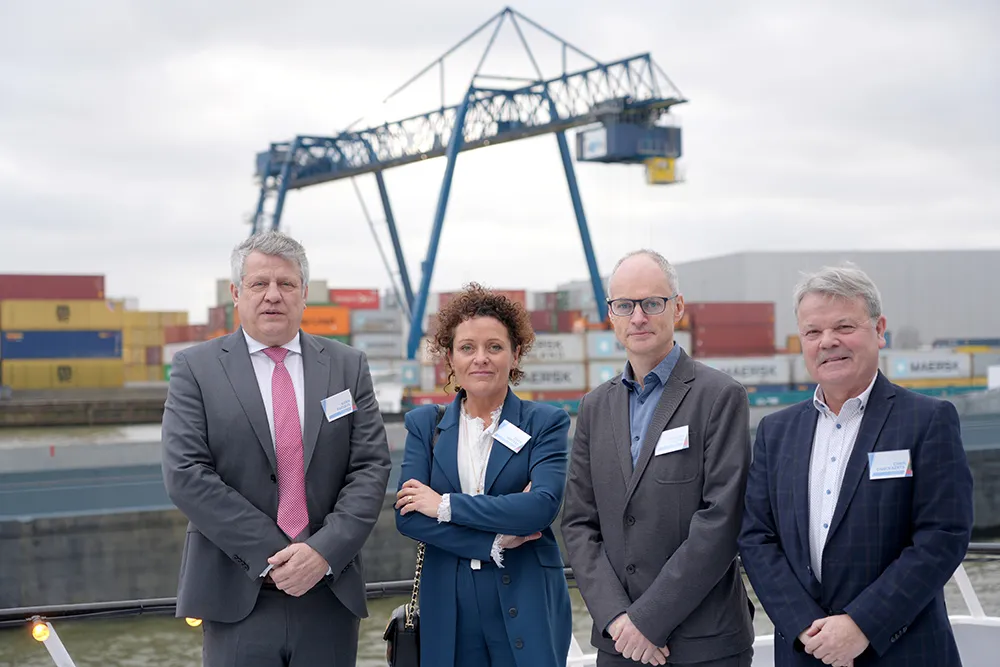
De Vlaamse Waterweg nv not only increased the headroom but also widened the canal at the bridges, improving safety and the smooth flow of all inland waterway traffic. “It was an engaging and intensive undertaking spanning many years, but what we have achieved is truly impressive,” says Chris Danckaerts, managing director of De Vlaamse Waterweg nv. “We delivered 50 bridge projects across 24 cities and municipalities, creating landmarks in their own right. Road bridges, railway bridges and cycle bridges that meet all design and comfort requirements. A Herculean task, carried out in excellent collaboration between public authorities, contractors and designers. The construction of a road bridge and a cycle bridge in Wijnegem is the final piece in this impressive undertaking.”
Since 2007, the waterway authority has worked on no fewer than 50 bridges in total, replacing or modifying them. Stefan Sablon says: “For this project, we set up an integrated project office in-house, with the temporary association Sweco-Arcadis and staff from De Vlaamse Waterweg working together as a dedicated team. It is certainly worth emphasising that this project could only be delivered through teamwork. Setting up a project office at De Vlaamse Waterweg’s headquarters in Hasselt enabled us to respond quickly and work efficiently.”
TEN-T and PPP
In 2012, the Albert Canal was honoured with inclusion in the European TEN-T programme for waterways. This European recognition and financial support gave the project its first boost. The public-private partnership (PPP) for raising 15 bridges provided a second boost. “This project was not only an impressive technical achievement. Thanks to strong applications, De Vlaamse Waterweg was able to secure substantial European funding. This helped us keep the overall bridge-raising project on schedule. The public-private partnerships and Europe’s support enabled us to raise the bridges in record time. Today, we can look back on a successful project! We are convinced this will help us persuade even more businesses to make use of inland shipping in their logistics chains,” says Chris Danckaerts.
Stefan Sablon says: “It was the first time De Vlaamse Waterweg had worked with DBFM contracts, and it was a positive experience, both in the procurement process and during delivery. The ‘P’ in PPP was very much in evidence. The contractors and the client really worked together.”
And that collaboration was crucial, because the challenges were considerable. Stefan Sablon says: “The biggest challenge was having to design, procure and deliver a large package of bridges, more than thirty, within ten years. We live in a time when obtaining permits has become particularly difficult. It took a lot of time and effort, but we managed to get everything over the line. I am very proud of that. Of course, there were also a number of particularly challenging projects. Three railway bridges were renewed in close collaboration with Infrabel. It was a very positive experience outside our comfort zone. Then there was the complex bridge at the Sportpaleis in Antwerp, in an urban setting and with the premetro running through it.
Ready for the future
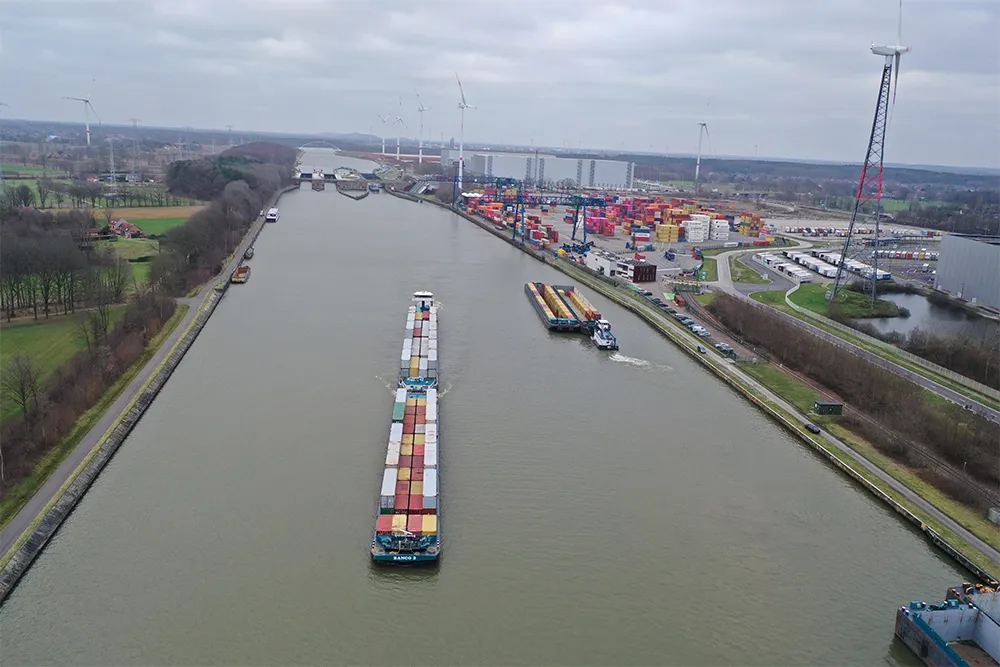
“Thanks to the uniform headroom, the canal can now accommodate vessels carrying more containers. There are also more opportunities for short sea shipping and estuary shipping. This means that certain large coasters can now sail as far as Genk. Another important benefit is that the entire length of the Albert Canal in Flanders now has new or modernised bridges, and its infrastructure is fully prepared for the next 100 years. The Flemish Government is now focusing strongly on asset management for our bridges and other civil engineering structures. In any case, the bridges over the Albert Canal will be fit for use for a very long time to come,” concludes Stefan Sablon.
Question about this story? Ask your question
Keep following this
Get an email when a new story is published. No account needed.
- ThemeExtending the life of bridges and tunnels
- SubjectHydraulic engineering







