









Sewerage & underground infrastructure
VLARIO Day treats more than 850 visitors to an engaging seminar programme and an innovative exhibition
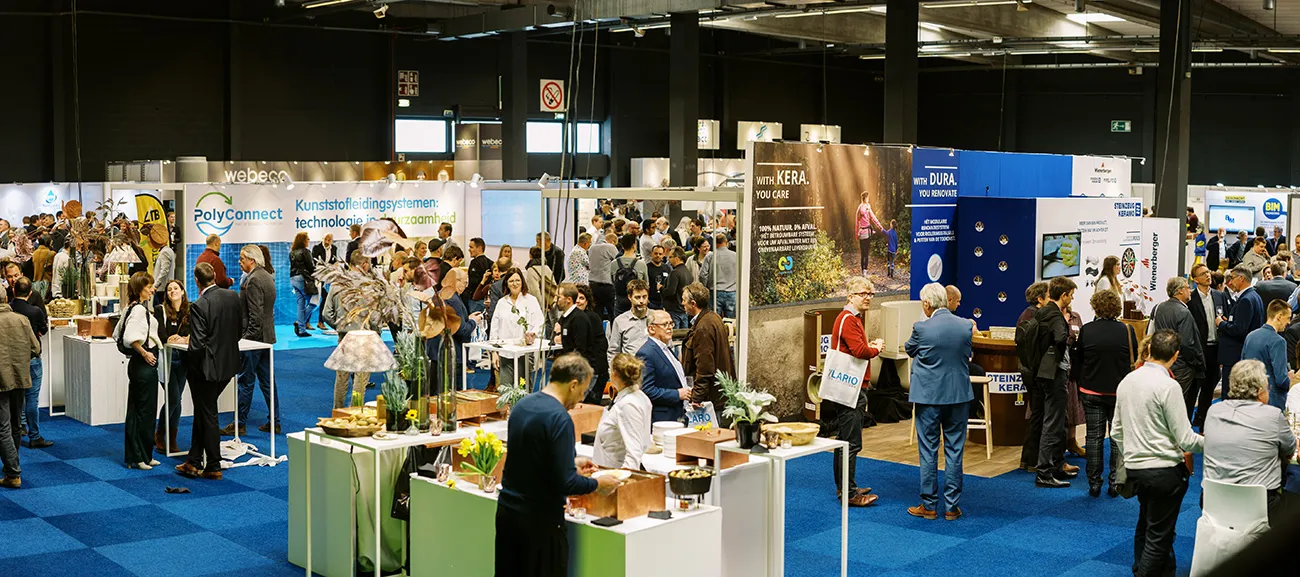
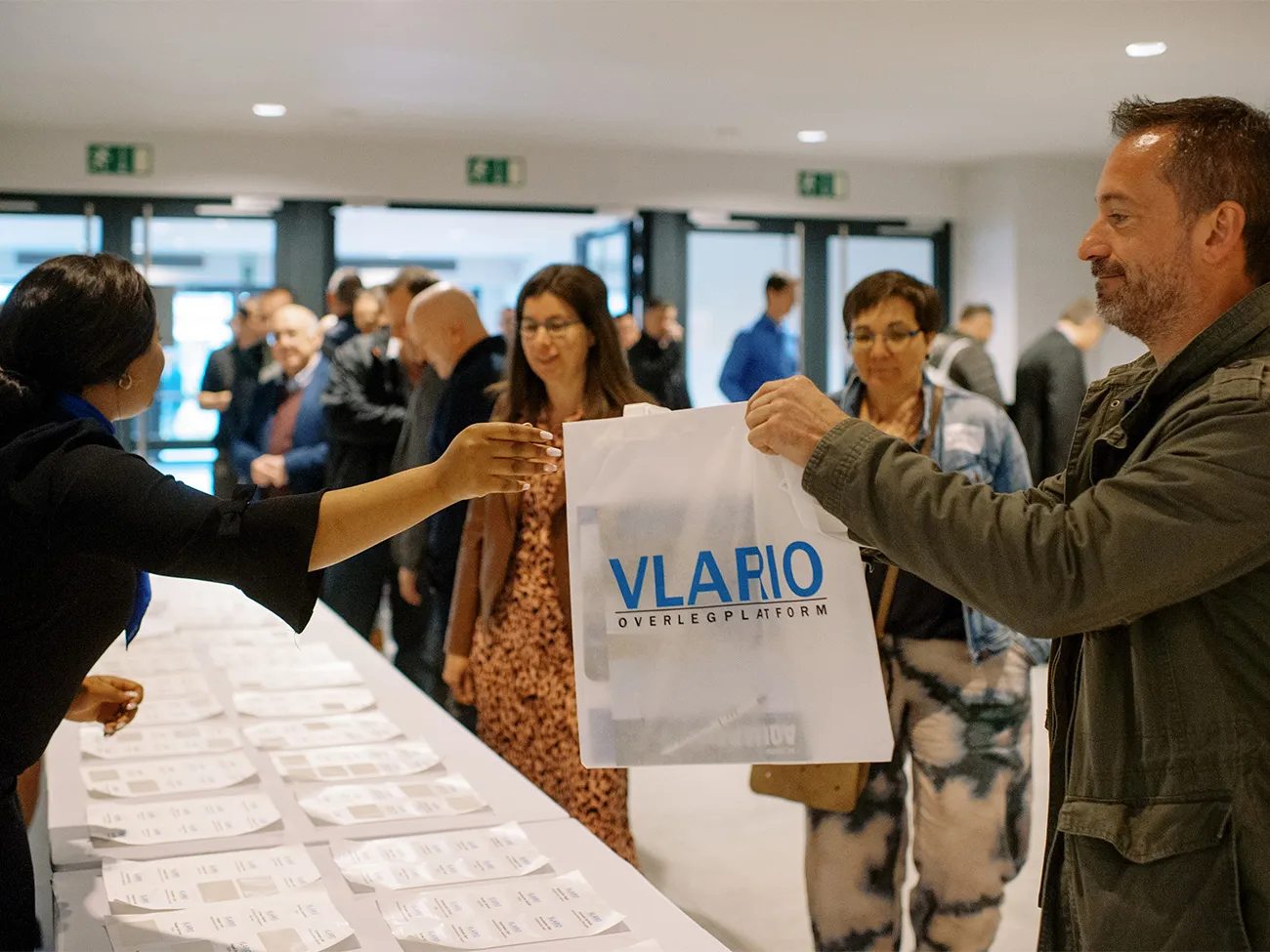
The VLARIO Day took place at Antwerp Expo on 29 March. More than 850 participants enjoyed an engaging programme, an innovative sewerage exhibition and an excellent networking opportunity. This year’s theme was: Mayor, where does your sanitation charge go? A topical issue that was discussed in depth during a packed seminar programme. GWW listened in on the presentations.
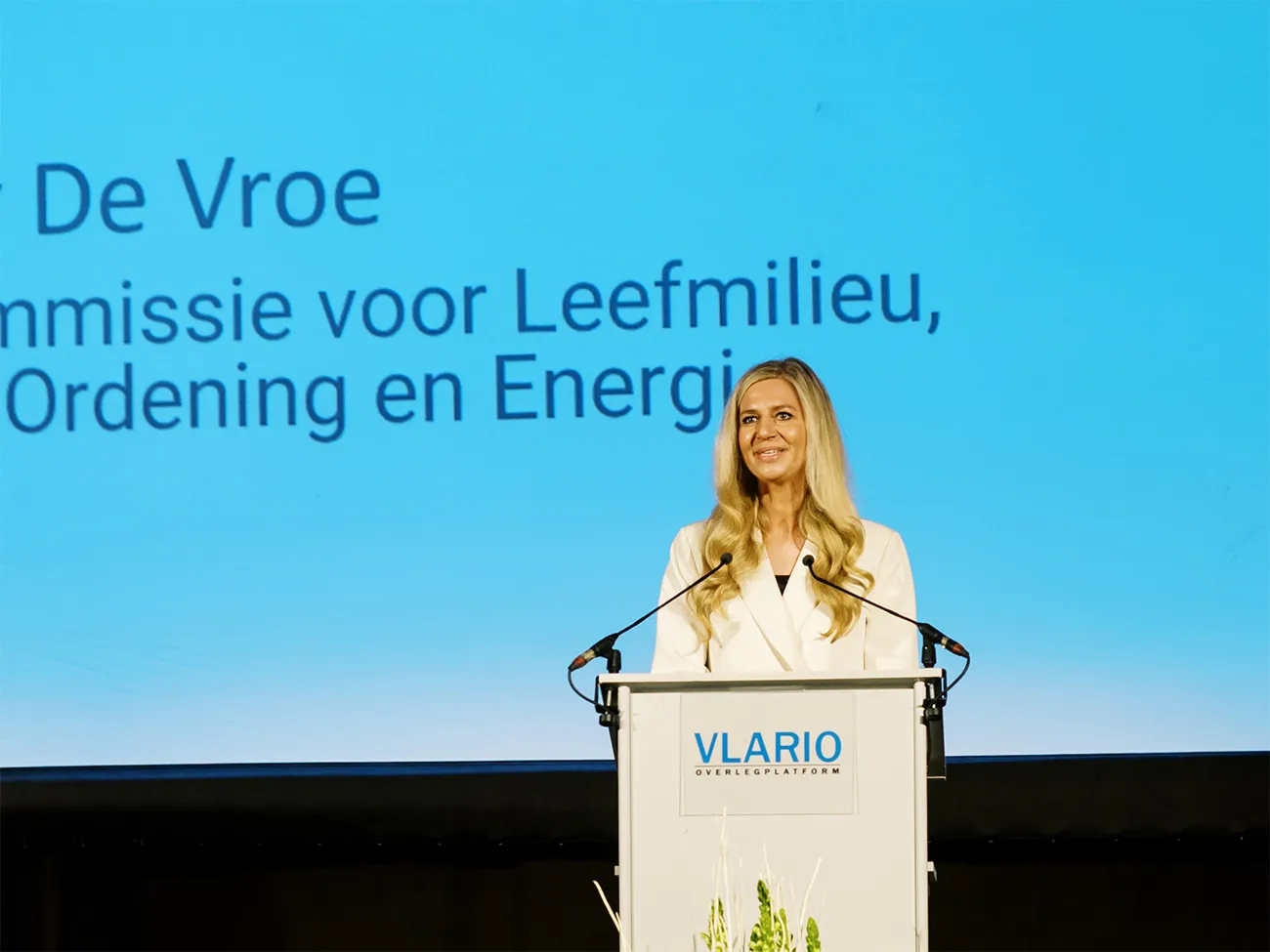
In her opening remarks, Gwenny De Vroe, Chair of the Committee on the Environment, Nature, Spatial Planning and Energy in the Flemish Parliament, congratulated VLARIO on the large turnout and the interesting programme. She stressed that water policy is a key priority for the committee and outlined the major challenges ahead, as extreme weather events are becoming increasingly common. De Vroe called for citizens, farmers and businesses to play a more active role in implementing the relevant policies. She highlighted the need for more sustainable and circular water use and stressed the importance of the Blue Deal, particularly its drought and rainwater plans, in encouraging municipalities to step up their efforts. She announced further parliamentary initiatives aimed at improving financial transparency in the sector and invited local authorities to attend the study day in September at the Flemish Parliament, organised in collaboration with VLARIO.
Professor and VLARIO Chair Patrick Willems also addressed the audience, reminding those present of Flanders’ vulnerability to flooding and drought, and of the growing risk of damage caused by climate change. He stressed the need for a paradigm shift, with water only being drained away when there is no alternative, and pointed to several tools that could help bring this about, including the green-blue score, the infiltration bonus and the Blue Deal project calls, which are intended to encourage more circular water use.
Municipal sanitation charge
Professor Theo Jans presented the findings of the study into how the municipal sanitation charge is spent. The study mapped revenues, costs, income and expenditure for municipalities and sewerage managers. The key figures were presented, and Professor Jans concluded that sewerage activities are fundamentally cost-covering and therefore profitable. However, this needs to be qualified by the fact that this is due to the long depreciation periods, and that the sector has recorded substantial negative cash positions in recent years, making financing a specific area of concern.
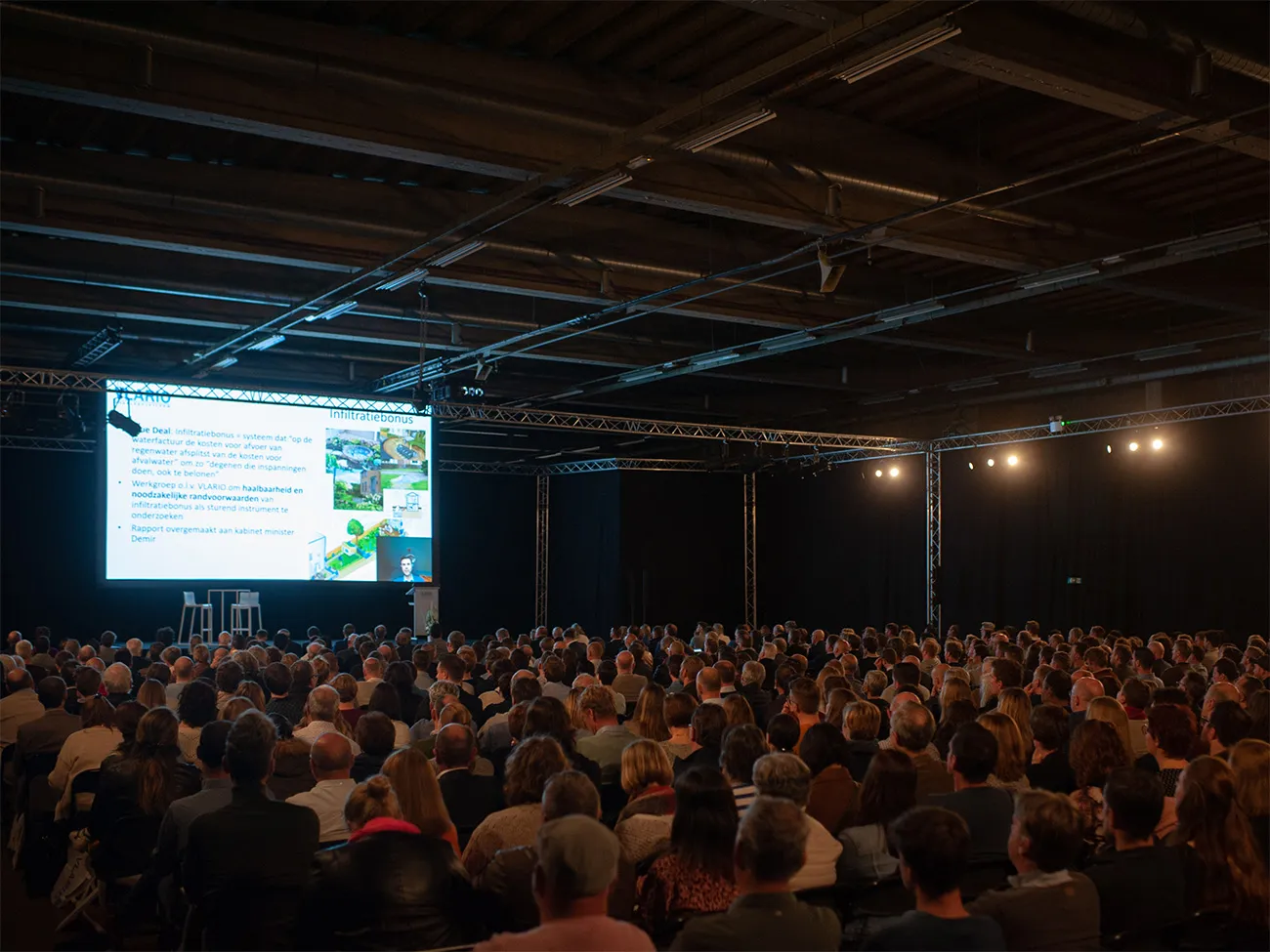
Victor Dries, deputy chief of staff to Minister Zuhal Demir, said in his presentation on the study of the sanitation charge that the high level of investment was a positive development. He called on VLARIO to take the initiative, together with sewerage managers and municipalities, to continue improving transparency. Victor Dries believes there is potential to invest ‘more intelligently’ by making greater use of decentralised solutions. He noted that most Blue Deal projects have now been launched or are under way, and stressed the importance of drawing up rainwater and drought plans on time to improve local water management.
The reform of governance in the wastewater sector was also discussed. It is moving towards a more results-oriented, flexible and programme-based approach. Ingeborg Barrez of VMM and Danny Baeten of Aquafin offered a first glimpse of the new cooperation agreement between the Flemish Region and Aquafin. The agreement is intended to clarify the division of responsibilities, with greater accountability for Aquafin, and to achieve ecological objectives more quickly and efficiently.
Professor Liesbeth Huybrechts of UHasselt also reviewed knowledge and good practice in involving the public in major infrastructure projects. Dorien Mahieu of PIDPA gave a brief update on the CIW project ‘Centralised or decentralised treatment of domestic wastewater’, while Griet Goossens of VCB presented the Coock project on water-conscious construction, which explores innovative techniques for individual and collective water treatment and water reuse.
Finally, the winner of the photography competition was announced. Participants voted for ‘looking for leaks’ by Bert Houben (Aquafin) as the winning photograph. It was a fitting end to a highly engaging morning, followed by a networking opportunity and a busy exhibition.
Question about this story? Ask your question
Keep following this
Get an email when a new story is published. No account needed.
- ThemeRenewing pipelines and sewers
- SubjectSewerage & underground infrastructure







