









Sewerage & underground infrastructure
Vlario Day puts its finger on the water problem
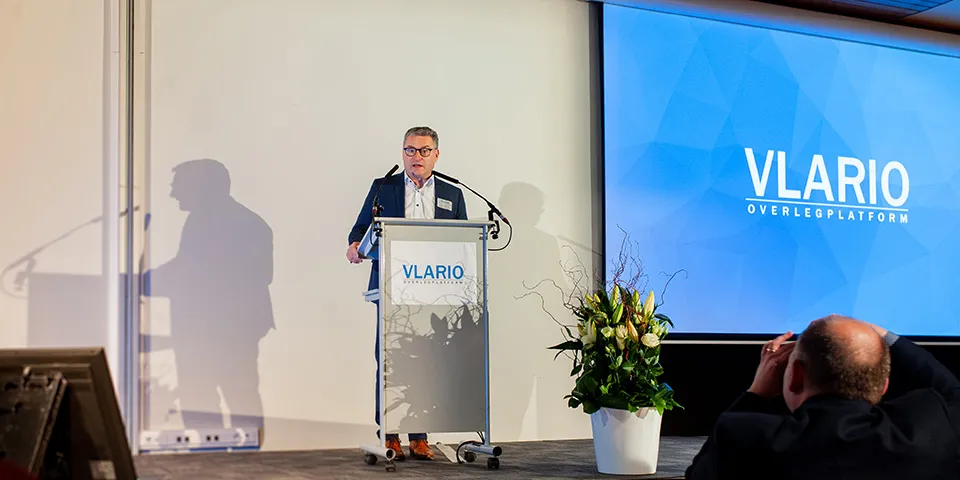
The Vlario Day took place at Antwerp Expo on 2 April. The theme spoke for itself: ‘Mayor, your waterways are not clean. What now?’. With the Water Framework Directive in mind, there is still a great deal of work to do to achieve the target of 100% clean water bodies by 2027. This was also emphasised by Koen Van den Heuvel, Flemish Minister for the Environment, Nature and Agriculture: “We have already made considerable efforts, but we are not there yet.”
The consultation platform & knowledge centre for the sewerage and wastewater treatment sector in Flanders organised its Vlario Day as part of the Vlario Sewerage Exhibition at Antwerp Expo. With more than 800 registrations, the attendance record was broken, and those present were welcomed by Koen Van den Heuvel, Flemish Minister for the Environment, Nature and Agriculture: “We face major challenges today. We have made great efforts in recent years, but we are not there yet and we need to pick up the pace,” said the minister. “Our first priority is to improve our water reserves and their quality. That is why I am very pleased that Vlario is holding this flagship event. Because we are not in this alone. On the contrary, we are all in the same boat.”
The European Water Framework Directive came into force in October 2000 and is specifically intended to ensure that we achieve good quality in our surface water and groundwater. Minister Van den Heuvel: “The directive was adopted almost 20 years ago. Thanks to the efforts we have made since then, 85 per cent of Flemish water bodies are now clean. But continued investment is necessary. We need to further develop new infrastructure and properly manage and continue to renovate existing infrastructure. As regards the 2027 target, the Flemish Environment Agency is assessing what is financially feasible for each municipality, and the Flemish Region is also taking responsibility.”
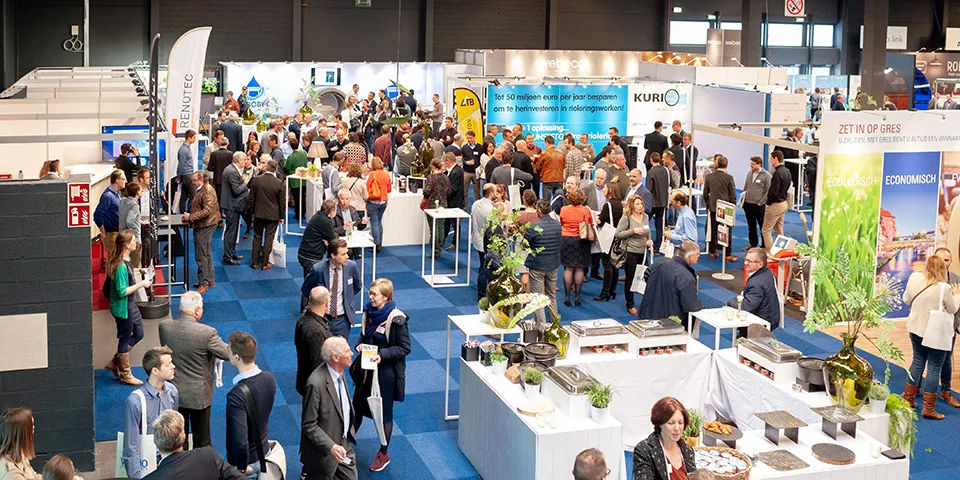
The Vlario Day was held as part of the Vlario Sewerage Exhibition.
Long lead times
A major obstacle in the race against the clock is the time it takes to deliver projects. “The average lead time is five to seven years,” said Minister Van den Heuvel. “That needs to be faster. Difficult cooperation with third parties, archaeological constraints,
expropriations,… are frequently cited reasons for delays. In this respect, I believe in the strength of committed local authorities and the importance of active monitoring, coordination and more consultation. The authorities cannot shoulder the measures alone. Providing information, raising awareness and encouraging active participation deserve our attention. Clear communication is therefore essential.”
Carl Verelst, chair of Vlario’s Project Management Working Group, agrees: “Projects just keep drifting along. The ‘lucky’ projects that have already been completed took an average of 5.5 years, while the ‘unlucky’ projects are now ‘active’ for an average of 7.4 years. With the 2027 deadline approaching, that does not look good. Especially as a third of the projects do not yet even have an approved preliminary design. So speeding up the process is definitely advisable. The public and political attention currently focused on the climate could certainly help.”
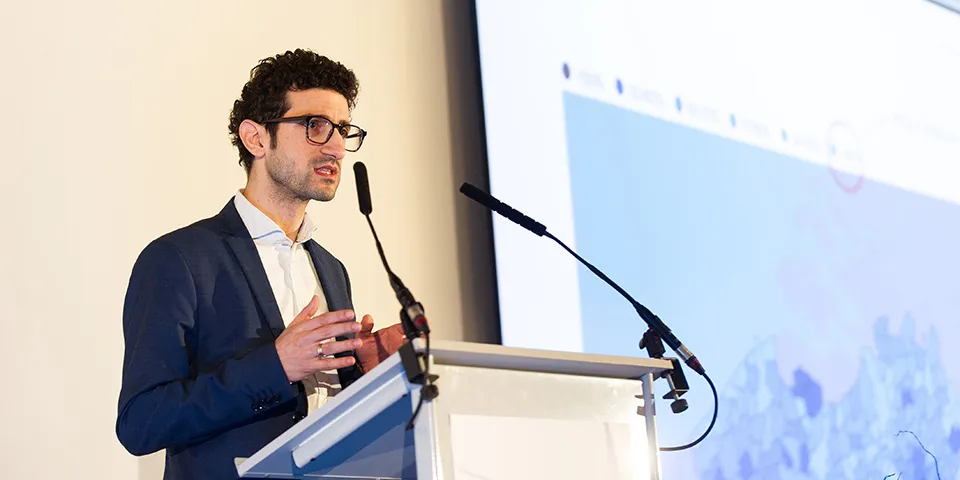
Mohamed Ridouani, Mayor of Leuven.
Leuven
It has long been no secret that our climate is deteriorating. More intense rainfall and the resulting risk of flooding mean we need a robust water system. “Every player needs to be aware of this when designing systems,” was the message at the Vlario Day. In Leuven, they have clearly taken that message to heart. “Paying close attention to sewerage will not win you an absolute majority, but thorough management and maintenance are very important. Because when things go wrong, they can go very badly wrong,” says Leuven Mayor Mohamed Ridouani. “Leuven currently has a sewerage connection rate of 99% and a wastewater treatment rate of 97%. This represents around €8 million in investment each year. That is certainly not an exaggerated amount, as it is what Leuven, with its 500 km of sewers, needs to ensure everything is properly monitored.”
Mayor Ridouani sees the fact that Leuven manages most of its sewerage in-house as a major asset. “That allows us to respond quickly,” he says. “We have constant access to data and insights that are extremely useful. The major challenges lie in historic towns and cities, where infrastructure has grown organically. But we need to make the shift to long-term policy. That is essential given the changing climate. It is a process of trial and error, but hopefully we will reach 100% soon.”
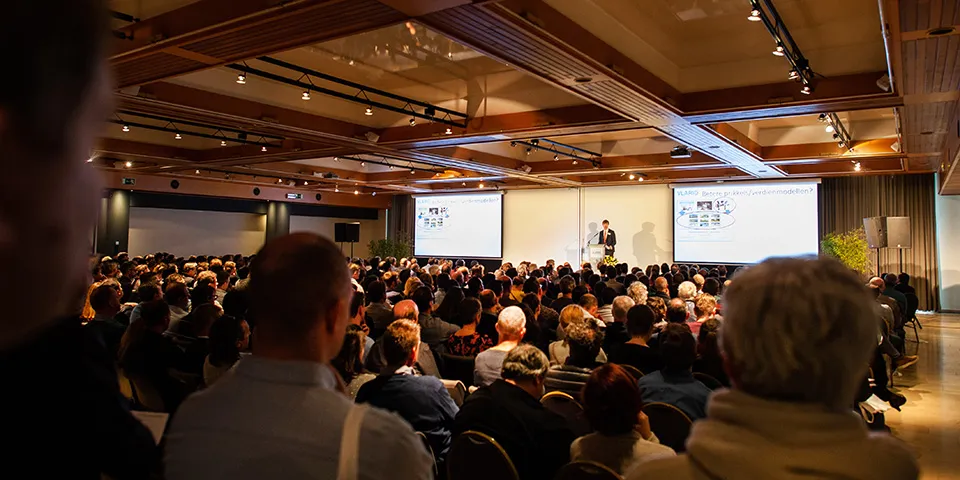
The Vlario Day, ‘Mayor, your waterways are not clean. What now?’, took place at Antwerp Expo on 2 April.
Financing plan
When people talk about infrastructure works, they inevitably talk about money too. The financial side of things is a stumbling block for many cities and municipalities. The Flemish Environment Agency is calling for a well-founded financing plan and has therefore developed Financing Model 2.0. “It also includes an individual simulator for sewerage managers,” explains Peter Aelterman of VMM. “Financing is feasible for half to two-thirds of municipalities. That means the rest face a challenge. VMM believes that creative solutions and a broad perspective can take you a long way. This includes making considered choices about techniques and materials. VMM is keen to provide support in this regard.”
Question about this story? Ask your question
Keep following this
Get an email when a new story is published. No account needed.
- ThemeRenewing pipelines and sewers
- SubjectSewerage & underground infrastructure







