









Sewerage & underground infrastructure
Vitrified clay, the natural choice for circularity and financial challenges in sewerage
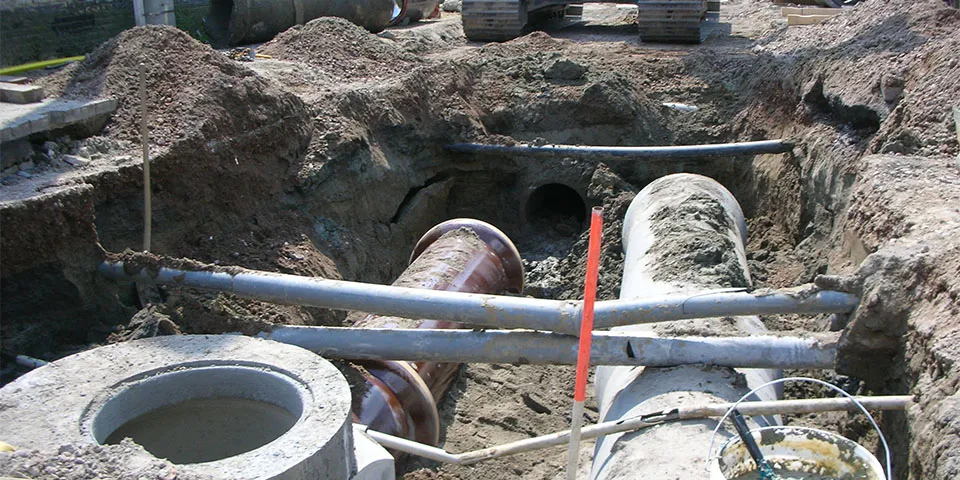
Demographic change is putting increasing pressure on both the availability of raw materials and the waste problem. We must all do our part to avoid waste and the constant use of new raw materials as far as possible. This is accelerating the shift towards circular thinking. The sewerage sector is no exception.
As well as being the highest-performing sewer pipes, with the longest proven service life, vitrified clay pipes also offer the best response to these circularity challenges. This applies to their production, reuse and potential processing at the end of their service life.
By using only 100% mineral, natural raw materials, namely clay, grog (recycled ceramic material) and water, vitrified clay products have virtually no impact on the environment. Vitrified clay pipes also contain no harmful chemical additives. Grog accounts for between 30% and 50% of vitrified clay products. This is a considerably higher proportion than, for example, in plastic pipes, where recycled content accounts for no more than a handful of percentage points.
Because production waste from its own process, which is ground into grog, is not enough to meet demand for grog during production, Steinzeug-Keramo buys in grog from external suppliers. “We therefore act as a recycling plant for other ceramic industries. This means external ceramic material ends up in a high-quality sewer pipe instead of in landfill,” the company says. Another very important point is that the recycling process is extremely simple and has little impact on the environment. The fired clay is simply ground again, with no additional high-energy or
environmentally harmful chemical processes.
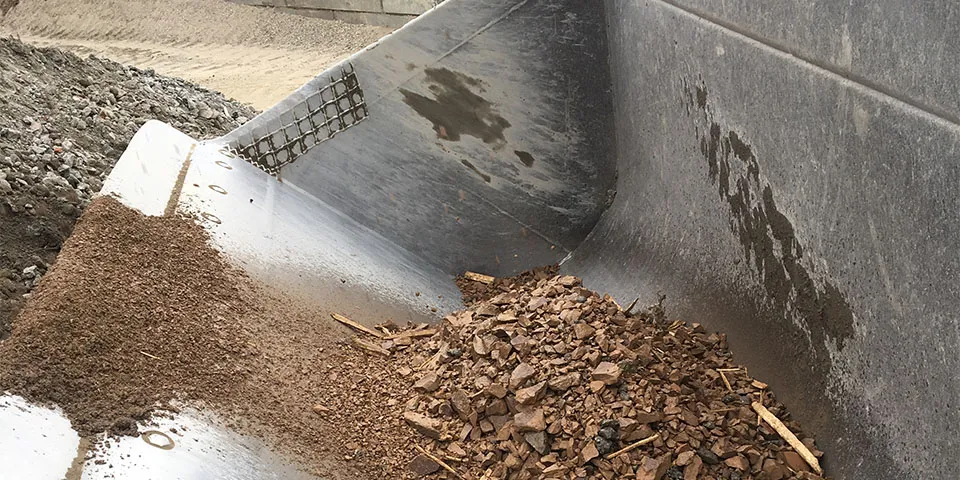
Vitrified clay can easily be crushed on site after its service life and reused, or even returned to the ground.
Reuse at end of service life
When ceramic pipes are excavated at the end of their service life, the material can also be reused or recycled very easily, even on site at the construction site. Most contractors have a mobile crushing plant for mineral materials close to the areas where they work most often. Because the materials do not need to be sorted and cleaned of soil and other contaminants, or transported to specialist recycling centres, the carbon footprint and environmental impact remain very limited even once the pipes have reached the end of their use as sewers. After being crushed on site, the material can be put to a new use, for example as sub-base for rebuilding the road.
Cost and productivity
Alongside the growing importance of the environmental pillar in the sewerage sector, two other factors are key to sound policy: installation productivity and construction costs. Contrary to claims in recent biased reporting about traditional materials, based on unrepresentative publications from the plastics sector, Steinzeug-Keramo’s own market research shows that project duration and cost are almost the same for vitrified clay and plastic materials.
“Based on concrete data provided by contractors from real, and therefore representative, sites in Flanders, the additional cost of vitrified clay is limited to a maximum of 3% per project,” says Steinzeug-Keramo. There are several reasons for this. The cost of pipes makes up a relatively small share of a project’s total cost, and the price difference between these materials is only a fraction of that. In addition, installing plastic pipes requires a range of specific measures, such as ovality and longitudinal profile measurements, to achieve an acceptable result. This has a negative impact on installation productivity and the associated installation costs. This is due not only to the measurements, but above all to the related installation and compaction methods, and the greater care and attention they require. On average, a project using vitrified clay therefore takes just 2% longer than one using flexible materials.
However, these minor differences in cost and productivity are offset by the longer potential depreciation periods of vitrified clay sewerage systems (> 100 years). Vitrified clay also offers sewerage asset managers many advantages in terms of performance and asset management, including ease of maintenance, renovatability, and the costs associated with excavation and waste processing at the end of the system’s service life. Taking all this into account, it is clear that vitrified clay remains the most cost-effective solution for foul water sewers.
Question about this story? Ask your question
Keep following this
Get an email when a new story is published. No account needed.
- ThemeRenewing pipelines and sewers
- SubjectSewerage & underground infrastructure







