









Sewerage & underground infrastructure
Vitrified clay jacking pipes in Oostakker reduce traffic disruption and protect groundwater
Text Niels RouvroisImage Pipelife
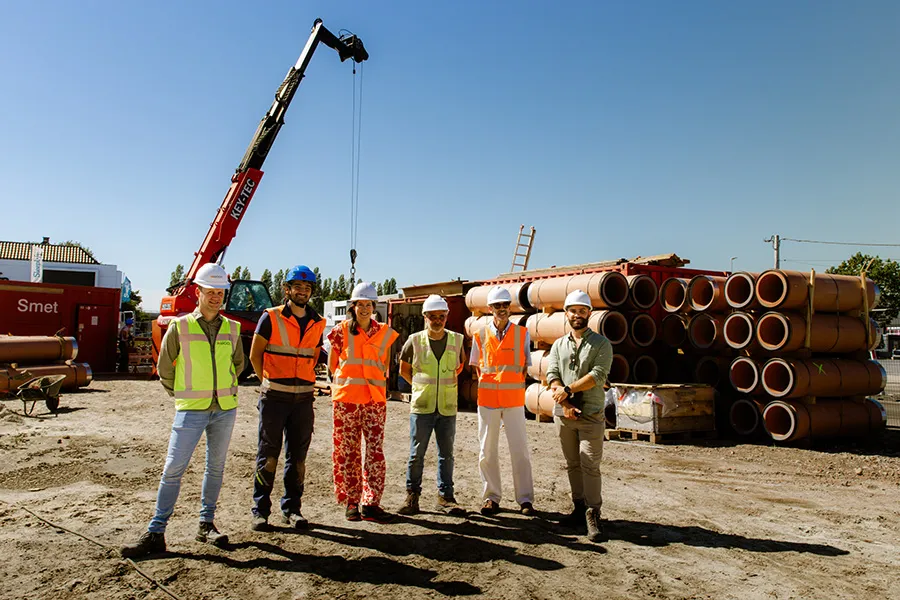
The Agency for Roads and Traffic and the city of Ghent are investing heavily in the redevelopment of the N70, with the aim of creating safer traffic conditions for all road users. Farys is taking advantage of the roadworks to install a separate sewer system beneath the road. To minimise disruption and protect the groundwater table as effectively as possible, trenchless installation was chosen for the works at the R4 slip roads. Arcadis acted as design consultant, Willemen Infra is managing the works, Smet Tunneling is carrying out the pipe jacking, and Pipelife’s KERA.Drive vitrified clay jacking pipes were selected for the project.
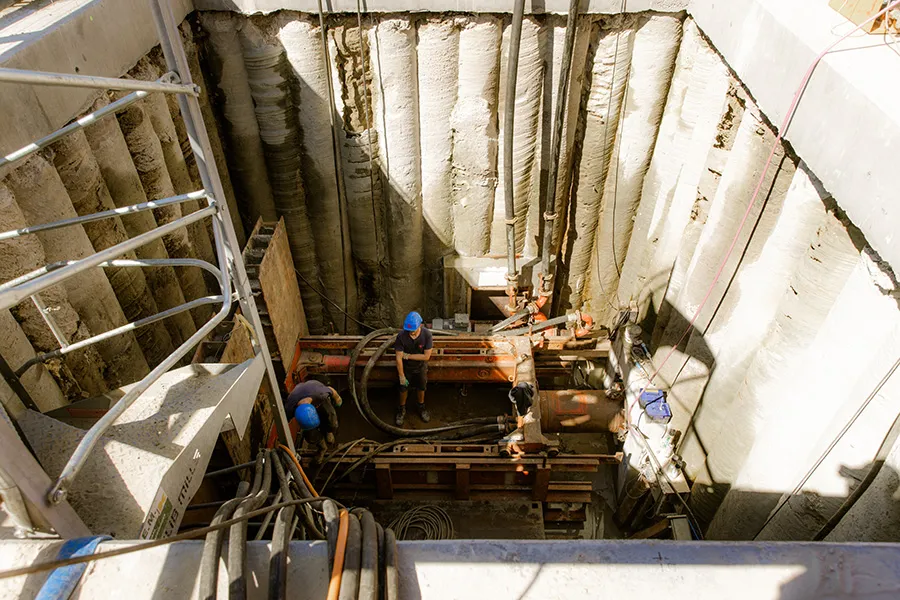
Given the busy junction between Orchideestraat and Drieselstraat in Oostakker, it quickly became clear that installing a sewer in an open trench was not desirable. Pipe jacking was therefore selected. In brief, the project involves 2 drives of 48 m with a diameter of 400. “For this project, we specifically chose to use a closed-face pipe-jacking method in combination with a watertight launch shaft and reception shaft,” explains Wesley Hendrickx, Project Leader Expertise Lead Road & Sewer at Arcadis. “This means we do not need to carry out additional groundwater pumping, causing less stress to an already vulnerable groundwater table.” Given the stricter regulations on groundwater pumping, this technique is particularly suitable for projects in areas with a high groundwater table.
Closed-face pipe jacking
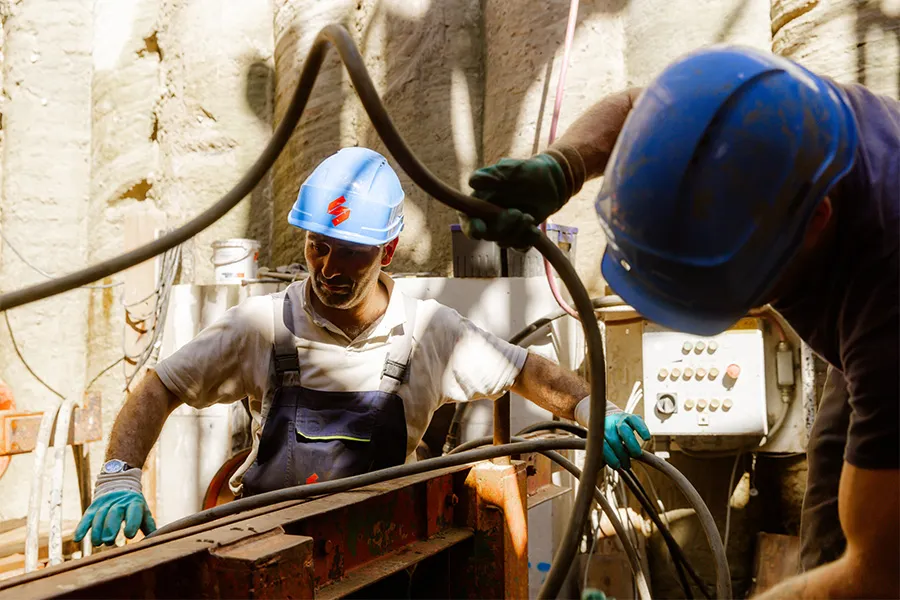
“The pipe jacking starts from a launch shaft, where we install our jacking equipment and then connect it hydraulically,” explains Darik De Clercq, Project Leader at Smet-Tunneling. “We then install our shield, which is also connected hydraulically, in the jacking shaft. The shield is connected to a supply and discharge line through which the drilling fluid is pumped forwards, mixed with the soil and ultimately removed. This system is extremely precise, enabling the pipe to be installed to within a few millimetres. It also ensures that the gravity gradient, expressed in millimetres per metre, is maintained.
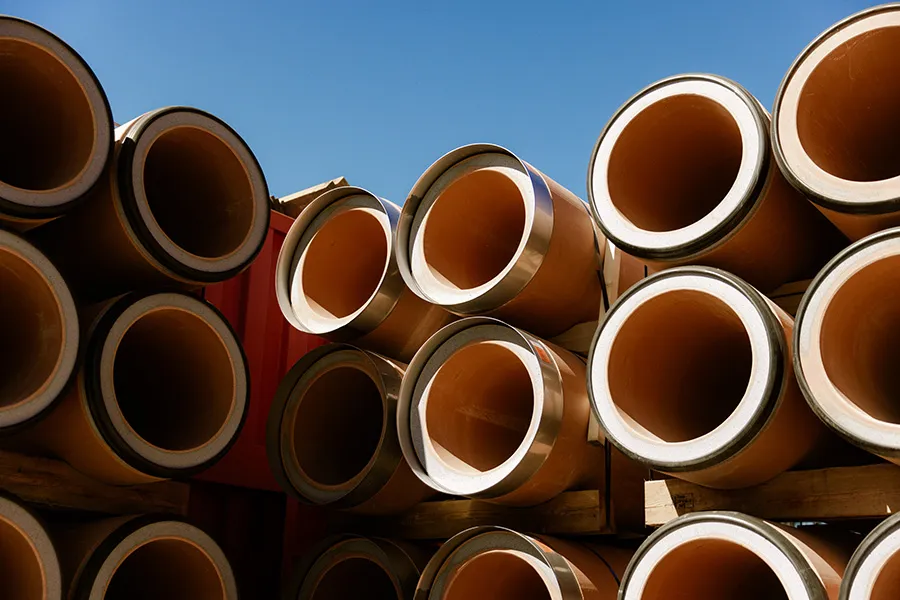
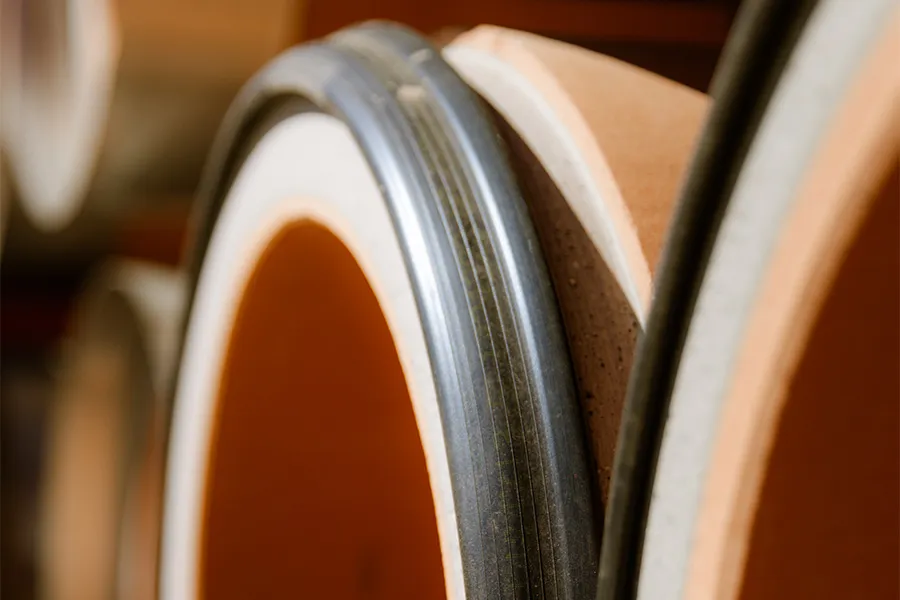
The KERA.Drive jacking pipes proved to be the ideal solution for this project. The KERA.Drive jacking range includes all the components needed for the trenchless installation of a modern new sewer system. Vitrified clay jacking pipes have considerable advantages over pipes made from other materials. “Their mechanical strength, watertightness and resistance to chemicals and domestic wastewater are maintained over time,” says George Meuwissen, Technical Account Manager at Pipelife.
“Vitrified clay pipes have a service life of more than 150 years. They are also natural products, made from fired clay, which are harmless and recyclable. And the icing on the cake is that the vitrified clay jacking pipes are BENOR-certified. In practice, vitrified clay pipes are best known for their durability in open-trench projects. Here, we are dealing with a DN 400 pipe-jacking project, where we guarantee the same durability and have even made the pipe wall considerably thicker. Thanks to their robust walls, Pipelife’s vitrified clay pipes can withstand a maximum jacking force of 160 tonnes, making jacking lengths of up to 100 m possible.”
Advantages of trenchless technology
Unlike sewers installed in open trenches, pipe jacking is carried out without digging a trench. The advantages are clear:
- Minimal disruption to traffic and the environment. Pipe jacking makes it possible to bore beneath obstacles such as roads, local infrastructure, railway lines and buildings without disturbing the surface
- Limited impact on fauna and flora
- Fast installation: pipe jacking can be carried out quickly, enabling projects to be completed more efficiently
- Minimal impact on transport: no
diversions and less transport of construction materials to and from the site, resulting in lower CO2 emissions - Extremely precise installation tolerances, ensuring the gravity gradient is maintained to within millimetres per metre.
- Minimal risk of settlement in nearby structures.
- Less disruption to local residents, as pipe jacking causes less noise and vibration than traditional excavation work and keeps homes more accessible
- Improved safety: as the work is carried out underground, the risk of workplace accidents is reduced
Vitrified clay proves its qualities
In this project, vitrified clay has once again demonstrated its qualities as a material. It remains an exceptionally strong product, with high density and resistance to chemicals, just like all other vitrified clay solutions for open-trench methods. With a service life of 150 years, vitrified clay achieves outstanding sustainability credentials, and because it is made entirely from natural products, its positive impact on the environment is also significant. “At Pipelife, we focus specifically on sustainable solutions for sewerage, sewer renovation, rainwater management and utilities. The project in Oostakker is a perfect example of this,” concludes George Meuwissen. ■
Question about this story? Ask your question
Keep following this
Get an email when a new story is published. No account needed.
- ThemeUsing and protecting the subsurface
- SubjectSewerage & underground infrastructure







