









Sewerage & underground infrastructure
Underground tanks with a storage capacity of 250,000 litres for a school in Vorst
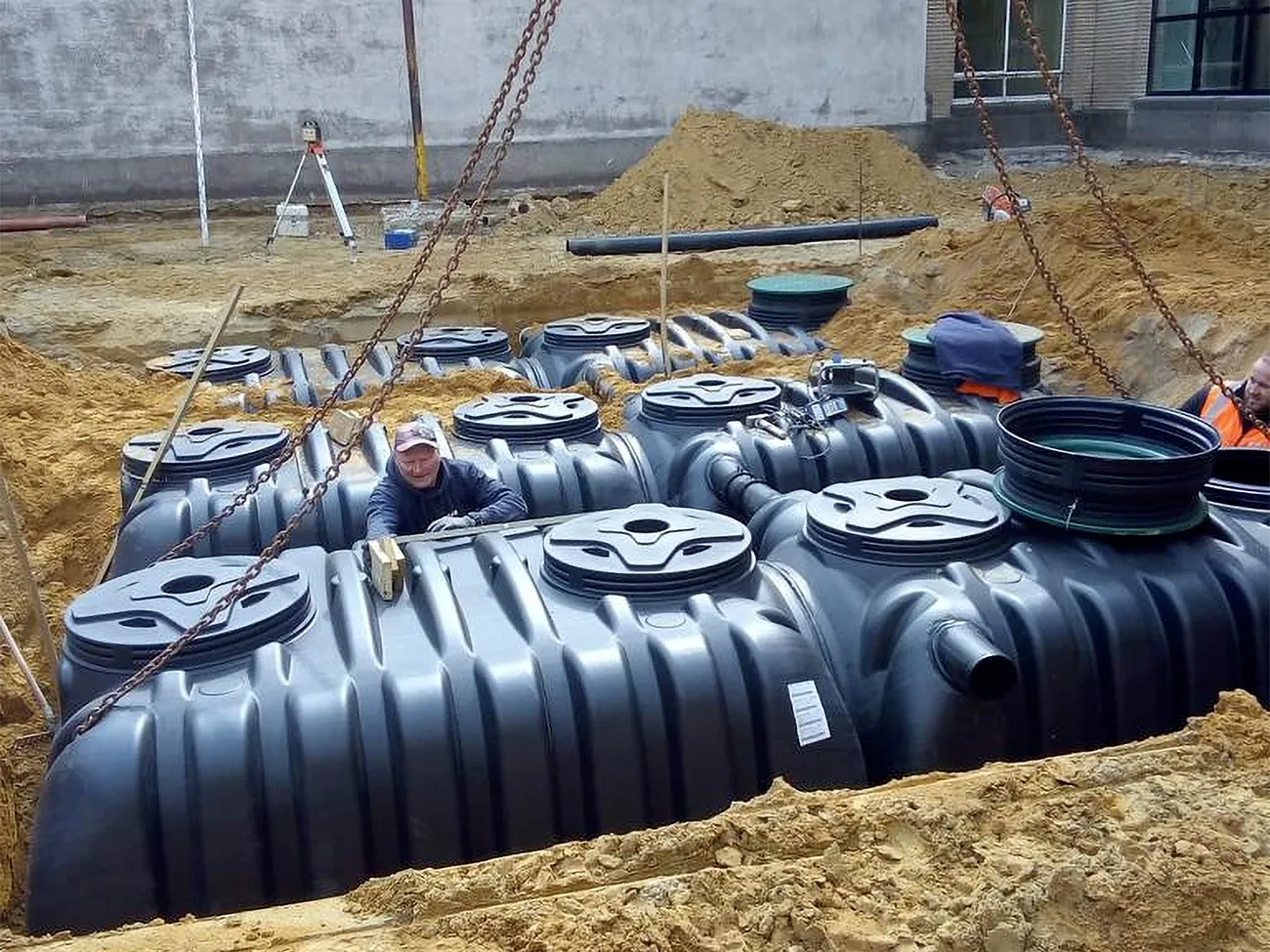
Rainwater storage is high on the list of priorities for the renovation of a school in Vorst. An impressive series of plastic tanks will provide controlled, delayed discharge of the rainwater. DS Plastics, a market leader in plastic tanks, is supplying a total of around twenty 10,000-litre tanks and seven 7,500-litre tanks for the project, together with one of its distributors. “That gives a capacity of 250,000 litres,” says Tom Henneman, managing director at DS Plastics.
The school covers an area of around 4,000 m², and the aim is to store the rainwater and discharge it into the sewers in a controlled, delayed manner. The engineering consultancy initially proposed a cast-in-situ concrete basement, but this was not feasible due to a lack of space. Plastic tanks proved to be an ideal alternative. The storage tanks are being installed by general contractor DSV nv from Aarschot beneath the playground, which will then be renovated. Tom Henneman: “The tanks can be installed at a shallow depth, allowing all the work to be carried out using a mini excavator. Given the limited space, this was an absolute necessity to complete the project successfully. A telescopic crane was used to lift the small excavator over the building and onto the playground. The low weight of the plastic tanks was also an advantage in this respect.”
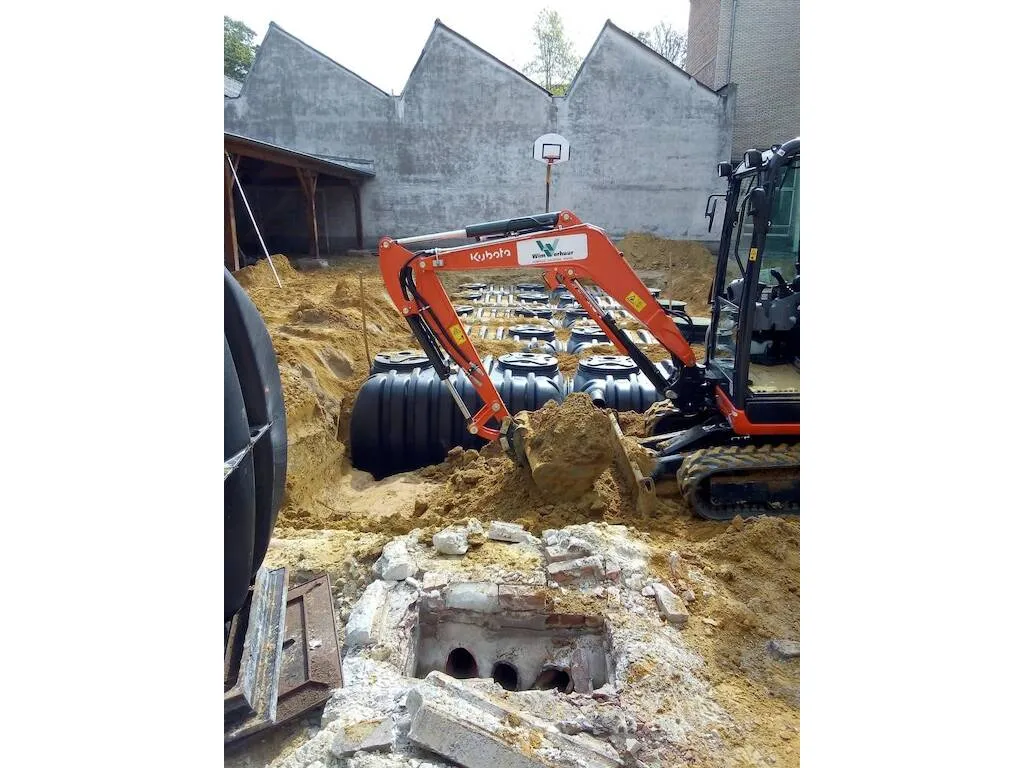
10,000 and 7,500 litres
The final choice was DS Plastics’ 10,000- and 7,500-litre QR rainwater tanks, with the aim of providing a storage capacity of 250,000 litres. The tank is installed underground, preferably as close to the source as possible. The excavation must be large enough to lower the tank into place safely. The bottom of the excavation is then covered with 50 cm of stabilised sand or, where groundwater is present, a reinforced concrete slab. Once the pipes have been connected, the tank is filled with water while stabilised sand is compacted around it.
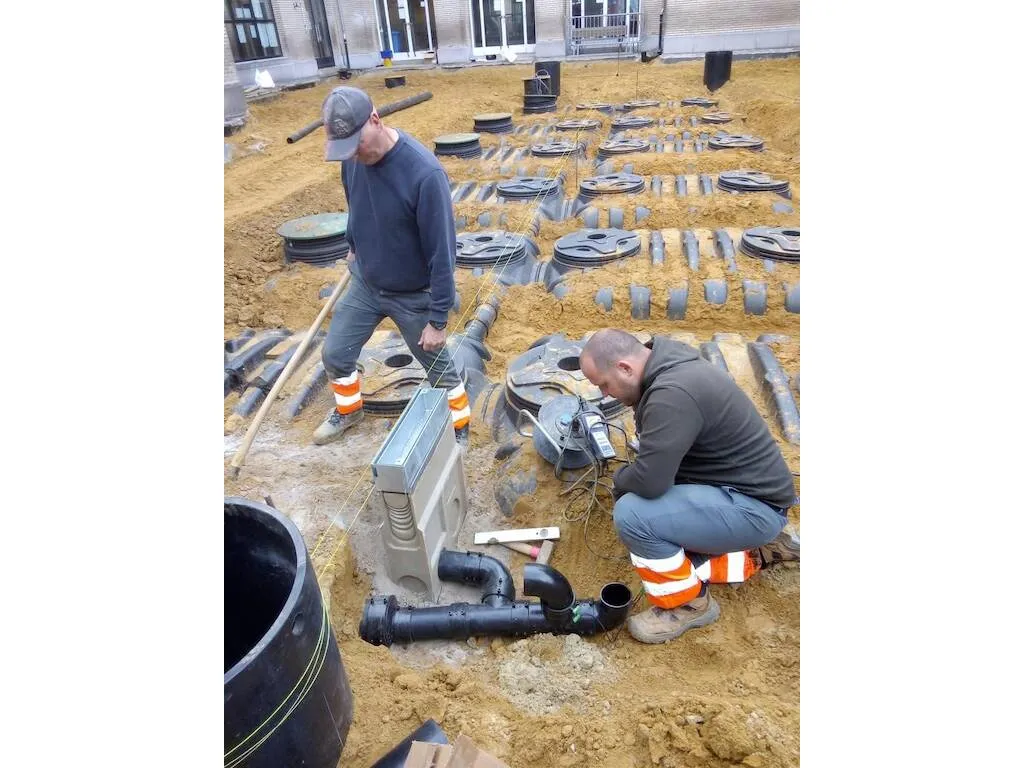
Efficient connection
To store a larger volume of rainwater, multiple rainwater tanks can be connected to create communicating vessels. DS Plastics can also provide a made-to-measure connection on the rainwater tank. In Vorst, the tanks are being divided into three or four connected zones, all of which will be beneath the renovated playground. Tom Henneman: “With plastic, we can prefabricate all the connections, and the tanks can be linked in several ways. This also makes for a very efficient connection on site. The ability to weld connections onto the tanks has been put to optimum use on this project. The work is divided into four phases, two before and two after the construction holiday.”
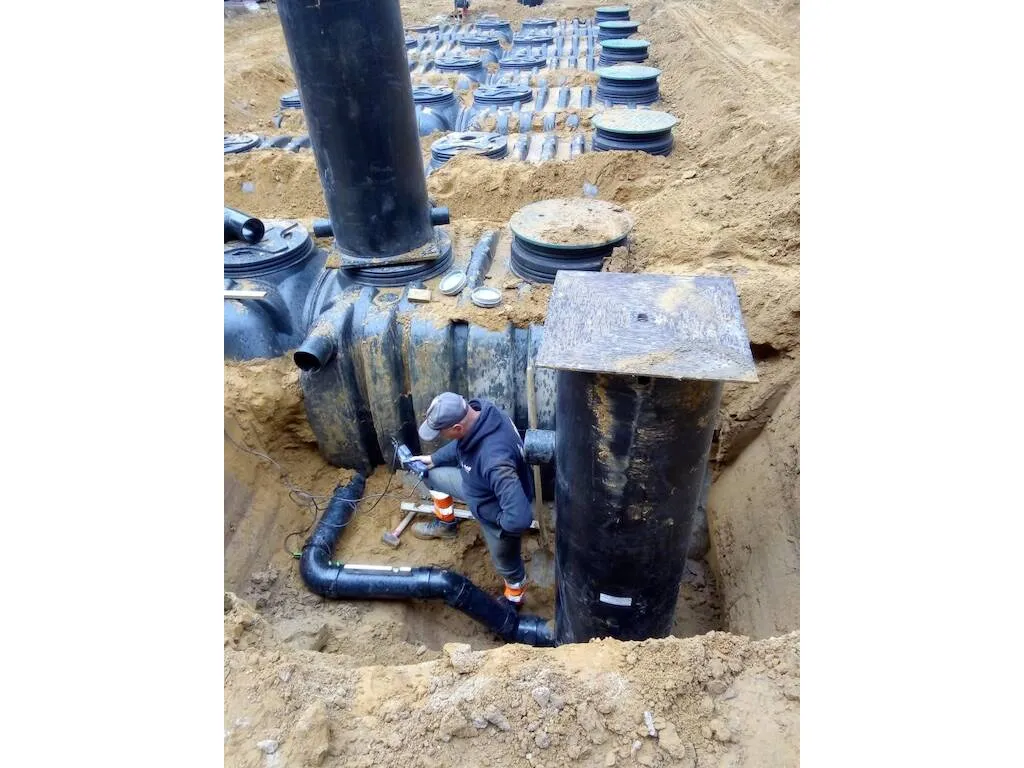
Advantages of HDPE
The advantages of HDPE over materials such as concrete are clearly demonstrated in this project. Tom Henneman: “One advantage is its longer service life, as plastic does not corrode. Plastic tanks are also not susceptible to dirt adhering to their walls. They therefore do not need to be cleaned, although every tank is equipped with an access shaft. For example, a poor filtration system could cause dirt to build up. The access shaft then makes it possible to drain the tank completely, without residue sticking to the walls.” The scale of the project is undoubtedly remarkable. “It is unusual for plastic tanks of this size to be used in such numbers. Installing a single tank or connecting two is common, but storing 250,000 litres is quite unique. In this case, it was the most economical and efficient solution. One of DS Plastics’ key strengths is our ability to offer renovation projects made-to-measure solutions,” concludes Tom Henneman.
Question about this story? Ask your question
Keep following this
Get an email when a new story is published. No account needed.
- ThemeSpace for water and green infrastructure
- SubjectSewerage & underground infrastructure







