









Sewerage & underground infrastructure
The right expertise from A to Z for a unique sewerage project
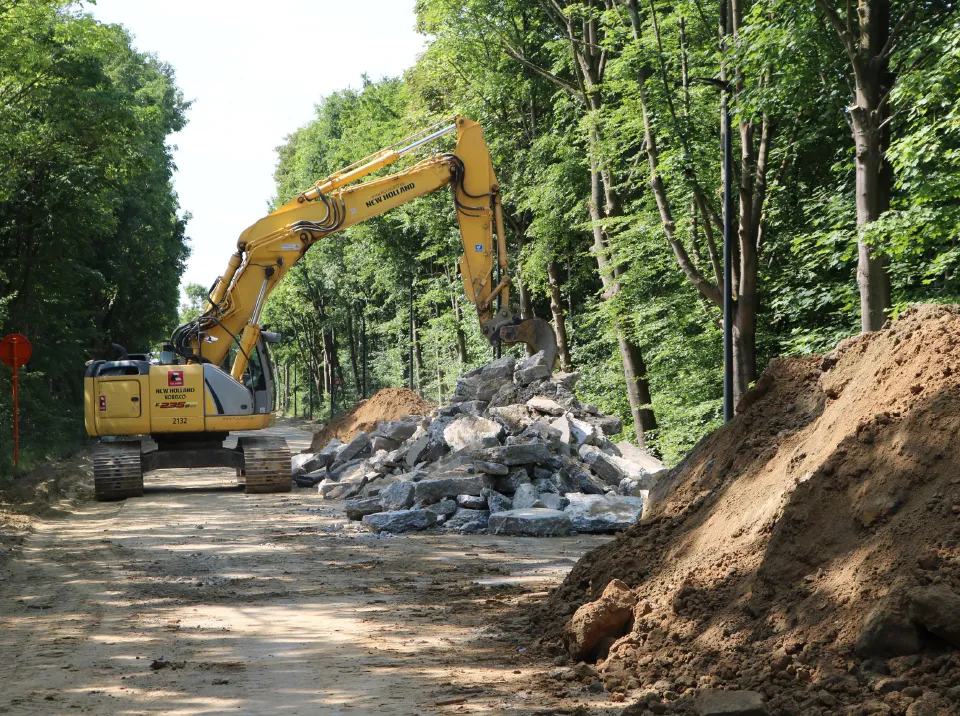
The carriageway’s concrete surfacing was also renewed, new footpaths were laid in concrete paving blocks, and a buffer ditch was created along the section between Melkweg and Erembodegemstraat. Aclagro managed the works from start to finish.
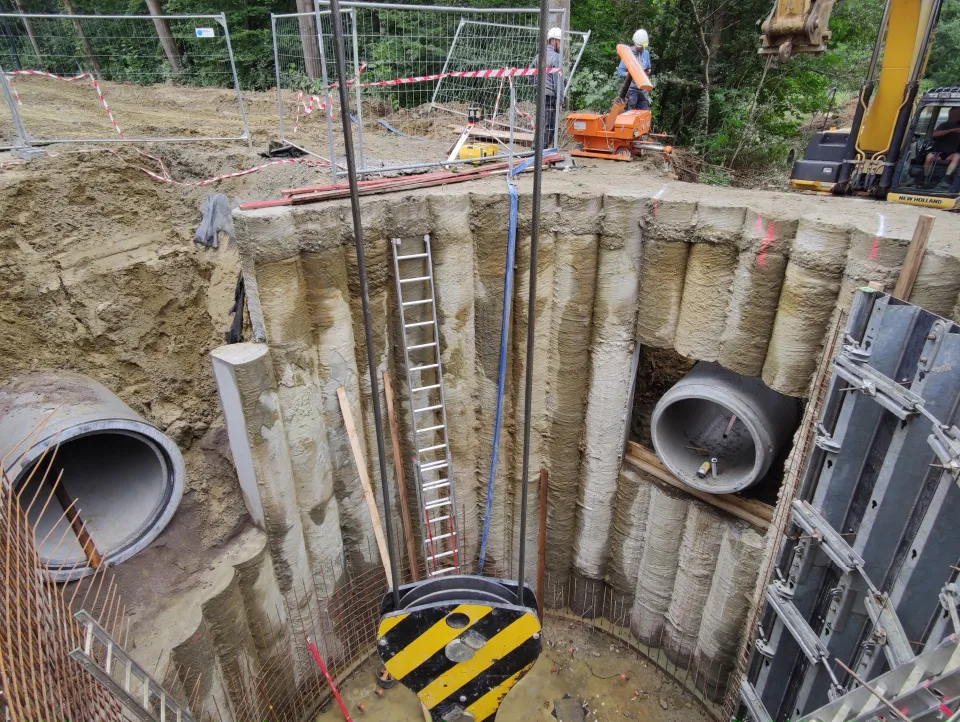
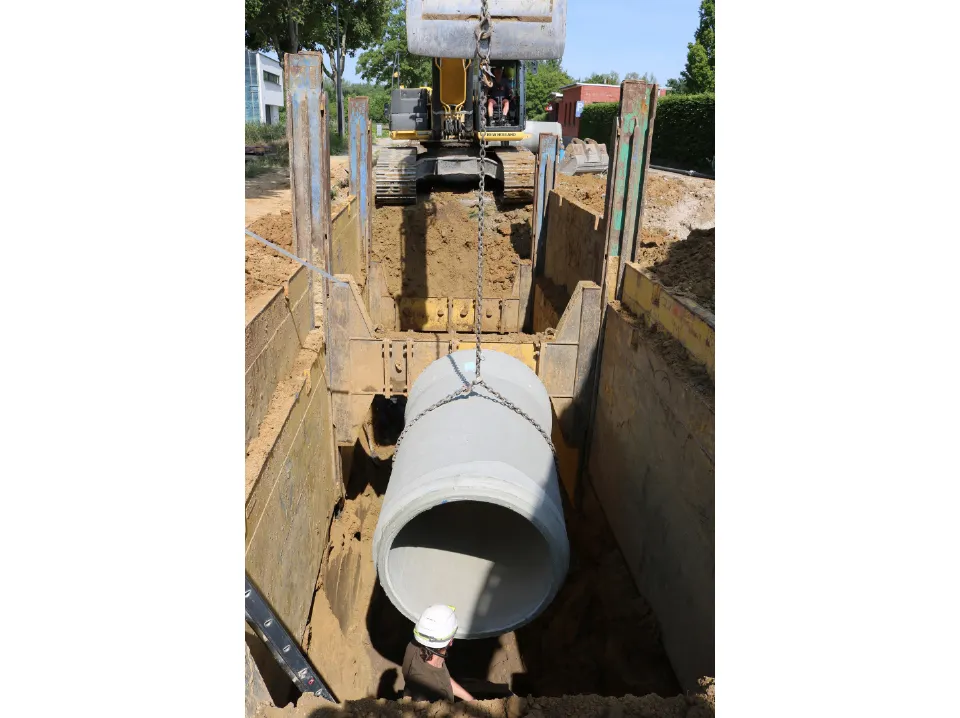
After the Easter holidays, Aclagro’s infrastructure division began constructing a separate sewerage system in Rooms-Hofstraat, Erembodegem, a district of Aalst. The project had two parts. The first was to lay 450 m of stormwater drainage (RWA) and foul water drainage (DWA) at a depth of 5 to 6 m. The second was to transform an existing nature area into a site with settling ponds and creeks to collect clean rainwater. Given the considerable depth, active trench support was used, with Krings panels. “This kind of work takes experience and a great deal of discipline from the team,” says site manager Jens Colman. “Otherwise, it’s easy to make mistakes that create risks. Unlike laying pipes using a drag box, two people are needed in the excavation to guide the pipes properly into position.”
Collector with centrifugal turbine
“An experienced team ensured that the 1,200 and 1,400 mm concrete pipes were installed safely at considerable depth,” says project manager Pascal Verthé, who managed the works alongside Jens Colman. At the end of the road, just before the water reaches the nature basin, a small treatment plant was built. Pascal Verthé explains: “That certainly makes this project special. The cylindrical collector captures the rainwater, and a centrifugal turbine removes plastic debris from the water before it is channelled into the adjacent nature area. The centrifuge is designed to be powered by the force of the incoming water, without requiring significant amounts of energy.”
The nature area was developed in consultation with the Agency for Nature and Forests. Pascal Verthé says: “Transforming the nearby nature area involved removing no less than 7,000 cubic metres of soil. This allowed us to create small creeks that can collect water from the collector. The water flows into the creeks, where it can first settle in the nature area before being discharged further. Installing the collector was an impressive feat of craftsmanship. A secant pile wall and circular formwork were used to cast the concrete collector. Two large sewer pipes, each with a diameter of 3 m and weighing 18 tonnes, also had to be installed. It was a substantial undertaking that had to be carried out to the nearest centimetre.”
From A to Z
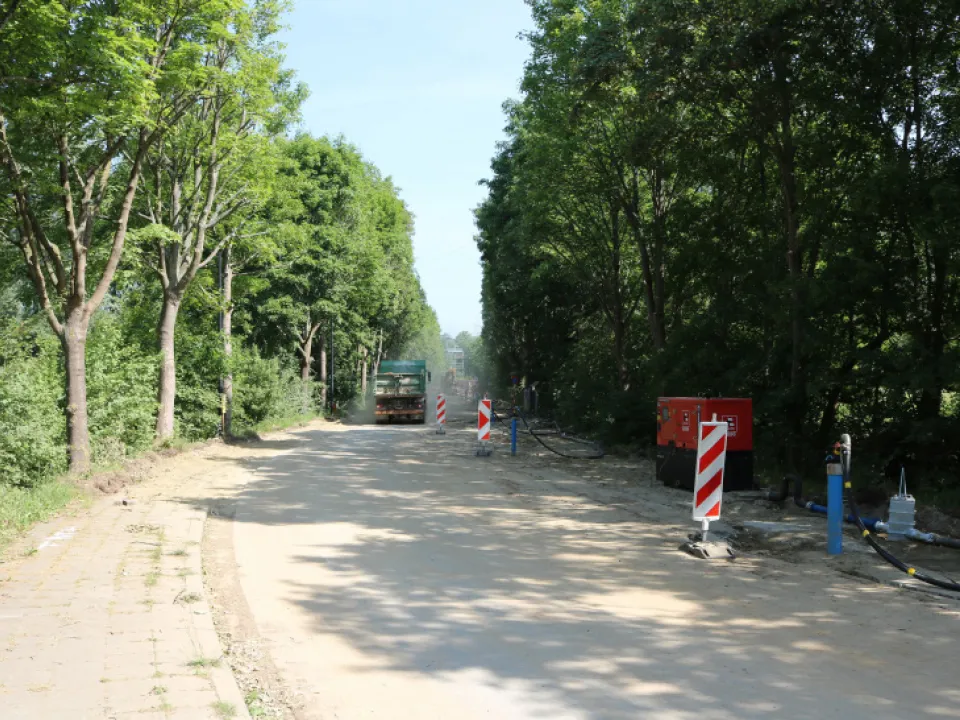
Aclagro also carried out the roadworks. First, the combined edge strip and kerb were cast in situ using a GPS-guided slipform paver. The new carriageway, comprising two 3.5 m-wide lanes, was then laid using the slipform paver by site manager Tom Rotthier’s experienced concrete team. The in-situ concrete works were managed by Nuno, site manager for formwork. Aclagro thus carried out almost the entire project with its own staff, from day one through to handover.
“That is certainly one of Aclagro’s great strengths. We can respond quickly and are not dependent on subcontractors. Only the new house connections and the installation of paving blocks and kerbs were subcontracted. This means we can manage the schedule ourselves from start to finish and adapt quickly if necessary. Good preparation is crucial in that respect. Before starting the sewerage works, we map the existing situation in detail. During the works, everything is closely monitored by the site manager, in this case Jens,” concludes Pascal Verthé.
Question about this story? Ask your question
Keep following this
Get an email when a new story is published. No account needed.
- ThemeRenewing pipelines and sewers
- SubjectSewerage & underground infrastructure







