









Sewerage & underground infrastructure
The first ‘low-impact’ sulphur concrete sewer is a reality
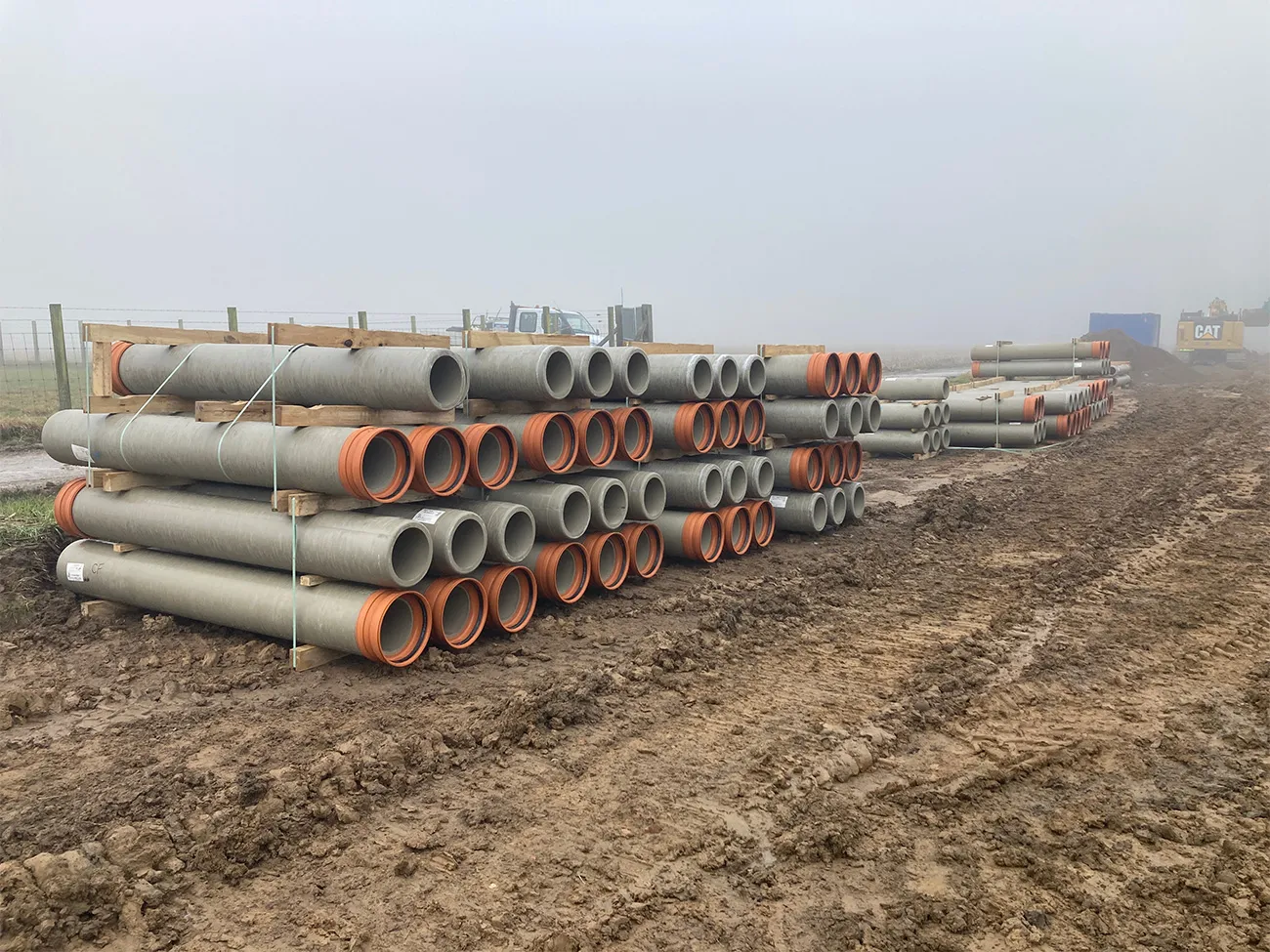
De Bonte Group’s THIOTUBE sulphur concrete sewer pipes have entered the sewerage market. In early January, the first pipes were laid in Wouterbosweg in Parike (Brakel). It is no coincidence that the first sulphur concrete sewer pipes were installed as part of an Aquafin sewerage project. In infrastructure, materials have one of the largest environmental footprints. Aquafin has set itself the goal of limiting its environmental impact as much as possible.
“We know that the production of the infrastructure we build has a significant environmental impact, even though its purpose is to restore the environment by reducing pollution in our waterways,” explains Danny Baeten, Aquafin’s Director of Process Innovation. “That is why we support initiatives that dare to pursue disruptive innovation, such as De Bonte Group’s sulphur concrete. As one of Flanders’ major clients for infrastructure works, and as a company in the environmental sector, we believe it is our role to challenge manufacturers to seek out solutions that deliver the best environmental outcomes. In future, we want the overall environmental footprint to carry more weight in the design of sewerage projects.”
Test sites
When Aquafin first encountered the sulphur concrete developed by De Bonte around six years ago, it seized the opportunity to help assess the material’s functional durability by providing real-life test sites. A mix of sulphur concrete manholes and pipes was installed at 5 carefully selected locations known for their highly aggressive environments. Over the past few years, visual inspections and laboratory tests on samples from these projects have shown that the material performs very well against the requirements for sewerage systems, including the most stringent ones. Meanwhile, De Bonte worked hard to build the factory for both THIOTUBE sewer pipes and THIOTRACK sleepers, which are made from the same material, and to fine-tune the equipment. Copro undertook the preparatory work for certification at the same time.
World first
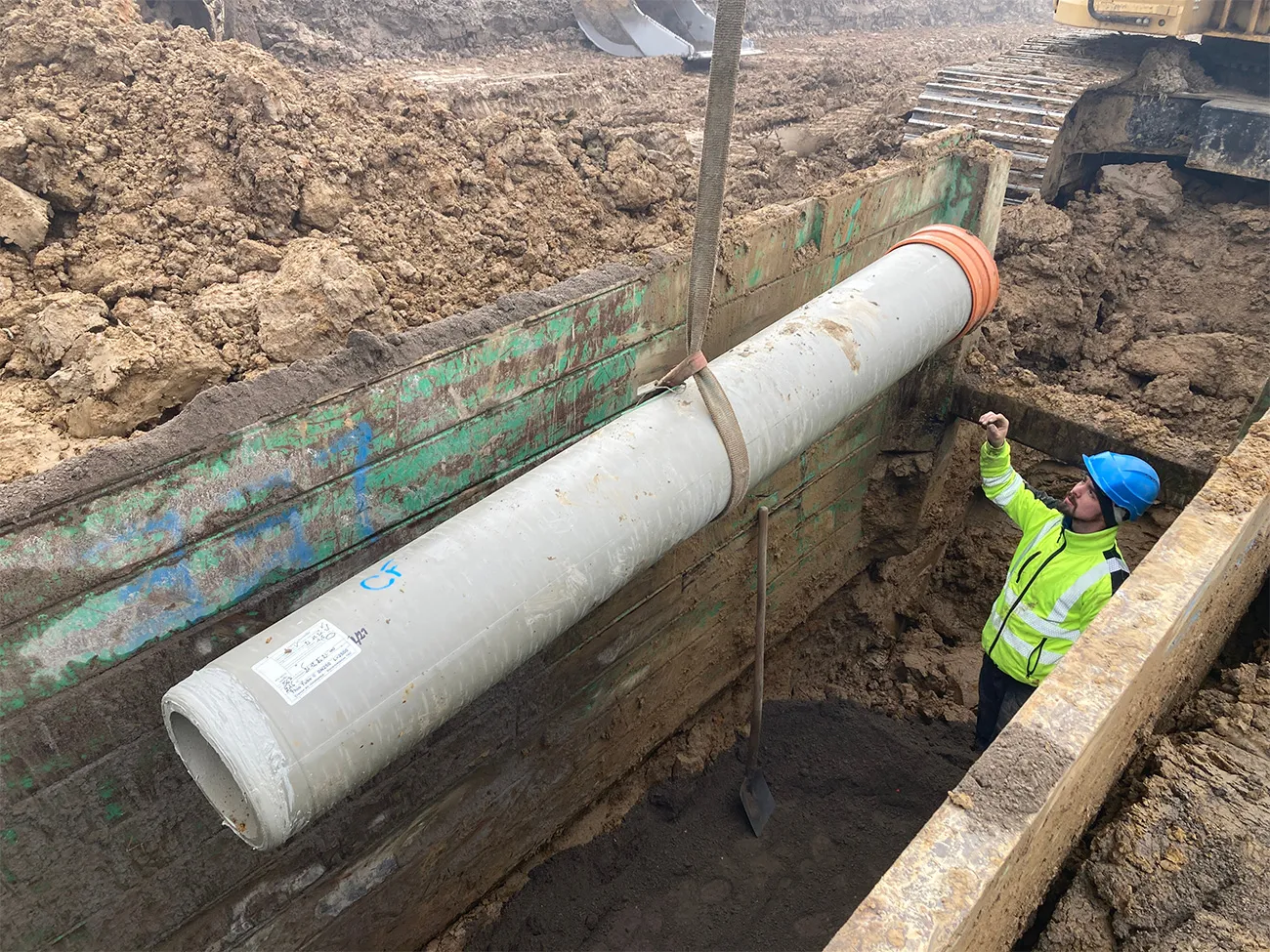
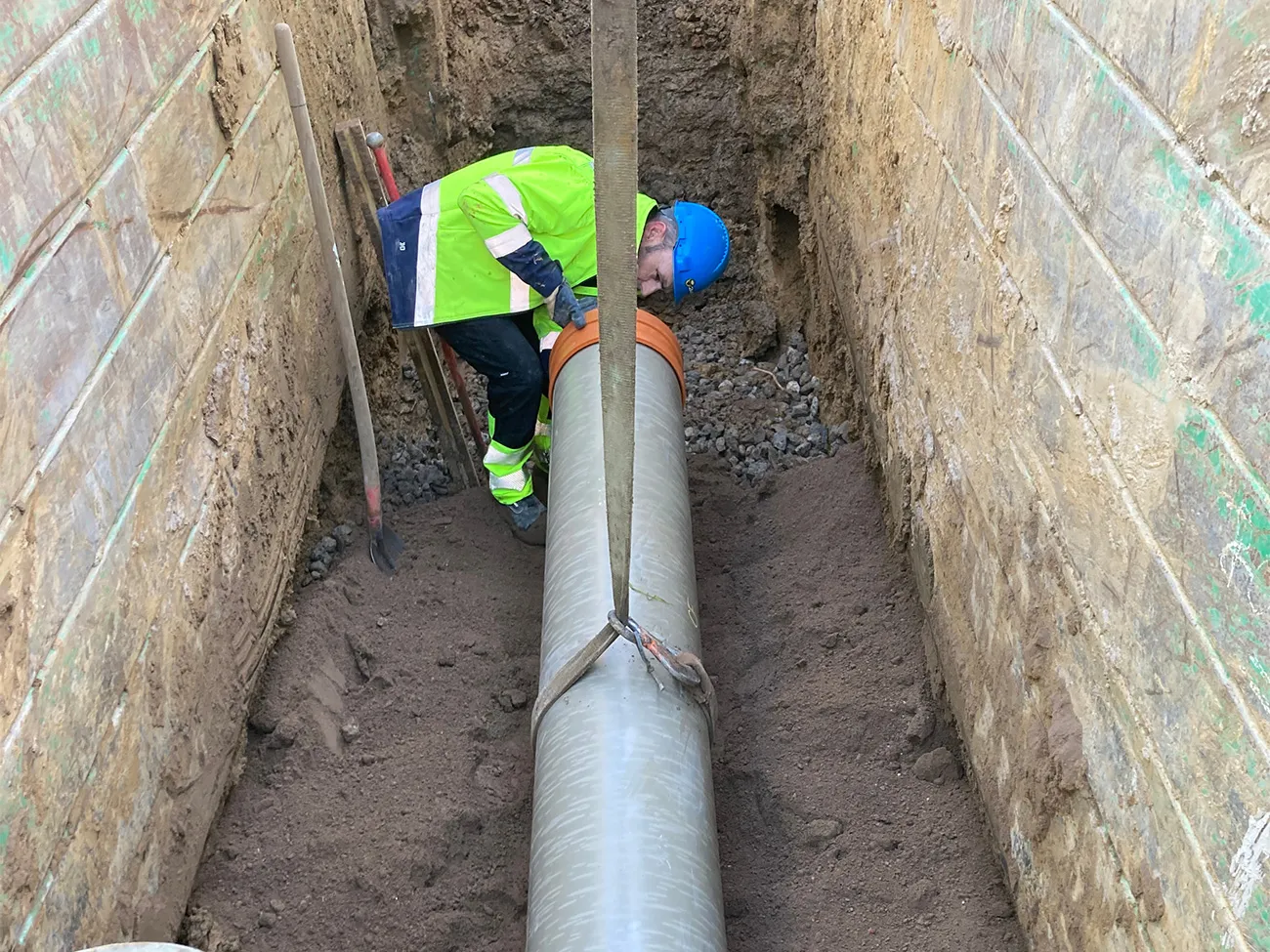
When De Bonte announced in late 2021 that production had started, Aquafin did not hesitate to use the material in part of the project in Brakel. The other stakeholders in the project, namely contractor Wegenwerken De Moor from Wetteren and engineering consultancy Arcadis, were also undeterred by the ‘unknown’ and enthusiastically supported the market entry of this disruptive solution. Between early January and mid-February, 490 m of DN250 mm pipes were laid between the outlet of the rising main at the start of Wouterbosweg and the wastewater treatment plant (RWZI) at the end of the street. IDEAL manholes, also supplied by De Bonte Group, were chosen for the access points. These manholes are made of cement concrete, but are also distinctive in their concept and performance. The works and associated tests proceeded very smoothly, to everyone’s satisfaction.
Functional performance and durability
The project in Brakel is one in which sulphur concrete pipes are particularly well suited. The project conditions, including the outlet of a rising main, great depths and a steep gradient, require a material with high chemical resistance, abrasion resistance and mechanical strength. It is truly exceptional that this functional performance is combined with excellent scores on two of the fundamental principles of sustainability, namely climate and circularity. Robust sulphur concrete can be remelted indefinitely, with no loss of value. The material therefore remains a primary raw material forever. It is 100% circular, making it a particularly interesting solution for the circular economy.
Very low CO2 emissions
The material also stands out for producing 50 to 85% less CO2 than traditional concrete or other commonly used materials such as plastic or vitrified clay. There are two reasons for this. First, cement is not used, so there is no need to produce it. Cement is replaced entirely by sulphur, a by-product of the petrochemical industry. The second reason for the very low carbon footprint is the low-energy production process, based on melting and solidifying the sulphur at 135° C, a low temperature by industrial standards.
THIOTUBE pipes are so disruptive in these respects that they enable sewer operators to meet their functional requirements while also limiting their environmental impact as much as possible. In short, future-proof sewerage is no longer a utopian idea. DN250 mm is currently the only available diameter, but the range is set to expand. Meanwhile, the first deliveries of sulphur concrete railway sleepers have also been made to Infrabel. “De Bonte Group’s sulphur concrete solutions are clearly on the right track,” the company says with a wink.
Een zakelijke vraag aan Copro? Get in touch
Companies in this story
Keep following this
Get an email when a new story is published. No account needed.
- ThemeRenewing pipelines and sewers
- SubjectSewerage & underground infrastructure
- CompanyCopro







