









Sewerage & underground infrastructure
Tailored foundation techniques: the basis of every successful construction project
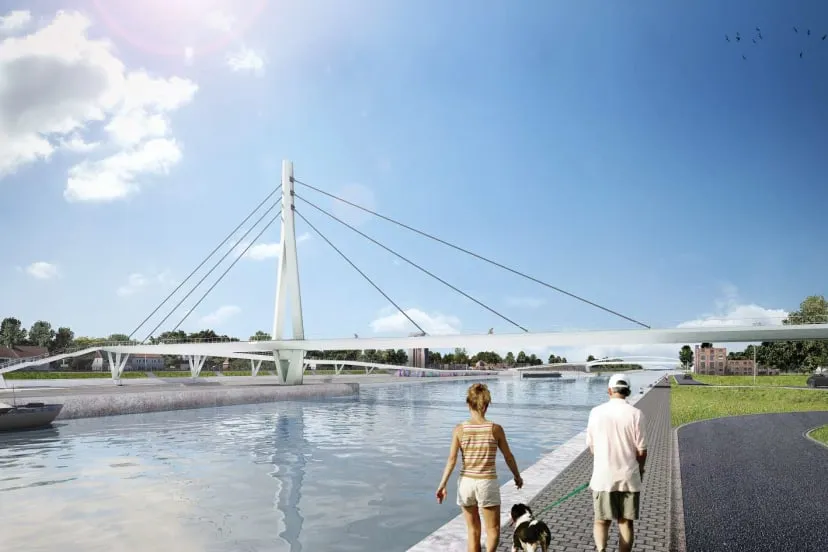
Text Joris Hendrickx Beeld Mees / ZJA Architecten
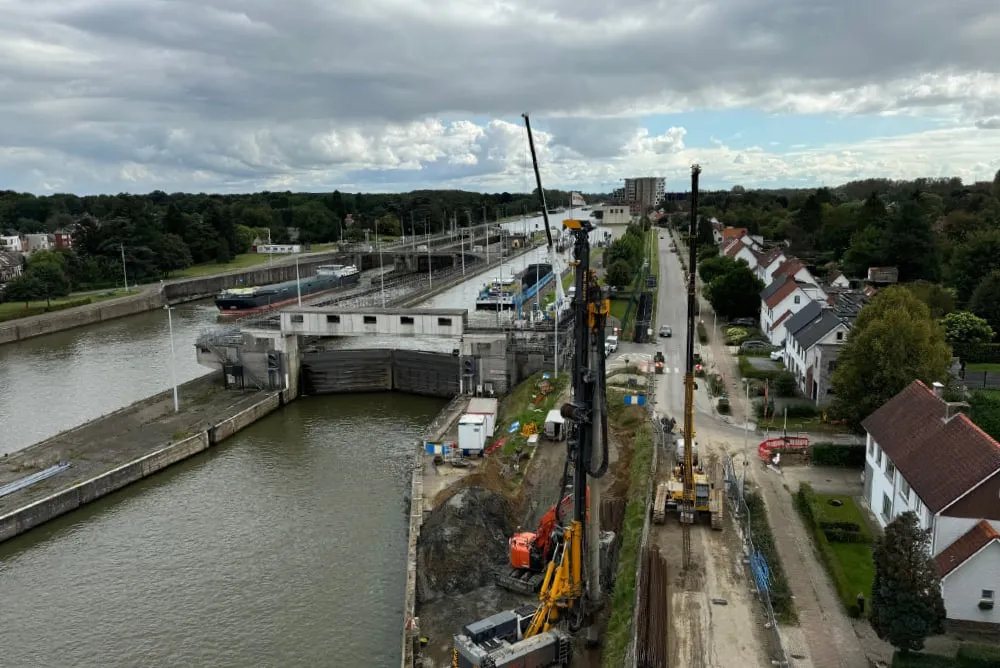
Choosing the right, reliable foundation techniques partner is crucial to the success of any complex construction project. With its experience and specialist expertise, Mees BV can provide a solid foundation, efficient execution and minimise long-term risks. The company proved this once again during the construction of a major cycle and pedestrian bridge in Wijnegem and the stabilisation of a dike in Maasmechelen.
Mees BV has been an established and respected name in foundation techniques for many years. Under the leadership of Jan Mees, the family business has built up an impressive portfolio of advanced solutions tailored to each project. “We always go the extra mile to provide innovative, sustainable solutions that meet each client’s specific requirements and comply with the highest safety and quality standards,” says Mees.
Cycle and pedestrian bridge in Wijnegem
One of the recent projects Mees BV is working on together with De Vlaamse Waterweg and Artes Roegiers is the construction of a new cycle and pedestrian bridge over the Albert Canal in Wijnegem. It is being built alongside another bridge for road traffic to replace the iconic ‘banana bridge’ and is part of a wider infrastructure plan to provide safer passage for cyclists and pedestrians.
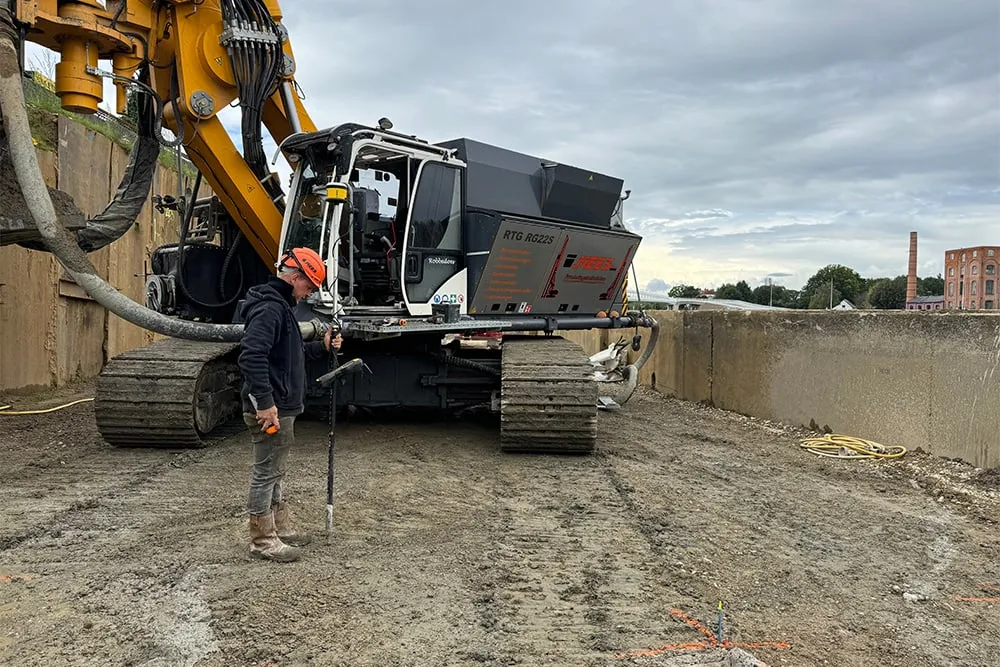
“Our task is to install the bored piles that will later support the bridge piers,” Mees explains. “This required close collaboration between our engineer and several engineering consultancies to ensure that our piles could withstand both vertical and horizontal forces. We prepared a separate study and detailed plan for each pier. What makes Mees BV’s approach unique, however, is that our drilling teams use GPS devices to position the reinforcement in each pile exactly where it needs to be. This allows us to ensure the reinforcement is positioned eccentrically and therefore guarantees the stability of the pile.”
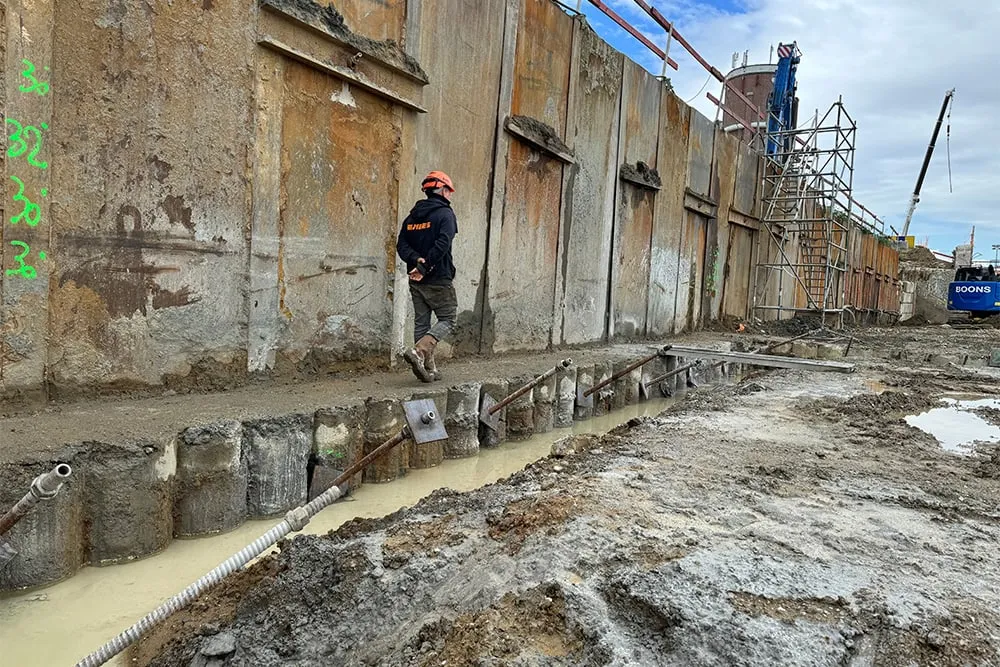
In addition, the foundation of one of the old bridge’s piers, which was located close to the water’s edge, had to be completely removed to make room for the new piles. Mees says: “To prevent water ingress, we first installed a secant pile wall. We also installed a Berlin wall along the bridge approach, as the bridge piers there are lower than the adjacent road. We have already bored piles for seven piers alongside the same approach. We will soon also be boring 21-metre piles for a pier from a pontoon on a narrow spit of land belonging to the adjacent lock complex, in the middle of the canal.”
Stabilising a dike in Maasmechelen
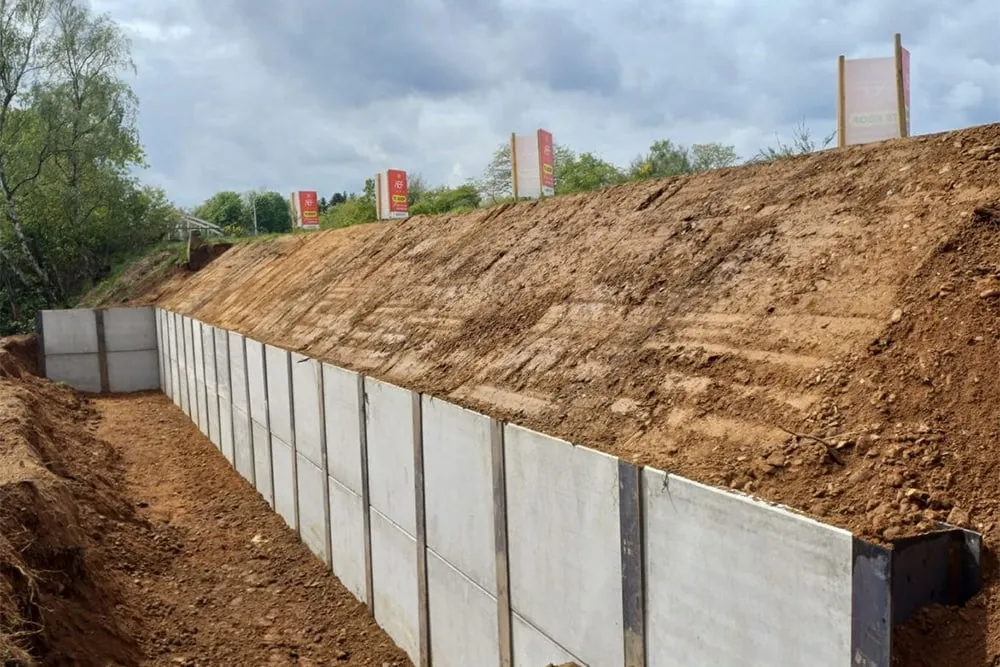
In Maasmechelen, Mees BV stabilised a dike so that a building could be constructed safely behind it. The company was responsible for the preliminary study, developing a concept and carrying out the work on site. “De Vlaamse Waterweg stipulated that we could not anchor into the dike, in order to safeguard its stability. That called for a creative solution,” says Mees. “Our solution also had to be installed at a specified TAW (elevation) relative to the canal water level.”
Mees says: “Specifically, we decided to install a Berlin wall. First, we drilled holes in the ground, filled them with concrete and then lowered the H-sections of the Berlin wall into them. This made the wall self-supporting. Thanks to the concept we developed, we did not have to drill into water-bearing layers or use anchors, and we were able to work without vibration. The Berlin wall, originally designed for functional purposes, also had to serve as a garden wall. Despite the use of large machines, the work was carried out to perfection. This project therefore highlights not only the creativity and expertise of our engineers, but also the skill of our workforce.”
Project in Wijnegem commissioned by De Vlaamse Waterweg nv, with support from:
- ZJA Architecten (renderings)
- THV Arcadis-Sweco
Contractor: TM Artes Roegiers-Aelterman
Question about this story? Ask your question
Keep following this
Get an email when a new story is published. No account needed.
- ThemeUsing and protecting the subsurface
- SubjectSewerage & underground infrastructure







