









Sewerage & underground infrastructure
Sinkholes like those in Brussels? Flanders must do everything it can
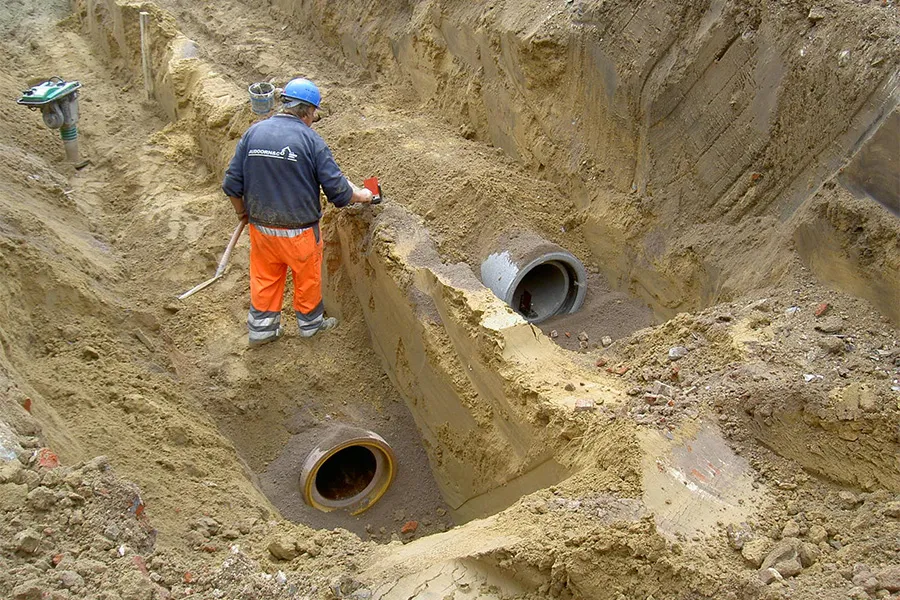
A dangerous hole opening up in a busy road every day: this is the nightmare scenario Flanders is doing everything in its power to avoid. The inspection programme Flanders has imposed for municipal sewers is on schedule, but that has not yet addressed the numerous defects identified. More than 1,000 km of sewers now require urgent repairs. Sewer managers must take action and make the necessary budgets available to prevent foreseeable sewer collapses. “It is clear that action is essential now,” says Minister Zuhal Demir. Municipalities that do nothing will soon lose subsidies and control over ‘their’ sewer networks.
A 50,000 km asset worth 70 billion euros, about which municipalities knew very little. Until recently, that was the astonishing situation in Flanders. The Minister for the Environment set municipalities a strict course to map their infrastructure and inspect priority sections. The project milestones are clear. By the end of 2022, all managers had to have a complete inventory, a risk map and an inspection plan. By the end of 2023, 25% of the inspection plan had to be completed, and by the end of 2025 all “critical” sewers must have been inspected, with 50% of the full inspection plan completed. All inspections must be completed by 2027, at an average cost of 160,000 euros per municipality.
Status tool shows problems in each municipality
Where do things stand today? At least there are no more surprises underground. Municipalities finally know where all their sewers are. All infrastructure has been digitised in a Flemish database, and 25% of the most critical pipes have been inspected. These are 120 km of sewers beneath large buildings, railways or motorways. Of the less critical pipes, 4,200 km, or 21%, have been checked from surface-level inspection chambers. This slight shortfall is because it remains very difficult to find enough specialist technicians to map the condition of underground infrastructure. “We can say that the end-of-2023 deadline has been all but met,” says Wendy Francken, director of Vlario. “At https://statustool.aquafin.be/, residents can find out the current status in their municipality. On the other hand, many municipalities are finding the inspection reports hard to swallow.”
Urgent repairs needed to more than 1,000 km of sewers
The status tool shows that 15% of the sewers inspected are in very poor condition. A further 13% have defects in specific locations. Urgent action is needed on no fewer than 1,000 km of inspected sewers to prevent a cascade of sinkholes in Flanders. These are not only dangerous for passing vehicles or pedestrians, but can also cause months of traffic disruption or lost income for businesses when they appear in a shopping centre. The additional budget needed to carry out urgent work on these 1,000 km of sewers is around 85 million euros.
Preventive work has the advantage of often causing minimal disruption to the surrounding area, because the sewer can be accessed through inspection chambers without digging up the road. Preventive renovations can extend the remaining service life of sewers by as much as 50 years.
“It is clear that action is essential now. Emergency repairs after a sewer has already collapsed cost the taxpayer ten times as much. This approach also benefits residents: every euro can only be spent once. It is therefore in their interests for local authorities to avoid huge unforeseen costs, so that other investments in other areas do not suddenly have to be postponed,” says Minister Demir.
Action in return for subsidies
Only municipalities that are on schedule with their inspections remain eligible for sewer subsidies. If repairs are found to be lagging behind, Flanders can take over this municipal responsibility. This is set out in the Flemish decree on the implementation of the sanitation obligation, dated February 2024.
Question about this story? Ask your question
Keep following this
Get an email when a new story is published. No account needed.
- ThemeRenewing pipelines and sewers
- SubjectSewerage & underground infrastructure







