









Sewerage & underground infrastructure
Sewerage in Flanders: there is certainly room for improvement!
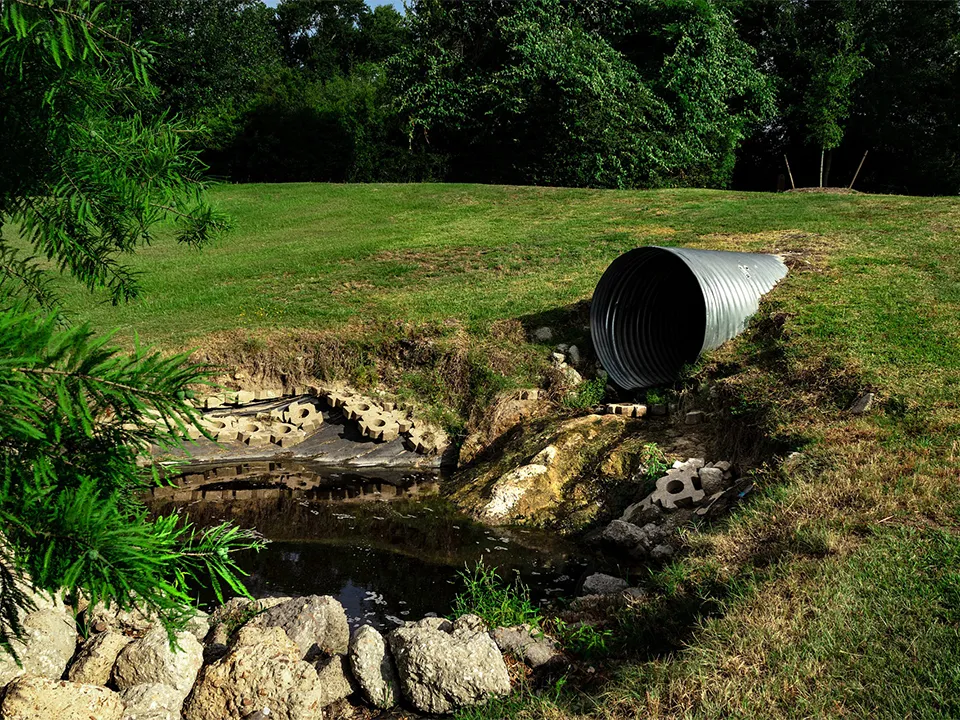
Flanders’ fundamental vulnerability when it comes to water is clear, and the challenges facing wastewater treatment are well known.
To meet the European targets, wastewater from a further half a million people in Flanders must be treated by 2027. One in eight homes is not connected to the sewer network. In most cases, untreated wastewater ends up in the soil, a ditch or a stream. Flanders faces a major challenge in expanding its sewerage and wastewater treatment infrastructure further and at a faster pace.
What needs to be done to turn the tide? Implement the concept note: Optimal coordination of municipal and supra-municipal asset management. Concrete agreements have been made with the Flemish Government to improve performance. Turning this theory into practice requires the following:
- Deliver projects faster: The average lead time for a sewerage project, from initial design through to completion of the works, is more than 8 years. That is far too long, and as a result the wastewater treatment rate in Flanders is rising too slowly. In the past six years, progress amounted to just five per cent, compared with 16% between 2006 and 2012. We need to work faster again! And that applies to everyone. At VLARIO Day on 29 September, politicians showed strikingly strong agreement on the need to cut infrastructure project lead times quickly. The Flemish Government therefore wants to review existing procedures and plans critically, streamlining and simplifying them, and to make a major effort to improve coordination between the various players (timing, budgets, etc.) so that the different objectives (road safety, clean water, etc.) can be achieved faster. VLARIO is offering its platform for developing proposals and is convinced that tackling the issues with environmental permits and expropriations would have a very positive impact on project lead times.
- Align plans more closely with funding. The implementation of plans depends on two budgets: that of the road authority, often the municipality, and that of the sewerage authority, which may be the municipality or the intermunicipal company. Plans need to be better aligned with each other and with the available funding. Specifically, sewerage plans must be linked to municipalities’ multi-year budgets (or those of the Roads and Traffic Administration), so that funding is in place when projects are due to be delivered. This is where the political stumbling block lies: many municipalities face structural problems with their finances and/or have other priorities. One important step is to provide clarity on the subsidies available from Flanders during a given period. A better long-term funding plan for the entire system is not a luxury, but a necessity. If a project stalls for whatever reason, it must be possible to replace it with another project that delivers a comparable result. This principle is also set out in the concept note mentioned above.
- Accountability is essential: make implementation plans binding. VLARIO has been calling for municipalities and sewerage authorities to be held accountable for years. The plans currently in place are too non-committal. Policy does have incentives (the carrot): plans, tools to help municipalities and subsidies. But municipalities and sewerage authorities that fail to carry out their duties adequately cannot be sanctioned, as there is no stick. The plans must therefore be binding on municipalities and sewerage authorities.
Finally, VLARIO is calling for the inspection of private wastewater drainage to be made compulsory when a home is sold, as is already the case for other utility services. This would also allow the certificate to be included in the Woningpas.
Question about this story? Ask your question
Keep following this
Get an email when a new story is published. No account needed.
- ThemeRenewing pipelines and sewers
- SubjectSewerage & underground infrastructure







