









Sewerage & underground infrastructure
Reliability, circularity and simply a very good product
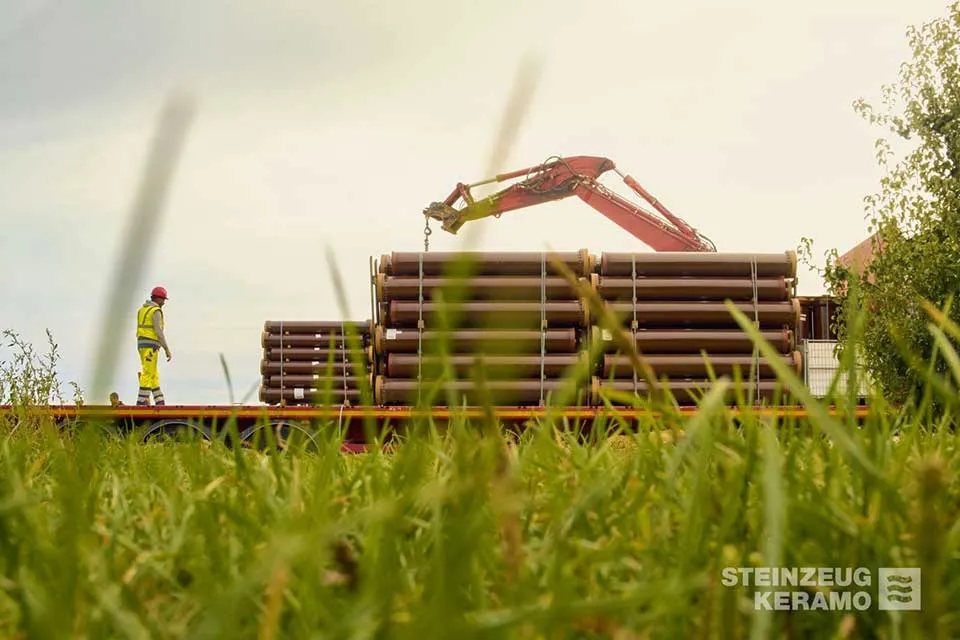
For decades, Steinzeug-Keramo has established itself as a reliable supplier of systems and solutions for sustainable water and wastewater management. The manufacturer of vitrified clay sewer systems intends to continue along the same lines in the future, without hesitation. “Local roots and reliability will remain our priorities, alongside a strong focus on sustainability and circularity,” says Dieter Schreurs, sales engineer at Steinzeug-Keramo.
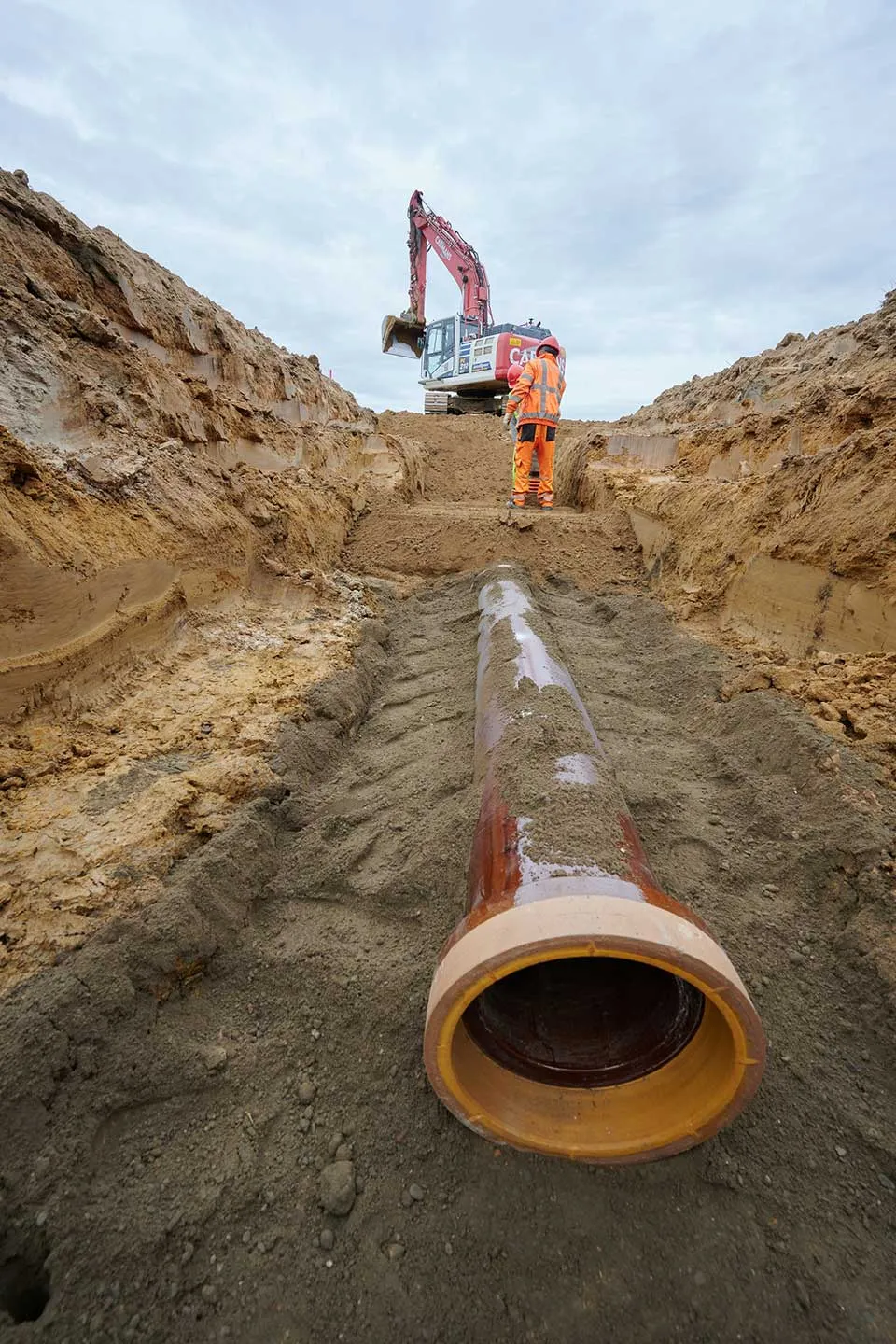
In addition to being the highest-performing sewer pipes, with the longest proven service life, vitrified clay pipes are also best suited to meeting these circularity challenges. This applies to production, as well as to reuse and potential processing at the end of their service life. Dieter Schreurs: “Steinzeug-Keramo is fully committed to a sustainable future, environmental responsibility and the reuse of materials. Vitrified clay is ideally suited to this. It is a 100% natural product made from an inexhaustible, harmless resource, with no additives or additional process lines. It also aligns with the ESG objectives of Wienerberger, of which Steinzeug-Keramo is part, and this environmentally friendly process is also third-party approved (Cradle to Cradle).”
A short production chain
The use of local raw materials makes Steinzeug-Keramo a highly reliable partner, even in more difficult times. Dieter Schreurs: “The coronavirus pandemic has not caused any problems in continuing to supply the market. Thanks to the short production chain in the immediate vicinity, Steinzeug-Keramo can ensure a very stable supply and pricing for both raw materials and production. As a local Belgian manufacturer, we can bring products to market quickly. Our local service and engineering teams enable us to support customers quickly and efficiently during the preparatory phase and throughout construction, even in these challenging times.”
Leading the way
The basic raw materials for vitrified clay are clay, water and grog: three materials derived from nature. Since clay is available in unlimited quantities, it will remain more than abundant for future generations, making it a sustainable solution. Steinzeug-Keramo says that, with vitrified clay as its product, it is ahead of the curve. Dieter Schreurs: “Thanks to its environmentally friendly raw materials, vitrified clay is already a very ecological product and has met the criteria for a circular economy (raw materials, reuse) for decades. Circularity has gained a great deal of importance in recent years, but our long experience means we know the subject very well and are playing a pioneering role in helping the market move forward.”
Maximum reuse
Vitrified clay scores very highly in terms of maximum reuse at the end of its service life, one of the key pillars of circularity. When vitrified clay pipes are removed at the end of their service life, the material can be reused or recycled very easily and sustainably, even directly on the construction site. Steinzeug-Keramo therefore holds Cradle to Cradle certification. This certification takes several pillars into account and considers not only the material’s impact on health and the environment, but also water and energy management, from CO2 emissions to the impact on the aquatic environment. Sustainability is assessed in this way from a very broad perspective. Social factors also play a role. Dieter Schreurs: “Our local roots and employment also ensure that we operate with respect for human rights and social legislation, with safety and wellbeing as priorities.”
Easy to maintain
“A circular, ecological design starts with choosing the right material. The service life, reliability and performance of a sewer system are strongly influenced by the material selected. The material must therefore meet extreme requirements and offer several qualities at the same time. The smooth glaze on the inside of the pipe and its straight profile minimise the build-up and adhesion of substances such as oils and fats. What does accumulate is easily removed during cleaning, keeping cleaning frequency low and making vitrified clay pipes very easy to maintain. The inherent chemical resistance of clay also protects against the harshest chemical conditions, so biogenic sulphuric acid attack is not an issue when vitrified clay is chosen. This also helps make water asset management manageable and financially attractive,” concludes Dieter Schreurs.
Question about this story? Ask your question
Keep following this
Get an email when a new story is published. No account needed.
- ThemeRenewing pipelines and sewers
- SubjectSewerage & underground infrastructure







