









Sewerage & underground infrastructure
Precise 3D plan forms the basis for construction of Metro 3 connecting tunnel
Together with partners BAM Galère and Soletanche-Bachy, BAM Contractors is helping to build the tunnel as part of the Progrès temporary joint venture (JV). “We proactively mapped as many parameters as possible to optimise the 3D plan for construction and eliminate potential obstacles in advance,” says Bart Van Doorselaere, senior D2B engineer at multidisciplinary infrastructure company BAM Contractors.
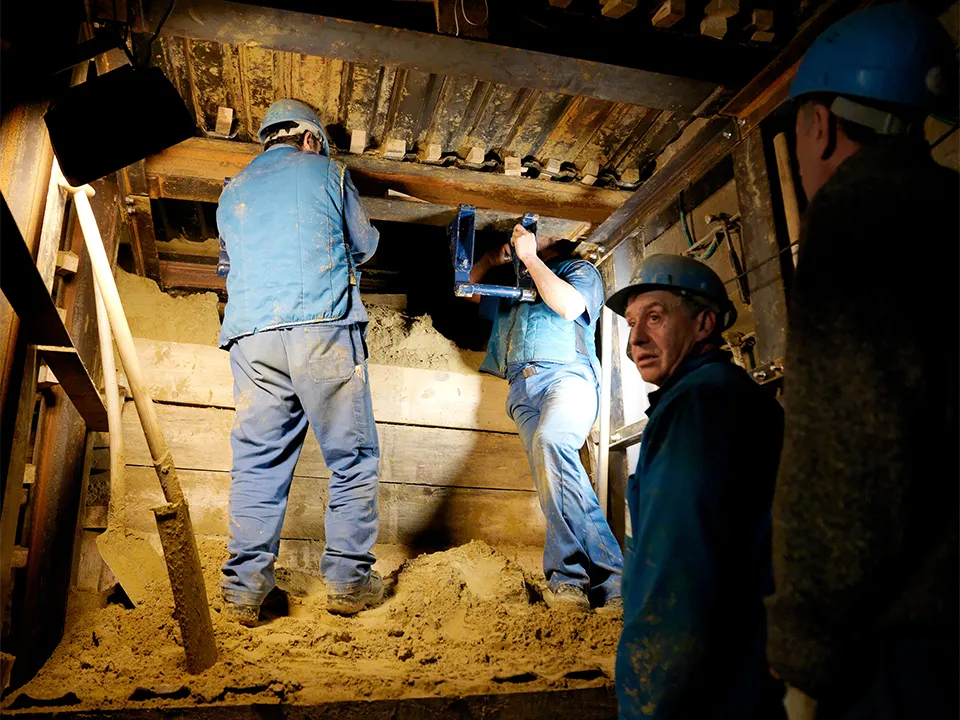
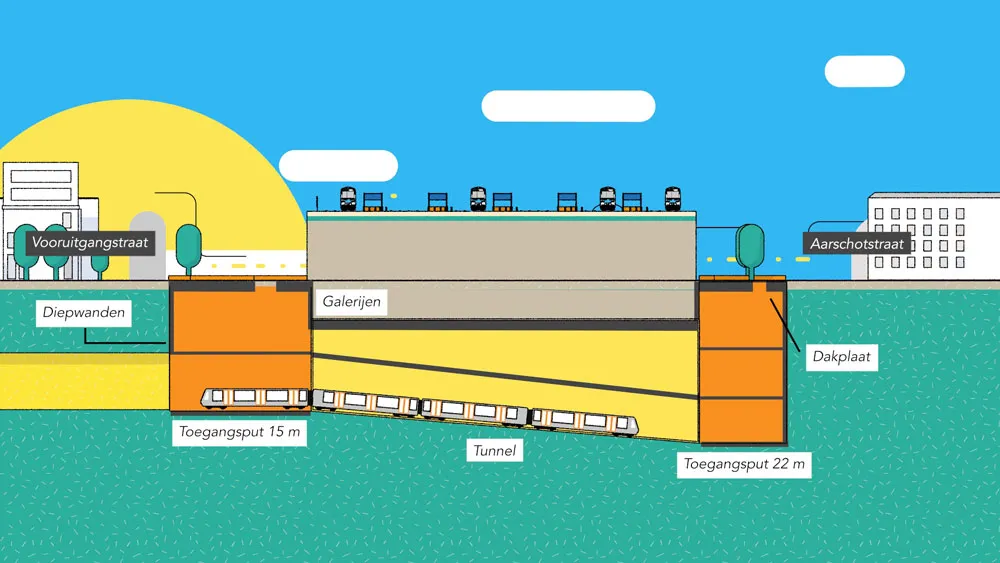
The 150 m underground tunnel is a crucial link in the project to create a lifeline for Brussels with Metro line 3. In recent weeks, we carried out the necessary preparatory work to allow the diaphragm walls to be built in the short term. Excavation for the tunnel itself is scheduled to begin in early June. To minimise disruption as much as possible and ensure the continuity of rail services, the JV is using the top-down method, in which the underground walls are built first.
A range of techniques
“The study by lead design consultant Sweco showed that combining several established techniques was the best option,” says Bart Van Doorselaere, who is responsible for design and coordination on the project. “The tunnel will be built using an optimised 3D model and techniques such as diaphragm wall panels, galleries, jet grouting and dewatering.” Project manager Thomas Forget adds: “We are now busy preparing for the diaphragm walls. This has brought a number of unexpected issues to light, such as the presence of a fuel oil tank in the basement of the former Medical Center. At the other end of the tunnel, along Aarschotstraat, we can already start excavating.”
The power of BIM
BAM Contractors has plenty of experience in building metro tunnels. Bart Van Doorselaere says: “A few years ago, we also helped build the Schuman-Josaphat tunnel, a railway tunnel in the Brussels-Capital Region that provides a direct link between Schuman station and Meiser station. Metro 3 is essentially a one-to-one derivative of that project, and that experience is proving useful now. In every project, my team and I focus on BIM. With the motto ‘we build it, before we build it’, we map the project as fully as possible in 3D before starting construction. This allows you to identify minor issues in advance that could otherwise have a major impact on the works.”
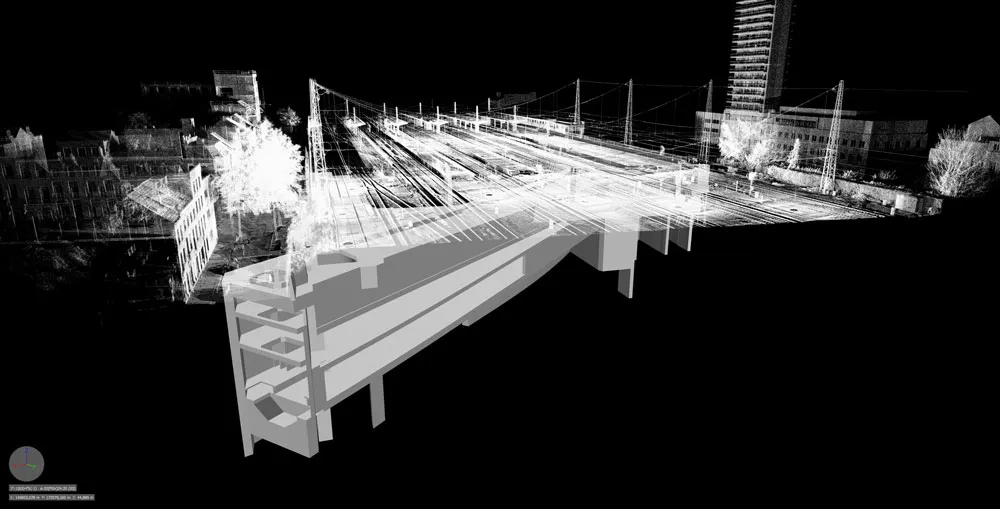
For example, old Infrabel plans showed a duct that was not included in the client’s model. Bart Van Doorselaere says: “We then send our specialist to the site to carry out a 3D scan. The data are processed immediately and show whether any construction issues could arise. This allows us to proactively map as much as possible to validate the model supplied by the client and optimise it where necessary. Only then do the site teams get the go-ahead. Once the work is complete, we immediately update the model. We are effectively working around the 3D model continuously. The main benefit of this approach is that we eliminate as many errors as possible in advance. This avoids delays, resulting not only in greater efficiency but also in financial and scheduling benefits!”
Monitoring also plays an important role in detecting errors and deviations. Bart Van Doorselaere says: “We continuously monitor the entire track layout and the buildings on both sides of the tracks. We are alerted immediately if the deviation tolerance is exceeded. This is usually resolved through compensatory measures, unless, of course, the stop threshold is exceeded and there is a risk of derailment. In that case, the tracks concerned are immediately taken out of service.”
Minimising disruption
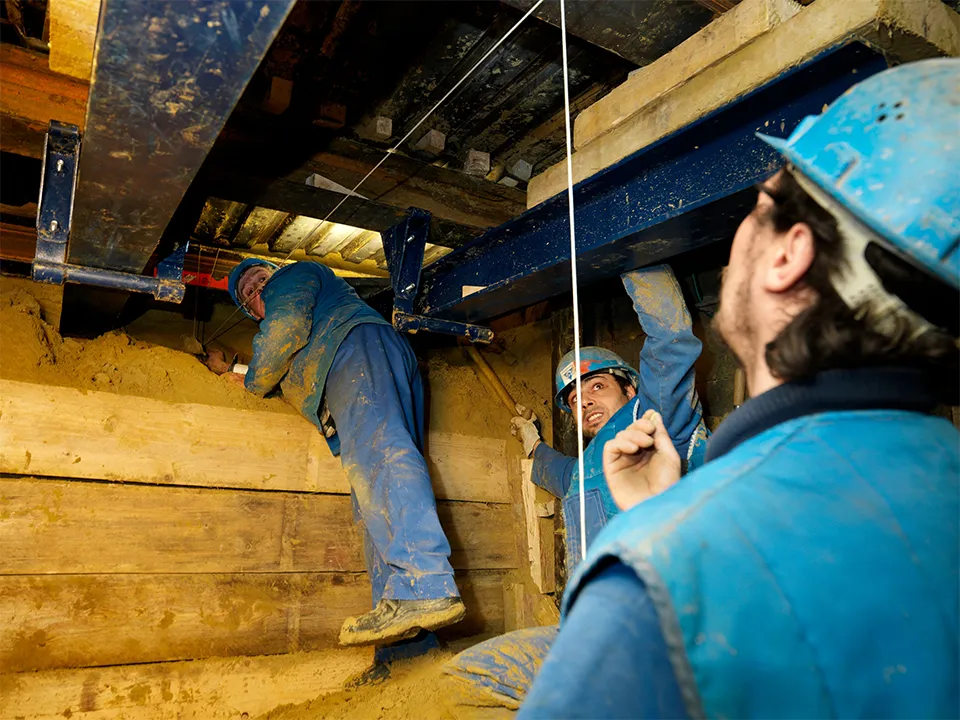
Minimising disruption is an important consideration on major infrastructure projects. For BAM too, “less disruption” is always a priority. Bart Van Doorselaere says: “Beliris set the framework, and BAM Contractors is doing everything possible to implement those ‘less disruption’ measures. Noise meters have been installed on site, and acoustic sound-absorbing panels have been chosen for the site hoarding instead of traditional fencing. The panels are also high enough to block the view. We are also making a major effort on both internal and external communications, including distributing leaflets and installing information LED panels on site.”
BAM Contractors’ commitment to corporate social responsibility is also evident in its investigation into reusing dewatering water. “We are currently looking into the possibility of using the water we pump out for jet grouting. This would mean we do not need to use drinking water for this purpose. The pumped-out water would be treated and reused on site. This was not a client requirement, so it is simply an additional environmental effort by BAM Contractors,” concludes Thomas Forget.
Question about this story? Ask your question
Wie aan Metro 3 werkte
- gedelegeerde bouwheerBelirisMentioned in Planning permission granted for works at Brussels North station
- leidende studiebureauSwecoIn this story
- bovenleidingenEQOS EnergieMentioned in 30 kilometres of underground overhead lines for Brussels metro upgrade
Keep following this
Get an email when a new story is published. No account needed.
- ProjectMetro 3
- SubjectSewerage & underground infrastructure
- CompanySweco







