









Impact assessment confirms the importance of the Metro 3 project
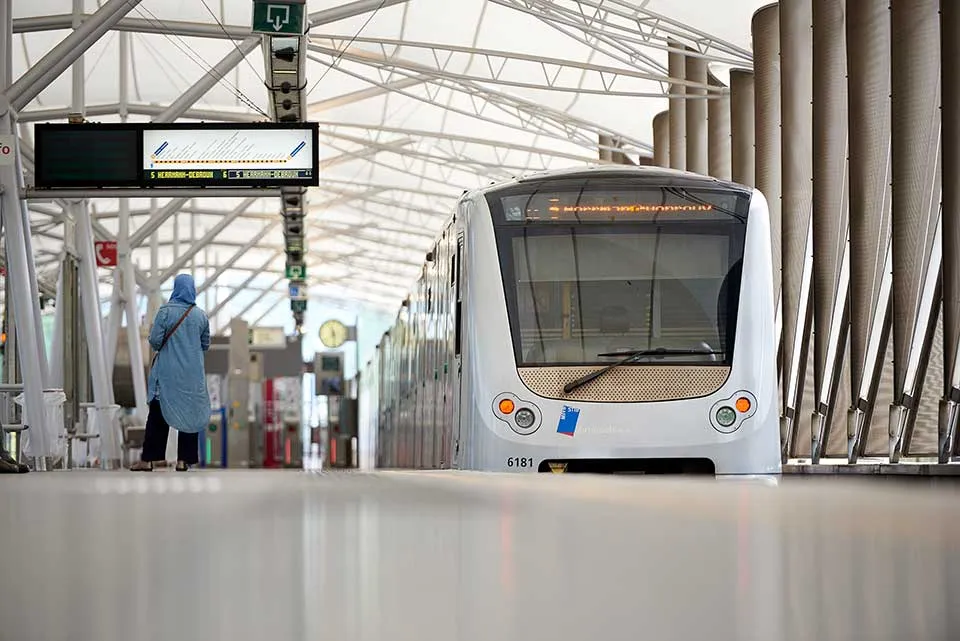
The environmental impact assessment is clear: Metro 3 is the most suitable means of transport for meeting the growing mobility needs in the north of Brussels.
The study, carried out by an independent consultancy under the supervision of a steering committee, shows that Metro 3 is the best solution and confirms the choice of station locations, the proposed route and the technical design. Based on the recommendations, the plans for the 4.5 km tunnel, the 7 new metro stations and the depot to be built as part of the extension of metro line 3 will be optimised. Beliris, the public-sector construction expert in Brussels, will submit the revised plans for the permit in early 2022, in close consultation with MIVB. This is an opportunity to further optimise the project and better meet the needs of local residents.
PHASE 2 OF THE PROJECT IS PROGRESSING AS PLANNED
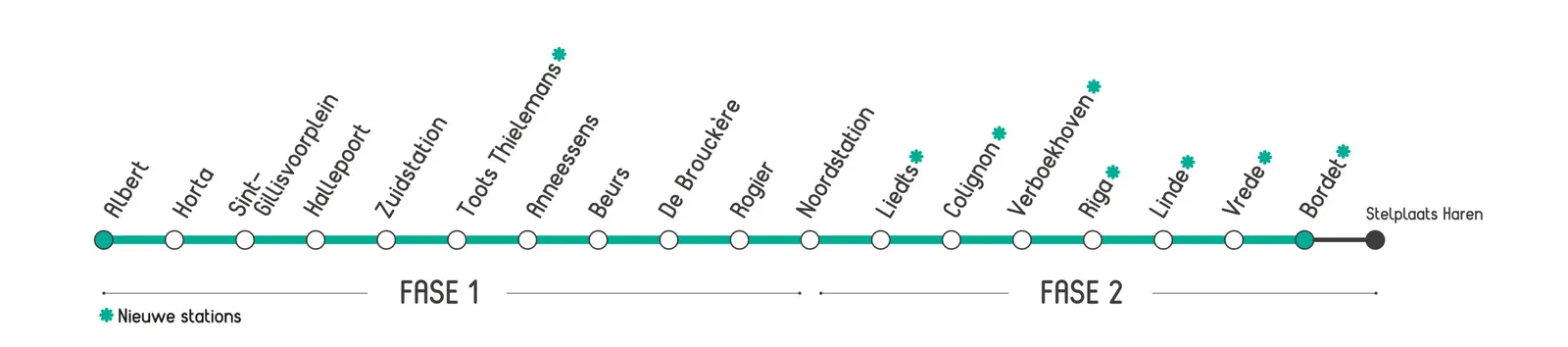
The new metro line 3 will form a 10.3 km route between Bordet in Evere and Albert in Vorst. It will be delivered in two phases, the first of which is already under way. Phase 1 involves converting the premetro into a metro, building a new station, Toots Thielemans, between the South station and Lemonnier, adapting the existing stations between Albert and the North station, and constructing the connecting tunnel at the North station. Phase 2 comprises excavating the tunnel, building 7 stations and constructing a metro depot. This phase marks a major step forward: more than 1,100 recommendations were gathered and analysed as part of the impact assessment. Many had already been included in the detailed project study or had previously been considered. The remaining recommendations will be analysed further within the planned 6-month period, before the amended permit application is submitted.
The study confirms that the Metro 3 project will provide a solution to the growing mobility needs of neighbourhoods in the north of Brussels. The project study had already been approved by the federal and regional authorities in 2013, incorporated into the Regional Land Use Plan (PRAS) in 2017 and endorsed by a public survey in Brussels in 2020.
THE METRO IS THE BEST SOLUTION
A number of independent, certified consultancies, ARIES and TRACTEBEL, conducted a thorough assessment of the project and the alternatives. They examined the possibility of increasing the capacity of tram 55 or adding an extra route. Neither option proved feasible. “Simply expanding the tram network would never be enough to meet the growing mobility needs in the north of Brussels. The impact assessment once again highlights the need for this metro line,” says Brieuc de Meeûs, CEO of MIVB. “That does not mean, however, that the tram will have no place in Brussels’ intermodal mobility plans in the future.” The study also reconsidered whether the planned 4.5 km tunnel should be built as a twin-bore tunnel rather than the proposed single-bore tunnel, but this proposal was rejected. This solution would significantly increase the cost of the project and have a much greater impact on buildings above ground, as well as on the environment.
ENVIRONMENT, INTERMODAL TRANSPORT AND ACCESS FOR PEOPLE WITH REDUCED MOBILITY
The conclusions of the impact assessment do not call into question the construction of the 7 new metro stations, whose route and locations were also reaffirmed in the 2017 PRAS impact report. The recommendations focus on adapting the 7 new stations and the depot in Haren in terms of the environment, integration with other modes of transport and accessibility for people with reduced mobility (PRM). They include recommendations on collecting rainwater and reducing the discharge of water into the sewer system. The study also recommends installing green roofs and photovoltaic panels. All these recommendations are being considered for the plans for stations with large roof areas: Verboekhoven, Vrede, Linde and Bordet, as well as the depot in Haren. Other findings are also being considered, such as providing toilets for people with reduced mobility, installing 2 lifts per platform, building secure cycle parking and reducing both the vertical gap and the horizontal distance between the platform and the metro entrance. In the coming months, Beliris, MIVB and the Region will examine the recommendations in the impact assessment in detail in order to further optimise the Metro 3 project.
CONSULTATION AND COMMUNITY INPUT TO INTEGRATE METRO 3
The study also makes recommendations on the design of public spaces around the new metro stations. These will not require changes to the permit application, as they will be developed through a participatory process. “The design of the public spaces will be developed in close consultation with residents, shopkeepers and all the parties involved in the neighbourhoods,” explains Cédric Bossut, director of Beliris. “The process will be tailored to the requirements of each station. Local residents will be able to contribute ideas for the design of the public spaces around the stations, including their appearance, street furniture, secure cycle parking, intermodal mobility and green spaces. This will not happen for several years, as all the civil engineering works must be completed first.”
MANAGING DISRUPTION DURING THE WORKS
The impact assessment also sets out its conclusions and findings on limiting disruption during the works. It recommends aiming for the most sustainable possible management of waste and materials, for example along the canal. The specifications for the destination and transport of the excavated soil are included in the works contract, which clearly defines the contractor’s assignment. The study rightly calls for measures to limit disruption. Excavating a tunnel and building 7 stations will affect the lives of local residents.
As project owners, MIVB and Beliris are taking responsibility and are aware of these concerns. They have therefore engaged the services of a specialist research consultancy in vibration and noise nuisance.
Question about this story? Ask your question
Wie aan Metro 3 werkte
- gedelegeerde bouwheerBelirisMentioned in Planning permission granted for works at Brussels North station
- leidende studiebureauSwecoMentioned in Precise 3D plan forms the basis for construction of Metro 3 connecting tunnel
- bovenleidingenEQOS EnergieMentioned in 30 kilometres of underground overhead lines for Brussels metro upgrade
Keep following this
Get an email when a new story is published. No account needed.
- ProjectMetro 3
- SubjectGeneral







