









Sewerage & underground infrastructure
Online platform points the way to the right infiltration solution
Text Joris Hendrickx Beeld FEBE

The new rules on rainwater call for clear, well-founded choices. With a practical online platform, FEBE helps everyone quickly find the right infiltration solution. Raf Pillaert, Product Manager Infrastructure at FEBE, explains how to use it.
FEBE is the recognised trade association for manufacturers of precast concrete products and represents the interests of the sector. The Belgian concrete industry produces a wide range of precast elements for construction, from masonry blocks and paving stones to large structural elements such as bridge beams. Manufacturers of products for infrastructure works are continually developing new precast concrete solutions for rainwater management.
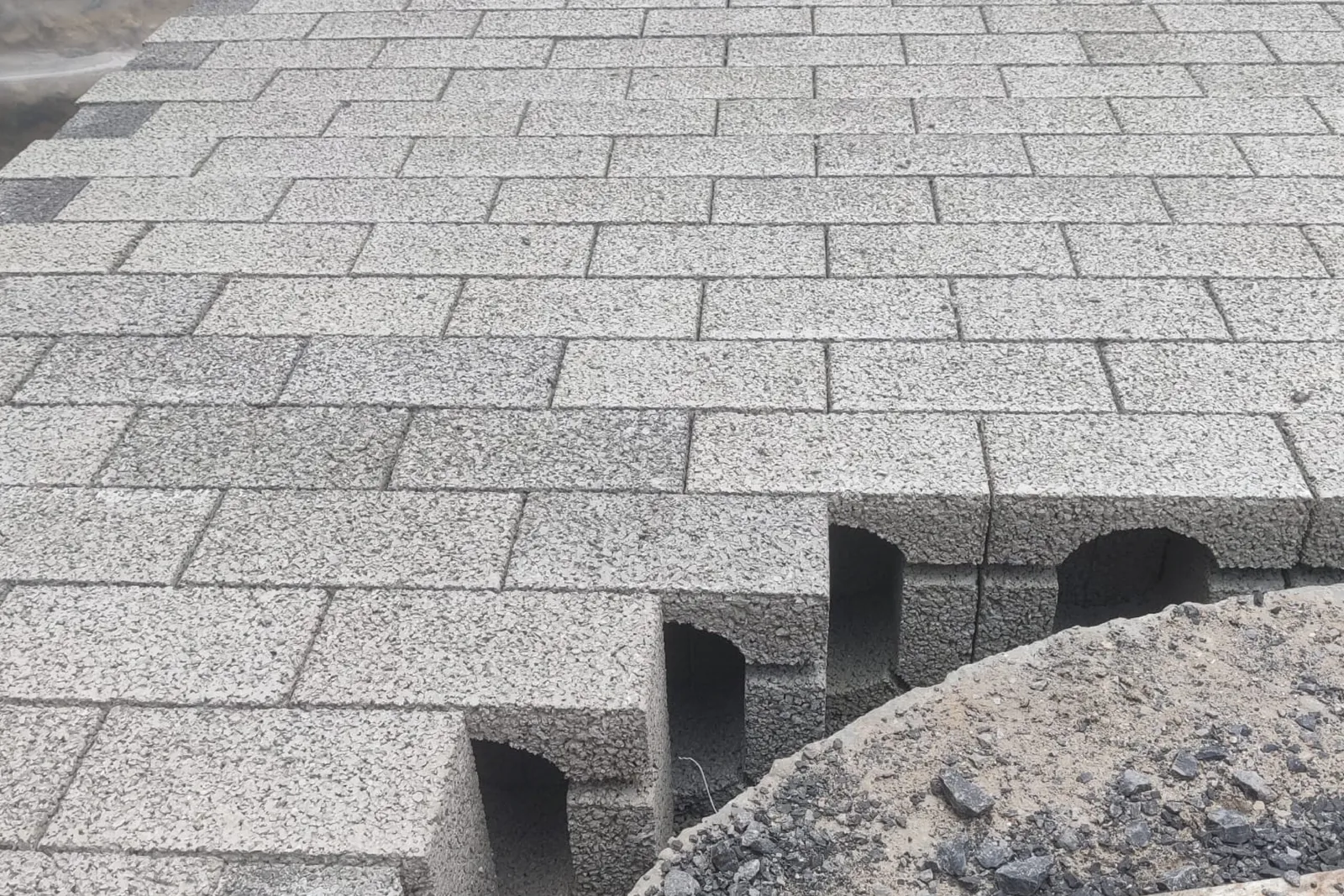
Updated guidance for the GSVH
In 2023, the Flemish Government approved a new regional urban planning regulation (GSV) on rainwater. It came into force on private property in October 2023. Since the start of 2025, it has also applied to projects on public land. Last month, the accompanying technical background document was updated following a circular from Minister Brouns’s cabinet. The document (version 1.3) clarifies the regulation and uses practical examples to show how to apply it. “This background document really is a guide for practitioners,” says Raf Pillaert. “It helps them interpret and apply the rules correctly.”
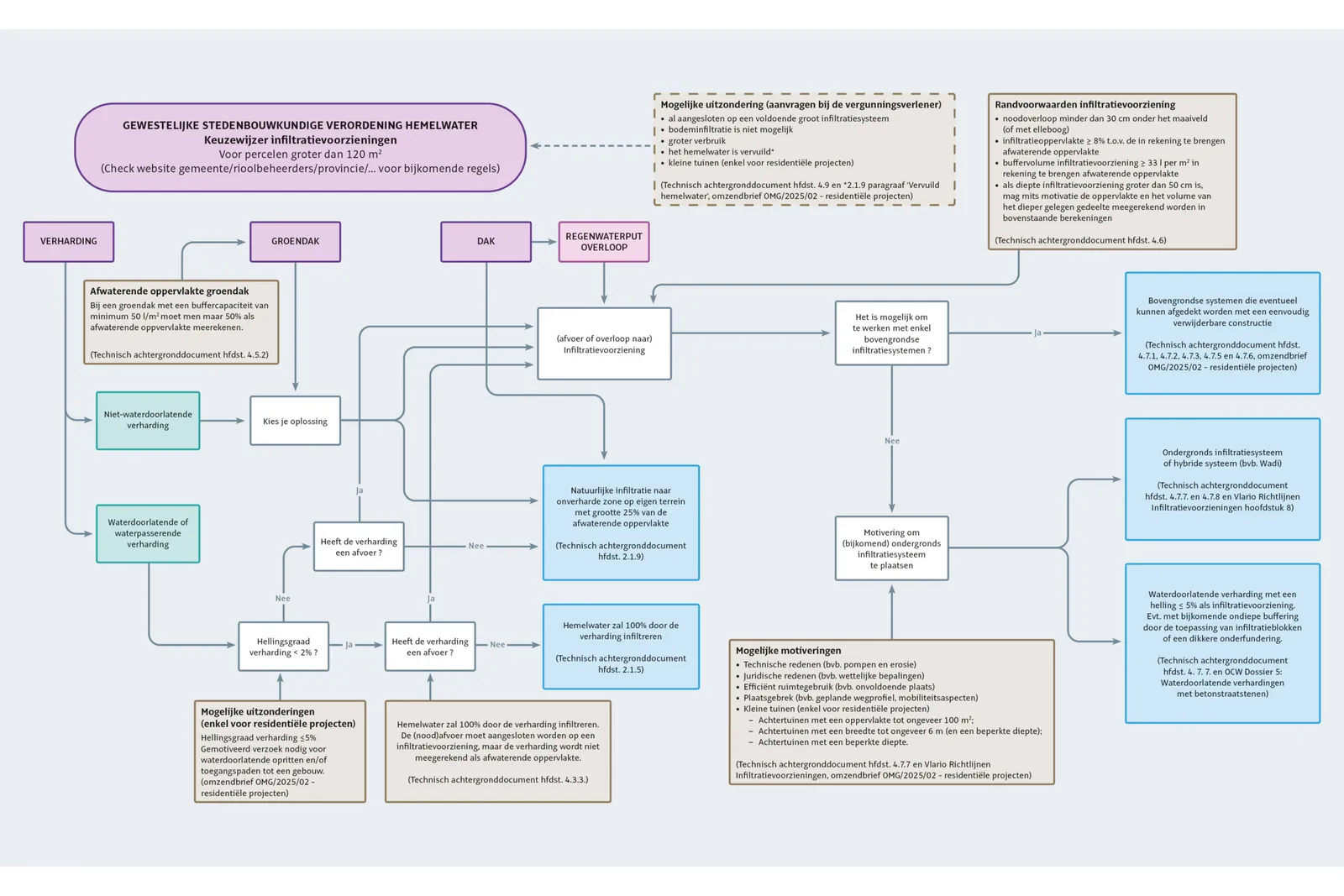
The technical background document also includes a clear flowchart to guide engineering consultancies, contractors and architects in choosing between different infiltration solutions, helping them ensure that every project complies with the GSVH. FEBE drew up the flowchart. “We want to provide certainty with this flowchart,” says Pillaert. “For every project, you can immediately see which solution complies with the GSVH. The tool brings structure to a wide range of options, from simple solutions to more complex systems.”
InfiltratieWijzer.be: a guide to choosing precast concrete infiltration solutions
FEBE’s role in the transition to sustainable rainwater policy does not stop at drawing up the flowchart. With an interactive website, the trade association is stepping up its efforts to raise awareness and offer practical support. “InfiltratieWijzer.be presents a range of options for infiltrating and storing rainwater in a very accessible way,” says Pillaert. “It helps designers and contractors choose the right solution for each project more quickly.”
The platform provides a comprehensive overview of precast concrete infiltration solutions. It features an interactive flowchart based on the official version. Each section links to further information or technical documents. For each infiltration solution selected, you can also immediately see which products are available and which manufacturers market them.
Three ways to manage water
The right-hand side of the flowchart shows three clear infiltration solutions:
- Above-ground systems, such as infiltration basins, infiltration depressions and ditches
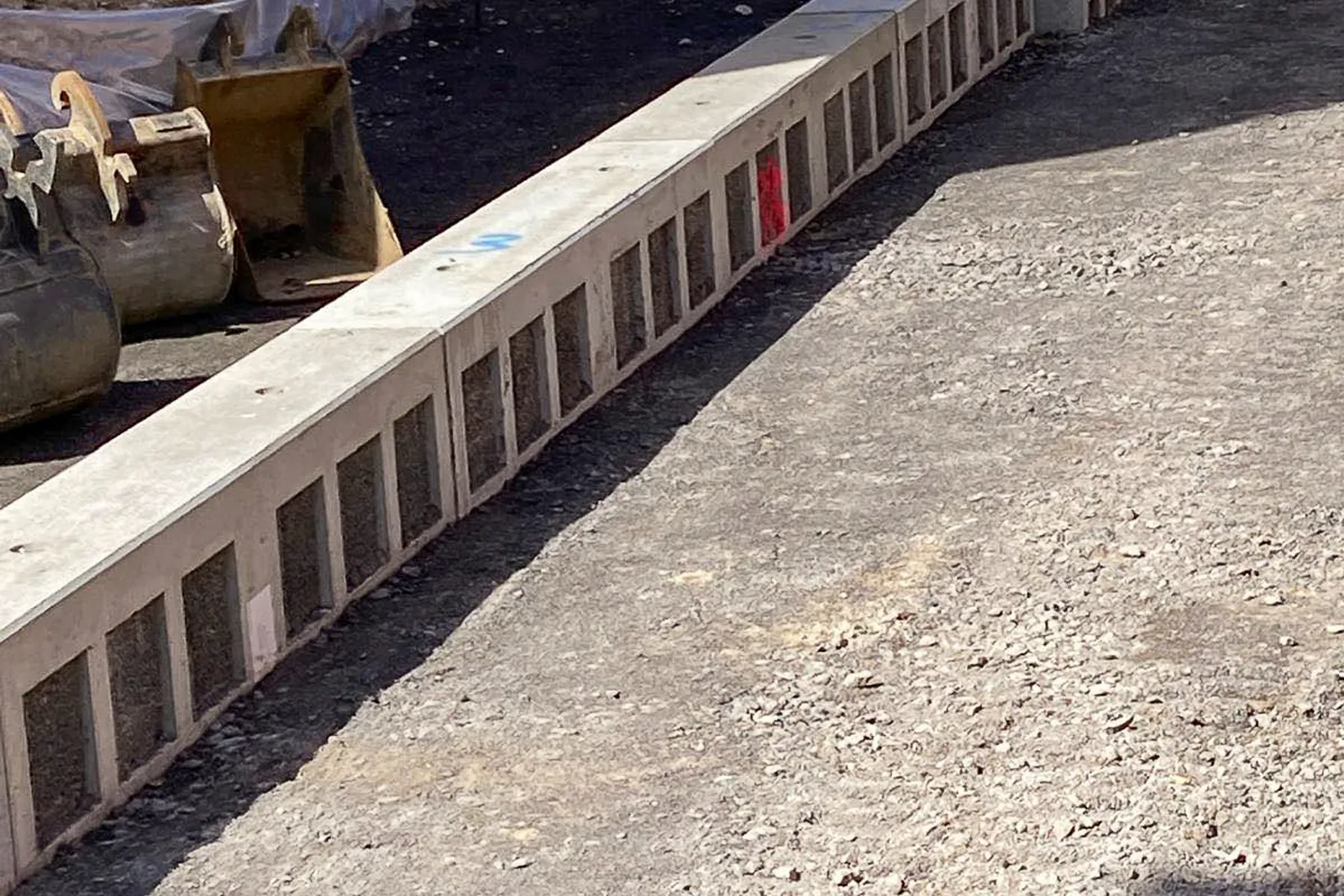
- Underground systems, such as infiltration channels, porous concrete pipes and infiltration wells. The underground section of a wadi is also included here.
- Permeable paving, such as porous concrete paving stones, concrete paving stones with widened joints or drainage openings, grass concrete pavers and large-format slabs with drainage openings.
“This three-way classification follows the GSVH requirements. The flowchart makes it easy to understand at a glance,” explains Pillaert. “You can quickly see which solution is the best choice for your project.”
Combining solutions for the best results
The objective remains clear: infiltrate and store as much rainwater as possible. “Every drop counts,” Pillaert stresses. “That is why as much rainwater as possible must be allowed to soak into the ground. In many projects, combining solutions offers the best approach to rainwater management. A mix of permeable paving and underground and above-ground systems often works best,” he concludes. “That way, you get the most out of your design.” By enabling well-founded choices and combinations of this kind, precast concrete is becoming an important building block for a forward-looking, sustainable approach to rainwater management.
Question about this story? Ask your question
Keep following this
Get an email when a new story is published. No account needed.
- ThemeSpace for water and green infrastructure
- SubjectSewerage & underground infrastructure







