









Sewerage & underground infrastructure
Metro 3 focuses on deep foundations
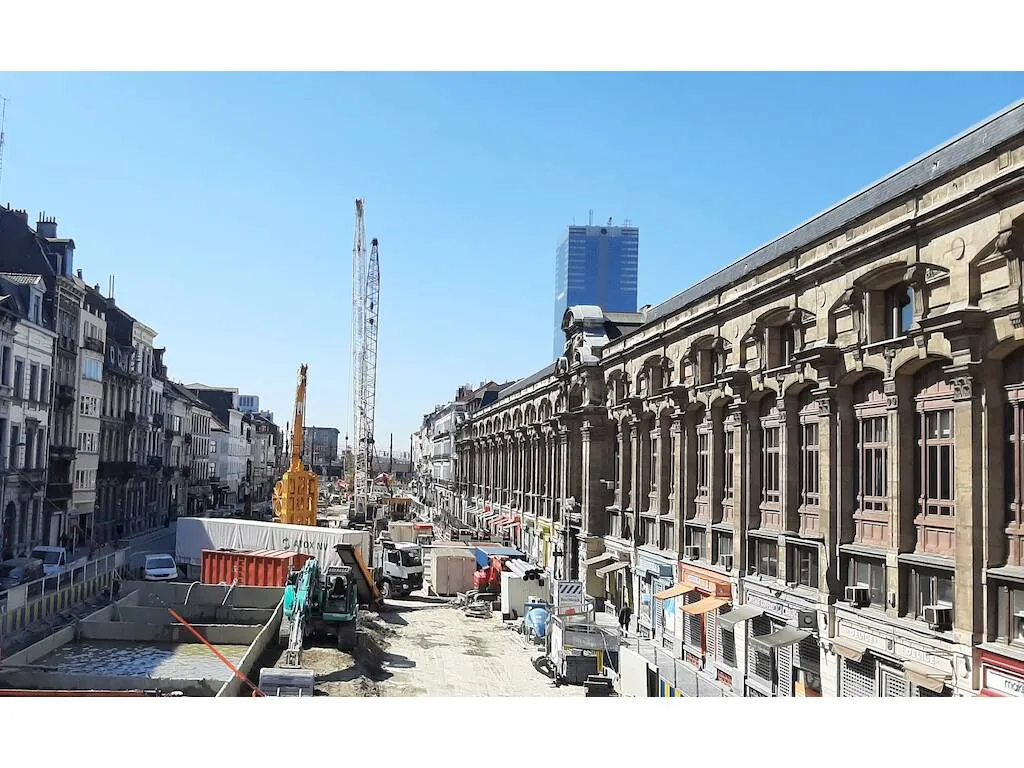
The ‘Deep Foundations’ package for the Toots project was awarded to the SOFRACO joint venture, comprising Franki Foundations and Soetaert. Franki Foundations is responsible for excavating the barrettes, including installing prefabricated elements, constructing diaphragm walls and building a secant pile wall using large-diameter bored piles. Arnaud Gaascht, site manager at Franki Foundations, tells us about the challenges he and his colleagues are tackling on site on Avenue de Stalingrad.
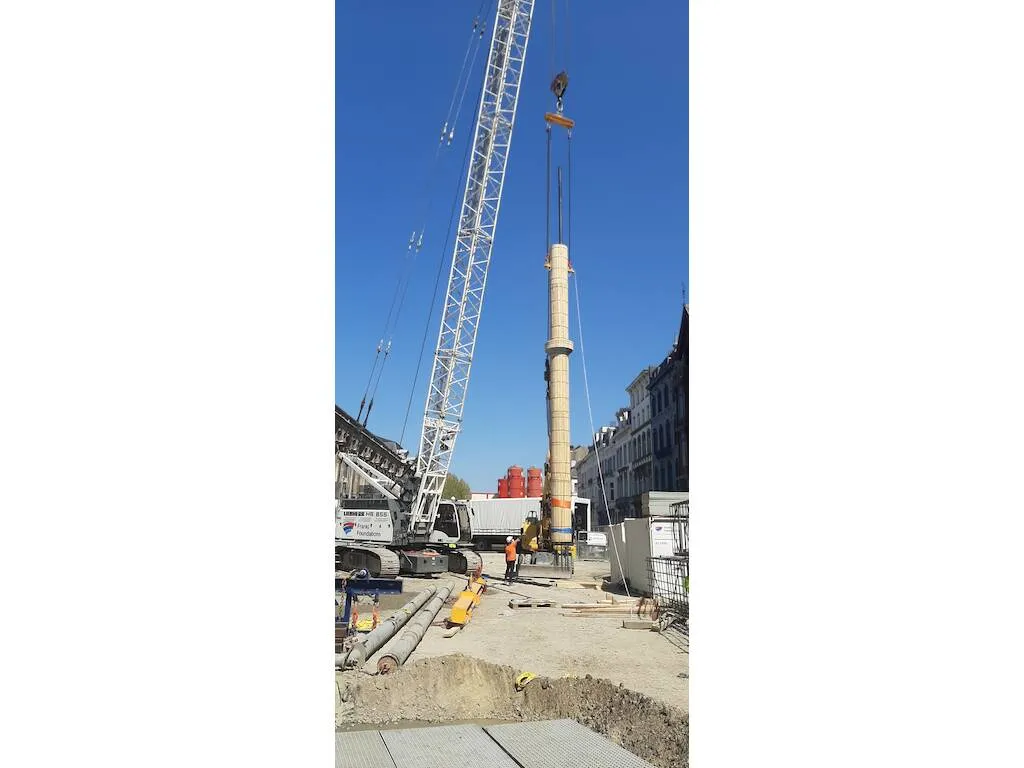
Franki Foundations is using a technique that it has previously applied successfully on the The One site. First, barrettes 1,000 and 1,500 mm wide and 28 to 35 m deep are excavated. The 1,000 mm barrettes will support temporary steel structures, allowing the subsequent earthworks to proceed smoothly. Prefabricated concrete columns will be installed in the 1,500 mm-wide barrettes. Once these barrettes have reached the required founding depth, they are filled with bentonite. The bentonite is then desanded and the steel reinforcement cages are installed. Finally, the concrete columns are put in place and concreting begins. During this final stage, the bentonite is displaced upwards so that, once cleaned, it can be reused. Arnaud Gaascht: “We pour the concrete very slowly to prevent the precast column from tilting. The permitted tolerance is just 1%, which is a major challenge. The 1,000 mm barrettes with steel structures are even more complex, as these structures are installed only after concreting. We have completed two so far, and everything has gone according to plan.”
A logistical tour de force
As the site is in the heart of Brussels, there are many constraints, particularly in terms of available space. “Just to assemble the auxiliary crane, we need a platform 50 m long and 12 m wide. On top of that, we also need to accommodate our excavator and the other contractors’ machinery. Although we worked on a ‘just in time’ basis, the reinforcement cages, columns and steel structures had to be stored on site for a short time. So it was essential to make the best possible use of the space available,” stresses Arnaud Gaascht. The contractors also had to ensure that the nearby homes remained accessible to the emergency services at all times. Franki Foundations has completed the work on the odd-numbered side of Avenue de Stalingrad and will soon start work on the opposite side of this major thoroughfare. Another constraint is the need to keep a route open for traffic at all times. But all these efforts will pay off: once the project is complete, it will be much easier for residents, commuters and tourists to get around our busy capital.
Question about this story? Ask your question
Keep following this
Get an email when a new story is published. No account needed.
- ThemeUsing and protecting the subsurface
- SubjectSewerage & underground infrastructure







